
- 400
- 500
- 600
- 700
- 800
- 900
- Rouran 400–554
- First Göktürk 552–630
- Tang rule 630–682
- Second Göktürk 682–744
- Uyghur 744–840
- Kirghiz 840–924
- Huns 370–469
- Western Göktürk 552–659
- Türgişlər 699–766
- Qarluqlar 766–800
- Khazar 650–969
Ammianus Marcellinus Roma imperiyasının tarixini latın dilində yazdı. O, Nerva hakimiyyətindən imperator Valentin 378-ci ildə Adrianopolda ölümünədək uzanır.[1] Son kitabı dövrünün hər hansı yazıçısının verdiyi hunların ilk tam təsviri ilə açılır. Eyni kitab hunların alanları və Qara dənizin şimalındakı qotları məğlub etdiyi müharibəni danışır.[2] Dördüncü əsrin heç bir başqa mənbəsi hunlara bu qədər yaxından baxmayıb.[2]
Müəllif
Əsərin sonunda Ammianus özünü “keçmiş əsgər və yunan” adlandırır.[1] O, Antioxiyadan idi. 378-ci ildən bir müddət əvvəl Romaya getdi və ömrünün qalan hissəsini orada keçirdi.[3] O, təxminən 330-cu ildən təxminən 400-cü ilədək yaşadı.[2] O, tarixi çox ehtimalla 392-ci ildən 393-cü ilə keçən qışda bitirdi. O zaman şərq imperatoru Teodosius ilə qərb qəsbkarı Evgenius arasında müharibə yaxınlaşırdı və hun atlıları yenə şərq ordusunda xidmət edəcəkdi.[4] O, Valentdən sonrakıları “daha qabiliyyətli, ömrün və elmin tam çağında olan adamlara” tapşıraraq bitirir.[1]
Hun fəsli
Ammianus səbəb bəyanatı ilə başlayır. O yazır ki, sonrakı müharibənin bütün fəlakətinin toxumu “qədim yazılardan az tanınan” hunlar xalqı idi. Onlar Azov dənizinin o tayında, buzla bağlı okeanın yaxınlığında yaşayırdı və vəhşiliyin hər ölçüsünü aşırdılar.[5] Doğulduqları andan uşaqlarının yanaqları dəmirlə dərin kəsilirdi ki, saqqal çıxanda çapıqlarla küt olsun. Kişilər buna görə saqqalsız qocalırdı.[6] Onların yığcam, güclü əzaları və qalın boyunları var idi.[6] Onlar yabanı bitkilərin köklərini və hər heyvanın yarıxam ətini yeyirdi. Əti budları ilə atlarının kürəkləri arasına qoyub bir az isidirdilər.[7]
Onların tikililəri yox idi və damlardan məzarlardan qaçan kimi qaçırdılar.[8] Onlar kətan və ya tarla siçanlarının tikilmiş dərilərindən geyinirdi. Tunikanı dağılana qədər geyinirdilər.[9] Onlar yuvarlaq papaq və ayaqlarında keçi dərisi taxırdı. Ayaqqabıları onları piyada zəif döyüşçü edirdi.[10] Onlar demək olar ki, atlarına bağlanmışdı; atlar davamlı, lakin çirkin idi. Atın belində alıb satır, yeyib içir, məşvərət edir və yatırdılar.[11] Onlara heç bir padşah hökm etmirdi. Onlar başçılarının rəhbərliyinə tabe olurdular.[12]
Onlar vəhşi səslə pona şəkilli dəstələrlə döyüşə girirdi. Qəsdən dağılır, sonra böyük qırğınla yenidən zərbə endirirdilər.[13] Uzaqdan itilənmiş sümük uclu atılan silahlarla, yaxından isə qılıncla vuruşurdular. Onlar düşmənlərini bağlamaq üçün üzərlərinə bükülmüş parça zolaqları da atırdılar.[14] Aralarında heç kim şum etmirdi. Onlar arabalarda yaşayırdı; orada qadınlar paltarlarını toxuyur, uşaq doğur və böyüdürdülər.[15] Onlar atəşkəslərdə sözünə xilaf idi və heç bir dinlə bağlı deyildi. Onlar qızıla sonsuz arzu ilə yanırdılar.[16]
Fəsil alanlara keçir; Ammianus onları qədim massagetlər adlandırır.[17] O, onların adını məğlub edib öz altına çəkdikləri çoxsaylı xalqlar üçün ümumi ad edir.[18] Alanlar qabıq örtüklü arabalarda yaşayır və ətlə və südlə qidalanırdı. Onlar hündür və göyçək idi, saçları sarı idi. Hər şeydə hunlara bənzəyirdi, lakin həyat tərzində daha mülayim idi.[19] Onlar yerə sancılmış çılpaq qılıncı müharibə tanrısı kimi ibadət edirdi. Gələcəyi söyüd budaqları ilə qabaqcadan söyləyirdilər.[20] Bu adətlər alanların adətləridir. Hunlar barədə Ammianus deyir ki, onların heç bir dini yox idi.[16]
Qotlarla müharibə
Növbəti fəsil hunların Donda tanaitlər adlanan alanları necə basdığını danışır. Onlar çoxunu öldürdü və sağ qalanları müqavilə ilə özlərinə birləşdirdi.[21] Alanlarla birlikdə onlar ən döyüşkən padşah Ermenrikusun geniş və zəngin torpaqlarına soxuldu. Ermenrikus qot rəvayətinin Hermanarikidir.[21] O, bir müddət müqavimət göstərdi, sonra könüllü ölümlə qorxusuna son qoydu.[22] Onun varisi Vitimiris tutduğu başqa hunların köməyi ilə döyüşdə düşənədək alanlara qarşı dayandı. Sərkərdələr Alateus və Safraks sonra greutunqları onun kiçik oğlunun adından Dnestrə geri apardı.[23]
Tervinqlərin hakimi Atanarik Dnestrdə düşərgə saldı və gözətçiləri iyirmi mil irəliyə göndərdi.[24] Hunlar gözətçilərin yanından keçdi və ay işığında çayı keçiddən adladı. Onlar Atanarikin özünün üzərinə düşdü; o, dağlara qaçdı və Gerasus çayından Dunaya qədər divar tikməyə başladı.[25] Qotlar arasında şayiə yayıldı ki, əvvəllər heç görünməmiş bir insan nəsli yerin gizli küncündən qalxıb. Onların böyük hissəsi sığınacaq üçün Dunayın o tayında Frakiyaya baxdı.[26] Kitab bunların heç biri üçün il vermir. Hermanarikə hücum adətən 375-ci ilə yerləşdirilir, lakin onu tarixləndirmək olmaz.[27]
Hunlar daha iki dəfə görünür. 377-ci ilin payızında qotlar Roma əyalətləri Skifiya və Mezyada ağır vəziyyətdə idi. Onlar zəngin qənimət ümidi ilə bəzi hunları və alanları öz tərəflərinə çəkdi.[28] Adrianopoldan sonra qotlar, hunlar və alanlarla birləşərək, Perintusun qarşısında düşərgə saldı.[29] Adrianopolun özündə Ammianus qot süvarisi ilə birlikdə alanlardan ibarət bir dəstəni adlandırır və heç bir hun adlandırmır.[30]
Şahid kimi dəyəri
Ammianus hun gördüyünü iddia etmir. O, hun və alan materialını öyrənilmiş və ya eşidilmiş kimi qeyd edir. 31-ci kitabda o, on bir qot başçısını adlandırır, bir dənə də hun adlandırmır.[31] Dunayın şimalındakı müharibə haqqında təsviri əsasən qotların ona danışdıqlarına əsaslanır. Məlumat verənlərindən biri Dnestrdə hunlarla vuruşan və sonralar ərəb sərhədinin komandanı olan Munderikus ola bilərdi.[31][32]
O, hunları skiflər və parfiyalılar haqqında daha qədim yazıçılardan götürülmüş ifadələrlə təsvir etdi. Pompey Troq ona nə şum edən, nə də ev saxlayan xalqı və bütün işlərini at belində görən köçəriləri verdi. Pomponi Mela ona yarıxam əti verdi.[33] O, sümük uclu atılan silahlarla istisnanı qaydaya çevirdi, çünki məlum hun ox ucları dəmirdəndir.[34] Onun padşahsız hunları Hermanarikin ölkəsini darmadağın edən xalq haqqında öz rəvayətinə uyğun gəlmir.[35]
Ən məşhur təfsilatlardan ikisi mətnin oxunuşundan asılıdır. Nəşrlərdə atların kürəkləri çap olunan yerdə əsas əlyazmada fərqli söz var. “Atlar” sonrakı əlyazmanın oxunuşudur.[36] Hunların əyri ayaqları oxunuşdan asılıdır. Bir mətn onu qəbul edir, digəri etmir.[37]
Müasir təsvirlər onu hələ də dövrünün ən yaxşı təsviri sayır. O, hunların necə göründüyünü və geyindiyini danışır. O, onların atlarını, silahlarını, taktikasını və arabalarını hər hansı yazıçı qədər dəqiq təsvir edir.[38] Yordanes və Ammianus qotlarla hunlar arasındakı müharibə barədə fərqləndikdə, müasir təsvirlər Ammianusa üstünlük verir.[39]
Sonrakı istifadə
Evnapius hunların təsvirinin yarısını Ammianusdan götürdü. Yeronimin yarıxam əti də Ammianusa gedib çıxır.[40] Kassiodor itmiş və Yordanesdə qalmış qot tarixini yazdı. O, kəsilmiş yanaqları köçürdü və onların məqsədini dəyişdi. Onun variantında uşaqlar südü dadmazdan əvvəl yaralara dözməyi öyrənməli idi.[41]
Nəşrlər
31-ci kitabın latın mətni aparatsız köçürmədə oxunur. Onun yanında John C. Rolfenin Loeb Classical Library nəşri durur. Onun 1939-cu il üçüncü cildi 27-dən 31-ə qədər kitabları Clarkın mətni və ingilis tərcüməsi ilə çap edir.[42]
The passage
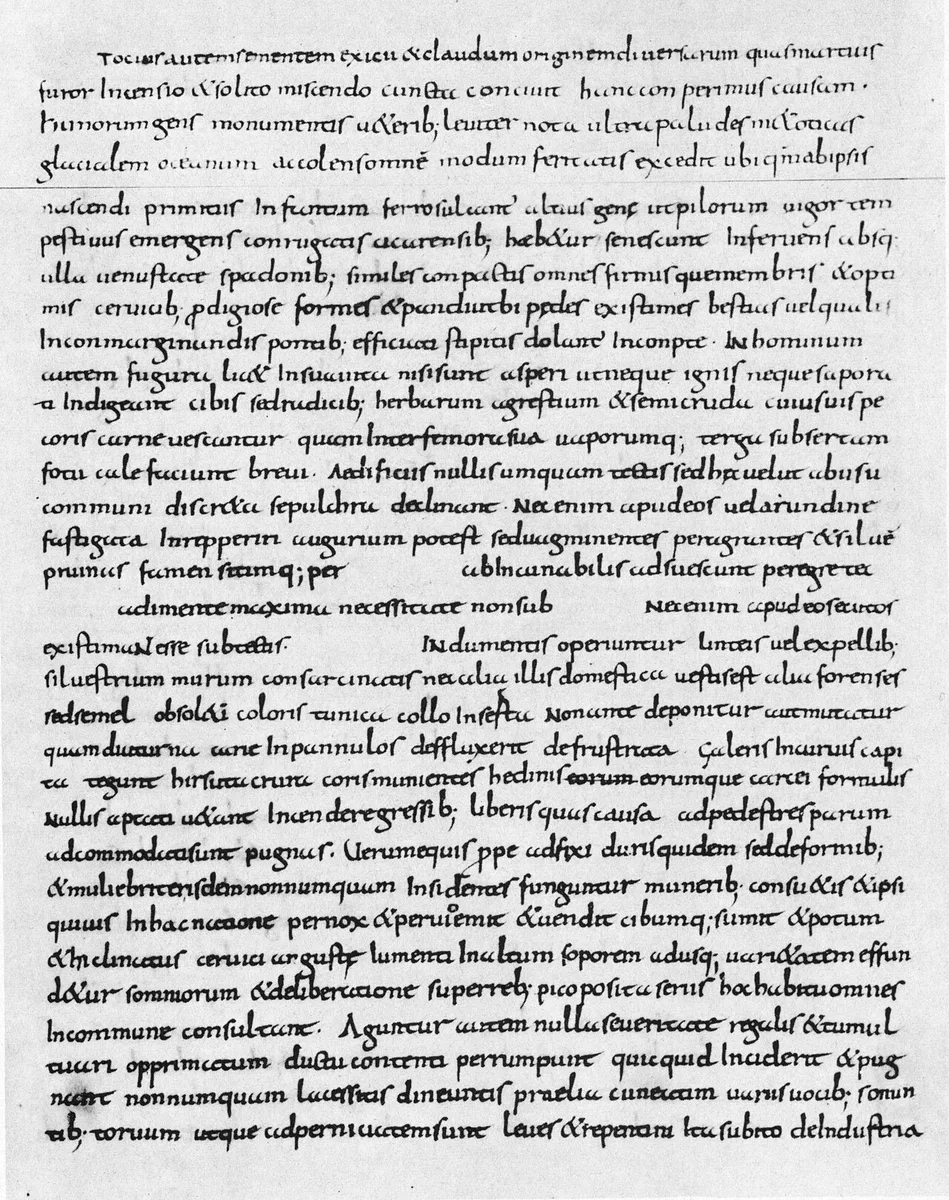
Totius autem sementem exitii et cladum originem diversarum, quas Martius furor incendio insolito miscendo cuncta concivit, hanc comperimus causam.
Hunorum gens monumentis veteribus leviter nota, ultra paludes Maeoticas glacialem oceanum accolens, omnem modum feritatis excedit.
Ubi quoniam ab ipsis nascendi primitiis infantum ferro sulcantur altius genae, ut pilorum vigor tempestivus emergens, corrugatis cicatricibus hebetetur, senescunt imberbes absque ulla venustate, spadonibus similes,
compactis omnes firmisque membris et opimis cervicibus, prodigiose deformes et pandi, ut bipedes existimes bestias, vel quales in commarginandis pontibus effigiati stipites dolantur incompte.
The seed of all the ruin and the origin of the various disasters that the fury of Mars stirred up, throwing everything into confusion with unwonted fire, we have found to be this.
The people of the Huns, little known from ancient records, living beyond the Maeotic marshes next to the icy ocean, exceeds every measure of savagery.
Since among them the cheeks of infants are cut deeply with iron from the very first days of life, so that the vigour of the hair, coming up in due time, is blunted by the wrinkled scars, they grow old beardless and without any grace, like eunuchs,
all with compact, strong limbs and thick necks, monstrously ugly and bowed, so that you would take them for two-legged beasts, or for the figured stumps that are crudely hewn for the edges of bridges.
[43] Ammianus Marcellinus; Rolfe 1939, xxxi.2.1–2, p. 380–381
Nemo apud eos arat nec stivam aliquando contingit.
Omnes enim sine sedibus fixis, absque lare vel lege aut victu stabili dispalantur, semper fugientium similes, cum carpentis in quibus habitant:
ubi coniuges taetra illis vestimenta contexunt, et coeunt cum maritis, et pariunt, et ad usque pubertatem nutriunt pueros.
Nullusque apud eos interrogatus respondere unde oritur potest, alibi conceptus natusque procul, et longius educatus.
Per indutias infidi et inconstantes, ad omnem auram incidentis spei novae perquam mobiles, totum furori incitatissimo tribuentes.
Inconsultorum animalium ritu, quid honestum inhonestumve sit, penitus ignorantes, flexiloqui et obscuri, nullius religionis vel superstitionis reverentia aliquando districti,
auri cupidine immensa flagrantes, adeo permutabiles et irasci faciles ut eodem aliquotiens die a sociis nullo irritante desciscant, itidemque propitientur, nemine leniente.
No one among them ploughs, and none ever touches a plough-handle.
For they all wander without fixed abodes, without hearth or law or settled way of life, always like fugitives, with the wagons in which they live.
There their wives weave for them their hideous garments, and lie with their husbands, and bear children, and rear the boys to puberty.
And no one among them, if asked, can say where he comes from, for he was conceived in one place, born far from it, and brought up still farther away.
In truces they are faithless and unstable, very ready to move at every breath of a new hope that presents itself, giving everything over to their most excited rage.
Like thoughtless animals, wholly ignorant what is honourable or dishonourable, ambiguous and obscure in speech, never held in check by reverence for any religion or superstition,
They burn with an immense desire for gold, and are so changeable and quick to anger that several times in one day they break away from their allies with no one provoking them, and are reconciled in the same way, with no one soothing them.
[44] Ammianus Marcellinus; Rolfe 1939, xxxi.2.10–11, p. 385–387
In hominum autem figura licet insuavi ita victu sunt asperi, ut neque igni neque saporatis indigeant cibis,
sed radicibus herbarum agrestium et semicruda cuiusvis pecoris carne vescantur, quam inter femora sua equorumque terga subsertam fotu calefaciunt brevi.
Aedificiis nullis umquam tecti, sed haec velut ab usu communi discreta sepulcra declinant.
Nec enim apud eos vel arundine fastigatum reperiri tugurium potest.
Indumentis operiuntur linteis vel ex pellibus silvestrium murum consarcinatis; nec alia illis domestica vestis est, alia forensis.
Sed semel obsoleti coloris tunica collo inserta non ante deponitur aut mutatur, quam diuturna carie in pannulos diffluxerit defrustata.
But although they have the form of men, however ugly, they are so rough in their way of life that they need neither fire nor seasoned food,
They live on the roots of wild plants and on the half-raw flesh of any kind of cattle, which they put between their own thighs and the backs of their horses and warm for a short while with the heat.
They are never covered by any buildings, but avoid them like tombs set apart from common use.
For among them not even a hut roofed with reed can be found.
They cover themselves with clothing of linen or of the skins of wild mice sewn together, and they have no one dress for the house and another for outdoors.
But once a tunic of faded colour has been pulled over the neck, it is not taken off or changed until, worn away by long decay, it has fallen into little rags.
[45] Ammianus Marcellinus; Rolfe 1939, xxxi.2.3–5, p. 381–383
Ex ipsis quivis in hac natione pernox et perdius emit et vendit, cibumque sumit et potum, et inclinatus cervici angustae iumenti, in altum soporem ad usque varietatem effunditur somniorum.
Et deliberatione super rebus propositis seriis, hoc habitu omnes in commune consultant.
Aguntur autem nulla severitate regali, sed tumultuario primatum ductu contenti, perrumpunt quicquid inciderit.
Any one of them in this nation, by night and by day, buys and sells, takes food and drink, and, bent over the narrow neck of his beast, sinks into so deep a sleep that it runs on into a variety of dreams.
And when deliberation is held on weighty matters put before them, they all consult in common in this posture.
They are led by no royal strictness, but, content with the disorderly leadership of their chief men, they break through whatever stands in their way.
[11] Ammianus Marcellinus; Rolfe 1939, xxxi.2.6–7, p. 383–385
Igitur Huni pervasis Halanorum regionibus, quos Greuthungis confines Tanaitas consuetudo cognominavit, interfectisque multis et spoliatis, reliquos sibi concordandi fide pacta iunxerunt,
eisque adhibitis confidentius Ermenrichi late patentes et uberes pagos repentino impetu perruperunt, bellicosissimi regis, et per multa variaque fortiter facta, vicinis nationibus formidati.
Qui vi subitae procellae perculsus, quamvis manere fundatus et stabilis diu conatus est, impendentium tamen diritatem augente vulgatius fama, magnorum discriminum metum voluntaria morte sedavit.
Cuius post obitum, rex Vithimiris creatus, restitit aliquantisper Halanis, Hunis aliis fretus, quos mercede sociaverat partibus suis.
Verum post multas quas pertulit clades, animam effudit in proelio, vi superatus armorum.
The Huns, then, having overrun the territories of those Halani who border on the Greuthungi and whom usage has surnamed Tanaites, and having killed and plundered many of them, joined the rest to themselves by a pledge of agreement,
and with these joined to them they broke more boldly, in a sudden onslaught, into the wide and rich districts of Ermenrichus, a most warlike king, dreaded by the neighbouring nations for his many and varied deeds of valour.
Struck by the force of the sudden storm, he tried for a long time to stand firm and steady, but as rumour spread more widely and heightened the dreadfulness of what threatened, he ended his fear of great perils by a voluntary death.
After his death Vithimiris was made king and resisted the Halani for a time, relying on other Huns whom he had allied to his side for pay.
But after many defeats that he suffered, he poured out his life in battle, overcome by force of arms.
[46] Ammianus Marcellinus; Rolfe 1939, xxxi.3.1–3, p. 395–397
Qeydlər
- ^ a b c Ammianus Marcellinus; Rolfe 1939, xxxi.16.9, p. 505
- ^ a b c Maenchen-Helfen 1973, p. 1
- ^ Maenchen-Helfen 1973, p. 11, 13
- ^ Maenchen-Helfen 1973, p. 10
- ^ Ammianus Marcellinus; Rolfe 1939, xxxi.2.1, p. 381
- ^ a b Ammianus Marcellinus; Rolfe 1939, xxxi.2.2, p. 381
- ^ Ammianus Marcellinus; Rolfe 1939, xxxi.2.3, p. 381–383
- ^ Ammianus Marcellinus; Rolfe 1939, xxxi.2.4, p. 383
- ^ Ammianus Marcellinus; Rolfe 1939, xxxi.2.5, p. 383
- ^ Ammianus Marcellinus; Rolfe 1939, xxxi.2.6, p. 383
- ^ a b Ammianus Marcellinus; Rolfe 1939, xxxi.2.6–7, p. 383–385
- ^ Ammianus Marcellinus; Rolfe 1939, xxxi.2.7, p. 383–385
- ^ Ammianus Marcellinus; Rolfe 1939, xxxi.2.8, p. 385
- ^ Ammianus Marcellinus; Rolfe 1939, xxxi.2.9, p. 385
- ^ Ammianus Marcellinus; Rolfe 1939, xxxi.2.10, p. 385–387
- ^ a b Ammianus Marcellinus; Rolfe 1939, xxxi.2.11, p. 387
- ^ Ammianus Marcellinus; Rolfe 1939, xxxi.2.12, p. 387
- ^ Ammianus Marcellinus; Rolfe 1939, xxxi.2.13, p. 387–389
- ^ Ammianus Marcellinus; Rolfe 1939, xxxi.2.18, 21, p. 391–393
- ^ Ammianus Marcellinus; Rolfe 1939, xxxi.2.23–24, p. 393–395
- ^ a b Ammianus Marcellinus; Rolfe 1939, xxxi.3.1, p. 395–397
- ^ Ammianus Marcellinus; Rolfe 1939, xxxi.3.2, p. 397
- ^ Ammianus Marcellinus; Rolfe 1939, xxxi.3.3, p. 397
- ^ Ammianus Marcellinus; Rolfe 1939, xxxi.3.4–5, p. 397–399
- ^ Ammianus Marcellinus; Rolfe 1939, xxxi.3.6–7, p. 399
- ^ Ammianus Marcellinus; Rolfe 1939, xxxi.3.8, p. 399–401
- ^ Maenchen-Helfen 1973, p. 20
- ^ Ammianus Marcellinus; Rolfe 1939, xxxi.8.2–4, p. 437
- ^ Ammianus Marcellinus; Rolfe 1939, xxxi.16.3, p. 501
- ^ Ammianus Marcellinus; Rolfe 1939, xxxi.12.17, p. 471–473
- ^ a b Maenchen-Helfen 1973, p. 11
- ^ Ammianus Marcellinus; Rolfe 1939, xxxi.3.5, p. 397–399
- ^ Maenchen-Helfen 1973, p. 13–15
- ^ Maenchen-Helfen 1973, p. 13
- ^ Maenchen-Helfen 1973, p. 12
- ^ Rolfe 1939, p. 382
- ^ Rolfe 1939, p. 380
- ^ Maenchen-Helfen 1973, p. 15
- ^ Maenchen-Helfen 1973, p. 17
- ^ Maenchen-Helfen 1973, p. 9, 15
- ^ Maenchen-Helfen 1973, p. 16
- ^ Rolfe 1939
- ^ Ammianus Marcellinus; Rolfe 1939, xxxi.2.1–2, p. 380–381
- ^ Ammianus Marcellinus; Rolfe 1939, xxxi.2.10–11, p. 385–387
- ^ Ammianus Marcellinus; Rolfe 1939, xxxi.2.3–5, p. 381–383
- ^ Ammianus Marcellinus; Rolfe 1939, xxxi.3.1–3, p. 395–397
Ədəbiyyat
- John C. Rolfe, Ammianus Marcellinus, with an English Translation, vol. III: Books XXVII–XXXI (1939)
- Otto J. Maenchen-Helfen, The World of the Huns: Studies in Their History and Culture (1973)
Drawn on by
Articles resting on this source 15
Alanlar · Balamber · Sümük və buynuz işlənməsi · Qotlar · Hermanarik · Hunların qotları fəth etməsi · Hun imperiyası · Hunlar · Yordanes · Darı · Kürək sümüyü ilə fal · Çöl qidası · Marsın qılıncı · Hunlar və syunnular · Çöl xalqlarının arabaları
Bura keçid verənlər13
- Şəxslər
- Balamber · Hermanarik
- States
- Hun imperiyası
- Conflicts
- Hunların qotları fəth etməsi
- Institutions and Titles
- Sümük və buynuz işlənməsi · Çöl xalqlarının arabaları
- Religions
- Marsın qılıncı
- Foods
- Çöl qidası
- Sources
- Yordanes
- Controversies
- Hunlar və syunnular
Məqaləyə istinad
Yavuz, Emre-E. “Ammianus Marcellinus.” Turkic Atlas, revised 18 November 2026. https://turkicatlas.org/sources/ammianus-marcellinus/
Last revised: 18 November 2026


