
- 400
- 500
- 600
- 700
- 800
- 900
- Rouran 400–554
- First Göktürk 552–630
- Tang rule 630–682
- Second Göktürk 682–744
- Uyghur 744–840
- Kirghiz 840–924
- Huns 370–469
- Western Göktürk 552–659
- Turgashlar 699–766
- Qarluqlar 766–800
- Khazar 650–969
Ammianus Marcellinus Rim imperiyasining tarixini lotin tilida yozdi. U Nerva hukmronligidan imperator Valensning 378-yilda Adrianopolda oʻlimigacha davom etadi.[1] Uning oxirgi kitobi hunlarning zamondagi har qanday yozuvchi bergan birinchi toʻliq tasviri bilan boshlanadi. Xuddi shu kitob hunlar Qora dengiz shimolidagi alanlarni va goʻtlarni sindirgan urushni hikoya qiladi.[2] IV asrning boshqa hech bir manbasi hunlarga bunchalik yaqindan qaramagan.[2]
Muallif
Asarning oxirida Ammianus oʻzini “sobiq jangchi va yunon” deb ataydi.[1] U Antioxiyadan edi. 378-yilgacha bir vaqt u Rimga bordi va umrining qolgan qismini oʻsha yerda oʻtkazdi.[3] U taxminan 330-yildan taxminan 400-yilgacha yashadi.[2] U tarixni ehtimol 392–393-yil qishida tugatdi. Oʻsha paytda sharqiy imperator Teodosiy bilan gʻarbiy tojtaxt gʻasbchisi Yevgeniy orasida urush yaqinlashayotgan edi va hun otliqlari yana sharqiy qoʻshinda xizmat qilardi.[4] U Valensdan keyin boʻlganlarni “yoshligi va ilmi gullagan, qobiliyatliroq kishilar”ga qoldirib tugatadi.[1]
Hunlar bobi
Ammianus sabab haqidagi bayon bilan boshlaydi. Keyingi urushdagi barcha halokatning urugʻi, deb yozadi u, “qadimgi yozuvlardan juda kam maʼlum” hunlar xalqi edi. Ular Azov dengizidan narida, muzlagan okean yonida yashardi va vahshiylikning har qanday oʻlchovidan oshib ketardi.[5] Tugʻilgandan boshlab bolalarning yuzlari temir bilan chuqur kesilardi, shunda soqol oʻsganda chandiqlardan tutilib qolardi. Shuning uchun erkaklar soqolsiz qarirdi.[6] Ularning aʼzolari ixcham va baquvvat, boʻyinlari yoʻgʻon edi.[6] Ular yovvoyi oʻsimliklarning ildizini va har qanday hayvonning yarim xom goʻshtini yerdi. Goʻshtni sonlari bilan otlarining orqasi orasiga qoʻyib, biroz isitardi.[7]
Ularning imoratlari yoʻq edi va tomlardan odamlar qabrdan qochgandek qochardi.[8] Ular zigʻir matoga yoki dala sichqonlarining tikilgan terisiga kiyinardi. Ular koʻylakni parchalanib tushguncha kiyardi.[9] Ular yumaloq qalpoq va oyoqlariga echki terisi kiyardi. Poyabzali ularni piyoda yomon jangchi qilardi.[10] Ular otlariga deyarli yopishib qolgan edi, otlari chidamli, ammo xunuk edi. Otda ular sotib olar va sotar, yeb-ichar, kengash oʻtkazar va uxlardi.[11] Ularni hech bir podshoh boshqarmasdi. Ular bosh kishilarining yetakchiligiga ergashardi.[12]
Ular jangga ponasimon saflarda vahshiy shovqin bilan kirardi. Ular ataylab tarqalib ketar, keyin yana katta qirgʻin bilan urardi.[13] Uzoqdan ular oʻtkirlangan suyak uchli otilma qurollar bilan, yaqindan qilichlar bilan jang qilardi. Ular shuningdek dushmanlarini bogʻlash uchun ularning ustiga buralgan mato bandlarini otardi.[14] Ular orasida hech kim shudgor qilmasdi. Ular aravalarda yashardi, unda ayollar kiyim toʻqir, bola tugʻar va oʻstirardi.[15] Ular sulhda xoin edi va hech bir din bilan bogʻlanmagan edi. Ular oltinga cheksiz ishtiyoq bilan yonardi.[16]
Bob alanlarga oʻtadi, Ammianus ularni qadimgi massagetlar deb ataydi.[17] U ularning nomini ular yengib, oʻz nomi ostiga tortgan koʻp xalqlarning umumiy nomiga aylantiradi.[18] Alanlar poʻstloq tomli aravalarda yashar, goʻsht va sut bilan oziqlanardi. Ular baland va xushboʻy, sochlari oq sargʻish edi. Ular hamma narsada hunlarga oʻxshardi, ammo turmush tarzida muloyimroq edi.[19] Ular yerga qadalgan yalangʻoch qilichga urush xudosi sifatida sigʻinardi. Ular kelajakni tol novdalari bilan bashorat qilardi.[20] Bu odatlar alanlarniki. Hunlar haqida Ammianus ularning umuman dini yoʻq, deydi.[16]
Goʻtlar bilan urush
Keyingi bob hunlar Donda, Tanaitlar deb ataladigan alanlarni qanday bosib olganini hikoya qiladi. Ular koʻpini oʻldirdi va tirik qolganlarni shartnoma bilan oʻziga qoʻshdi.[21] Alanlar bilan ular Ermenrichusning, eng jangovar podshohning, keng va boy yerlariga bostirib kirdi. Ermenrichus goʻt anʼanasining Hermanaricidir.[21] U bir muddat qarshilik koʻrsatdi va keyin ixtiyoriy oʻlim bilan qoʻrquvini tugatdi.[22] Uning vorisi Vithimiris yollagan boshqa hunlarning yordami bilan jangda halok boʻlgunicha alanlarga qarshi turdi. Keyin sarkardalar Alatheus va Saphrax greutunglarni uning kichik oʻgʻli nomidan Dnestrga qaytardi.[23]
Tervinglar hakami Athanaric Dnestrda qarorgoh qurdi va izquvarlarni yigirma mil oldinga yubordi.[24] Hunlar izquvarlardan oʻtib ketdi va oy yorugʻida daryodan brod orqali oʻtdi. Ular Athanaricning oʻzini bosdi, u togʻlarga qochdi va Gerasus daryosidan Dunaygacha devor qurishni boshladi.[25] Goʻtlar orasida yerning yashirin burchagidan hech koʻrilmagan odamlar zoti chiqqani haqida mish-mish tarqaldi. Ularning katta qismi panoh uchun Dunay narigi tomonidagi Frakiyaga qaradi.[26] Kitob bularning hech biri uchun yil bermaydi. Hermanaricga hujum odatda 375-yilga qoʻyiladi, ammo uni sanalab boʻlmaydi.[27]
Hunlar yana ikki marta koʻrinadi. 377-yilning kuzida goʻtlar Rimning Skifiya va Mesiya viloyatlarida qiyin ahvolda edi. Ular boy oʻlja umidi bilan baʼzi hunlar va alanlarni oʻz tomoniga ogʻdirdi.[28] Adrianopoldan keyin goʻtlar hunlar va alanlar bilan birlashib, Perintus oldida qarorgoh qurdi.[29] Adrianopolning oʻzida Ammianus goʻt otliqlari bilan alanlar guruhini nomlaydi va hech bir hunni nomlamaydi.[30]
Guvoh sifatidagi qiymati
Ammianus hunni koʻrganini daʼvo qilmaydi. U hun va alan materialini oʻrganilgan yoki eshitilgan deb belgilaydi. 31-kitobda u oʻn bir goʻt yetakchisini nomlaydi va birorta hunni nomlamaydi.[31] Uning Dunay shimolidagi urush haqidagi bayoni asosan goʻtlar aytganiga tayanadi. Uning axborot berganlaridan biri Dnestrda hunlarga qarshi jang qilgan va keyin Arabiya chegarasining qoʻmondoni boʻlgan Munderichus boʻlishi mumkin.[31][32]
U hunlarni skiflar va parfiyaliklar haqidagi qadimgi yozuvchilardan olingan iboralar bilan tasvirladi. Pompeius Trogus unga shudgor qilmaydigan va uy tutmaydigan xalqni hamda barcha ishini otda bajaradigan koʻchmanchilarni berdi. Pomponius Mela unga yarim xom goʻshtni berdi.[33] U suyak uchli otilma qurollar bilan istisnoni qoidaga aylantirdi, chunki maʼlum hun oʻq uchlari temirdan.[34] Uning podshohsiz hunlari Hermanaric davlatini yoʻq qilgan xalq haqidagi oʻz hikoyasiga mos kelmaydi.[35]
Eng mashhur tafsilotlarning ikkitasi matnning oʻqilishiga bogʻliq. Nashrlar otlarning orqasini bosgan joyda asosiy qoʻlyozmada boshqa soʻz bor. “Otlar” keyingi qoʻlyozmaning oʻqilishidir.[36] Hunlarning ayri oyoqlari bir oʻqilishga bogʻliq. Bir matn uni qabul qiladi, boshqasi qabul qilmaydi.[37]
Zamonaviy bayonlar uni hali ham oʻz zamonining eng yaxshi bayoni deb baholaydi. U hunlarning qanday koʻrinishi va kiyinishini aytadi. U ularning otlari, qurollari, taktikasi va aravalarini har qanday yozuvchi kabi aniq tasvirlaydi.[38] Jordanes va Ammianus goʻtlar bilan hunlar urushi haqida kelishmagan joyda, zamonaviy bayonlar Ammianusga ergashadi.[39]
Keyingi qoʻllanilishi
Eunapius hunlar tasvirining yarmini Ammianusdan oldi. Jeromning yarim xom goʻshti ham Ammianusga borib taqaladi.[40] Cassiodorus yoʻqolgan va Jordanesda saqlangan goʻt tarixini yozdi. U kesilgan yuzlarni koʻchirdi va ularning maqsadini oʻzgartirdi. Uning variantida bolalar sut totishdan oldin yaralarga chidashni oʻrganishi kerak edi.[41]
Nashrlar
31-kitobning lotincha matni apparatsiz transkripsiyada oʻqiladi. Uning yonida Loeb Classical Library dagi John C. Rolfe nashri turadi. Uning 1939-yilgi uchinchi jildi 27 dan 31 gacha boʻlgan kitoblarni Clark matni va inglizcha tarjima bilan bosadi.[42]
The passage
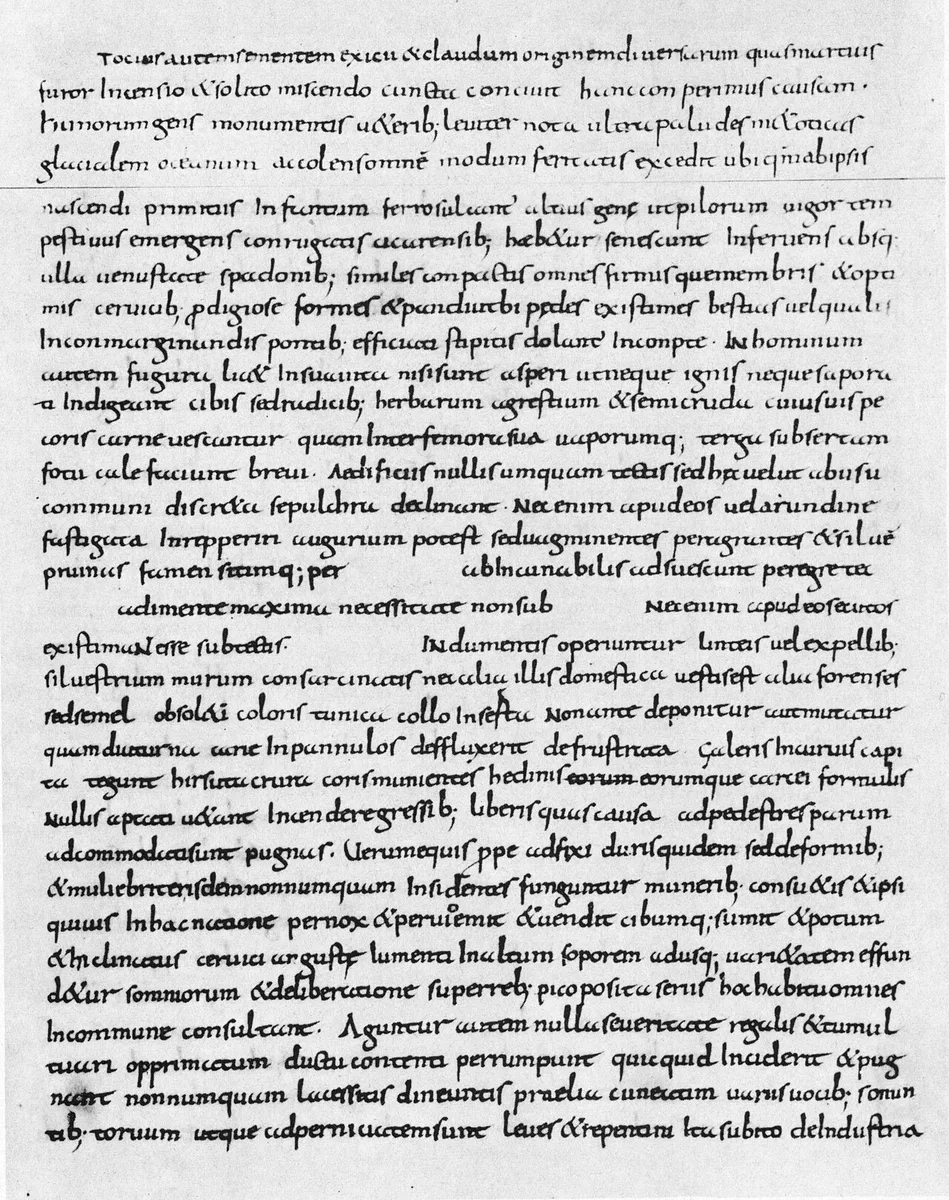
Totius autem sementem exitii et cladum originem diversarum, quas Martius furor incendio insolito miscendo cuncta concivit, hanc comperimus causam.
Hunorum gens monumentis veteribus leviter nota, ultra paludes Maeoticas glacialem oceanum accolens, omnem modum feritatis excedit.
Ubi quoniam ab ipsis nascendi primitiis infantum ferro sulcantur altius genae, ut pilorum vigor tempestivus emergens, corrugatis cicatricibus hebetetur, senescunt imberbes absque ulla venustate, spadonibus similes,
compactis omnes firmisque membris et opimis cervicibus, prodigiose deformes et pandi, ut bipedes existimes bestias, vel quales in commarginandis pontibus effigiati stipites dolantur incompte.
The seed of all the ruin and the origin of the various disasters that the fury of Mars stirred up, throwing everything into confusion with unwonted fire, we have found to be this.
The people of the Huns, little known from ancient records, living beyond the Maeotic marshes next to the icy ocean, exceeds every measure of savagery.
Since among them the cheeks of infants are cut deeply with iron from the very first days of life, so that the vigour of the hair, coming up in due time, is blunted by the wrinkled scars, they grow old beardless and without any grace, like eunuchs,
all with compact, strong limbs and thick necks, monstrously ugly and bowed, so that you would take them for two-legged beasts, or for the figured stumps that are crudely hewn for the edges of bridges.
[43] Ammianus Marcellinus; Rolfe 1939, xxxi.2.1–2, p. 380–381
Nemo apud eos arat nec stivam aliquando contingit.
Omnes enim sine sedibus fixis, absque lare vel lege aut victu stabili dispalantur, semper fugientium similes, cum carpentis in quibus habitant:
ubi coniuges taetra illis vestimenta contexunt, et coeunt cum maritis, et pariunt, et ad usque pubertatem nutriunt pueros.
Nullusque apud eos interrogatus respondere unde oritur potest, alibi conceptus natusque procul, et longius educatus.
Per indutias infidi et inconstantes, ad omnem auram incidentis spei novae perquam mobiles, totum furori incitatissimo tribuentes.
Inconsultorum animalium ritu, quid honestum inhonestumve sit, penitus ignorantes, flexiloqui et obscuri, nullius religionis vel superstitionis reverentia aliquando districti,
auri cupidine immensa flagrantes, adeo permutabiles et irasci faciles ut eodem aliquotiens die a sociis nullo irritante desciscant, itidemque propitientur, nemine leniente.
No one among them ploughs, and none ever touches a plough-handle.
For they all wander without fixed abodes, without hearth or law or settled way of life, always like fugitives, with the wagons in which they live.
There their wives weave for them their hideous garments, and lie with their husbands, and bear children, and rear the boys to puberty.
And no one among them, if asked, can say where he comes from, for he was conceived in one place, born far from it, and brought up still farther away.
In truces they are faithless and unstable, very ready to move at every breath of a new hope that presents itself, giving everything over to their most excited rage.
Like thoughtless animals, wholly ignorant what is honourable or dishonourable, ambiguous and obscure in speech, never held in check by reverence for any religion or superstition,
They burn with an immense desire for gold, and are so changeable and quick to anger that several times in one day they break away from their allies with no one provoking them, and are reconciled in the same way, with no one soothing them.
[44] Ammianus Marcellinus; Rolfe 1939, xxxi.2.10–11, p. 385–387
In hominum autem figura licet insuavi ita victu sunt asperi, ut neque igni neque saporatis indigeant cibis,
sed radicibus herbarum agrestium et semicruda cuiusvis pecoris carne vescantur, quam inter femora sua equorumque terga subsertam fotu calefaciunt brevi.
Aedificiis nullis umquam tecti, sed haec velut ab usu communi discreta sepulcra declinant.
Nec enim apud eos vel arundine fastigatum reperiri tugurium potest.
Indumentis operiuntur linteis vel ex pellibus silvestrium murum consarcinatis; nec alia illis domestica vestis est, alia forensis.
Sed semel obsoleti coloris tunica collo inserta non ante deponitur aut mutatur, quam diuturna carie in pannulos diffluxerit defrustata.
But although they have the form of men, however ugly, they are so rough in their way of life that they need neither fire nor seasoned food,
They live on the roots of wild plants and on the half-raw flesh of any kind of cattle, which they put between their own thighs and the backs of their horses and warm for a short while with the heat.
They are never covered by any buildings, but avoid them like tombs set apart from common use.
For among them not even a hut roofed with reed can be found.
They cover themselves with clothing of linen or of the skins of wild mice sewn together, and they have no one dress for the house and another for outdoors.
But once a tunic of faded colour has been pulled over the neck, it is not taken off or changed until, worn away by long decay, it has fallen into little rags.
[45] Ammianus Marcellinus; Rolfe 1939, xxxi.2.3–5, p. 381–383
Ex ipsis quivis in hac natione pernox et perdius emit et vendit, cibumque sumit et potum, et inclinatus cervici angustae iumenti, in altum soporem ad usque varietatem effunditur somniorum.
Et deliberatione super rebus propositis seriis, hoc habitu omnes in commune consultant.
Aguntur autem nulla severitate regali, sed tumultuario primatum ductu contenti, perrumpunt quicquid inciderit.
Any one of them in this nation, by night and by day, buys and sells, takes food and drink, and, bent over the narrow neck of his beast, sinks into so deep a sleep that it runs on into a variety of dreams.
And when deliberation is held on weighty matters put before them, they all consult in common in this posture.
They are led by no royal strictness, but, content with the disorderly leadership of their chief men, they break through whatever stands in their way.
[11] Ammianus Marcellinus; Rolfe 1939, xxxi.2.6–7, p. 383–385
Igitur Huni pervasis Halanorum regionibus, quos Greuthungis confines Tanaitas consuetudo cognominavit, interfectisque multis et spoliatis, reliquos sibi concordandi fide pacta iunxerunt,
eisque adhibitis confidentius Ermenrichi late patentes et uberes pagos repentino impetu perruperunt, bellicosissimi regis, et per multa variaque fortiter facta, vicinis nationibus formidati.
Qui vi subitae procellae perculsus, quamvis manere fundatus et stabilis diu conatus est, impendentium tamen diritatem augente vulgatius fama, magnorum discriminum metum voluntaria morte sedavit.
Cuius post obitum, rex Vithimiris creatus, restitit aliquantisper Halanis, Hunis aliis fretus, quos mercede sociaverat partibus suis.
Verum post multas quas pertulit clades, animam effudit in proelio, vi superatus armorum.
The Huns, then, having overrun the territories of those Halani who border on the Greuthungi and whom usage has surnamed Tanaites, and having killed and plundered many of them, joined the rest to themselves by a pledge of agreement,
and with these joined to them they broke more boldly, in a sudden onslaught, into the wide and rich districts of Ermenrichus, a most warlike king, dreaded by the neighbouring nations for his many and varied deeds of valour.
Struck by the force of the sudden storm, he tried for a long time to stand firm and steady, but as rumour spread more widely and heightened the dreadfulness of what threatened, he ended his fear of great perils by a voluntary death.
After his death Vithimiris was made king and resisted the Halani for a time, relying on other Huns whom he had allied to his side for pay.
But after many defeats that he suffered, he poured out his life in battle, overcome by force of arms.
[46] Ammianus Marcellinus; Rolfe 1939, xxxi.3.1–3, p. 395–397
Izohlar
- ^ a b c Ammianus Marcellinus; Rolfe 1939, xxxi.16.9, p. 505
- ^ a b c Maenchen-Helfen 1973, p. 1
- ^ Maenchen-Helfen 1973, p. 11, 13
- ^ Maenchen-Helfen 1973, p. 10
- ^ Ammianus Marcellinus; Rolfe 1939, xxxi.2.1, p. 381
- ^ a b Ammianus Marcellinus; Rolfe 1939, xxxi.2.2, p. 381
- ^ Ammianus Marcellinus; Rolfe 1939, xxxi.2.3, p. 381–383
- ^ Ammianus Marcellinus; Rolfe 1939, xxxi.2.4, p. 383
- ^ Ammianus Marcellinus; Rolfe 1939, xxxi.2.5, p. 383
- ^ Ammianus Marcellinus; Rolfe 1939, xxxi.2.6, p. 383
- ^ a b Ammianus Marcellinus; Rolfe 1939, xxxi.2.6–7, p. 383–385
- ^ Ammianus Marcellinus; Rolfe 1939, xxxi.2.7, p. 383–385
- ^ Ammianus Marcellinus; Rolfe 1939, xxxi.2.8, p. 385
- ^ Ammianus Marcellinus; Rolfe 1939, xxxi.2.9, p. 385
- ^ Ammianus Marcellinus; Rolfe 1939, xxxi.2.10, p. 385–387
- ^ a b Ammianus Marcellinus; Rolfe 1939, xxxi.2.11, p. 387
- ^ Ammianus Marcellinus; Rolfe 1939, xxxi.2.12, p. 387
- ^ Ammianus Marcellinus; Rolfe 1939, xxxi.2.13, p. 387–389
- ^ Ammianus Marcellinus; Rolfe 1939, xxxi.2.18, 21, p. 391–393
- ^ Ammianus Marcellinus; Rolfe 1939, xxxi.2.23–24, p. 393–395
- ^ a b Ammianus Marcellinus; Rolfe 1939, xxxi.3.1, p. 395–397
- ^ Ammianus Marcellinus; Rolfe 1939, xxxi.3.2, p. 397
- ^ Ammianus Marcellinus; Rolfe 1939, xxxi.3.3, p. 397
- ^ Ammianus Marcellinus; Rolfe 1939, xxxi.3.4–5, p. 397–399
- ^ Ammianus Marcellinus; Rolfe 1939, xxxi.3.6–7, p. 399
- ^ Ammianus Marcellinus; Rolfe 1939, xxxi.3.8, p. 399–401
- ^ Maenchen-Helfen 1973, p. 20
- ^ Ammianus Marcellinus; Rolfe 1939, xxxi.8.2–4, p. 437
- ^ Ammianus Marcellinus; Rolfe 1939, xxxi.16.3, p. 501
- ^ Ammianus Marcellinus; Rolfe 1939, xxxi.12.17, p. 471–473
- ^ a b Maenchen-Helfen 1973, p. 11
- ^ Ammianus Marcellinus; Rolfe 1939, xxxi.3.5, p. 397–399
- ^ Maenchen-Helfen 1973, p. 13–15
- ^ Maenchen-Helfen 1973, p. 13
- ^ Maenchen-Helfen 1973, p. 12
- ^ Rolfe 1939, p. 382
- ^ Rolfe 1939, p. 380
- ^ Maenchen-Helfen 1973, p. 15
- ^ Maenchen-Helfen 1973, p. 17
- ^ Maenchen-Helfen 1973, p. 9, 15
- ^ Maenchen-Helfen 1973, p. 16
- ^ Rolfe 1939
- ^ Ammianus Marcellinus; Rolfe 1939, xxxi.2.1–2, p. 380–381
- ^ Ammianus Marcellinus; Rolfe 1939, xxxi.2.10–11, p. 385–387
- ^ Ammianus Marcellinus; Rolfe 1939, xxxi.2.3–5, p. 381–383
- ^ Ammianus Marcellinus; Rolfe 1939, xxxi.3.1–3, p. 395–397
Adabiyot
- John C. Rolfe, Ammianus Marcellinus, with an English Translation, vol. III: Books XXVII–XXXI (1939)
- Otto J. Maenchen-Helfen, The World of the Huns: Studies in Their History and Culture (1973)
Drawn on by
Articles resting on this source 15
Alanlar · Balamber · Suyak va shox bilan ishlash · Gotlar · Hermanaric · Hunlarning gotlarni zabt etishi · Hun imperiyasi · Hunlar · Jordanes · Tariq · Kurak suyagi bilan fol ochish · Dasht ozigʻi · Mars qilichi · Hunlar va xunnlar (Xiongnu) · Dasht xalqlarining aravalari
Bu yerga havolalar13
- Shaxslar
- Balamber · Hermanaric
- States
- Hun imperiyasi
- Conflicts
- Hunlarning gotlarni zabt etishi
- Institutions and Titles
- Suyak va shox bilan ishlash · Dasht xalqlarining aravalari
- Religions
- Mars qilichi
- Foods
- Dasht ozigʻi
- Sources
- Jordanes
- Controversies
- Hunlar va xunnlar (Xiongnu)
Maqoladan iqtibos olish
Yavuz, Emre-E. “Ammianus Marcellinus.” Turkic Atlas, revised 18 November 2026. https://turkicatlas.org/sources/ammianus-marcellinus/
Last revised: 18 November 2026


