
- 400
- 500
- 600
- 700
- 800
- 900
- Rouran 400–554
- First Göktürk 552–630
- Tang rule 630–682
- Second Göktürk 682–744
- Uyghur 744–840
- Kirghiz 840–924
- Huns 370–469
- Western Göktürk 552–659
- Түргештер 699–766
- Қарлұқтар 766–800
- Khazar 650–969
Аммиан Марцеллин Рим империясының тарихын латын тілінде жазды. Ол Нерва билігінен 378 жылы Адрианопольде император Валенттің өліміне дейін жетеді.[1] Оның соңғы кітабы сол заманның кез келген жазушысы берген ғұндардың алғашқы толық сипаттамасымен ашылады. Сол кітап ғұндардың Қара теңізден солтүстікте аландарды және готтарды талқандаған соғысын баяндайды.[2] Төртінші ғасырдың басқа ешбір дереккөзі ғұндарға мұншалықты жақыннан қараған жоқ.[2]
Автор
Еңбектің соңында Аммиан өзін «бұрынғы сарбаз және грек» деп атайды.[1] Ол Антиохиядан шықты. 378 жылға дейін біраз уақыт бұрын ол Римге барды және өмірінің қалған бөлігін сонда өткізді.[3] Ол шамамен 330 жылдан шамамен 400 жылға дейін өмір сүрді.[2] Тарихты ол ықтимал 392–393 жылдың қысында аяқтады. Ол кезде шығыс императоры Феодосий мен батыс тақ иеленушісі Евгений арасында соғыс жақындап келе жатты, және ғұн атты әскерлері шығыс әскерінде тағы қызмет етпек еді.[4] Ол Валенттен кейінгі оқиғаларды «өмірінің гүлденген шағындағы, білімі мен қабілеті зор адамдарға» қалдырып аяқтайды.[1]
Ғұндар тарауы
Аммиан себеп туралы мәлімдемеден бастайды. Келесі соғыстың барлық апатының тұқымы, деп жазады ол, «көне жазбалардан әрең белгілі» ғұндар халқы болды. Олар Азов теңізінің арғы жағында, қатқан мұхиттың жанында өмір сүрді және жабайылықтың барлық өлшемінен асып түсті.[5] Туғаннан бастап балалардың беттері темірмен терең тілінді, сақал өскенде тыртықтар оның ұшын мұқатсын деп. Сондықтан ер адамдар сақалсыз қартайды.[6] Олардың мүшелері тығыз әрі мықты, мойындары жуан болды.[6] Олар жабайы өсімдіктердің тамырларын және кез келген жануардың жартылай шикі етін жеді. Олар етті сандары мен жылқыларының арқасының арасына салып, аздап жылытты.[7]
Олардың үйлері болмады және төбеден қашты, адамдар молалардан қашатындай.[8] Олар зығыр матадан немесе дала тышқандарының тігілген терілерінен киім киді. Олар туника ыдырап кеткенше киді.[9] Олар домалақ тымақ және аяқтарына ешкі терісін киді. Аяқ киімдері оларды жаяу соғыста нашар жауынгер етті.[10] Олар жылқыларына дерлік бекітіліп қойғандай болды, олар төзімді, бірақ келбетсіз еді. Ат үстінде олар сатты және сатып алды, жеді және ішті, кеңес құрды және ұйықтады.[11] Оларды ешбір патша билемеді. Олар басшы адамдарының жетекшілігімен жүрді.[12]
Олар шайқасқа сына тәрізді шеп құрып, жабайы дыбыспен кірді. Олар әдейі тарап кетіп, сосын қайта соққы беріп, көп қырғын жасады.[13] Алыстан олар үшкір сүйекпен ұшталған снарядтармен, ал жақыннан семсермен соғысты. Олар сондай-ақ жауларын байлау үшін олардың үстіне бұралған мата жолақтарын лақтырды.[14] Олардың арасында ешкім жер жыртпады. Олар арбаларда өмір сүрді, онда әйелдер киімдерін тоқыды, балаларын тудырып, өсірді.[15] Олар бітімде сатқын болды және ешбір дінге байланбады. Олар алтынға шексіз құштарлықпен жанды.[16]
Тарау аландарға ауысады, оларды Аммиан ескі массагеттер деп атайды.[17] Ол олардың атын өздері жеңіп, өз қол астына тартқан көптеген халықтың ортақ атауы етеді.[18] Аландар қабықпен жабылған арбаларда өмір сүрді және ет пен сүтпен қоректенді. Олар ұзын бойлы және сұлу, ашық шашты еді. Олар ғұндарға бәрінде ұқсас, бірақ тұрмыс салтында жұмсағырақ еді.[19] Олар жерге қадалған жалаңаш семсерге соғыс құдайы ретінде табынды. Олар болашақты тал шыбықтармен болжады.[20] Бұл әдеттер — аландардікі. Ғұндар туралы Аммиан олардың мүлде діні болмағанын айтады.[16]
Готтармен соғыс
Келесі тарау ғұндардың Танаис деп аталатын Дондағы аландарды қалай басып алғанын баяндайды. Олар көп адамды өлтіріп, аман қалғандарды келісіммен өзіне қосты.[21] Аландармен бірге олар өте соғыс сүйгіш патша Эрменрихтің кең және бай жерлеріне бұзып кірді. Эрменрих — готтар дәстүріндегі Германарих.[21] Ол біраз уақыт қарсы тұрды, сосын өз еркімен өліп, қорқынышын тоқтатты.[22] Оның мұрагері Витимир өзі жалдаған басқа ғұндардың көмегімен ол шайқаста құлағанша аландарға қарсы тұрды. Сосын қолбасшылар Алатей мен Сафрак оның кішкентай ұлының атынан грейтунгтерді Днестрге қайта бастады.[23]
Тервингтердің төрешісі Атанарих Днестрде қонып, жиырма миль алға барлаушы жіберді.[24] Ғұндар барлаушыларды айналып өтіп, өзеннен ай сәулесінде өткел арқылы өтті. Олар Атанарихтің өзіне тиді, ол тауларға қашты және Герас өзенінен Дунайға дейін қорған сала бастады.[25] Готтар арасында жердің жасырын бұрышынан бұрын-соңды көрінбеген адамдар тайпасы шықты деген қауесет тарады. Олардың көп бөлігі пана үшін Дунайдың арғы жағындағы Фракияға қарады.[26] Кітап мұның бірде-біріне жыл бермейді. Германарихке шабуыл әдетте 375 жылға қойылады, бірақ оның күнін анықтау мүмкін емес.[27]
Ғұндар тағы екі рет көрінеді. 377 жылдың күзінде готтар Рим провинциялары Скифия мен Мёзияда қатты қысылды. Олар бай олжа үмітімен кейбір ғұндар мен аландарды өз жағына тартты.[28] Адрианопольден кейін ғұндар мен аландармен қосылған готтар Перинф алдында қонды.[29] Адрианопольдің өзінде Аммиан готтардың атты әскерімен бірге аландар тобын атайды, ғұндарды атамайды.[30]
Куә ретіндегі құны
Аммиан ғұнды көргенін айтпайды. Ол ғұндар мен аландар туралы материалды оқылған немесе естілген деп белгілейді. 31-кітапта ол он бір готтар басшысын атайды және бірде-бір ғұнды атамайды.[31] Оның Дунайдан солтүстіктегі соғыс туралы баяндауы көбіне готтардың өзіне айтқанына сүйенеді. Оның хабар берушілерінің бірі Днестрде ғұндармен соғысқан және кейін Арабия шекарасының қолбасшысы болған Мундерих болуы мүмкін.[31][32]
Ол ғұндарды скифтер мен парфяндар туралы ескі жазушылардан алынған тіркестермен сипаттады. Помпей Трог оған жер жыртпайтын және үй ұстамайтын халықты, және барлық ісін ат үстінде жүргізетін көшпенділерді берді. Помпоний Мела оған жартылай шикі етті берді.[33] Ол сүйек ұшты снарядтармен ерекшелікті ереже етті, өйткені белгілі ғұн жебе ұштары темірден.[34] Оның патшасыз ғұндары Германарих патшалығын талқандаған халық туралы өз баяндауына сай келмейді.[35]
Ең танымал егжей-тегжейлердің екеуі мәтіннің оқылуына байланысты. Басылымдар жылқылардың арқасын басатын жерде, негізгі қолжазбада басқа сөз тұр. «Жылқылар» — кейінгі қолжазбаның оқуы.[36] Ғұндардың қисық аяқтары бір оқуға байланысты. Бір мәтін оны қабылдайды, ал басқасы қабылдамайды.[37]
Қазіргі баяндаулар оны әлі де өз заманының ең жақсы баяндауы деп бағалайды. Ол ғұндардың қандай көрінгенін және қалай киінгенін айтады. Ол олардың жылқыларын, қаруын, тактикасын және арбаларын кез келген жазушыдай дәл сипаттайды.[38] Иордан мен Аммиан готтар мен ғұндар арасындағы соғыс туралы келіспеген жерде, қазіргі баяндаулар Аммианды ұстанады.[39]
Кейінгі қолданысы
Евнапий ғұндар сипаттамасының жартысын Аммианнан алды. Иеронимнің жартылай шикі еті де Аммианға барып тіреледі.[40] Кассиодор жоғалған және Иордан арқылы сақталған готтар тарихын жазды. Ол тілінген беттерді көшіріп алды және олардың мақсатын өзгертті. Оның нұсқасында балалар сүт татпай тұрып жараға төзуді үйренуі тиіс болды.[41]
Басылымдар
31-кітаптың латынша мәтіні аппаратсыз транскриптте оқылады. Оның жанында Loeb Classical Library-дегі Джон К. Рольфтың басылымы тұр. Оның 1939 жылғы үшінші томы 27–31-кітаптарды Кларктың мәтінімен және ағылшынша аудармамен басып шығарады.[42]
The passage
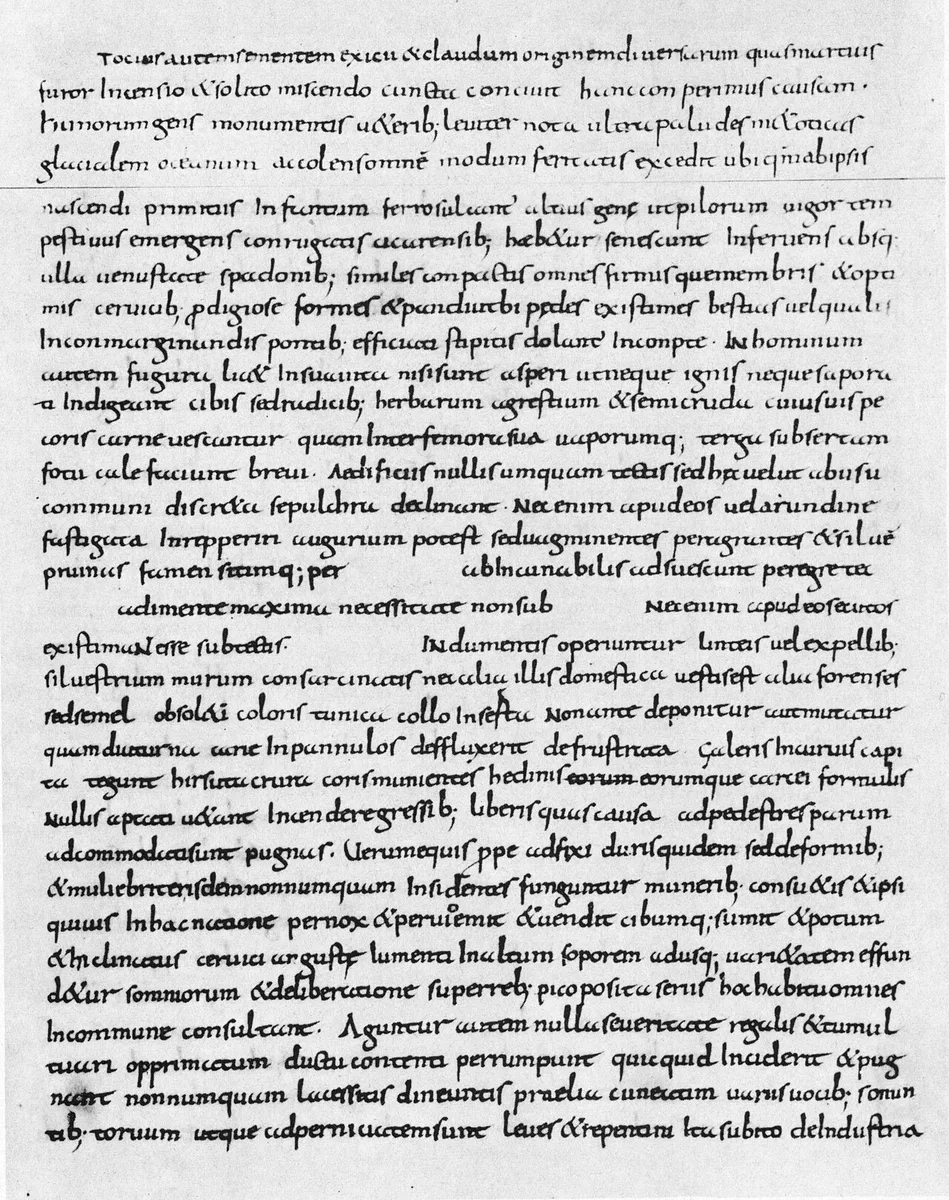
Totius autem sementem exitii et cladum originem diversarum, quas Martius furor incendio insolito miscendo cuncta concivit, hanc comperimus causam.
Hunorum gens monumentis veteribus leviter nota, ultra paludes Maeoticas glacialem oceanum accolens, omnem modum feritatis excedit.
Ubi quoniam ab ipsis nascendi primitiis infantum ferro sulcantur altius genae, ut pilorum vigor tempestivus emergens, corrugatis cicatricibus hebetetur, senescunt imberbes absque ulla venustate, spadonibus similes,
compactis omnes firmisque membris et opimis cervicibus, prodigiose deformes et pandi, ut bipedes existimes bestias, vel quales in commarginandis pontibus effigiati stipites dolantur incompte.
The seed of all the ruin and the origin of the various disasters that the fury of Mars stirred up, throwing everything into confusion with unwonted fire, we have found to be this.
The people of the Huns, little known from ancient records, living beyond the Maeotic marshes next to the icy ocean, exceeds every measure of savagery.
Since among them the cheeks of infants are cut deeply with iron from the very first days of life, so that the vigour of the hair, coming up in due time, is blunted by the wrinkled scars, they grow old beardless and without any grace, like eunuchs,
all with compact, strong limbs and thick necks, monstrously ugly and bowed, so that you would take them for two-legged beasts, or for the figured stumps that are crudely hewn for the edges of bridges.
[43] Аммиан Марцеллин; Rolfe 1939, xxxi.2.1–2, p. 380–381
Nemo apud eos arat nec stivam aliquando contingit.
Omnes enim sine sedibus fixis, absque lare vel lege aut victu stabili dispalantur, semper fugientium similes, cum carpentis in quibus habitant:
ubi coniuges taetra illis vestimenta contexunt, et coeunt cum maritis, et pariunt, et ad usque pubertatem nutriunt pueros.
Nullusque apud eos interrogatus respondere unde oritur potest, alibi conceptus natusque procul, et longius educatus.
Per indutias infidi et inconstantes, ad omnem auram incidentis spei novae perquam mobiles, totum furori incitatissimo tribuentes.
Inconsultorum animalium ritu, quid honestum inhonestumve sit, penitus ignorantes, flexiloqui et obscuri, nullius religionis vel superstitionis reverentia aliquando districti,
auri cupidine immensa flagrantes, adeo permutabiles et irasci faciles ut eodem aliquotiens die a sociis nullo irritante desciscant, itidemque propitientur, nemine leniente.
No one among them ploughs, and none ever touches a plough-handle.
For they all wander without fixed abodes, without hearth or law or settled way of life, always like fugitives, with the wagons in which they live.
There their wives weave for them their hideous garments, and lie with their husbands, and bear children, and rear the boys to puberty.
And no one among them, if asked, can say where he comes from, for he was conceived in one place, born far from it, and brought up still farther away.
In truces they are faithless and unstable, very ready to move at every breath of a new hope that presents itself, giving everything over to their most excited rage.
Like thoughtless animals, wholly ignorant what is honourable or dishonourable, ambiguous and obscure in speech, never held in check by reverence for any religion or superstition,
They burn with an immense desire for gold, and are so changeable and quick to anger that several times in one day they break away from their allies with no one provoking them, and are reconciled in the same way, with no one soothing them.
[44] Аммиан Марцеллин; Rolfe 1939, xxxi.2.10–11, p. 385–387
In hominum autem figura licet insuavi ita victu sunt asperi, ut neque igni neque saporatis indigeant cibis,
sed radicibus herbarum agrestium et semicruda cuiusvis pecoris carne vescantur, quam inter femora sua equorumque terga subsertam fotu calefaciunt brevi.
Aedificiis nullis umquam tecti, sed haec velut ab usu communi discreta sepulcra declinant.
Nec enim apud eos vel arundine fastigatum reperiri tugurium potest.
Indumentis operiuntur linteis vel ex pellibus silvestrium murum consarcinatis; nec alia illis domestica vestis est, alia forensis.
Sed semel obsoleti coloris tunica collo inserta non ante deponitur aut mutatur, quam diuturna carie in pannulos diffluxerit defrustata.
But although they have the form of men, however ugly, they are so rough in their way of life that they need neither fire nor seasoned food,
They live on the roots of wild plants and on the half-raw flesh of any kind of cattle, which they put between their own thighs and the backs of their horses and warm for a short while with the heat.
They are never covered by any buildings, but avoid them like tombs set apart from common use.
For among them not even a hut roofed with reed can be found.
They cover themselves with clothing of linen or of the skins of wild mice sewn together, and they have no one dress for the house and another for outdoors.
But once a tunic of faded colour has been pulled over the neck, it is not taken off or changed until, worn away by long decay, it has fallen into little rags.
[45] Аммиан Марцеллин; Rolfe 1939, xxxi.2.3–5, p. 381–383
Ex ipsis quivis in hac natione pernox et perdius emit et vendit, cibumque sumit et potum, et inclinatus cervici angustae iumenti, in altum soporem ad usque varietatem effunditur somniorum.
Et deliberatione super rebus propositis seriis, hoc habitu omnes in commune consultant.
Aguntur autem nulla severitate regali, sed tumultuario primatum ductu contenti, perrumpunt quicquid inciderit.
Any one of them in this nation, by night and by day, buys and sells, takes food and drink, and, bent over the narrow neck of his beast, sinks into so deep a sleep that it runs on into a variety of dreams.
And when deliberation is held on weighty matters put before them, they all consult in common in this posture.
They are led by no royal strictness, but, content with the disorderly leadership of their chief men, they break through whatever stands in their way.
[11] Аммиан Марцеллин; Rolfe 1939, xxxi.2.6–7, p. 383–385
Igitur Huni pervasis Halanorum regionibus, quos Greuthungis confines Tanaitas consuetudo cognominavit, interfectisque multis et spoliatis, reliquos sibi concordandi fide pacta iunxerunt,
eisque adhibitis confidentius Ermenrichi late patentes et uberes pagos repentino impetu perruperunt, bellicosissimi regis, et per multa variaque fortiter facta, vicinis nationibus formidati.
Qui vi subitae procellae perculsus, quamvis manere fundatus et stabilis diu conatus est, impendentium tamen diritatem augente vulgatius fama, magnorum discriminum metum voluntaria morte sedavit.
Cuius post obitum, rex Vithimiris creatus, restitit aliquantisper Halanis, Hunis aliis fretus, quos mercede sociaverat partibus suis.
Verum post multas quas pertulit clades, animam effudit in proelio, vi superatus armorum.
The Huns, then, having overrun the territories of those Halani who border on the Greuthungi and whom usage has surnamed Tanaites, and having killed and plundered many of them, joined the rest to themselves by a pledge of agreement,
and with these joined to them they broke more boldly, in a sudden onslaught, into the wide and rich districts of Ermenrichus, a most warlike king, dreaded by the neighbouring nations for his many and varied deeds of valour.
Struck by the force of the sudden storm, he tried for a long time to stand firm and steady, but as rumour spread more widely and heightened the dreadfulness of what threatened, he ended his fear of great perils by a voluntary death.
After his death Vithimiris was made king and resisted the Halani for a time, relying on other Huns whom he had allied to his side for pay.
But after many defeats that he suffered, he poured out his life in battle, overcome by force of arms.
[46] Аммиан Марцеллин; Rolfe 1939, xxxi.3.1–3, p. 395–397
Ескертпелер
- ^ a b c Аммиан Марцеллин; Rolfe 1939, xxxi.16.9, p. 505
- ^ a b c Maenchen-Helfen 1973, p. 1
- ^ Maenchen-Helfen 1973, p. 11, 13
- ^ Maenchen-Helfen 1973, p. 10
- ^ Аммиан Марцеллин; Rolfe 1939, xxxi.2.1, p. 381
- ^ a b Аммиан Марцеллин; Rolfe 1939, xxxi.2.2, p. 381
- ^ Аммиан Марцеллин; Rolfe 1939, xxxi.2.3, p. 381–383
- ^ Аммиан Марцеллин; Rolfe 1939, xxxi.2.4, p. 383
- ^ Аммиан Марцеллин; Rolfe 1939, xxxi.2.5, p. 383
- ^ Аммиан Марцеллин; Rolfe 1939, xxxi.2.6, p. 383
- ^ a b Аммиан Марцеллин; Rolfe 1939, xxxi.2.6–7, p. 383–385
- ^ Аммиан Марцеллин; Rolfe 1939, xxxi.2.7, p. 383–385
- ^ Аммиан Марцеллин; Rolfe 1939, xxxi.2.8, p. 385
- ^ Аммиан Марцеллин; Rolfe 1939, xxxi.2.9, p. 385
- ^ Аммиан Марцеллин; Rolfe 1939, xxxi.2.10, p. 385–387
- ^ a b Аммиан Марцеллин; Rolfe 1939, xxxi.2.11, p. 387
- ^ Аммиан Марцеллин; Rolfe 1939, xxxi.2.12, p. 387
- ^ Аммиан Марцеллин; Rolfe 1939, xxxi.2.13, p. 387–389
- ^ Аммиан Марцеллин; Rolfe 1939, xxxi.2.18, 21, p. 391–393
- ^ Аммиан Марцеллин; Rolfe 1939, xxxi.2.23–24, p. 393–395
- ^ a b Аммиан Марцеллин; Rolfe 1939, xxxi.3.1, p. 395–397
- ^ Аммиан Марцеллин; Rolfe 1939, xxxi.3.2, p. 397
- ^ Аммиан Марцеллин; Rolfe 1939, xxxi.3.3, p. 397
- ^ Аммиан Марцеллин; Rolfe 1939, xxxi.3.4–5, p. 397–399
- ^ Аммиан Марцеллин; Rolfe 1939, xxxi.3.6–7, p. 399
- ^ Аммиан Марцеллин; Rolfe 1939, xxxi.3.8, p. 399–401
- ^ Maenchen-Helfen 1973, p. 20
- ^ Аммиан Марцеллин; Rolfe 1939, xxxi.8.2–4, p. 437
- ^ Аммиан Марцеллин; Rolfe 1939, xxxi.16.3, p. 501
- ^ Аммиан Марцеллин; Rolfe 1939, xxxi.12.17, p. 471–473
- ^ a b Maenchen-Helfen 1973, p. 11
- ^ Аммиан Марцеллин; Rolfe 1939, xxxi.3.5, p. 397–399
- ^ Maenchen-Helfen 1973, p. 13–15
- ^ Maenchen-Helfen 1973, p. 13
- ^ Maenchen-Helfen 1973, p. 12
- ^ Rolfe 1939, p. 382
- ^ Rolfe 1939, p. 380
- ^ Maenchen-Helfen 1973, p. 15
- ^ Maenchen-Helfen 1973, p. 17
- ^ Maenchen-Helfen 1973, p. 9, 15
- ^ Maenchen-Helfen 1973, p. 16
- ^ Rolfe 1939
- ^ Аммиан Марцеллин; Rolfe 1939, xxxi.2.1–2, p. 380–381
- ^ Аммиан Марцеллин; Rolfe 1939, xxxi.2.10–11, p. 385–387
- ^ Аммиан Марцеллин; Rolfe 1939, xxxi.2.3–5, p. 381–383
- ^ Аммиан Марцеллин; Rolfe 1939, xxxi.3.1–3, p. 395–397
Әдебиет
- John C. Rolfe, Ammianus Marcellinus, with an English Translation, vol. III: Books XXVII–XXXI (1939)
- Otto J. Maenchen-Helfen, The World of the Huns: Studies in Their History and Culture (1973)
Drawn on by
Articles resting on this source 15
Аландар · Баламбер · Сүйек пен мүйізді өңдеу · Готтар · Германарик · Ғұндардың готтарды бағындыруы · Ғұн империясы · Ғұндар · Иордан · Тары · Жауырынмен бал ашу · Дала тағамы · Марстың қылышы · Ғұндар және сюнну · Дала халықтарының арбалары
Осы бетке сілтемелер13
- Тұлғалар
- Баламбер · Германарик
- States
- Ғұн империясы
- Conflicts
- Ғұндардың готтарды бағындыруы
- Institutions and Titles
- Сүйек пен мүйізді өңдеу · Дала халықтарының арбалары
- Religions
- Марстың қылышы
- Foods
- Дала тағамы
- Sources
- Иордан
- Controversies
- Ғұндар және сюнну
Мақаладан дәйексөз алу
Yavuz, Emre-E. “Аммиан Марцеллин.” Turkic Atlas, revised 18 November 2026. https://turkicatlas.org/sources/ammianus-marcellinus/
Last revised: 18 November 2026


