
In 744 the Uyghurs, one of the Nine Oguz, overthrew the last khan of the Göktürks and for a century were the power of the eastern steppe. In 840 the Kirghiz came down from the Yenisei and burned their capital. The Kirghiz khaganate that began that year is dated to about 924. The path follows the two khaganates in eight steps, from the founder of the Uyghur state to the Kirghiz khan who ended it.
1/8
Uyghur Khaganate
744–840
The people who took the steppe after the Göktürks.
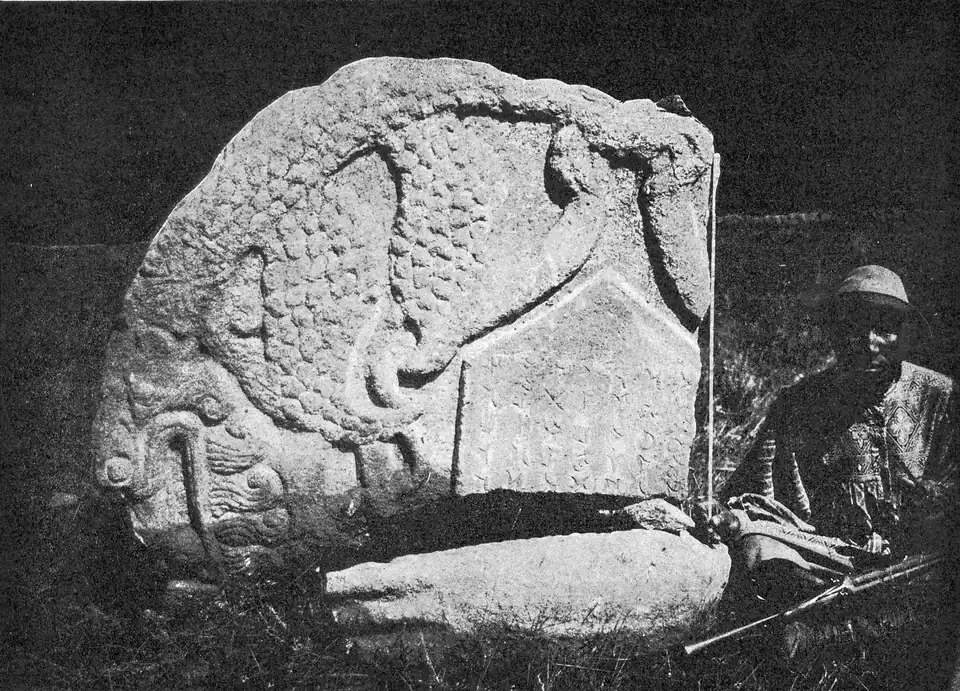
The Uyghurs were one of the Tiele peoples, the Nine Oguz of the inscriptions. In 744 their leader Kutlug Bilge Kül, with his allies the Basmïl and the Karluk, overthrew the last khan of the Second Göktürk Khaganate. From a walled capital on the Orkhon the Uyghurs ruled the eastern steppe until 840. That year the Kirghiz came down from the Yenisei with a hundred thousand horse, killed the khan and burnt the court.
 Uyghur Khaganate
2/8
Kutlug Bilge Kül Khan
744–747
The founder, who ruled for three years.
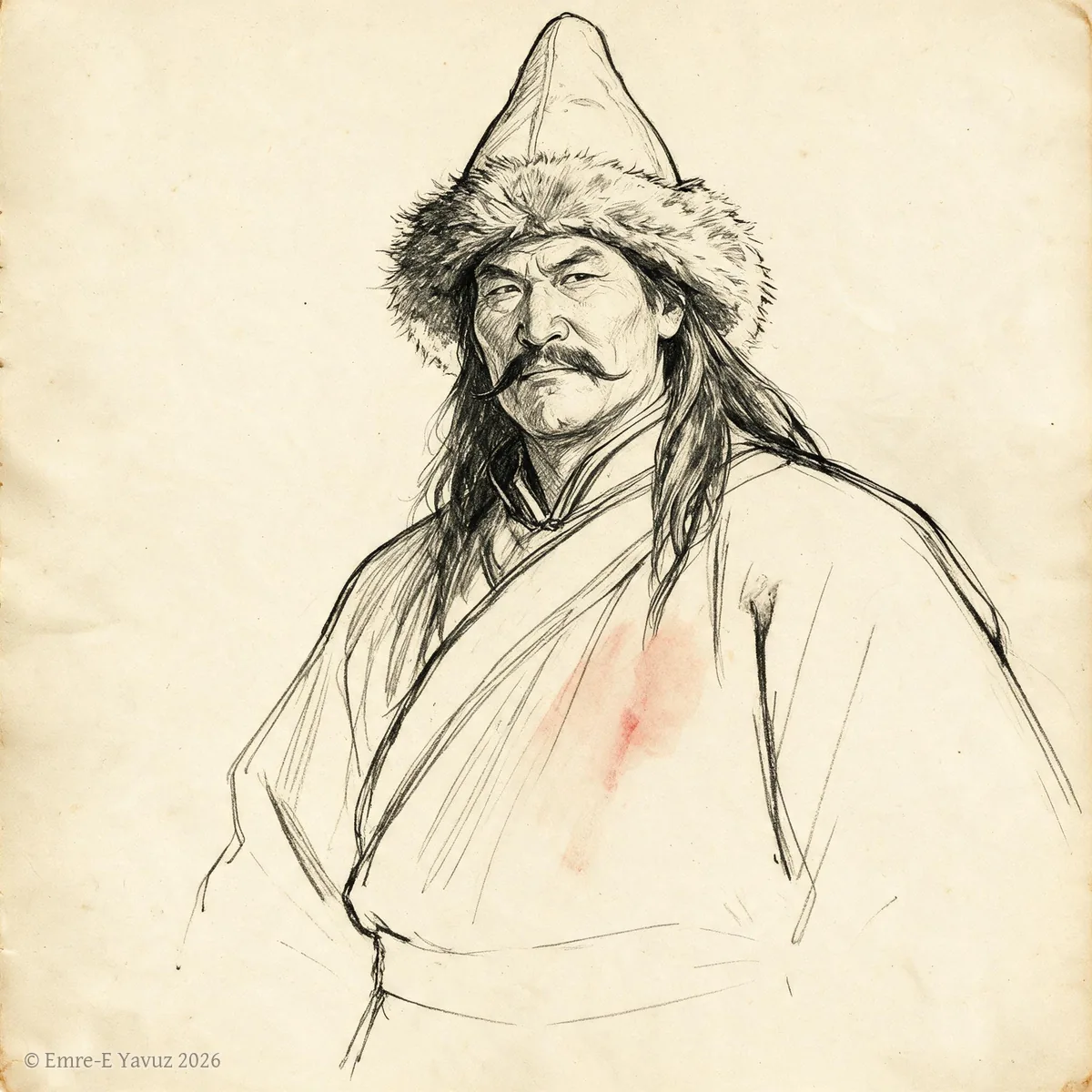
Kutlug Bilge Kül, called Guli Peiluo in the Chinese histories, led the Uyghurs. They had been independent of the Göktürks since the end of the reign of the khan Kapgan. In 744 the Uyghurs, with the Basmïl and the Karluk, overthrew the Second Göktürk Khaganate, and he took the title of khan. By the end of that year the Basmïl were his subjects. He reigned three years, and his son led the army in the field.
- Uyghur Khaganate
3/8
Bayanchur Khan
747–759
The son who made a state out of the conquest.
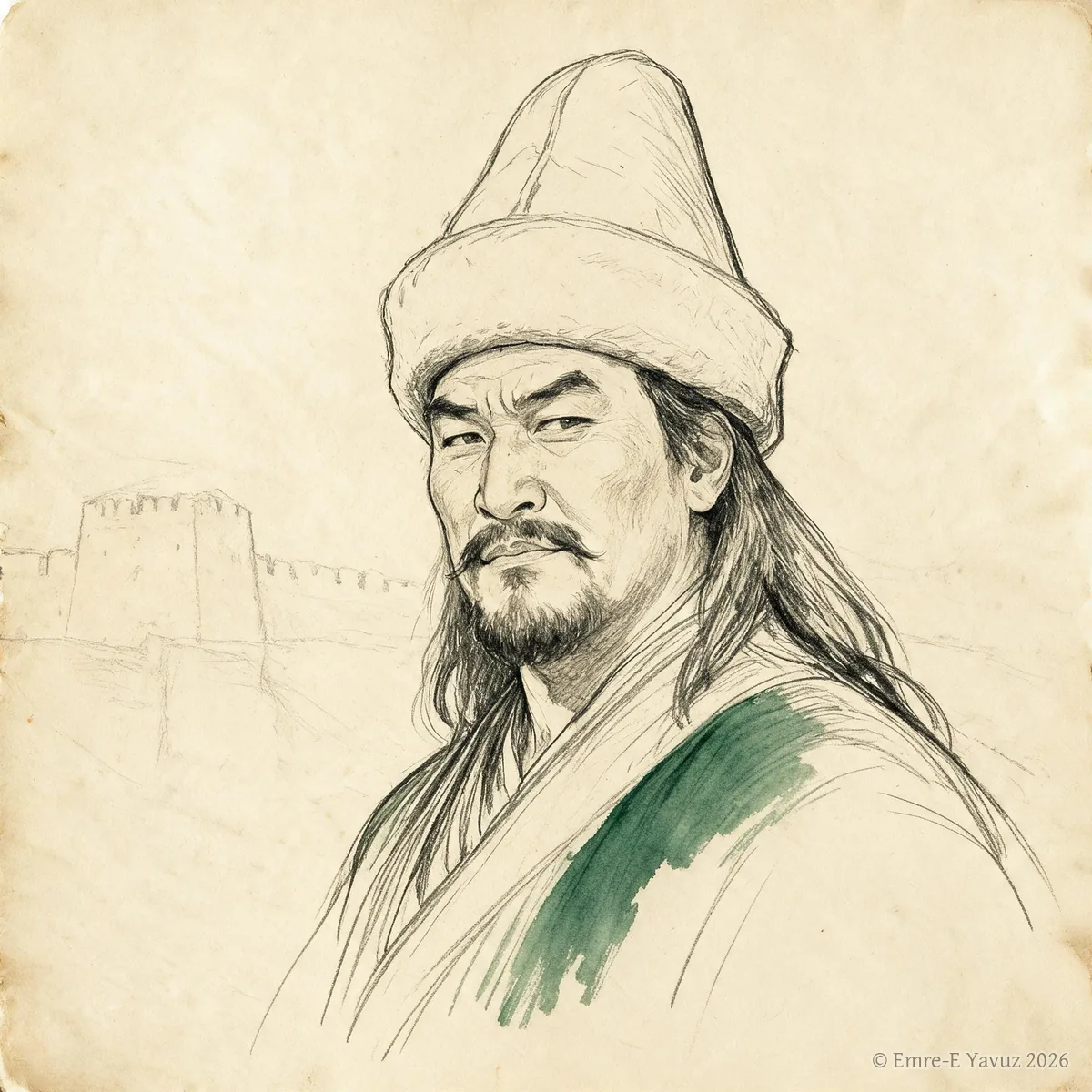
Bayanchur followed his father in 747 and reigned until 759. The Basmïl and the Karluk resisted, and he tightened the Uyghur hold over both. His own inscription at Šine-Usu tells his campaigns in the first person. It credits him with the capital and the palace, and with ordering Chinese and Sogdians to build Bay Balïq on the Selenga. He sent his eldest son to serve the Tang dynasty of China against the rebellion of An Lushan.
- Uyghur Khaganate
4/8
An Lushan
703–757
The rebellion that drew the Uyghurs into China.
An Lushan was born in 703, the son of a Sogdian father, from a people of merchants, and a Göktürk mother. He rose to command all the Tang armies of the north-east. In December 755 he revolted, and in July 756 he took the capital. His son murdered him in January 757, but the rebellion went on until January 763. The Tang retook Chang'an with the help of the Uyghurs. The dynasty never again ruled as a centralised state.
 Tang
5/8
Karabalghasun inscription
800–830
The stone that tells what the Chinese histories leave out.
The stele stood east of the main street of the Uyghur capital on the Orkhon. A Russian mission found it in 1889. It carries three texts, in Chinese, Sogdian and Old Turkic, and the Chinese is the best preserved. Two things are known above all from this stone: the conversion of the khan Bögü to Manichaeism, a Sogdian religion, which the Chinese histories never mention, and the restoration of the Uyghur state under the founder of its second dynasty.
6/8
The fall of Ordu-Balık, 840
840
The year the Uyghur capital burned.
In 839 famine, an epidemic and heavy snow struck the Uyghurs, and the snow killed many sheep and horses. A commander who lost the struggle for the throne is said to have gone to the Kirghiz and brought them in. In 840 they came down from the upper Yenisei, took Ordu-Balık, killed the khan and burned the city. They carried off the Tang princess Taihe, and the Uyghurs scattered: south, to Gansu, and west into the Tarim, where they founded the kingdom of Qocho.
7/8
Yenisei Kirghiz Khaganate
840–924
The realm of the victors on the upper Yenisei.
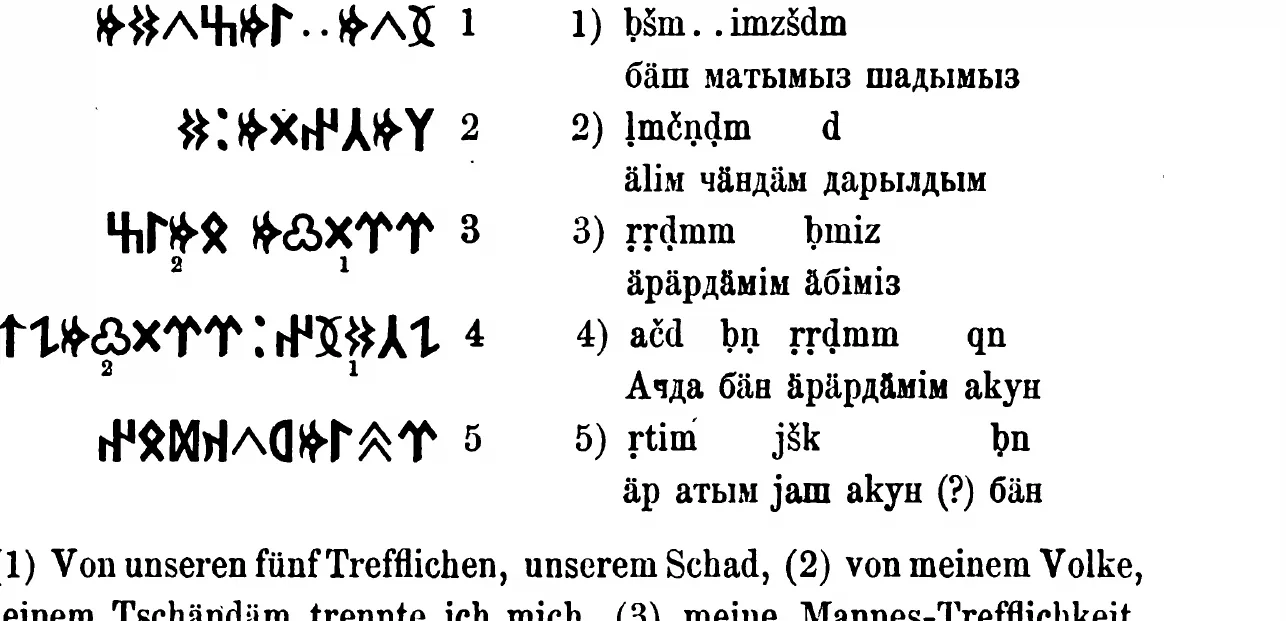
The Kirghiz lived on the upper Yenisei in southern Siberia. About 820 their ruler took the title of khan, and in 840 they broke the Uyghurs. They did not take the Uyghurs' place on the Orkhon but stayed on the Yenisei, and their hold on the plateau was brief. Their realm is dated from 840 to about 924. They wrote in the Old Turkic runic script, and more than 150 runic monuments are known, almost all of them epitaphs.
 Yenisei Kirghiz Khaganate
8/8
Are Khan
† 847
The khan who ended the Uyghur state.
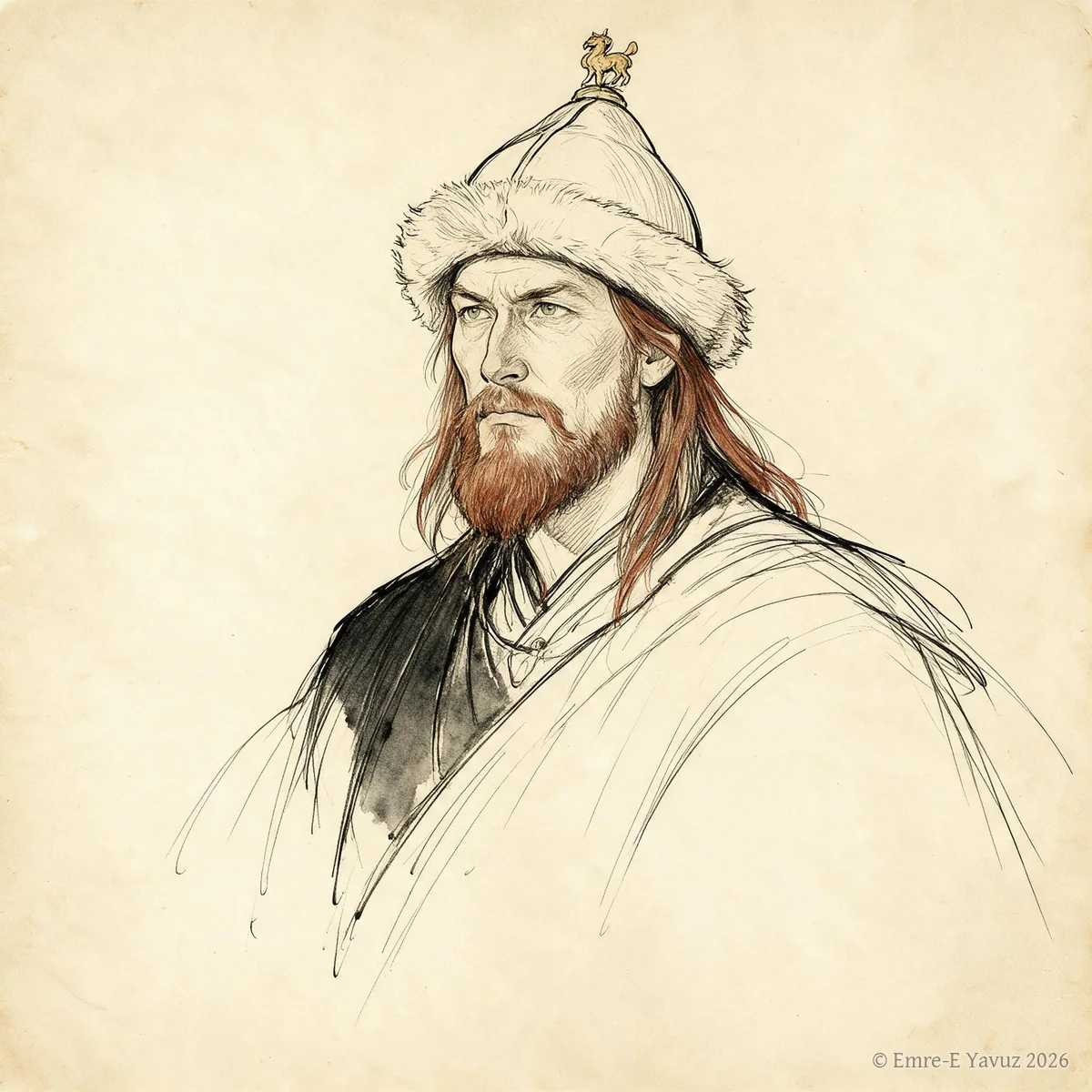
The Chinese call the ruler of the Yenisei Kirghiz Are. He called himself khan about 820 and fought the Uyghurs for twenty years. In 840 he came in person, burned the Uyghur camp and its golden tent, and took the princess Taihe. He sent her home with an escort. The Tang court of China entered him in the register of its imperial clan. By 847 he was dead, in one account murdered by an official.
- Yenisei Kirghiz Khaganate

