
35 articles
Conflicts
Wars, civil wars and the great campaigns — the whole struggle, not a day of it.
Up to 100 AD 2
-
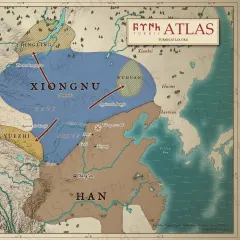 The Xiongnu–Han Wars 200 BC Wars between the Han and the Xiongnu, 200 BC to AD 93. Baideng brought the heqin, Mayi ended it, and Wudi's armies broke the chanyu at Mobei. Civil war split the Xiongnu, and the north fell by AD 93.
-
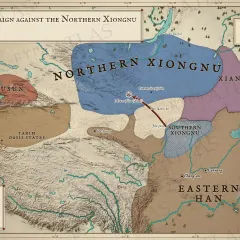 Han campaigns against the Northern Xiongnu 87 Destruction of the Northern Xiongnu by Han, Southern Xiongnu, Xianbei and Wuhuan armies, AD 87 to 93. The Xianbei killed the Youliu Chanyu and took his skin. Four campaigns ended the northern realm. What was left of it went west.
100–552 AD 14
- Hunnic conquest of the Goths 370 War of the 370s in which the Huns, after subduing the Alans of the Don, broke the Gothic realm of Hermanaric north of the Black Sea and drove the Goths to the Roman frontier.
-
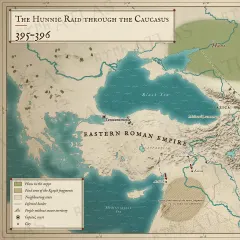 Hunnic invasion of 395 395 Hun raid across the Caucasus in 395 into the Roman East and the Persian empire. The Huns ravaged Armenia, Cappadocia and Syria, rode to Ctesiphon and drove thousands of captives north.
-
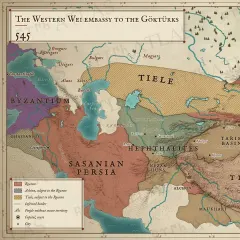 Rouran Domination of the Turkic Peoples 400 Rule of the Rouran over the Turkic-speaking peoples of the steppe, about 400 to 552. The Tiele rose against it in 487, 508 and 546. The Ashina worked iron for it in the Altai and destroyed it in 552.
- The Rouran–Wei wars, 402–449 402 Half a century of war across the Gobi, 402 to 449. By the Wei Shu's account, the first steppe empire to call its ruler khan stood against the first steppe people to rule north China.
- Taiwu's campaign against the Rouran (429) 429 Northern Wei campaign across the Gobi in 429, led by the emperor Taiwu. It scattered Datan's people at the Li river, and more than three hundred thousand surrendered.
- Attila's Balkan wars 441 Hun invasions of the eastern Roman provinces south of the Danube in the 440s, under Bleda and Attila. They broke the eastern armies, tripled the tribute and made Attila the master of a great power.
- Hunnic invasion of Gaul, 451 451 Attila's campaign of 451 from Pannonia across the Rhine into Gaul. It took Metz, failed before Orléans and ended at the battle on the Catalaunian Plains against Aetius and the Visigoths.
- Hunnic invasion of Italy, 452 452 Attila's campaign of 452 across the Julian Alps into northern Italy. The Huns destroyed Aquileia and took Milan; famine, disease and an eastern attack on their homeland drove them back.
- Gaoche secession (487) 487 The departure of more than a hundred thousand Gaoche tents from the Rouran khaganate in 487. North-west of Gaochang they founded a kingdom of their own.
- Rouran civil war (520–521) 520 The Rouran civil war after the murder of Chounu, four rulers in a single year. Anagui was khan for ten days, then Shifa, then Poluomen, then Anagui again, restored by the Wei.
- Revolt of the Six Garrisons 523 Rising of the northern garrisons of the Northern Wei from 523 or 524. Poliuhan Baling began it at Woye. In 525 the Rouran khan Anagui broke it for the Wei.
- Hegemony Wars in Northern China 534 The century of wars that followed the break-up of the Northern Wei in 534. First two Weis, then Qi against Zhou, then Sui against Chen, and last the wars that made the Tang.
-
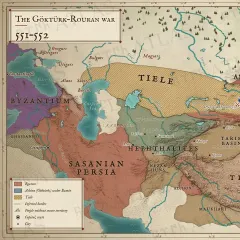 The Göktürk–Rouran Wars 546 Wars of the Göktürks against the Rouran, 546 to 555, and against the Avars who fled west. Bumin broke the khaganate in 552, and Mukan destroyed its remnant.
-
 The Turkic War of Independence 546 War in which Bumin's Ashina broke the Rouran overlordship, 546 to 552. It began with the intercepted Tiele rising and the refused princess. It ended at Ötüken.
553–743 AD 18
- Göktürk Expansion along the Silk Road 553 Göktürk advance from the Seven Rivers to the Oxus and the Caucasus, 553 to 629. Istemi began it in 553. It made the Göktürks masters of the Sogdian silk trade and enemies of Sasanian Persia.
- Mukan's Eastern and Northern Wars 553 Mukan Khan's wars on the eastern and northern edges of the Göktürk realm. He drove the Khitan east and annexed the Qigu, the Kirghiz, in the north. After the wars, the Zhou Shu sets the realm's bounds from the Liao sea to the Western Sea.
- The Göktürk–Hephthalite war, 555–563 555 The war that destroyed the Hephthalite realm and made the western Göktürks a world power, 555 to 563. Istemi from the north, Khosrow from the south, a partition on the Oxus.
-
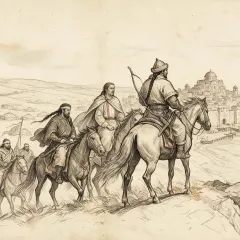 Göktürk Expansion into Europe 557 Advance of the western Göktürks from the Volga to the Crimea, about 557 to 598, which made them masters of the Pontic steppe and brought them into alliance with Byzantium.
- The Zhou–Qi war, 557–577 557 The twenty-year war between the two halves of northern China, and the first war the Göktürks fought inside China. Mukan marched with the Zhou in 563 and took his pay in plunder.
- The Göktürk–Sasanian Trade Conflict 560 Quarrel of the Göktürks under Istemi with Khosrow I of Persia over the silk trade in the 560s, which ended their partnership and turned the Göktürks to Byzantium.
-
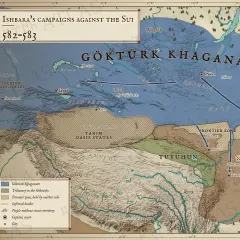 The Göktürk–Sui wars, 582–603 582 War between the Göktürks and the Sui, 582 to 603, which the Sui won almost entirely by diplomacy rather than arms. It ended with a Sui client on the Ashina throne.
-
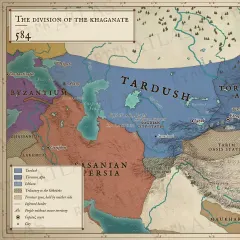 The Göktürk Civil War 584 The Göktürk civil war, 584 to 603. Four Ashina princes fought for the khaganate, the Sui set them against one another, and the state that Bumin founded became two.
-
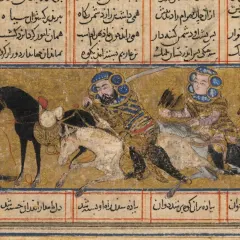 Göktürk–Persian war, 588–589 588 The first great Göktürk–Persian war, 588–589. A Göktürk army crossed the Oxus and took Herat, and Bahram Chobin destroyed it, a victory that carried him into revolt against his king.
- Tang conquest of the eastern Khaganate, 626–630 626 The Tang conquest of the eastern khaganate, 626 to 630. The Göktürks stood at the Wei river within sight of Chang'an. Four years later they had no khan at all.
- The Caucasus campaign, 627–629 627 Joint campaign of the western khaganate and Rome against Sasanian Persia, 627 to 629. The Göktürks forced the Caspian gates, took Derbent and besieged Tiflis.
- The Tang conquest of the western Khaganate, 640–659 640 The Tang conquest of the western khaganate, 640 to 659. The Tang took the oasis states one at a time, then the steppe behind them. The western Ashina line ended at Chang'an.
- Arab–Khazar Wars (642–737) 642 Almost continuous fighting between Arab armies and the Khazars for the passes of the Caucasus, 642 to 737. It ended with Marwan's march to the Volga. Neither side defeated the other.
-
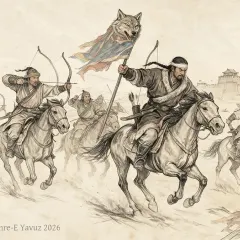 Göktürk war of restoration, 679–687 679 The Göktürks of the Ordos rose twice against Tang rule, in 679 and in 681, and raided for a decade after. The first rising was crushed. The second founded the Second Khaganate.
- Kapgan's wars with the Tang, 698–716 698 The wars of Kapgan Khan against the Tang, 698 to 716. For eighteen years he took what he wanted and gave nothing back. A marriage refused, Hebei sacked, six prefectures handed over.
- Kapgan's western war, 709–713 709 Campaign of 709 to 713, the furthest reach of the Second Khaganate. The Göktürks attacked the Kirghiz in winter, destroyed the Türgesh khan at Bolchu and sent a column beyond the Oxus.
- The revolt of the subject peoples, 714–716 714 Rising of the subject peoples against the Second Khaganate, 714 to 716. The Ten Arrows and the Nine Surnames went over to the Tang, and Kapgan was killed. The khaganate came apart from the inside.
- Fall of the Second Khaganate, 741–744 741 Collapse of the Göktürk state, 741 to 744. The boy khan was murdered by his own shad. A coalition of Basmïl, Uyghurs and Karluk then sent two Ashina heads to Chang'an.
From 744 AD 1
- Uyghur–Kirghiz War 820 War of the Yenisei Kirghiz against the Uyghur khaganate, about 820 to 840. Their ruler Are took the title of khan. A Uyghur defector led the Kirghiz to the Orkhon, where they killed the Uyghur khan.
Image credits
- Göktürk Expansion along the Silk Road: Western Göktürk attendants with long plaits, wall painting of Afrasiab, Samarkand. Northeast Asian History Foundation, Public domain ↗
- Hegemony Wars in Northern China: Armoured riders of the Western Wei, wall painting of the Five Hundred Robbers, Mogao Cave 285, Dunhuang, 535–557. Public domain ↗
- Kapgan's western war, 709–713: The steles of Tonyukuk at Bain Tsokto, Mongolia. Vezirtonyukuk, CC BY-SA 4.0 ↗
- Revolt of the Six Garrisons: Northern Wei pottery figures of a rider and attendants. Gary Todd, CC BY-SA 4.0 ↗
- Taiwu's campaign against the Rouran (429): Cavalry horse of the Northern Wei, painted pottery. Gary Todd, CC0 ↗
- Tang conquest of the eastern Khaganate, 626–630: Battle steed of Taizong, copy of a relief from the Zhaoling, his tomb. Gary Todd, CC0 ↗
- The Göktürk–Hephthalite war, 555–563: Hephthalite silver bowl with hunting riders, British Museum. O. M. Dalton, 1905, Public domain ↗
- The Göktürk–Sasanian Trade Conflict: Sasanian silver plate with a hunting king, 303–309, Cleveland Museum of Art. Wmpearl, CC0 ↗
- The Rouran–Wei wars, 402–449: Cavalry figures of the Northern Wei, painted pottery. Gary Todd, CC0 ↗
- The Tang conquest of the western Khaganate, 640–659: Battle steed of Taizong, copy of a relief from the Zhaoling, his tomb. Gary Todd, CC0 ↗
- The Zhou–Qi war, 557–577: Guards with lances, wall painting in the tomb of Xu Xianxiu, Northern Qi. Public domain ↗
- Göktürk Expansion into Europe: Göktürk Expansion into Europe in a modern illustration. © Emre-E Yavuz 2026
- Göktürk war of restoration, 679–687: Göktürk war of restoration, 679–687 in a modern illustration. © Emre-E Yavuz 2026
- Göktürk–Persian war, 588–589: Khosrow II flees from Bahram Chobin, the Persian commander of the war of 588, and is saved by the angel Sarush. Painting in a Shahnama made in Baghdad about 1299. The Cleveland Museum of Art, 1944.480.1.a, CC0.
- Han campaigns against the Northern Xiongnu: 89: Dou Xian marches out from the Jilu pass with the Southern Xiongnu and defeats the northern chanyu at Mount Jiluo in the Altai; an inscription on Mount Yanran records the victory. The Southern Xiongnu are subject to the Han, and the Xianbei hold the east. Modern map; the road is drawn, and the borders in the steppe are approximate. © Emre-E Yavuz 2026
- Hunnic invasion of 395: 395–396: The Huns cross the Caucasus and raid Armenia, Melitene, Antioch and Edessa. Basich and Kursich ride down the Tigris to Ctesiphon and return through the Caspian Gates. The date of their raid is disputed. The find area of the runic fragments in Syria is shaded. Modern map. The roads are drawn. © Emre-E Yavuz 2026
- Rouran Domination of the Turkic Peoples: 545: Yuwen Tai, chancellor of the Western Wei, sends An Nuopantuo, a Sogdian of Jiuquan, to the Göktürks in the Altai, who are still subjects of the Rouran. It is the first embassy of a Chinese state to the Ashina. Modern map; the road is drawn, the source names no route. © Emre-E Yavuz 2026
- The Göktürk Civil War: The Göktürk realm in 584, when the civil war broke out: Tardush in the west, Töremen Apa in the middle and Ishbara in the east, beside the Sui, the Chen, Sasanian Persia and the Eastern Roman Empire. Between the steppe and China stand the wall of the Northern Qi (556) and a frontier zone held by neither side. Modern map; the zones are approximate. © Emre-E Yavuz 2026
- The Göktürk–Rouran Wars: 551–552: the Göktürks under Bumin rise against the Rouran. In January 552 they beat a Rouran army in Dzungaria, then crush the main Rouran army north of Huaihuang, and Anagui kills himself. Modern map; the routes and the place of the battle in Dzungaria are drawn. © Emre-E Yavuz 2026
- The Göktürk–Sui wars, 582–603: 582–583: In 582 the Göktürks under Ishbara cross the Long Wall and plunder the Sui frontier from Wuwei to Yan'an. In 583 Ishbara marches from Ötüken to Baidao, is defeated and withdraws, and Apa flees west to Tardush. Modern map; the roads of the raids are drawn. © Emre-E Yavuz 2026
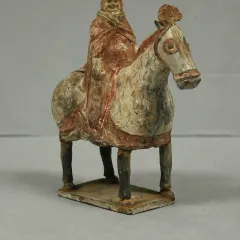
- The Turkic War of Independence: Painted earthenware tomb figure of an armoured horseman, Northern Wei dynasty, sixth century. The Western Wei, one of the two states into which the Northern Wei split in 534, were the Göktürks’ allies against the Rouran. The Metropolitan Museum of Art, New York, 20.39.3, Rogers Fund, 1920. Open Access, public domain (CC0).
- The Xiongnu–Han Wars: 209–200 BC: Bagatur (Modu Chanyu) kills his father Duman and becomes chanyu. He destroys the king of the Donghu, drives back the Yuezhi, retakes the land Meng Tian had seized as far as Chaona and Fushi, and subjects the Dingling, the Gekun and the other peoples of the north; the Wuhuan pay him tribute. In 200 BC he surrounds the Han emperor Gaozu at Baideng near Pingcheng. Modern map; the roads are drawn, and the borders in the steppe are approximate. © Emre-E Yavuz 2026




