
The First Khaganate broke in a civil war that ran from 584 to about 603, and in 630 the Tang took its eastern khan prisoner. For the next fifty-two years the eastern steppe had no khan of its own. The Tang court debated where the surrendered tribes should live, governed them through their own chiefs and kept the frontier quiet for a generation. The path follows that fall in six steps, from the civil war to the risings of 679 to 681.
1/6
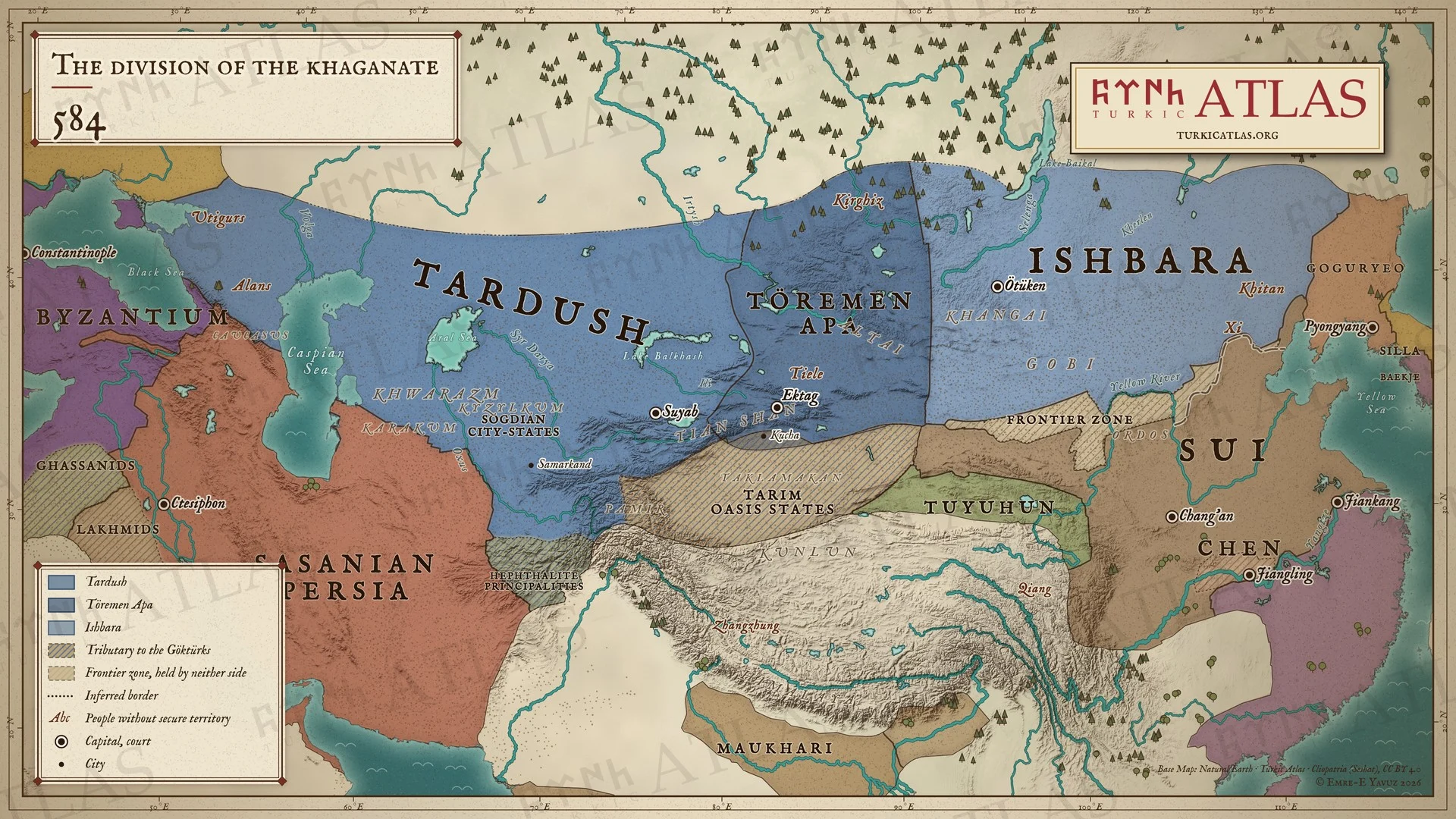
The Göktürk Civil War
584–603
How the khaganate that Bumin founded split in two.
After the quarrel over the succession of Taspar Khan, four Ashina princes, Ishbara, Töremen Apa, Amrak and Tardush, found that the throne could not hold them all. The Sui, a new Chinese dynasty, fought the Göktürks with agents rather than soldiers and set the princes against one another. In 585 Ishbara, attacked by Tardush, declared himself a vassal of the Sui. About 603 the realm stood divided into an eastern and a western state that never reunited.
 First Göktürk Khaganate
2/6
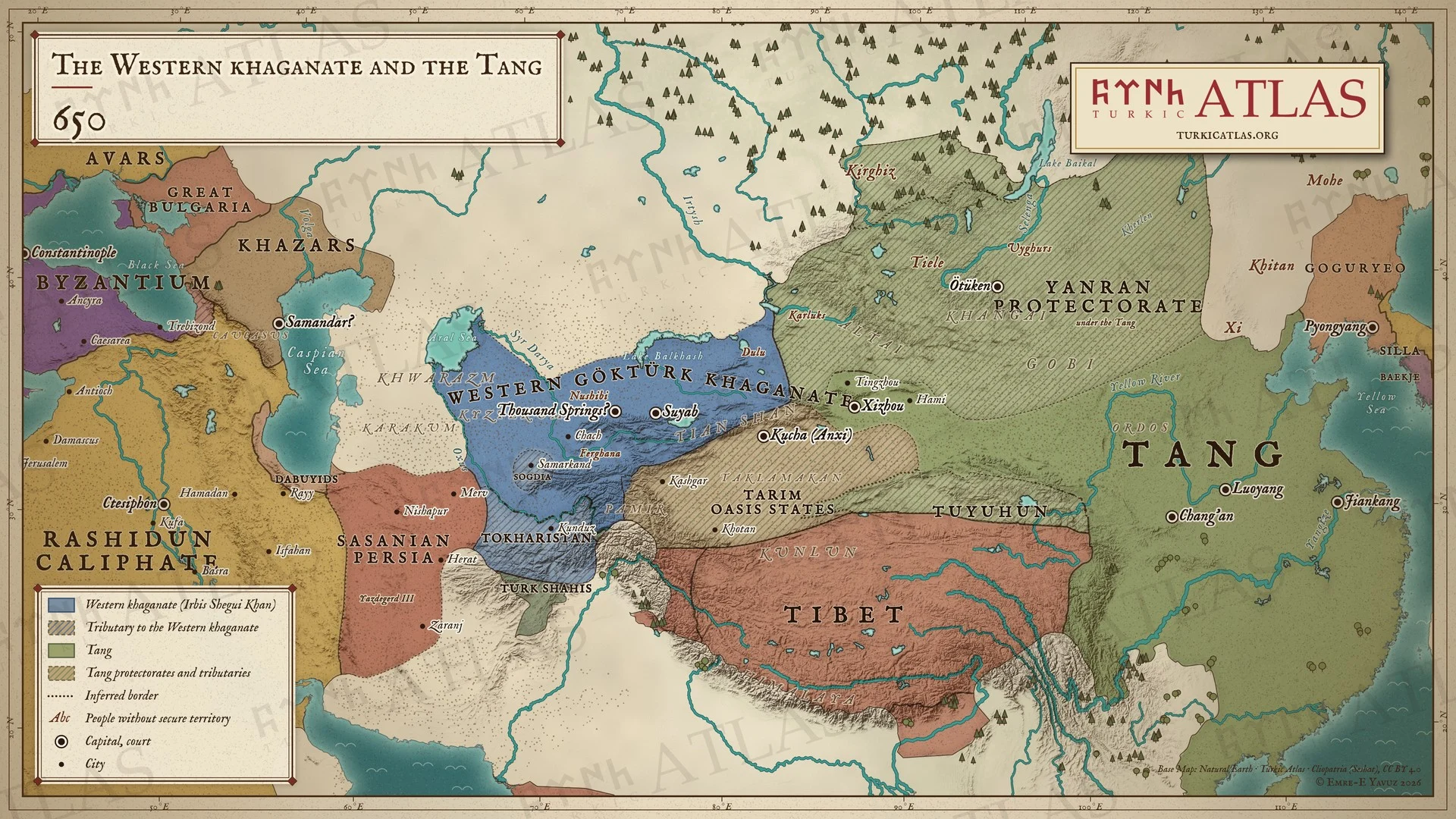
Tang conquest of the eastern Khaganate, 626–630
626–630
How the Tang ended the eastern khaganate after it broke from within.
In 626 the eastern khan Ilig stood on the Wei river with more than a hundred thousand riders, so close to the Tang capital Chang'an that the city was put under martial law. Almost none of what followed was decided in battle. His subject peoples rose, the herds died in a great snow, and his nephew Töles went over to the Tang. Only then did Li Jing march, in winter. In 630 Ilig was taken alive.
- First Göktürk Khaganate
 Tang
3/6
The Court Debate of 630
630
How the Tang court decided where the surrendered Göktürks should live.
After Ilig's fall the Tang court had to decide what to do with some hundred thousand Göktürks who had surrendered. Most officials wanted the tribes broken up and settled as farmers south of the Yellow River. Wei Zheng wanted them sent back north. Wen Yanbo, the director of the Secretariat, argued for keeping the tribes whole below the frontier as a shield for China, and the emperor Taizong took his plan. Nine years later the court reversed itself and moved them north of the river.
4/6
Loose-rein prefectures
630–682
How the Tang governed the tribes through their own chiefs.
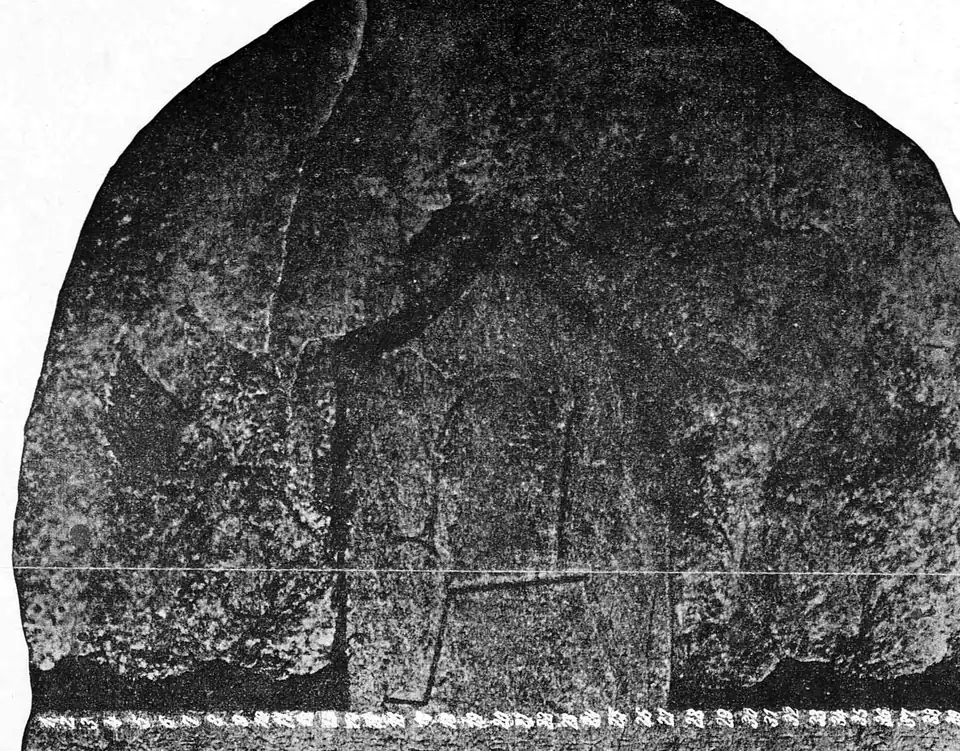
The Tang did not break up the tribes that surrendered. Each was entered on the imperial register as a prefecture or a command, and its own chief became its prefect or commander. The Chinese name for the arrangement comes from harness: the halter that steers an animal without breaking it. From 650 two protectorates, Shanyu and Hanhai, stood over these commands, and for nearly thirty years the northern frontier was quiet. The Kül Tegin inscription says that the lords who went over took Chinese titles.
- Tang
5/6
The Göktürk interregnum, 630–682
630–682
The fifty years without a khan, as Chang'an and the Orkhon saw them.
From 630 to 682 the eastern steppe had no khan of its own. Seen from Chang'an the period was an administrative success. Seen from the Orkhon a century later it was servitude: the Kül Tegin inscription says that for fifty years the Göktürks gave their toil and their strength to the Chinese khan. Two Ashina tried to rule in between. Ashina Simo, a khan set up by the Tang, could not hold his people from 639 to 643, and Chebi, who made himself khan in the far north, was brought down in 650.
6/6
Göktürk war of restoration, 679–687
679–687
The risings of 679 to 681, which failed and ended the quiet years.
In 679 two Ashide chiefs raised Nishufu as khan, and twenty-four prefectures went over to them. The first Tang army sent against them was beaten. The second, under Pei Xingjian, broke the rising, and Nishufu was killed by his own men. In 680 the tribes fetched Ashina Funian, a kinsman of Ilig, to make him khan. He surrendered and was beheaded in Chang'an in 681. The fugitives of that rising were the men Ilterish gathered a year later.
 Second Göktürk Khaganate
- Tang
 Uyghur Khaganate
© Emre-E Yavuz 2026© Emre-E Yavuz 2026
