
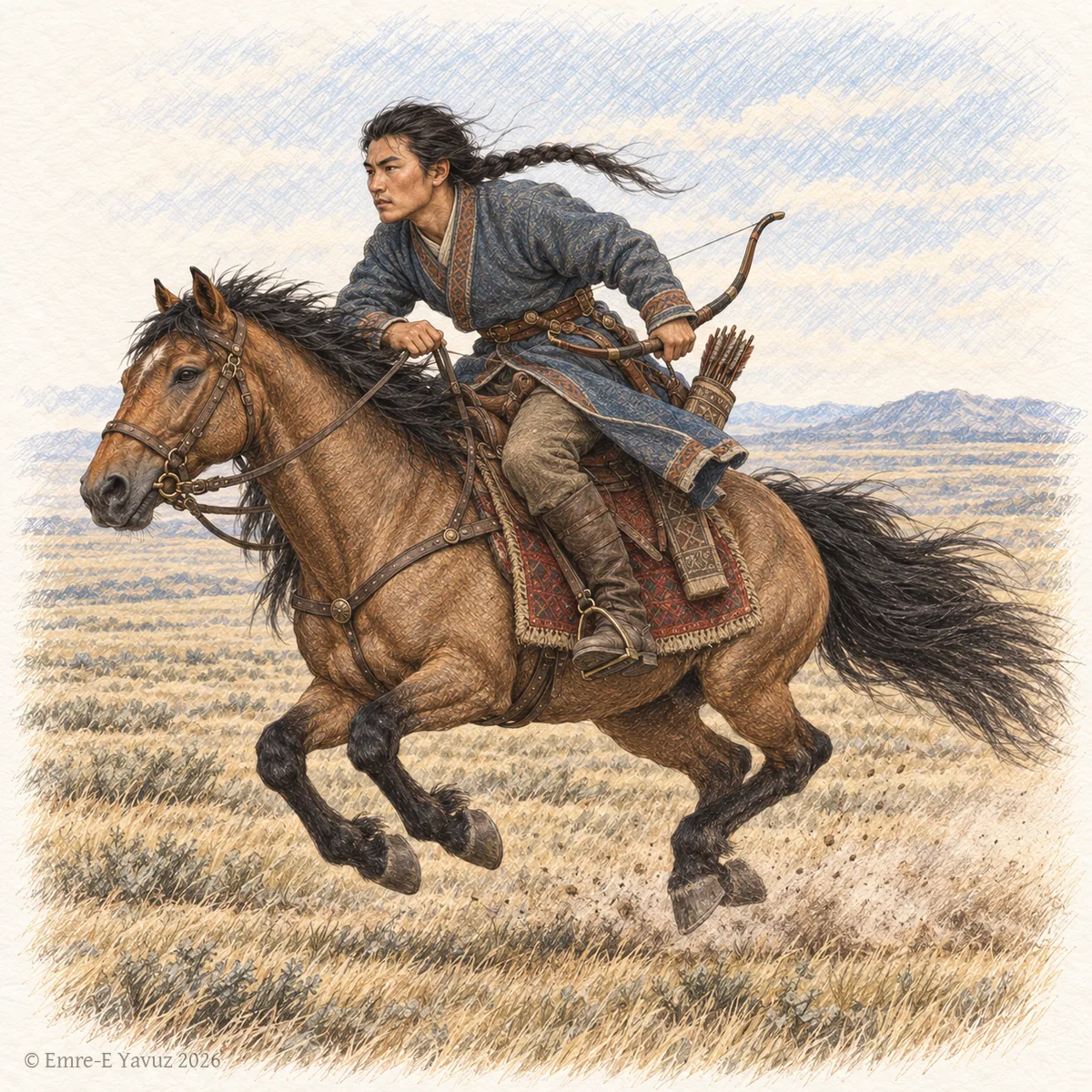
Yinghefu, 英賀弗, is the second word the Tongdian gives for a brave man among the Göktürks. Those who were brave and strong, it says, were called shiboluo, and they were also called yinghefu.[1] The gloss belongs to a passage on the early ranks of the khaganate. The names of these ranks were taken from the body, from age, from colour and hair, from wine and meat, or from animals.[1]
The Tongdian names no holder of the title and gives it no duty.[1] The word does not occur in the Zhou Shu, the Sui Shu, the Bei Shi or the two Tang histories.[2] One translation of the passage gives the Turkic reading ïšbara for the first word and no reading for the second.[3] The passage introduces the word only with “also called”. It does not say whether yinghefu was a title of its own or another name for the same one.[1]
References
- ^ a b c d Tongdian, juan 197
- ^ Zhou Shu (Book of Zhou), juan 50; Sui Shu (Book of Sui), juan 84; Bei Shi (History of the Northern Dynasties), juan 99; Jiu Tangshu (Old Book of Tang), juan 194; Xin Tangshu (New Book of Tang), juan 215
- ^ Mau-tsai 1958, Turkish edition, p. 21
Sources
- Tongdian, juan 197 (after Sui Shu and Zhou Shu)
- Zhou Shu (Book of Zhou), juan 50
- Sui Shu (Book of Sui), juan 84
- Bei Shi (History of the Northern Dynasties), juan 99 (after Wei Shu, Zhou Shu and Sui Shu)
- Jiu Tangshu (Old Book of Tang), juan 194
- Xin Tangshu (New Book of Tang), juan 215 (after Jiu Tangshu)
Literature
- Liu Mau-tsai, Çin Kaynaklarına Göre Doğu Türkleri (1958, Turkish edition)
What links here3
- Institutions and Titles
- Ishbara (Title) · The Twenty-Eight Ranks
- Languages
- Chinese transcriptions of Turkic
Cite this article
Yavuz, Emre-E. “Yinghefu.” Turkic Atlas, revised 28 October 2026. https://turkicatlas.org/institutions/yinghefu/
Last revised: 28 October 2026

