
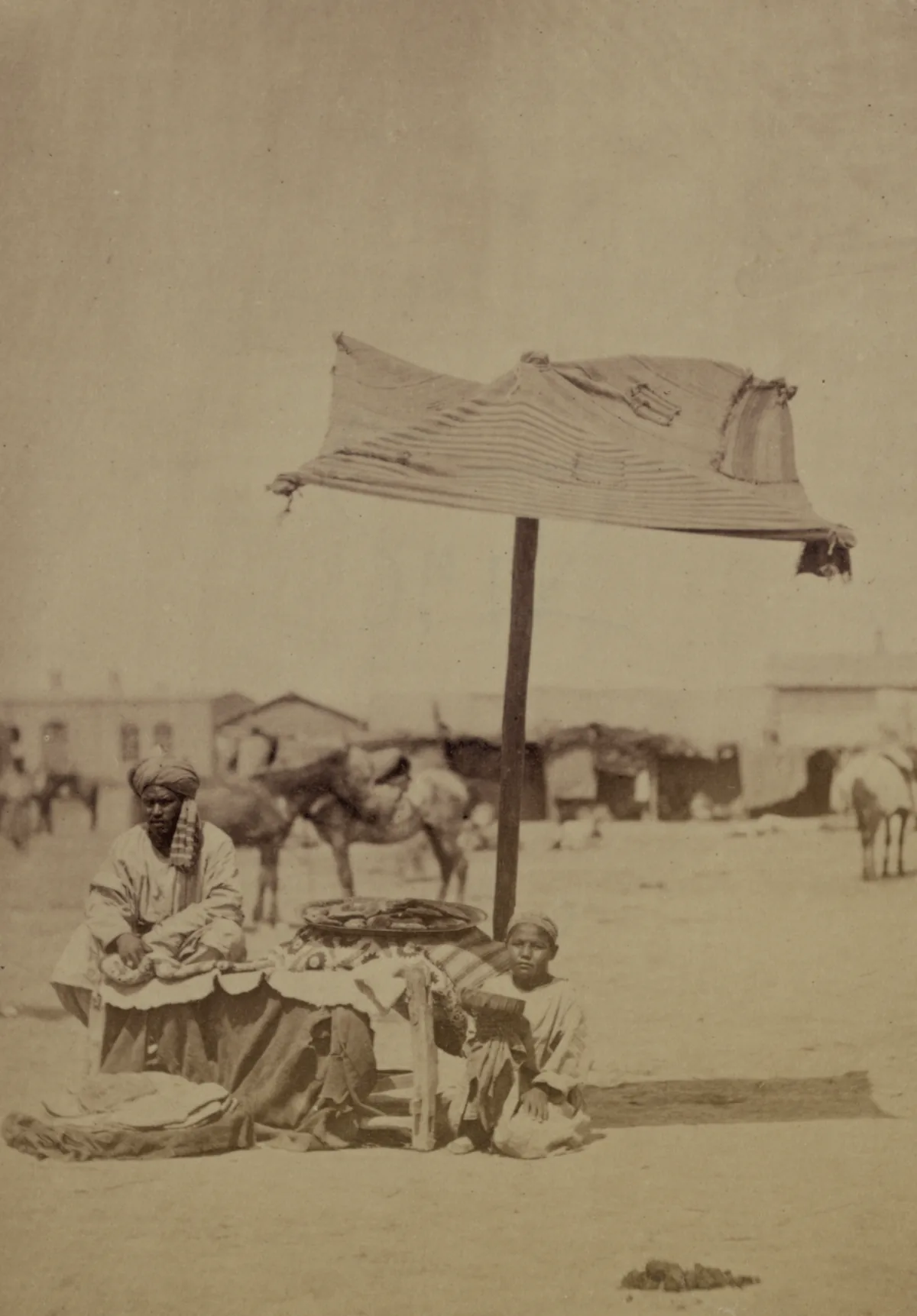
Ayran is the soured milk drink of the Turkic peoples.[1] In Turkey today the word means above all yogurt thinned with water and beaten. Its older sense, which the dictionary still gives first, is the thin sour liquid that remains when milk or yogurt has been churned and the butter taken off.[2] Mahmud al-Kashgari first wrote the word down in the 1070s and glossed it as “churned milk”.[3] The milk economy behind it is far older. The Chinese histories describe the Xiongnu, the Gaoche and the Göktürks as peoples who lived on meat and soured milk.[4] Milk proteins in the teeth of the dead show that herders on the Mongolian steppe drank milk five thousand years ago.[5] No text of their own time records what the early Turkic peoples called their soured milk.[6]
The word and its meanings
Across the Turkic languages, the word covers the whole range of soured milk.[2] In sound it changes little from Central Asia to Anatolia, and even Chuvash, which differs most from the other Turkic languages, keeps it in a recognisable form.[7] The Turkish dictionary gives two meanings. One is the watery part left when milk or yogurt has been churned and its butter taken off. The other is the drink made by thinning yogurt with water and beating it.[2] In Kazakh and Kyrgyz, ayran is a food rather than a drink. It is the boiled milk of cows, sheep or goats, set with a starter until it sours and thickens.[8] In Tatar, äyrän is soured milk stirred into water, and also the white water the butter leaves behind.[2] In Turkmen it is what remains of churned yogurt once the butter has been taken off. In Azerbaijani it is the same with water added.[2] Chuvash says uyran and means buttermilk. Uyran usla is “to churn butter”.[9]
Among the Khakas of the Yenisei, ayran was a food that brought blessing.[10] They held a festival of the First Ayran in summer and one of the Last Ayran in autumn, when the ayran ran out.[10] The ayran of the previous year was kept to start the new. A figure called the ayran tözi guarded the milk foods of the household.[10] An Anatolian proverb wishes that God leave no one without ayran in summer and without a quilt in winter: Allah yazın ayransız, kışın yorgansız etmesin.[2] North of the Altai a drink made from ayran is called ayran arağası, “ayran spirit”. The traveller Pallas saw ayran kept for a long time in skins among the Bashkirs. Ayran itself is not alcoholic, and a Central Asian proverb sets it against kumys: whoever drinks two cups of kumys is in trouble, and whoever drinks two cups of ayran is shameless, that is, greedy.[11]
The first record
Mahmud al-Kashgari wrote his dictionary of the Turkic languages in Arabic between 1073 and 1077, for the caliph.[12] Among its words stands ayrān, with a single Arabic gloss, maḫīḍ, “churned milk”.[3] Maḫīḍ is the milk from which the butter has been churned, the buttermilk that remains in the churn. The entry is the oldest written trace of the word. It gives the older of the two meanings that the Turkish dictionary records today.[6] Kashgari says nothing about who drank it, or when. The entry is a single line.[3]
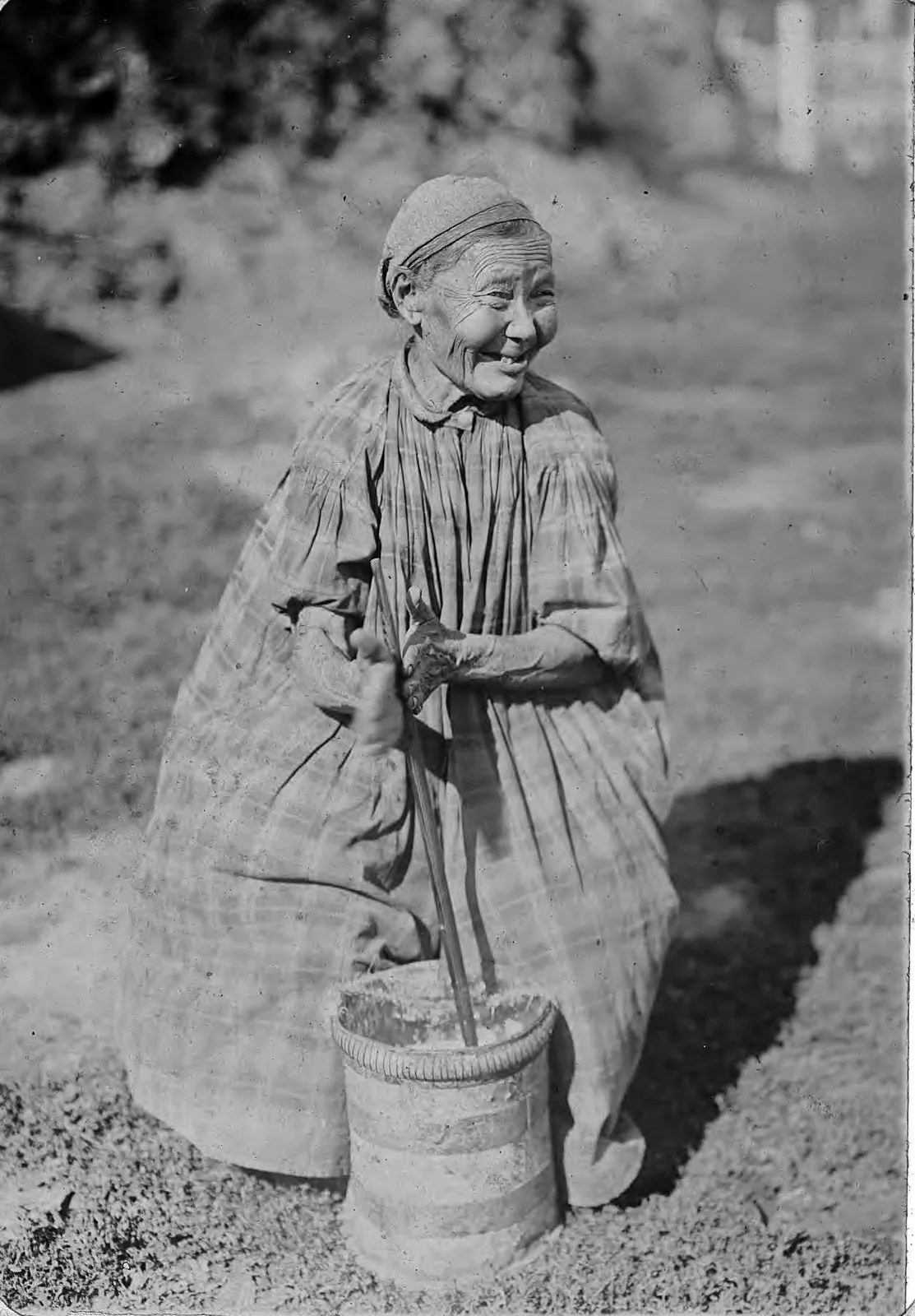
Three centuries later, the word appears in the glossaries of the Kipchak language.[6] In the dictionary of Ibn Muhanna, from the end of the fourteenth century, ayran is the sour, liquid part of milk that remains after its fat has been separated.[6] Abu Hayyan described Kipchak in the fourteenth century. He says that in that language sour milk is called ayran.[6] The Kipchak glossaries of the fourteenth and fifteenth centuries contain the word as well.[6] Between Kashgari’s buttermilk and the sour milk of the Kipchaks, the word stayed within one practice. Milk was left to sour, it was churned, and what the butter left was drunk.
Origin of the word
Where the word comes from is disputed, and four derivations stand. The first derives it from the verb ayır-, “to separate”. Ayran would then be what separates from the milk when the butter is churned out.[13] A variant goes back to the older form of the same verb, adır-, and reconstructs an earlier adran.[14] The objection to both is the form of the word. In its oldest record and in the living languages, it has y, never the sound the older verb would leave. Kashgari writes ayrān, not adran, and Tatar, Kyrgyz and Khakas say ayran, not azran.[15]
The second derivation derives the Turkic word from the Mongolian ayiraγ, the name of kumys and of soured mare’s or cow’s milk.[13] Some scholars answer that the Secret History of the Mongols does not have the word. The Mongolian term in that text is unda’an, which means only “drink”. A medieval glossary sets Mongolian unda’an against Turkic ayran.[16] They do not conclude that the Mongols did not know ayran, since travellers say that they made a drink of diluted yogurt.[17] The third derivation comes from a study of the Ket language of the Yenisei. It holds that both words, the Turkic and the Mongolian, are Hunnic in origin.[13] One study of Old Chinese holds that the Turkic and the Mongolian words are ultimately connected. It adds that the Mongolian word and Chinese 酪 lao, “soured milk”, were taken from one source, which it identifies as the word of the Xiongnu.[18]
The fourth and most recent derives ayran from ürüŋ, “white”, one of the oldest colour words of Turkic. Ürüŋ already stands in the Orkhon inscriptions, and in Yakut it still means milk and everything made from it, the “white food” of the herders.[19] The proposed path runs from ürüŋ through yürüŋ and, by an exchange of sounds, uyran to ayran. Chuvash uyran would preserve the middle stage.[20] This derivation ties the word to a root of the Göktürk inscriptions.[15] It is the proposal of one study.
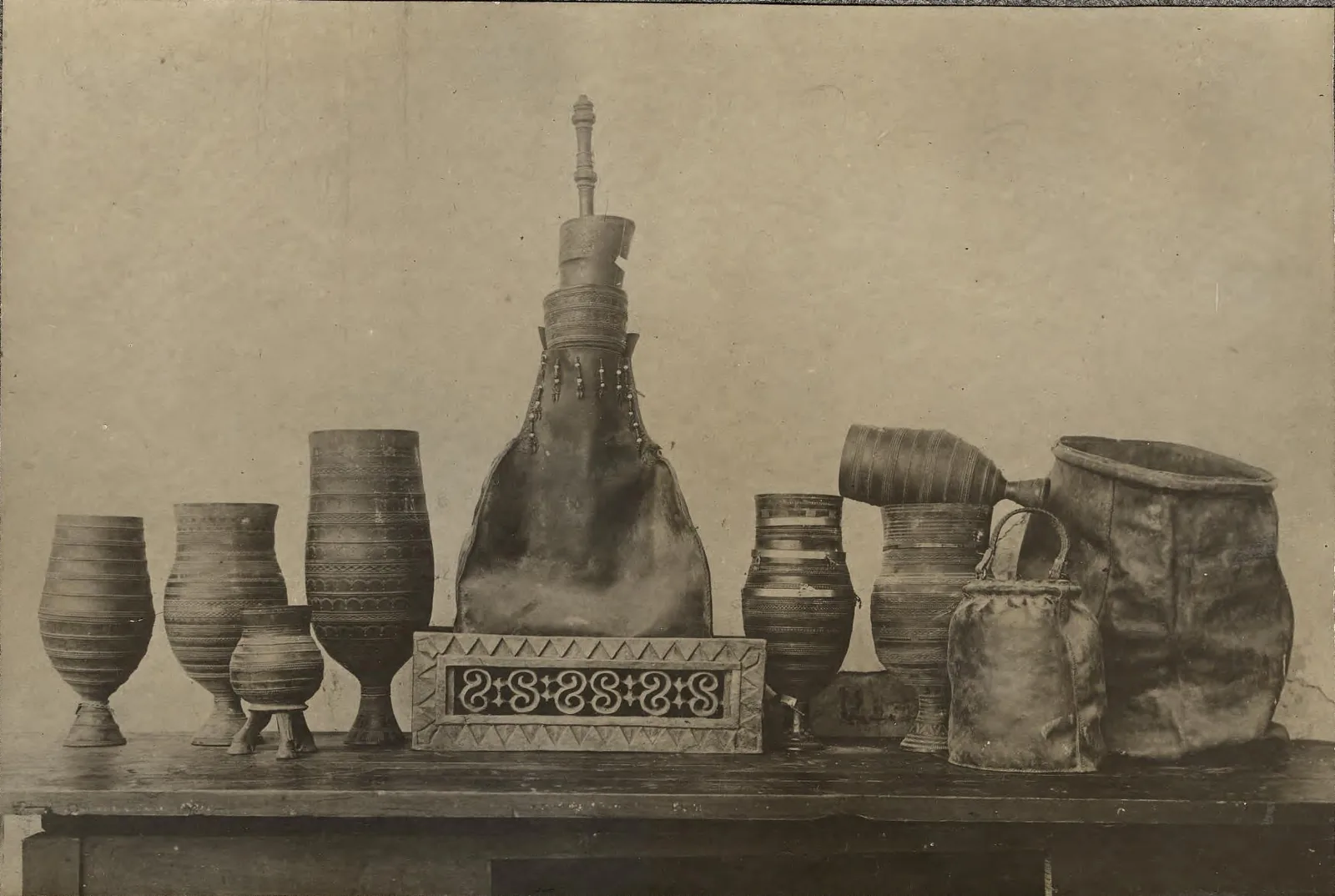
In the Kutadgu Bilig of 1069–1070, ürüŋ is still the common word for white. A proverb the book calls Turkish speaks of ürüŋ süt, “white milk”.[21]
Soured milk in the Chinese sources
The Chinese histories describe the steppe peoples from outside, and they return again and again to their milk. Zhonghang Yue was a eunuch of the Han court who had gone over to the Xiongnu. He told Laoshang Chanyu to throw away the Han food he was sent, to show that it was neither as handy nor as good as their own milk and curds.[22] The Han Shu repeats the scene.[23]
The Wei Shu describes the Gaoche, the “high carts” whom the later histories call the Tiele.[24] They grew no grain and brewed no wine.[24] On the day a bride was fetched, men and women went together, carrying fermented mare’s milk and boiled meat cut at the joints.[24] Where thunder had struck, they gathered again in the autumn, when the horses were fat.[24] They buried a ram, lit fires and rode round the place a hundred times.[24] Then each of them set up a bundle of willow rods in a ring and poured milk and curd over it.[24]
Of the Göktürks, the Sui Shu says that they ate meat and drank soured milk.[25] They drank mare’s milk until they were drunk, and sang and shouted to one another.[25] The Bei Shi repeats the words of the Sui Shu.[26] The Chinese word in both places is 酪.[25] The word means soured or fermented milk, the curdled milk of cows and ewes as well as the fermented, curdless milk of mares.[18] One translation renders this mare’s milk as fermented milk and adds that it may have been kumys.[27] The text does not say whether the soured milk of every day was the milk of cows and sheep, from which ayran is made, or kumys.[25]
Archaeological evidence
Milk leaves traces in the tartar of the teeth, and its proteins show from which animal the milk came.[5] A study of thirty-two burials from Mongolia found the oldest such traces in graves of about 3000 BC, among herders whose forebears had come from the west.[28] The first traces of mare’s milk date from about 1200 BC, when horses were first ridden there.[5]
All three burials of the Xiongnu period in the study carried milk.[29] One held mare’s milk alone, one the milk of cattle and of sheep or goats, and one ruminant milk together with mare’s milk.[29] The one burial of the Turkic period showed no trace of milk.[29] One grave is too few to say anything about the Göktürks. Of the eleven burials of the Mongol period, nine carried milk.[29]
Mare’s milk differs from that of cattle, sheep and goats.[30] It holds less of the protein that forms curd and much more sugar. It therefore makes poor curd and suits fermented drinks, which can reach ten to twelve per cent of alcohol.[30] Ayran is therefore made from the milk of cattle, sheep and goats, and mare’s milk goes into kumys. The study could not tell which starters the herders used, because no trace of them survived in the samples.[31] On the Mongolian steppe today, milk and the foods made from it give up to half of what people eat in summer.[32]
Ayran and the early Turkic peoples
Ayran in the older sense, the buttermilk of the churn, belongs to a dairy economy that was established on the eastern steppe some three and a half thousand years before the First Göktürk Khaganate. The Chinese saw soured milk as the food of the Xiongnu, the Gaoche and the Göktürks alike. The steppe on which Bumin founded his realm in 552 lived on it. The word is younger in the record. It is first written down five centuries after Bumin, in Kashgari’s dictionary, and no older text preserves it.[6] The practice reaches back to the oldest Turkic peoples and beyond them. The name ayran is attested from the eleventh century.
References
- ^ Otyzbay 2019, p. 219
- ^ a b c d e f Otyzbay 2019, p. 227
- ^ a b c Dīvān Lughāt al-Turk; al-Kāshgharī 1072–1074, p. 145
- ^ Shiji, juan 110; Wei Shu, juan 103; Sui Shu (Book of Sui), juan 84
- ^ a b c al. 2020, p. 2
- ^ a b c d e f g Otyzbay 2019, p. 225
- ^ Ögel 1978, p. 27
- ^ Otyzbay 2019, p. 226–227
- ^ Otyzbay 2019, p. 224,226
- ^ a b c Otyzbay 2019, p. 226
- ^ Ögel 1978, p. 29
- ^ Dīvān Lughāt al-Turk
- ^ a b c Otyzbay 2019, p. 221
- ^ Otyzbay 2019, p. 221–222
- ^ a b Otyzbay 2019, p. 222
- ^ Ögel 1978, p. 27–28
- ^ Ögel 1978, p. 28
- ^ a b Pulleyblank 1962, p. 253
- ^ Otyzbay 2019, p. 222,224–225
- ^ Otyzbay 2019, p. 222,225–226
- ^ Kutadgu Bilig; Dankoff 1983, couplets 880–881
- ^ Shiji, juan 110
- ^ Han Shu, juan 94
- ^ a b c d e f Wei Shu, juan 103
- ^ a b c d Sui Shu (Book of Sui), juan 84
- ^ Bei Shi (History of the Northern Dynasties), juan 99
- ^ Mau-tsai 1958, Turkish edition, p. 64
- ^ al. 2020, p. 2,11,15
- ^ a b c d al. 2020, p. 11
- ^ a b al. 2020, p. 14
- ^ al. 2020, p. 15
- ^ al. 2020, p. 3
Sources
- Dīvān Lughāt al-Turk
- Shiji, juan 110
- Han Shu, juan 94 (after Shiji)
- Wei Shu, juan 103
- Sui Shu (Book of Sui), juan 84
- Bei Shi (History of the Northern Dynasties), juan 99 (after Wei Shu, Zhou Shu and Sui Shu)
- Kutadgu Bilig
Literature
- Maḥmūd al-Kāshgharī, Dīwān Lughat al-Turk (1072–1074)
- Zhazira Otyzbay, Ayran Sözcüğünün Etimolojisi, Anlamı ve Türk Kültüründeki Yeri (2019)
- Shevan Wilkin, Alicia Ventresca Miller, William T. T. Taylor et al., Dairy pastoralism sustained eastern Eurasian steppe populations for 5,000 years (2020)
- Liu Mau-tsai, Çin Kaynaklarına Göre Doğu Türkleri (1958, Turkish edition)
- Bahaeddin Ögel, Türk Kültür Tarihine Giriş IV: Türklerde yemek kültürü (1978)
- Edwin G. Pulleyblank, The Consonantal System of Old Chinese, Part II (1962)
What links here7
- Foods
- Kumys · Qurut · Steppe Diet · Tutmaç
- Customs & Pastimes
- Culture of the Turkic Peoples · The Göktürk Feast
- Sources
- Dīvān Lughāt al-Turk
Cite this article
Yavuz, Emre-E. “Ayran.” Turkic Atlas, revised 8 November 2026. https://turkicatlas.org/foods/ayran/
Last revised: 8 November 2026

