
In 546 the Ashina were a clan of smiths in the Altai, subjects of the Rouran. Thirty years later their realm reached from the Khingan Mountains to the Volga, and their envoys had been received in Constantinople. The path follows that rise in eight steps, from the empire they served to the embassy that brought a Roman envoy to their khan.
1/8
Rouran Khaganate
400–554
The empire the Göktürks served before they ruled.
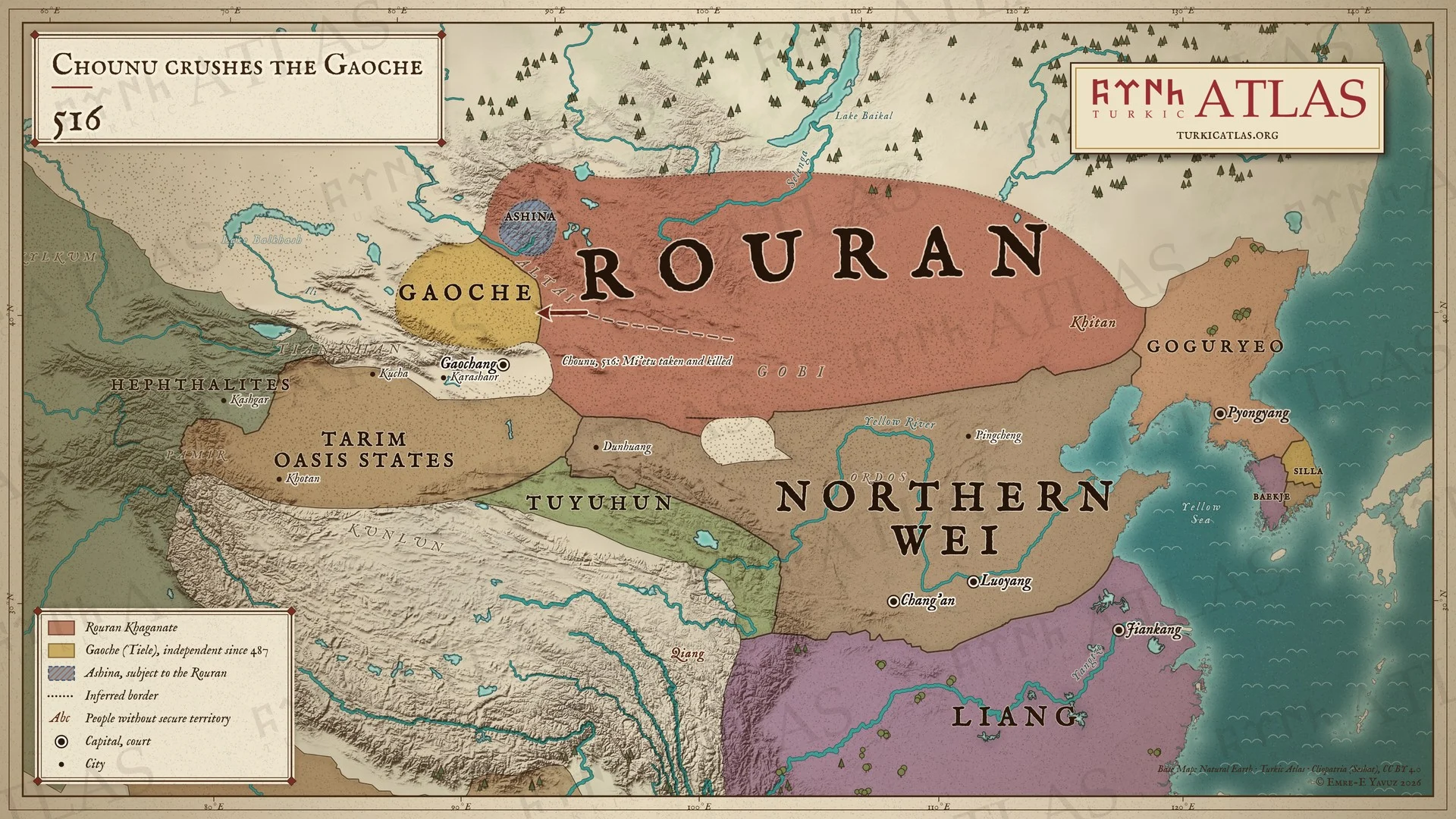
For a century and a half before 552 the Rouran ruled the eastern steppe, from the Khingan range in the east to the Seven Rivers in the west. Their first ruler, Shelun, took the title khagan. Among the peoples who answered to them were the Tiele and a small clan in the Altai, the Ashina. When the Göktürks came to power, they took this empire over rather than tearing it down.
 Rouran Khaganate
2/8
Ashina
439–969
The family behind the Göktürk khaganates.
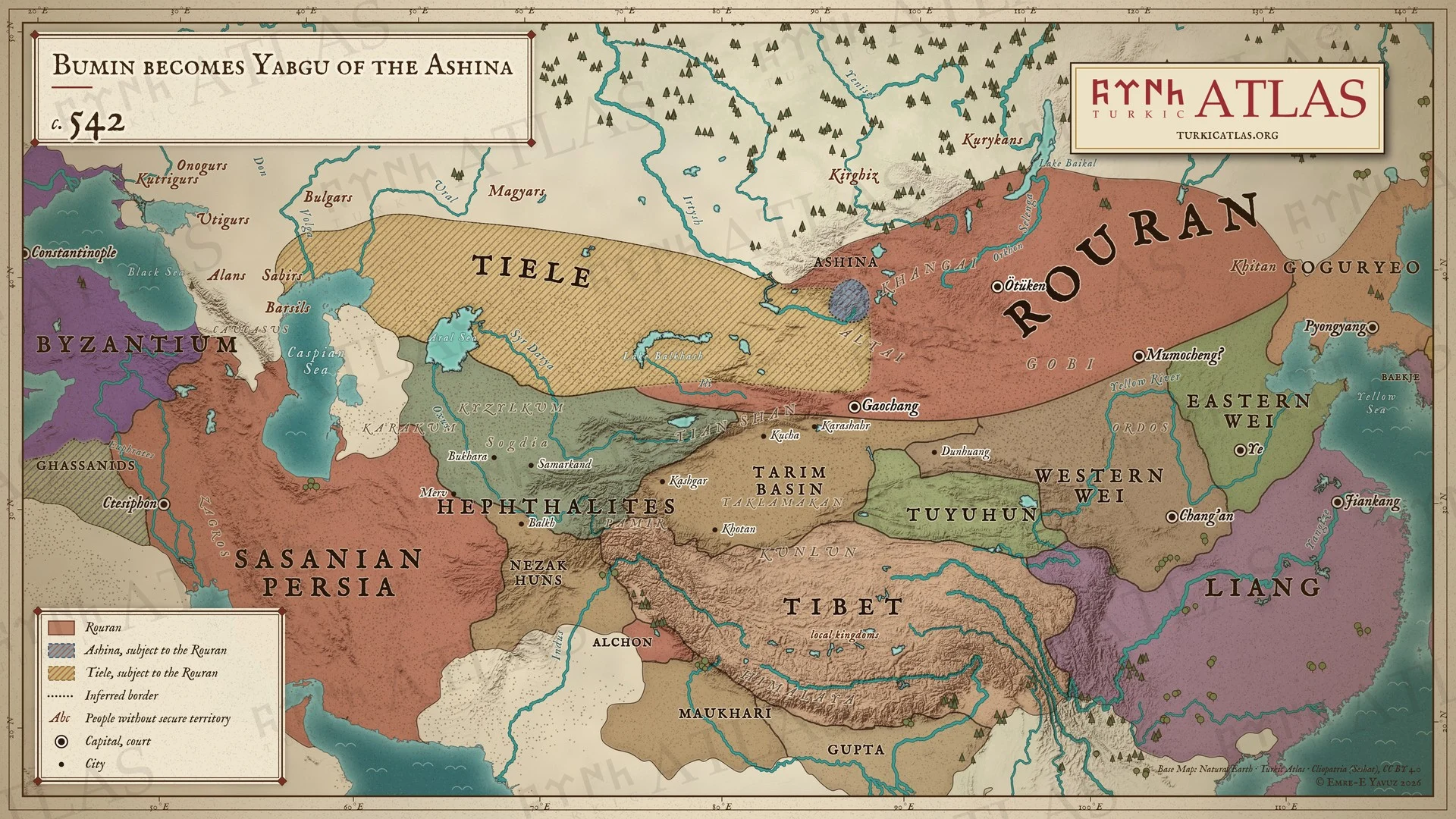
Before 546 the Ashina were a few hundred households in the Altai, the mountains where Mongolia, China, Kazakhstan and Russia meet today. They worked iron for the Rouran. The Chinese histories tell their origin in several ways. In the best known, the clan descends from a she-wolf, and Ashina was the ablest of her ten sons, who became ruler of the others. Every khan of the First Khaganate came from this house.
 Ashina
3/8
Anagui
520–552

The last khan of the Rouran, and the sentence that started a war.
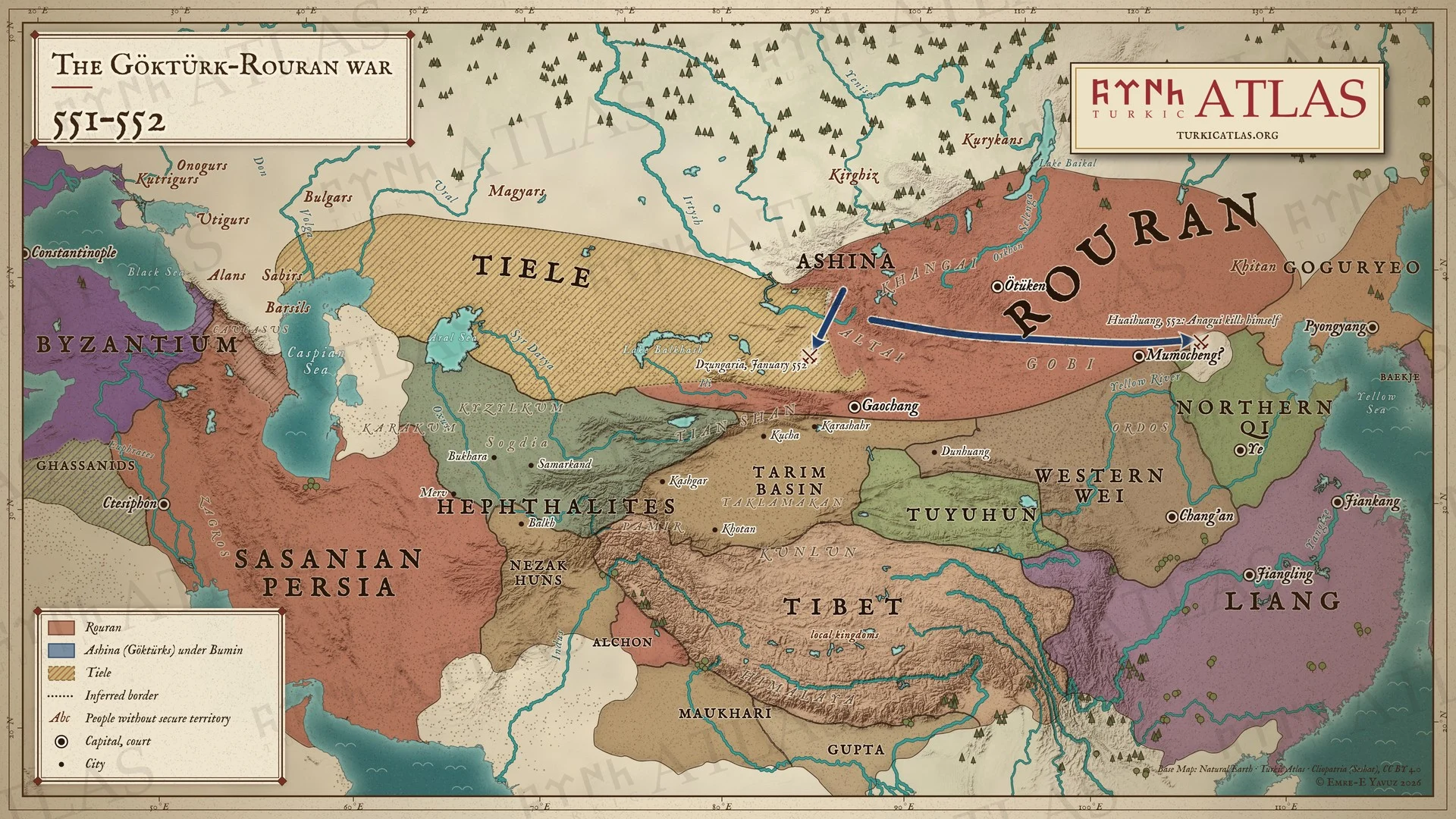
Anagui held the Rouran throne for three decades. He crushed the Tiele when they rose and twice led his armies into China. In 546 Bumin, the head of the Ashina, asked him for a daughter in marriage. Anagui answered that Bumin was his blacksmith slave and asked how he dared open his mouth. Six years later Bumin's army stood before his capital, and by the Chinese account Anagui took his own life.
- Rouran Khaganate
4/8
Bumin Khan
552

The founder, from the refused marriage to the new khaganate.
In 546 Bumin intercepted the Tiele on the march and defeated them, and more than fifty thousand of them submitted to him. After Anagui's insult he turned to China: in 551 the Western Wei sent him the princess Changle as his bride. In 552 he crushed the Rouran and took the title Illig Khan. He died within months, and his brother Istemi carried the new realm to the west.
 First Göktürk Khaganate
- Ashina
5/8
First Göktürk Khaganate
552–630
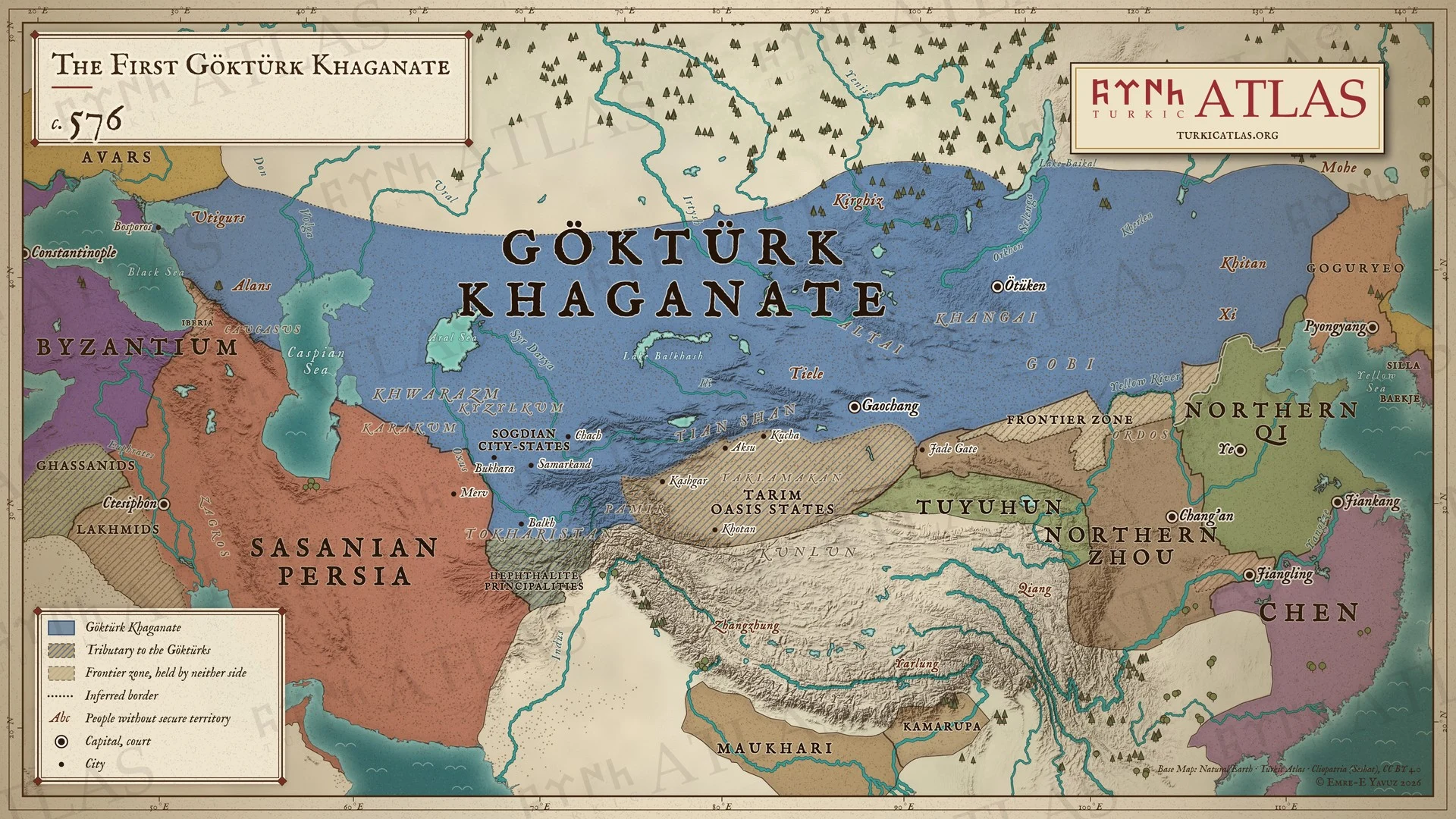
The first state in history to bear the name Türk.
From its centre at Ötüken in Mongolia, the new khaganate brought the steppe from Mongolia to the Black Sea under one rule. It was governed in two wings, an eastern and a western one, each held by a member of the Ashina. The arrangement made rapid growth possible, but it also created rival centres of power. After 584 civil war divided the wings, and the eastern khaganate fell to the Tang in 630.
- First Göktürk Khaganate
6/8
Istemi
552–576

The brother who carried the khaganate west.
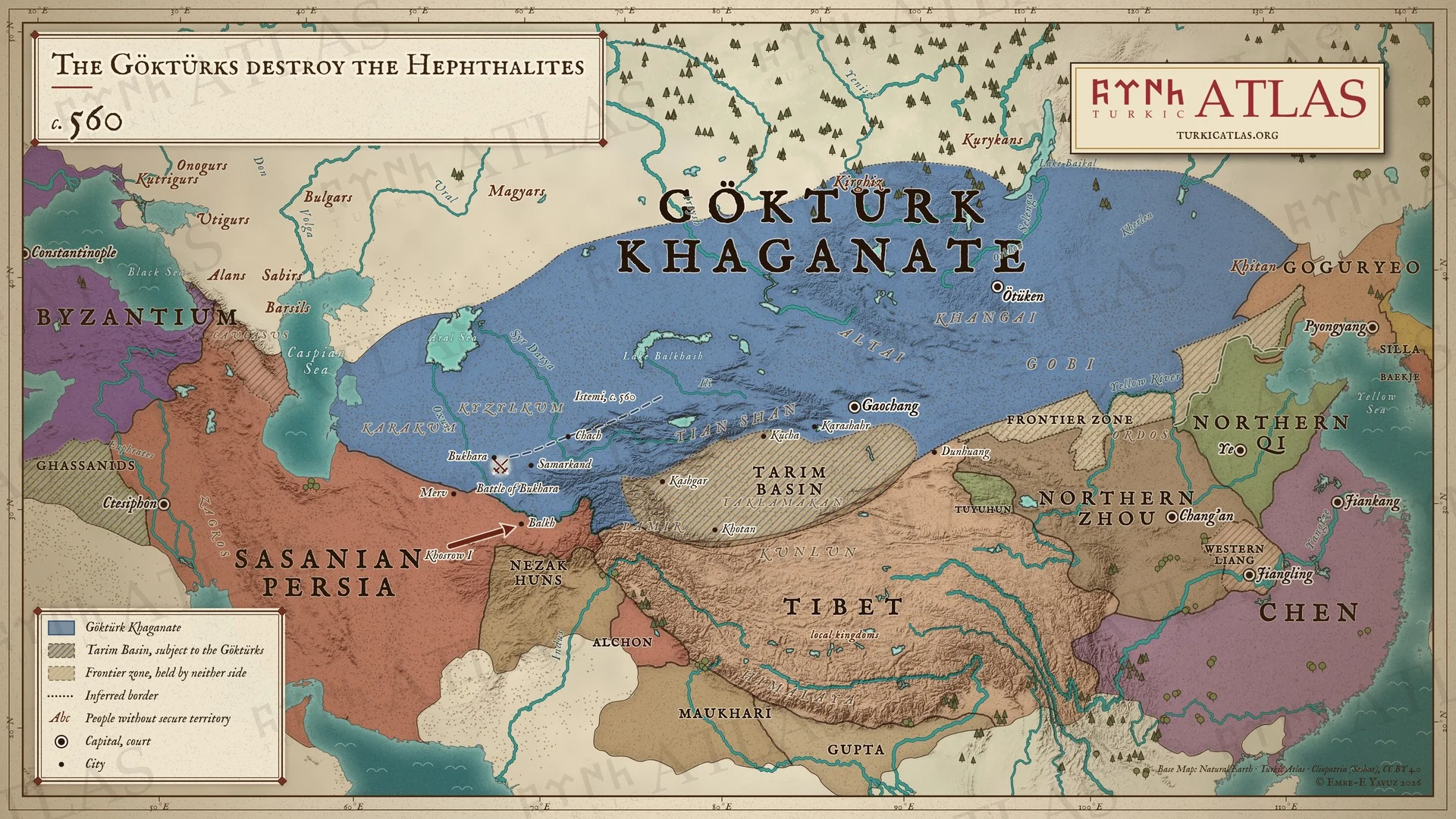
Bumin's younger brother Istemi took over the western half of the realm and ruled it for twenty-three years. In 553 he led an army out of the Altai into lands the Göktürks knew only by hearsay. Together with Persia he destroyed the Hephthalites and took the trading cities of Sogdiana. When he died in 576, the khaganate reached from the Khingan Mountains to the Volga, and its frontier with Persia ran along the Oxus, the Amu Darya of today.
- Ashina
7/8
Göktürk Expansion along the Silk Road
553–629
Why silk turned allies into enemies.
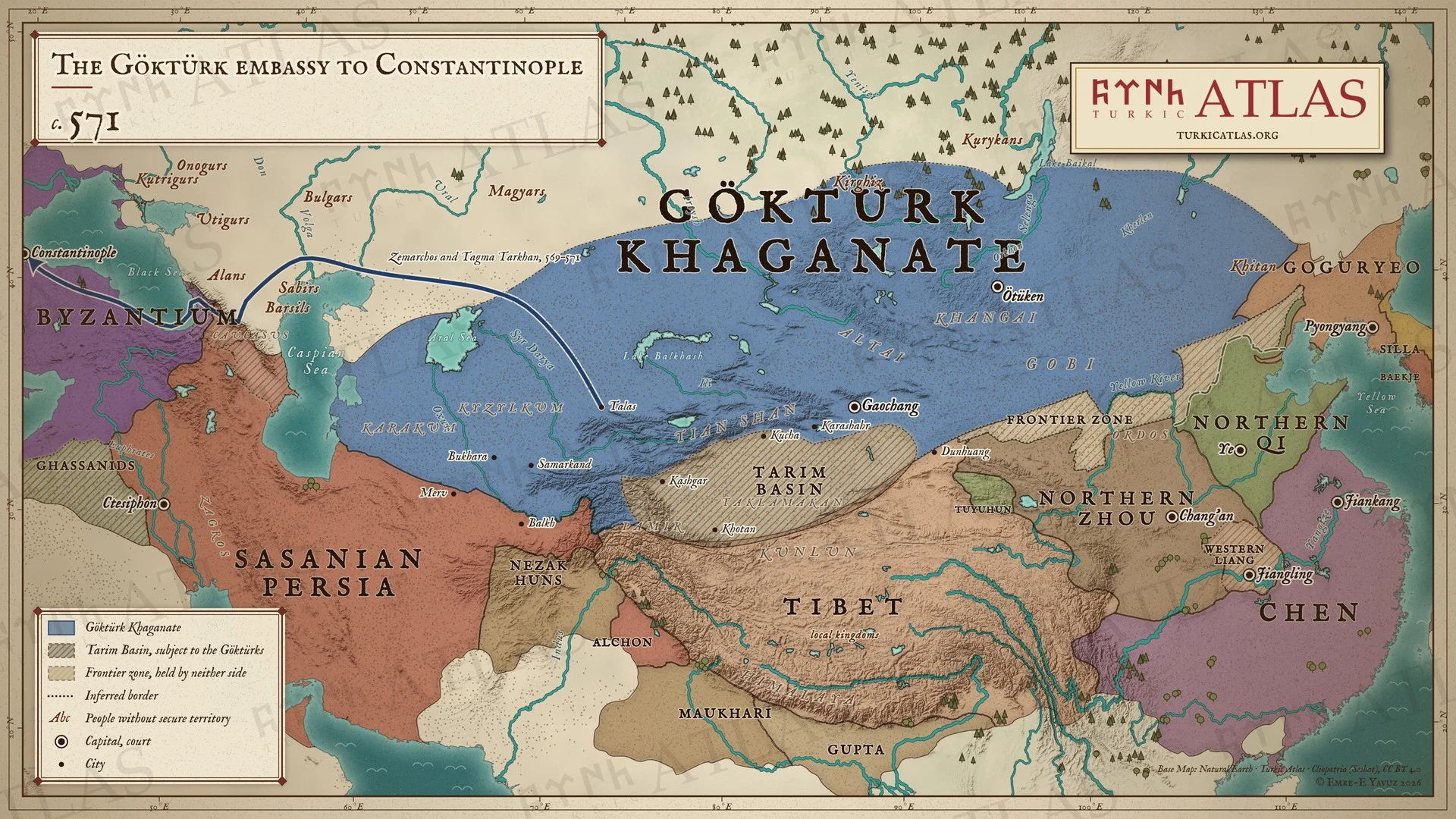
The Sogdians, once subjects of the Hephthalites, now served the Göktürks, and their merchants set out to sell the khaganate's raw silk in the west. In Persia the king Khosrow bought the silk and had it burned before the envoys' eyes. The quarrel over the trade turned the two allies into enemies. The Sogdian Maniakh then led an embassy around Persia to Constantinople.
 Byzantium
 Sasanian Persia
 Hephthalites
8/8
The embassy of Zemarchos, 569
569–571
A Roman envoy at the court of Istemi.
Emperor Justin II answered Maniakh's embassy with one of his own. In 569 Zemarchos of Cilicia travelled with the Sogdians to Istemi's camp on a mountain that the Greek account calls the Golden Mountain. He was purified by fire and received in a tent, where Istemi sat on a golden throne with two wheels. The Greek historian Menander preserved the account of the journey.
© Emre-E Yavuz 2026© Emre-E Yavuz 2026© Emre-E Yavuz 2026© Emre-E Yavuz 2026© Emre-E Yavuz 2026© Emre-E Yavuz 2026
