
شيۇڭنۇ–خەن ئۇرۇشلىرى خەن ئىمپېرىيەسى بىلەن شيۇڭنۇلار (Xiongnu) ئىتتىپاقى ئوتتۇرىسىدىكى ئۇرۇشلار ئىدى. ئۇلار مىلادىدىن بۇرۇن 200-يىلىدىكى بەيدېڭ قورشاۋىدىن مىلادىيە 93-يىلىدىكى شىمالىي چەنيۈ نىڭ ئاخىرلىشىغىچە داۋاملاشتى.
بەيدېڭ ۋە heqin
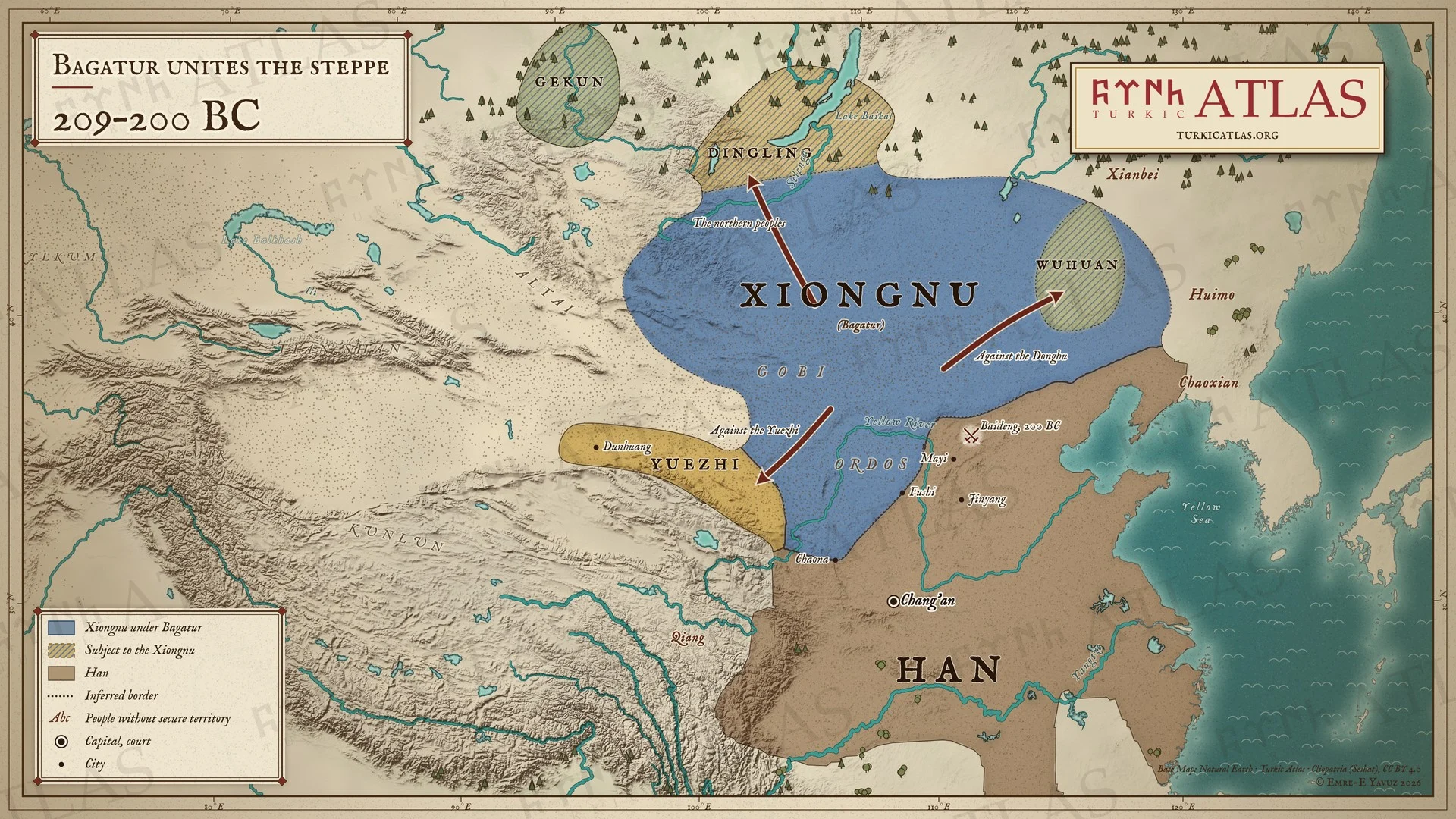
مىلادىدىن بۇرۇن 200-يىلىنىڭ قىشىدا باغاتۇر تۇنجى خەن ئىمپېراتورىنى يەتتە كۈن بەيدېڭ دۆڭىدە قامال قىلدى. ئۇنىڭ 320,000 كىشىلىك خەن قوشۇنىغا قارشى 400,000 تاللانغان ئاتلىقى بار ئىدى.[1][2] «خەن شۇ» 300,000 دىن ئارتۇق تاللانغان ئاتلىقنى كۆرسىتىدۇ.[3][4] ھەر ئىككى سان خەن ئوردىسىنىڭ يۇمىلاق سانلىرى، ھېسابلاپ چىقىرىلغان سان ئەمەس. شيۇڭنۇ سانى ئېھتىمال قورال كۆتۈرۈشكە يارايدىغان بارلىق ئەرلەرنى بىلدۈرىدۇ. ئىمپېراتور قۇتۇلۇپ چىقتى. ئۇنىڭ كەينىدىن heqin كېلىشىمى كەلدى: چەنيۈ ئۈچۈن بىر خەن شاھزادىسى، يىللىق سوۋغاتلار ۋە قېرىنداشلىق قەسىمى.[1] ۋېن بىلەن جىڭ دەۋرىدە خەن ھەر بىر ھۇجۇمدىن كېيىن كېلىشىمنى يېڭىلىدى. ئۇ مىلادىدىن بۇرۇن 133-يىلىغىچە داۋاملاشتى.[3] مىلادىدىن بۇرۇن 182-يىلىنىڭ باھارىدا، ئىمپېراترىتسا لۈ دەۋرىدە، شيۇڭنۇلار دىداۋغا ھۇجۇم قىلىپ، ئاياڭنى تالان-تاراج قىلدى. 181-يىلىنىڭ بىرىنچى ئېيىدا ئۇلار دىداۋنى يەنە تالان-تاراج قىلىپ، ئىككى مىڭ ئادەمنى ئېلىپ كەتتى.[5] مىلادىدىن بۇرۇن 177-يىلىنىڭ بەشىنچى ئېيىدا ئوڭ دانا پادىشاھ سېرىق دەريانىڭ جەنۇبىدىكى زېمىنغا كىرىپ، شاڭ ۋىلايىتىنىڭ چېگرا قاراۋۇللىرىنى قوغدىغان قەبىلىلەرنى تالان-تاراج قىلدى. ئىمپېراتور ۋېن باش ۋەزىرى گۇەن يىڭنى 85,000 ھارۋا ۋە ئاتلىق بىلەن ئۇنىڭغا قارشى ئەۋەتتى، پادىشاھ چېگرادىن ئۇ تەرەپكە چېكىندى.[1][6] بەزى ئالىملار بۇ ھۇجۇمنى خەنگە ئۆتۈپ، ئۇلار ئۈچۈن چېگرا قاراۋۇللىرىنى تۇتقان شيۇڭنۇلارغا بېرىلگەن جاۋاب دەپ چۈشەندۈرىدۇ.[7]
ئىككى زامانىۋى ئىزاھات ئۇرۇشلارنى كەڭرىرەك بىر چەمبەرگە قويىدۇ. بىرىنچىسى جۇڭگونى ھەرىكەتچان تەرەپ دەپ قارايدۇ. ئۇ چېگرانىڭ شەكلىنى دالىدىكى چوڭ كۆچمەنچىلىكتىن ئىلگىرى بولغان خەنزۇ ئۆسۈشىدىن ئالغانلىقىنى، تامنىڭ كۆچمەنلەرنى سىرتتا تۇتۇشقا قانچىلىك خىزمەت قىلغان بولسا، خەنزۇلارنى ئىچىدە تۇتۇشقىمۇ شۇنچىلىك خىزمەت قىلغانلىقىنى ئېيتىدۇ.[8] ئىككىنچىسى خەننىڭ شىمالىي چېگرادىكى دەسلەپكى ئۇرۇشلىرىنىڭ شيۇڭنۇلارغا ئەمەس، چېگرا قوماندانلىرىغا قارشى بولغانلىقىنى ئېيتىدۇ. قوماندانلار قىستالغاندا شيۇڭنۇلارغا ئۆتۈپ كېتەتتى. بۇ ھالدا ئوردا چېگرا ۋالىيلىرىنى قاتتىق تۇتقان يەردە، سودا بىلەن ئۇرۇش بېسىپ كىرىش ۋە قورقۇتۇپ پۇل ئېلىش سۈپىتىدە بىرلەشتۈرۈلۈشى مۇمكىن ئىدى.[9]
ۋۇدى دەۋرىدىكى بۇرۇلۇش
مىلادىدىن بۇرۇن 133-يىلى خەن چەنيۈنى تۇزاققا چۈشۈرۈش ئۈچۈن مايى ئەتراپىدا 300,000 ئادەمنى يوشۇردى. ئۇ چارۋىنىڭ پادىچىسىز ئوتلاپ يۈرگىنىنى كۆرۈپ، كەينىگە قايتتى.[1] يوشۇرۇن ھۇجۇمدىن كېيىن شيۇڭنۇلار heqin نى بۇزدى. ئۇلار چېگرىغا سانسىز ھۇجۇم قىلدى.[1] مىلادىدىن بۇرۇن 129-يىلى تۆت گېنېرال ھەر بىرى 10,000 ئاتلىق بىلەن يولغا چىقتى. پەقەت ۋېي چىڭلا لوڭچېڭگە يەتتى، گۇڭسۈن ئاۋ بولسا 7,000 ئادىمىنى يوقاتتى.[1] مىلادىدىن بۇرۇن 127-يىلى ۋېي چىڭ سېرىق دەريانىڭ جەنۇبىدىكى يەرنى ئېلىپ، ئۇنىڭدا شۇئوفاڭنى سالدى.[1] بۇ يەر ئوردوس.
ھۇجۇملار، مىلادىدىن بۇرۇن 124-يىلىدىن 119-يىلىغىچە
مىلادىدىن بۇرۇن 124-يىلى ۋېي چىڭ ئالتە گېنېرال ۋە 100,000 دىن ئارتۇق ئادەم بىلەن ئوڭ دانا پادىشاھنى كېچىدە ئورىۋالدى. پادىشاھ مەست ئىدى، چۈنكى ئۇ خەننىڭ ئۆزىگە يېتەلمەيدىغانلىقىنى ئويلىغان ئىدى. ئۇ قېچىپ كەتتى، خەن ئۇنىڭ 15,000 كىشىسىنى ئالدى.[1]
مىلادىدىن بۇرۇن 121-يىلى خۇئو چۈبىڭ غەربتىكى شيۇڭنۇلارغا ئىككى قېتىم زەربە بەردى. شۇ كۈزدە خۇنيې پادىشاھى شيۇتۇ پادىشاھىنى ئۆلتۈرۈپ، 40,000 دىن ئارتۇق ئادىمى بىلەن خەنگە ئۆتتى. «شىجى» بۇ ئادەملەرنىڭ 100,000 دەپ ئېلان قىلىنغانلىقىنى ئېيتىدۇ.[1] ۋۇدى سالنامىسى شۇ يىلى ئۇلارنىڭ يېرىنى ۋۇۋېي ۋە جيۇچۈەن ۋىلايەتلىرى قىلىدۇ. ئوخشاش يەردىن ئايرىلغان جاڭيې ۋە دۇنخۇاڭنى مىلادىدىن بۇرۇن 111-يىلى ۋىلايەت قىلىدۇ. باشقا مەنبەلەر خېشىنىڭ تۆت ۋىلايىتىنى باشقىچە تارىخلايدۇ.[10][11] تاڭ دەۋرىدىكى ئىزاھلىغۇچى جاڭ شوجيې «شىخې گۇشى» (Xihe gushi) نى نەقىل كەلتۈرۈپ، شيۇڭنۇلارغا ئىككى تاغنى ماتەم تۇتىدىغان بىر قوشاقنى مەنسۇپ قىلىدۇ: ئۇلار چىلىيەن تاغلىرىنى يوقاتقاندىن بېرى ھايۋانلىرى كۆپەيمەيدۇ. ئۇلار يەنجى تاغلىرىنى يوقاتقاندىن بېرى ئاياللىرىنىڭ يۈزىدە رەڭ يوق.[1][12] بەزى ئالىملار مىلادىدىن بۇرۇن 121 ۋە 119-يىللىرىدىكى يۈرۈشلەرنىڭ ئىككى داۋاملىق ئاقىۋىتىنى ساناپ ئۆتىدۇ. بىرىنچىسى شۇ ئوتلاقلارنى يوقىتىش. ئىككىنچىسى خېشى كارىدورىدىن لوپنۇرغىچە بولغان زېمىننى يوقىتىش، خەن ئۇ يەردە ئاندىن جيۇچۈەن ۋىلايىتىنى قۇرۇپ، شيۇڭنۇلارنى چياڭلاردىن ئايرىۋەتتى.[13]
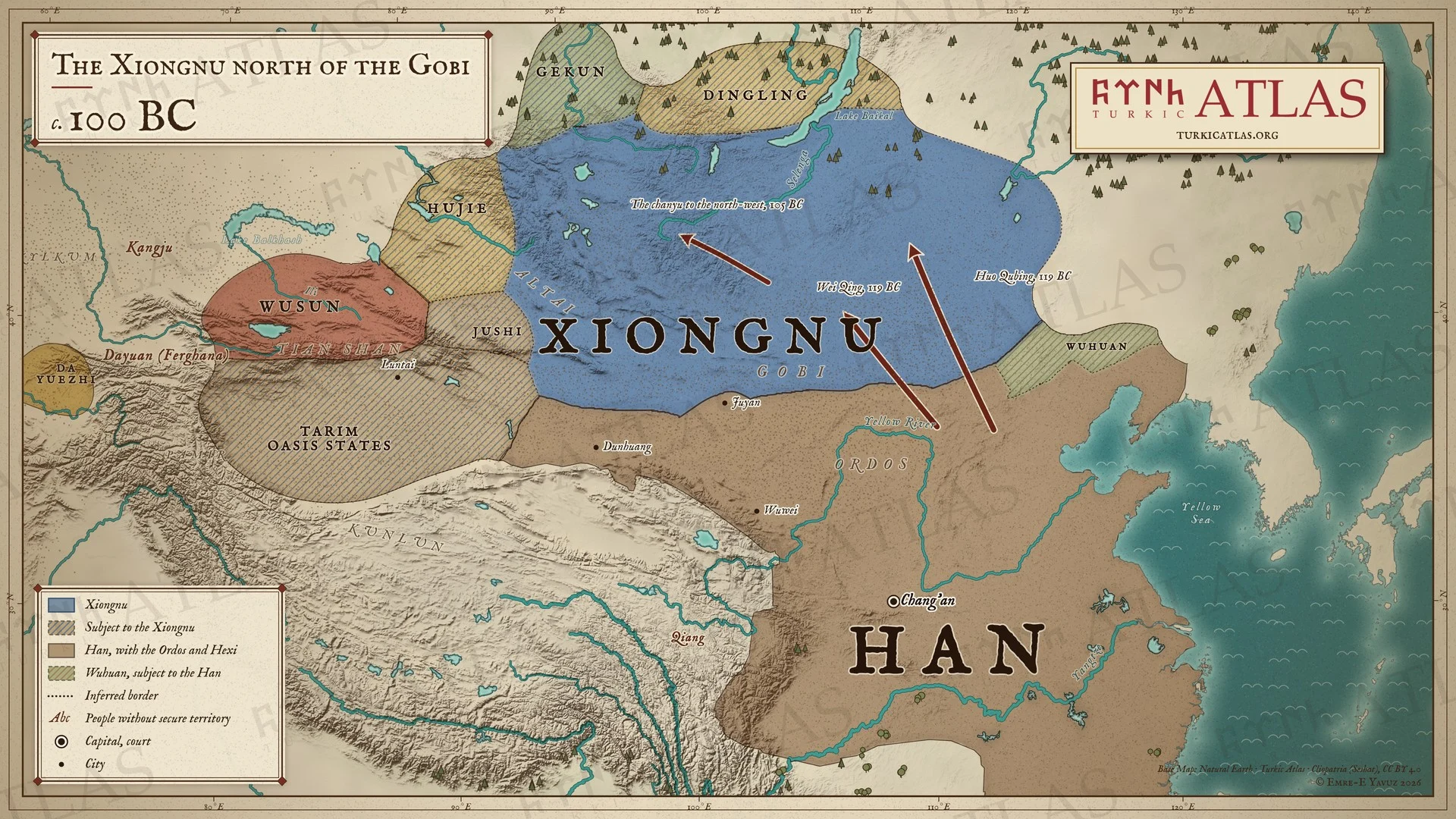
مىلادىدىن بۇرۇن 119-يىلىدىكى مۇبېي يۈرۈشىدە خەن مەيدانغا 100,000 ئات ۋە 140,000 زاپاس ئات سالدى.[1] چەنيۈ چۆلنىڭ شىمالىدا ساقلىدى. ئاخشام، قاتتىق شامالدا، خەن قانىتى ئۇنىڭغا يېپىلدى. ئۇ بىر نەچچە يۈز ئاتلىق بىلەن بۆسۈپ چىقتى.[1] شۇنىڭدىن كېيىن شيۇڭنۇلارنىڭ گوبىنىڭ جەنۇبىدا خان ئوردىسى قالمىدى. بىراق خەن 100,000 دىن ئارتۇق ئاتنى يوقاتقان ئىدى ۋە يەنە چىقالمايتتى.[1]
ئاجىزلىشىش
مىلادىدىن بۇرۇن 103-يىلى 80,000 شيۇڭنۇ ئاتلىقى جاۋ پونۇنىڭ قوشۇنىنى ئايرىۋەتتى، قوشۇن يوقالدى.[1] مىلادىدىن بۇرۇن 99-يىلى لى گۇاڭلى قورشىلىپ، ئون ئادەمنىڭ ئالتە ياكى يەتتىسىنى يوقاتتى.[1] مىلادىدىن بۇرۇن 90-يىلى لى گۇاڭلى 70,000 ئادەم بىلەن يولغا چىقتى. «خەن شۇ» غا ئاساسلانغاندا، ئۇ كېچىدىكى ھۇجۇمدىن كېيىن تەسلىم بولدى.[3] خەن ئەمدى قوشۇن ئەۋەتمىدى. ۋۇدى ئۈچ يىلدىن كېيىن ئۆلدى.[3]
شيۇڭنۇلارنىڭ بۆلۈنۈشى
مىلادىدىن بۇرۇن 72-يىلى بەش خەن قوشۇنى ۋە 50,000 ۋۇسۇن ئاتلىقى يولغا چىقتى. شيۇڭنۇلار ئۇلاردىن قۇتۇلۇپ كەتتى.[3] شيۇڭنۇلار ئاندىن قار بورىنى ۋە دىڭلىڭلار، ۋۇخۇەنلەر ۋە ۋۇسۇنلار سەۋەبىدىن خەلقىنىڭ ئونتىن ئۈچىنى، پادىلىرىنىڭ ئونتىن بەشىنى يوقاتتى.[3] مىلادىدىن بۇرۇن 57-يىلىدىن باشلاپ رەقىب چەنيۈلەر بىر-بىرى بىلەن ئۇرۇشتى. مىلادىدىن بۇرۇن 53-يىلى خۇخانيې قېرىندىشى تەرىپىدىن مەغلۇب قىلىنىپ، ۋەزىرلىرىنىڭ مەسلىھەتىگە قارشى خەنگە بويسۇندى. جىجى غەربكە كەتتى.[3] مىلادىدىن بۇرۇن 36-يىلى گەن يەنشۇ ۋە چېن تاڭ قوشۇن توپلىدى. ئۇلار جىجىنى كاڭجۈدە ئۆلتۈردى.[3]
شىمالنىڭ ئاخىرلىشىشى
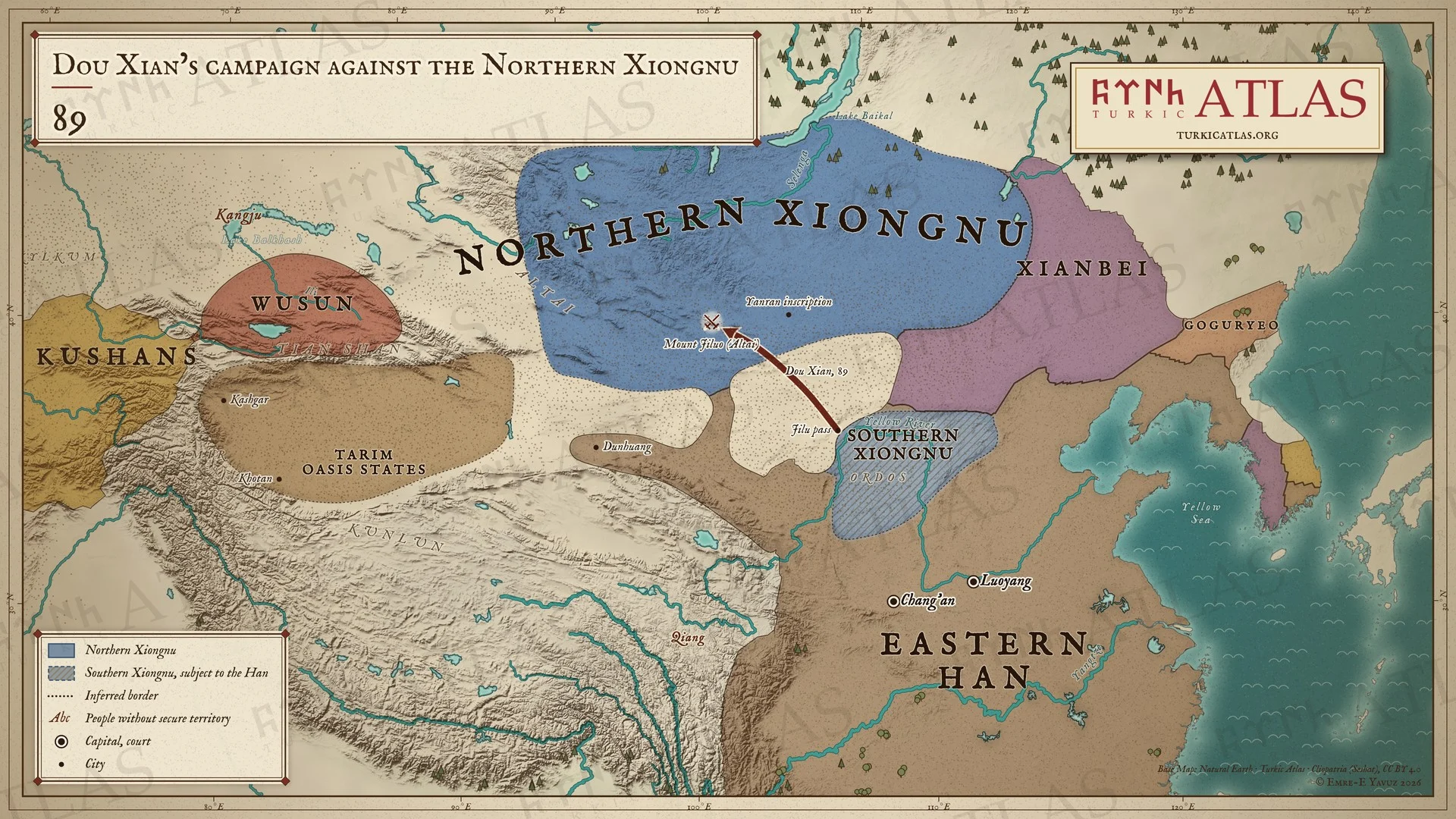
مىلادىيە 89-يىلى بىلەن 91-يىلى ئارىسىدا خەن ۋە جەنۇبىي شيۇڭنۇ قوشۇنلىرى شىمالىي ئوردىنى بۆسۈپ ئۆتتى. مىلادىيە 93-يىلى ئاخىرقى دەۋاگەر چېگرادىن ئۆتۈپ قايتىپ كېلىشكە ئالدانىپ، بېشى ئېلىندى. بۇ خەننىڭ شىمالىي شيۇڭنۇلارغا قارشى يۈرۈشلىرى دە سۆزلىنىدۇ.[14] «خۇ خەن شۇ» نىڭ ئاخىرقى ھۆكۈمىدە چەنيۈ ۋۇسۇنلارنىڭ زېمىنىغا قاچتى. چۆلنىڭ شىمالىدىكى زېمىن بوش قالدى.[14]
-
c. 215 BC Qin takes the Ordos
Around 215 BC the First Emperor of Qin sent Meng Tian north with a hundred thousand men. He took the land inside the great bend of the Yellow River, the Ordos, made the river the frontier and crossed it to hold the plain below the Yin mountains. According to the Shiji the Donghu north of Yan were strong at this time, and the Yuezhi flourished between Dunhuang and the Qilian mountains. The Xiongnu chanyu Duman could not withstand Qin and moved north. How far north, the source does not say. A second reading places the Qilian of this passage in the Tianshan; the hatched area shows it.
-
209–200 BC Modu unites the steppe
In 209 BC Modu killed his father Duman and became chanyu. Between the Xiongnu and the Donghu lay an empty strip more than a thousand li wide. When the Donghu demanded it, Modu struck east and destroyed their king. The Wuhuan held out at the Wuhuan mountain and paid the Xiongnu a yearly tribute of oxen, horses and sheepskins; the Xianbei withdrew far beyond the Liaodong frontier. Modu drove back the Yuezhi, took back the land Meng Tian had seized as far as Chaona and Fushi, and subjected the Hunyu, Qushe, Dingling, Gekun and Xinli in the north. In 200 BC he surrounded the Han emperor Gaozu for seven days on the hill of Baideng near Pingcheng.
-
176–c. 160 BC The height of the realm
In 176 BC Modu wrote to the Han court that the Wise King of the Right had destroyed the Yuezhi, and that Loulan, the Wusun, the Hujie and twenty-six states around them had all become Xiongnu: all the peoples who draw the bow were now one family. His son Laoshang killed the Yuezhi king and made a drinking cup of his skull. The Yuezhi left the Hexi and moved west into the land of the Saka. The Han Shu names a Xiongnu Commandant of Slaves who resided between Karashahr, Weixu and Weili and taxed the oasis states. In 162 BC the emperor Wendi confirmed the Long Wall as the line between the two realms. No source describes the northern edge of the realm in Tuva and beyond the Baikal.
-
127–121 BC The Han take the Ordos and the Hexi
In 127 BC the Han general Wei Qing drove the kings of the Loufan and the Baiyang out of the Ordos. Han founded Shuofang there and restored Meng Tian's wall along the river; in exchange it gave up the district of Zaoyang beyond Shanggu. In 123 BC the chanyu withdrew north across the Gobi on the advice of the defector Zhao Xin. In the spring and summer of 121 BC Huo Qubing struck into the Hexi corridor, and in the autumn the Hunye king killed the Xiutu king and went over to Han with more than forty thousand people. From then on, says the Shiji, the land from Jincheng and the Hexi west along the Southern Mountains to the Salt Marsh was empty of Xiongnu. By this time the Wusun held the land of the Saka, and the Yuezhi had moved on to the north bank of the Oxus.
-
119–c. 100 BC North of the Gobi
In 119 BC Wei Qing and Huo Qubing crossed the Gobi with separate armies. Huo Qubing marched more than two thousand li beyond Dai, sacrificed on Mount Langjuxu and turned back at the Hanhai. Afterwards, says the Shiji, there was no royal court south of the Gobi. Han settled soldiers and farmers from Shuofang west to Lingju and set up the commanderies of the Hexi, from Wuwei to Dunhuang; the Wuhuan were moved beyond the frontier of five eastern commanderies to watch the Xiongnu for Han. By 105 BC the chanyu had moved further north-west, his left wing facing Yunzhong and his right Jiuquan and Dunhuang. The southern edge of the realm ran somewhere in the Gobi.
-
60–51 BC The Western Regions lost, the realm divided
In 71 BC the Dingling struck the Xiongnu from the north, the Wuhuan from the east and the Wusun from the west, and the peoples bound to them fell away. In 60 BC the Rizhu king went over to Han. The Xiongnu Commandant of Slaves was abolished, and Zheng Ji became the first Protector-General of the Western Regions, with his seat at Wulei. In 57 BC five chanyus contended for the throne. In 54 BC Zhizhi took the royal court, and his younger brother Huhanye moved south to the Han frontier. In 51 BC Huhanye came before the emperor at Ganquan and was allowed to live below the Guanglu wall.
-
49–33 BC Zhizhi in the west, Huhanye in the north
Believing that Huhanye, weak and bound to Han, could not come back north, Zhizhi led his people west. He defeated the Wusun, received the surrender of the Wujie in the north, broke the Jiankun in the west and brought the Dingling under him, and made his seat in the land of the Jiankun. Around 44 BC he killed a Han envoy and went on to Kangju; of his people only three thousand arrived. In 36 BC the Protector-General Gan Yanshou and his deputy Chen Tang marched on Kangju and killed him. Huhanye meanwhile returned to the royal court in the north, and in 33 BC he received the palace lady Wang Zhaojun as his wife. From then on the land north of the Long Wall belonged to the Xiongnu again.
-
AD 48–50 Northern and Southern Xiongnu
Under Wang Mang the states of the Western Regions went over to the Xiongnu. In AD 48 the chiefs of eight southern tribes raised Bi, the Rizhu king, as chanyu under the name Huhanye; he came to the Wuyuan frontier and offered to shield Han against the northern Xiongnu for ever. The next year the northern chanyu fell back a thousand li. In AD 50 the southern court moved inside the frontier, first to Yunzhong and in the winter to Meiji in Xihe, and its chiefs were stationed along the frontier commanderies from Beidi to Dai. Beyond the Liaodong frontier the Xianbei sent their first envoys to Han in AD 49.
-
AD 87–93 The end of the Northern Xiongnu
In AD 87 the Xianbei entered the eastern lands of the Northern Xiongnu and killed the chanyu Youliu; fifty-eight tribes, two hundred thousand people, came to the frontier to surrender. In 89 Dou Xian marched out with the southern chanyu, defeated the northern chanyu at Mount Jiluo and had an inscription cut on Mount Yanran, more than three thousand li beyond the frontier. A rock inscription in the Gobi of central Mongolia is identified with this text; it lies much closer to the frontier than the figure of the source. In 91 Geng Kui defeated the northern chanyu at the Jinwei mountains, and the chanyu fled to the land of the Wusun. The Xianbei moved into the empty land, and more than a hundred thousand Xiongnu tents that stayed behind called themselves Xianbei.
-
c. AD 155–180 The Xianbei in the old Xiongnu land
The Xianbei leader Tanshihuai set his court on the Chuochou river below Mount Tanhan, more than three hundred li north of Gaoliu. According to the Hou Han Shu he raided the Han frontier in the south, held off the Dingling in the north, drove back the Fuyu in the east and struck the Wusun in the west, and held all the old Xiongnu land, fourteen thousand li from east to west. He divided it into an eastern, a central and a western part; the western reached Dunhuang and the Wusun. The Southern Xiongnu remained inside the Han frontier. One reckoning puts the last defeat of the Northern Xiongnu by the Xianbei in 155, a second puts their move west around 158; the hatched area north of Kangju shows where the second places them.
- Place named in a source (position as commonly identified)
- Position disputed or approximate
- Zone drawn after the Han histories
- Second reading or entirely uncertain position (hatched)
- People subject to the Xiongnu, or under Han protection
- Oasis states taxed by the Xiongnu
- Border that no source describes (drawn uncertain)
- Movement named in a source (route drawn)
ئىزاھلار
- ^ a b c d e f g h i j k l m n o Shiji, juan 110
- ^ Ögel 2015, p. 281–286
- ^ a b c d e f g h Han Shu, juan 94
- ^ Ögel 2015, p. 285
- ^ Ögel 2015, p. 306
- ^ Ögel 2015, p. 307–309
- ^ Ögel 2015, p. 307
- ^ Lattimore 1951, p. 240, 460–461
- ^ Lattimore 1951, p. 467–468, 478–480
- ^ Han Shu, juan 6
- ^ Chavannes 1913, v–vi
- ^ Laufer 1919, p. 326
- ^ Sinor 1990, p. 130
- ^ a b Hou Han Shu, juan 89
مەنبەلەر
- شىجى (Shiji), juan 110
- خەنشۇ (Han Shu), juan 6, 94 (after Shiji)
- خۇ خەن شۇ (Hou Han Shu), juan 89
ئەدەبىيات
- Denis Sinor (ed.), The Cambridge History of Early Inner Asia (1990)
- Berthold Laufer, Sino-Iranica. Chinese Contributions to the History of Civilization in Ancient Iran (1919)
- Édouard Chavannes, Les documents chinois découverts par Aurel Stein dans les sables du Turkestan oriental (1913)
- Bahaeddin Ögel, Büyük Hun İmparatorluğu Tarihi I (2015)
- Owen Lattimore, Inner Asian Frontiers of China (1951)
بۇ بەتكە ئۇلانغانلار9
- شەخسلەر
- خەن ئىمپېراتورى ۋۇ · خۇنيې پادىشاھى · لى لىڭ · مېڭ تيەن · سۇ ۋۇ · ۋېي چىڭ · ئىزىشىيې چەنيۈ
- Places
- يەشىم دەرۋازا
- Controversies
- قىرغىزلارنىڭ لى لىڭدىن ئەۋلاد بولۇشى
ماقالىنى نەقىل كەلتۈرۈش
Yavuz, Emre-E. “شيۇڭنۇ–خەن ئۇرۇشلىرى.” Turkic Atlas, revised 20 November 2026. https://turkicatlas.org/conflicts/xiongnu-han-wars/
Last revised: 20 November 2026

