
The confederation that dominated the eastern steppe for two centuries and was the principal adversary of Han China. The path follows the Chinese sources in order: the ruler killed by his own son, the empire that son made, the treaty that bought the frontier its quiet, the war that broke it, the division of the confederation and the end of its northern half. The last stop is the debate on whether the Huns of Europe continue the Xiongnu.
1/15
Xiongnu
209 BC–155
The confederation itself: what it was, what is known of it and through whom.
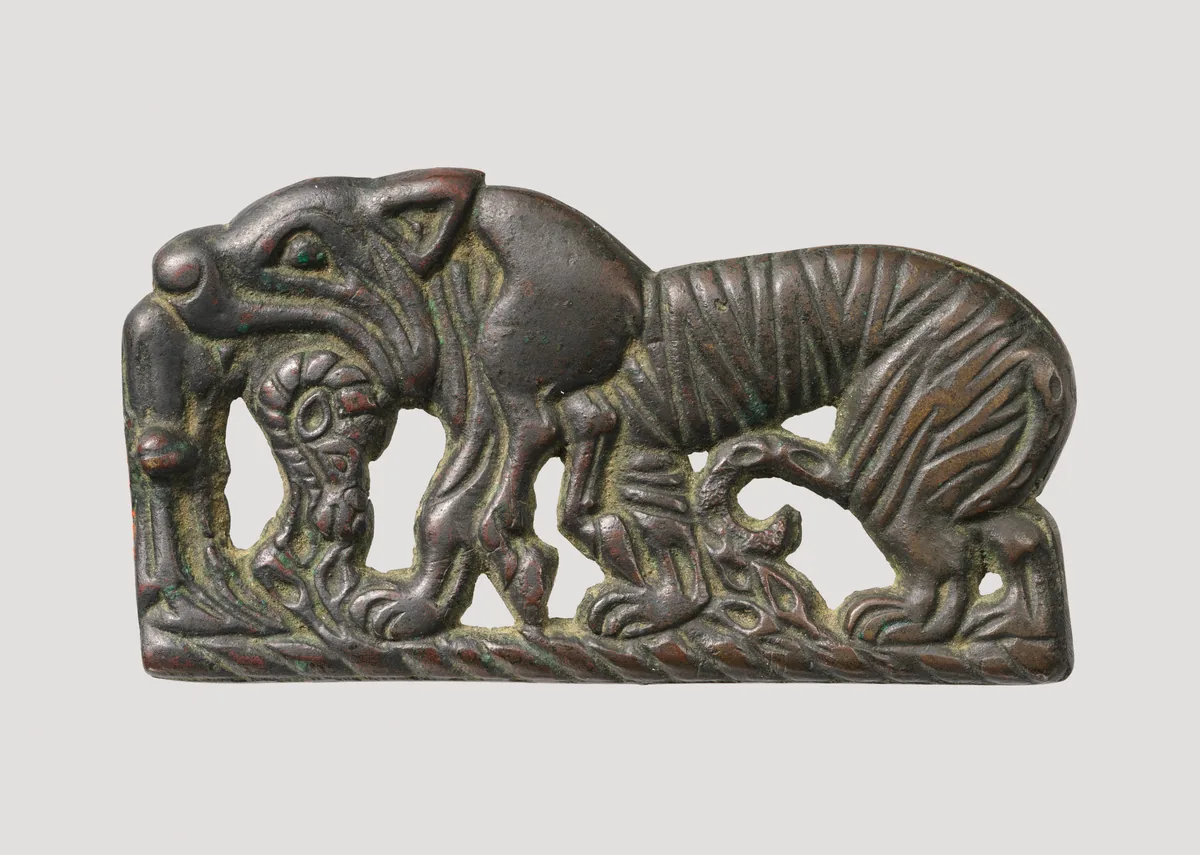
The Xiongnu were the confederation that dominated the eastern steppe from the end of the third century BC and for two centuries were the principal adversary of Han China. They left no text of their own, so everything known of them comes through Chinese sources, and the Chinese account of their origins conflates at least three different things under one name. The Shiji describes them as wanderers without walled cities or agriculture; excavation at Ivolga and in the Egiin Gol valley shows settlements and grain. The article also holds the two open questions that bear on the later khaganates: what language their rulers spoke, and whether the Ashina came out of them.
 Xiongnu
2/15
Duman (Touman)
† 209 BC
The first ruler of the Xiongnu whom any source names, and the hunt that ended his reign.
Duman is the first Xiongnu ruler any source names. The Shiji places him at a moment of Chinese strength: the Qin sent Meng Tian north with a hundred thousand men and took the land south of the bend of the Yellow River. The chapter says that Touman could not match the Qin and moved north. He wished to put a younger son in the place of his heir Bagatur, sent Bagatur as a hostage to the Yuezhi and then attacked them. Bagatur stole a horse and rode home, and in 209 BC he shot his father on a hunt. All of this stands in one chapter, written some ninety years after the events.
- Xiongnu
3/15
Bagatur (Modu Chanyu)
209 BC–174 BC
The son who killed his father and made the confederation an empire.
Bagatur came to the throne in 209 BC by killing his father. By his death in 174 BC the Xiongnu commanded the steppe from Manchuria to the Tarim, had beaten a Han emperor in the field and had imposed on the Han court a treaty of yearly payments. He drilled his riders with whistling arrows until every man shot where he shot, and then turned the arrow on Duman. He drove the Yuezhi west and subdued five peoples of the north. The Shiji sets out the order of his state: Worthy Kings, twenty-four commanders of ten thousand horsemen, three noble clans and three assemblies in the year. Bagatur is a proposed reading of the Chinese graphs 冒頓.
- Xiongnu
4/15
Donghu
300 BC–206 BC
The eastern neighbour, and the three requests that Bagatur answered with an attack.
The Donghu were the power on the eastern side of the Xiongnu; at the time of Duman, the Shiji says, they were strong and the Yuezhi flourishing. They asked Bagatur for his father's thousand-li horse, and he gave it. They asked for one of his consorts, and he gave her. They asked for the empty land between the two peoples, and he beheaded the counsellors who advised giving it and said that land is the foundation of the state. The Donghu had taken his compliance for fear and had made no preparation. He destroyed their king and took their people and their herds. The Chinese histories trace the Xianbei and the Wuhuan to what survived of them.
5/15
Siege of Baideng
200 BC
A Han emperor surrounded for seven days, and the way out of the ring.
In the winter of 200 BC the first Han emperor, Gaozu, took the field against Bagatur after the Han king Xin had gone over to the Xiongnu at Mayi. Bagatur made a show of defeat and drew the Han on, who came north with three hundred and twenty thousand men, most of them infantry. Gaozu reached Pingcheng ahead of his foot, and Bagatur shut him up on Baideng for seven days. A gift to the chanyu's consort, and the failure of two allied commanders to appear, led Bagatur to open one corner of the ring. Gaozu ordered every man to draw his bow and face outward, and walked the column out through the gap.
- Xiongnu
6/15
Heqin
198 BC–133 BC
The arrangement that bought seventy years of quiet, and the ways it was read.
Heqin was the arrangement by which the Han bought quiet on the northern frontier for seventy years: a woman of the imperial house as the chanyu's consort, fixed yearly deliveries of floss, silk, wine, rice and food, open frontier markets and an oath that made the two rulers brothers. The Han letter of 162 BC reads it as a division between two sovereigns. The Xiongnu letters read the deliveries as what a lesser court sends to a greater one. Zhonghang Yue, a Han eunuch who had gone over to the chanyu, argued inside the Xiongnu court that a taste for Chinese goods would deliver the Xiongnu into Han hands.
7/15
Laoshang Chanyu
174 BC–161 BC
The son who held the empire, the defector Zhonghang Yue and the raid that came within a day's ride of the capital.
Laoshang, whose personal name was Jiyu, inherited the empire and spent his reign showing that it could be held. The Shiji says he killed the Yuezhi king and made his head into a drinking vessel. With the Han princess sent at his accession came a eunuch, Zhonghang Yue, who went over to the chanyu, taught his officers to keep written records and to count the people and animals by account, and had the Xiongnu answer Han letters on a longer tablet with a broader seal. In 166 BC the chanyu entered Zhaona with a hundred and forty thousand horse, and his scouts were seen at the Sweet Springs, within a day's ride of the capital.
- Xiongnu
8/15
Mayi ambush
133 BC
The battle that was never fought, and the end of the heqin.
In 133 BC the Han put three hundred thousand men in hiding around the frontier town of Mayi under the censor-in-chief Han Anguo. A man of Mayi named Nie Wengyi, who traded contraband across the line, offered the chanyu Junchen the town for sale, and Junchen came into the Wuzhou pass with a hundred thousand horse. A hundred li short of the town he saw livestock spread over the country with nobody herding it, attacked a watchtower instead, and learned from the officer he took what was waiting. He withdrew without a single arrow loosed. The Shiji says that from then on the Xiongnu broke off the heqin and raided the frontier past counting.
- Xiongnu
9/15
The Xiongnu–Han Wars
200 BC–93
The long war that followed Mayi, from the Han offensives to the end of the northern chanyu.
The wars between the Han and the Xiongnu run from the siege of Baideng in 200 BC to the end of the northern chanyu in AD 93. After the ambush at Mayi the Xiongnu broke the heqin, and in 129 BC four generals went out with ten thousand horse each; only Wei Qing reached Longcheng. In 127 BC Wei Qing took the land south of the Yellow River, the Ordos, and built Shuofang on it. In 119 BC the Han put a hundred thousand horse in the field and lost more than a hundred thousand horses. Defeats in 103, 99 and 90 BC ended the offensives. The Xiongnu then divided, and in AD 93 the last northern claimant was beheaded.
- Xiongnu
10/15
Mobei campaign, 119 BC
119 BC
The deepest Han strike into the steppe, and the turn of the long war.
In 119 BC the Han sent two armies across the Gobi under Wei Qing and Huo Qubing. It was the deepest strike the Han had attempted, and its point was to reach the Xiongnu court itself rather than the frontier. The chanyu Yizhixie was beaten north of the desert and broke out with a small escort. The Xiongnu gave up the country south of the Gobi, and the Han pushed its garrisons and its colonists into the Ordos loop behind them. The campaign is the turn of the long war that had opened at Mayi fourteen years before.
- Xiongnu
11/15
Huhanye Chanyu
58 BC–31 BC
Five chanyus at once, and the one who went to Chang'an and bowed.
Between 57 and 54 BC as many as six men held the title of chanyu at once, and Huhanye was beaten twice, the second time by his own brother. The only surviving Xiongnu council debate records what he did next. The great ministers said that to serve the Han would shame the former chanyus. The Left Yizhizi King answered that strength and weakness have their seasons, and that to serve was to survive. Huhanye took the second view, and in 51 BC he was received at the Sweet Springs palace, above the vassal kings. About 43 BC he swore an oath on Mount Nuoshui, drinking from the cup made of a Yuezhi king's skull.
- Xiongnu
12/15
Zhizhi Chanyu
56 BC–36 BC
The brother who refused to bow and went west.
Zhizhi, whose name was Hutuwusi, was Huhanye's elder brother. He broke Huhanye and took the chanyu's court, but when his brother submitted to the Han the balance turned, and he wished to go far away. He went north, where the Wujie surrendered, he broke the Jiankun, the country of the Yenisei Kirghiz, and the Dingling submitted. He repeatedly beat the Wusun. Kangju invited him west to fight the Wusun. The march cost him almost everything: his people died of the cold on the road, and three thousand reached Kangju. In 36 BC the Protector General Gan Yanshou and his deputy Chen Tang went into Kangju and killed him.
- Xiongnu
13/15
Xiongnu split of 48
48
Famine, a quarrel over the succession and the prince Bi, who took the title of Huhanye.
In the winter of AD 48 a prince named Bi, a grandson of Huhanye, took the title of chanyu against the court in the north. The break came over the succession: the chanyu wished to pass the throne to his own son and killed the brother who stood next in line, and Bi, passed over twice, said that speaking by sons he was the eldest and ought to succeed. Drought and locusts had struck the Xiongnu country, and more than half the men and animals died. In the spring the chiefs of the eight tribes agreed to make Bi chanyu and gave him the title Huhanye. From then on the Xiongnu were divided into a southern and a northern realm.
14/15
Han campaigns against the Northern Xiongnu
87–93
Four armies in six years, and a Southern Chanyu who asked to finish the north.
Between AD 87 and 93 the northern half of the Xiongnu was destroyed by four armies in six years. The Han provided the command and the money but only a minority of the troops; the rest were Xiongnu, Xianbei and Wuhuan fighting for the Han against their own kin. In 88 the Southern Chanyu Tuntuhe sent a memorial asking that the campaign be given to his own troops. In 89 Geng Bing and Dou Xian went out from Shuofang and broke the Northern Xiongnu. In AD 93 his brother Yuchujian, whom the Han had recognised, broke away and was beheaded. The Hou Han Shu, the only witness, reports the war from inside the Southern court.
- Xiongnu
15/15
The Huns and the Xiongnu
91–469
Whether the Huns of Europe continue the Xiongnu: the readings, and what each rests on.
Whether the Huns of Europe continue the Xiongnu has been discussed since 1756. The names probably go back to one word, but a shared name is not a shared people. One reading identifies the two and holds that the elite of both was Turkic-speaking; a second finds no unbroken chain of evidence but thinks one likely; a third holds that no direct connection is known; a fourth declines to judge. The Hunnic graves, names and common nouns show little that is eastern. Between the end of the Xiongnu in the north in 91 and the Huns on the Don in the 370s lie nearly three centuries for which no source follows them.
- 1. Xiongnu
- 2. Duman (Touman)
- 3. Bagatur (Modu Chanyu)
- 4. Donghu
- 5. Siege of Baideng
- 6. Heqin
- 7. Laoshang Chanyu
- 8. Mayi ambush
- 9. The Xiongnu–Han Wars
- 10. Mobei campaign, 119 BC
- 11. Huhanye Chanyu
- 12. Zhizhi Chanyu
- 13. Xiongnu split of 48
- 14. Han campaigns against the Northern Xiongnu
- 15. The Huns and the Xiongnu

