
Бухара салгылашы эфталит мамлекетин талкалап, көк түрктөрдү Согдианага ээ кылган салгылашуунун заманбап аты. Окуя шексиз. Жылы, жери жана жеңилген падышанын аты шексиз эмес. Аны үч салт баяндайт, бири да майдандан эмес: арабча Табари, кытай династиялык тарыхтары жана грекче Менандр, ал анын кесепеттерин Константинопольго келген элчилерден көргөн.
Булактар
Табари жеңүүчүнү жана жеңилгенди атайт жана башка эч нерсе айтпайт.[1] Каган Синжибу, башкача айтканда Истеми, «бардык түрктөрдүн эң эр жүрөгү жана эң күчтүүсү болгон жана эң көп аскерге ээ болгон; Хайатиланын падышасы Варзды өлтүргөн ал; алардын саны менен күчүнөн коркпой, падышаны аскеринин көпчүлүк бөлүгү менен өлтүрүп, байлыгын олжо кылып, Хосровдун колуна өткөн бөлүктөрдөн башка жерин багындырган».[2] Масуди падышаны Акшунваз деп атайт, бул эки муун мурун Перозду жеңген эфталит башкаруучусунун Акшунварын эске салат.[3] Чжоу шу эфталиттердин жеңилүүсүн Мукан хандын жеңиштеринин катарында берет. Ал Истемини такыр атабайт. Суй шу аны кайталайт, жана эки текст тең персиялык союздашты же падышанын өлүмүн билбейт.[4] Менандр, экинчи четинен, согдуларга өздөрүн Истемиге мурун эфталиттердин, азыр көк түрктөрдүн букарасы катары сүрөттөтөт. Ал ошондой эле Истеминин II Юстинге жазган катында эфталиттер багындырылып, шаарларда жашап жатканын билдиртет.[5] Земархтан бардык эфталиттер багындырылдыбы деп сурашканда, жооп бир сөз болгон, «бардыгы».[5] Менандр ошондой эле тарап алмаштырган кишини атайт: Хосровдун кеңешиндеги эфталит Катульф, өз элин көк түрктөргө сатып берген.[5]
Кайра куруу
Жүрүш төмөнкүчө өттү.[6] Бул кайра куруу боюнча, согдулук шаарлардын жети падышасы Бухарада чогулушкан. Алар Сырдарыядагы жаңы көк түрк коңшуларына эфталиттерге каршы жардам сурап киши жиберишкен, эфталиттер өздөрүнүн эң чоң гарнизондорун Бухарада кармашкан. Көк түрктөр кичирээк эфталит посттору менен тез эле иштерин бүтүрүп, Бухаранын дарбазаларынын алдында пайда болушту. Ошол эле учурда экинчи фронт батыш Таримде ачык болгон, ал эми үчүнчүсү, персиялык, түштүк-чыгышта. Эфталит башкаруучусу Гадфар Балхтан жана башка жерлерден кошумча күч чакырган. Ал гарнизонду коргогон. Салгылаш жети күн жети түн созулган дешет. Сегизинчисинде көк түрктөр өтүп кетишип, атчандар менен жөө жоокерлер шаарга киришти. Алар цитаделди, Аркты алышып, эфталит колбашчыларынын кеткенин табышты. Фаганиш Афганстанга качкан, ал эми Гадфар түштүк-чыгыштан ага чабуул жасаган персиялыктарга. Жарым көчмөн көк түрктөр дубалдуу шаарды алып, аны тоноо кылышкан жок.[6] Ашина асылзаадалары андан кийин Бухарага жайгашты. Истеми Аркты пландоо борбору катары колдонгон болушу мүмкүн, ал эми аскердин көпчүлүк бөлүгү талаага кайтты.[6] Бухаранын сакталып калган жалгыз жергиликтүү тарыхы, Наршахинин, согушту да, эфталиттерди да камтыбайт. Ал жети падышаны да камтыбайт.[7] Экинчи кайра куруу, Фирдоусиден, Табаридан, Динавариден жана гректерден, ошол эле согуштун башкача аякташын берет.[8] Көк түрктөр Чачты алып, Чирчикти кесип өтүштү. Ал жерде Гатфар деп аталган падыша Балхтан, Шугнандан жана Термездеден Бухаранын жанына аскер чогултуп, түздүктө салгылашуудан баш тартты. Ал Насафтагы адырларда салгылашты, ал жерде сегиз күндөн кийин көк түрктөр жеңишти.[8] Аман калгандар Чаганиянын Фаганишин тандашты, ал персиялыктарга багынды.[8] Turkic Atlas ал кайра курууну толук эфталиттер макаласында берет.[8]
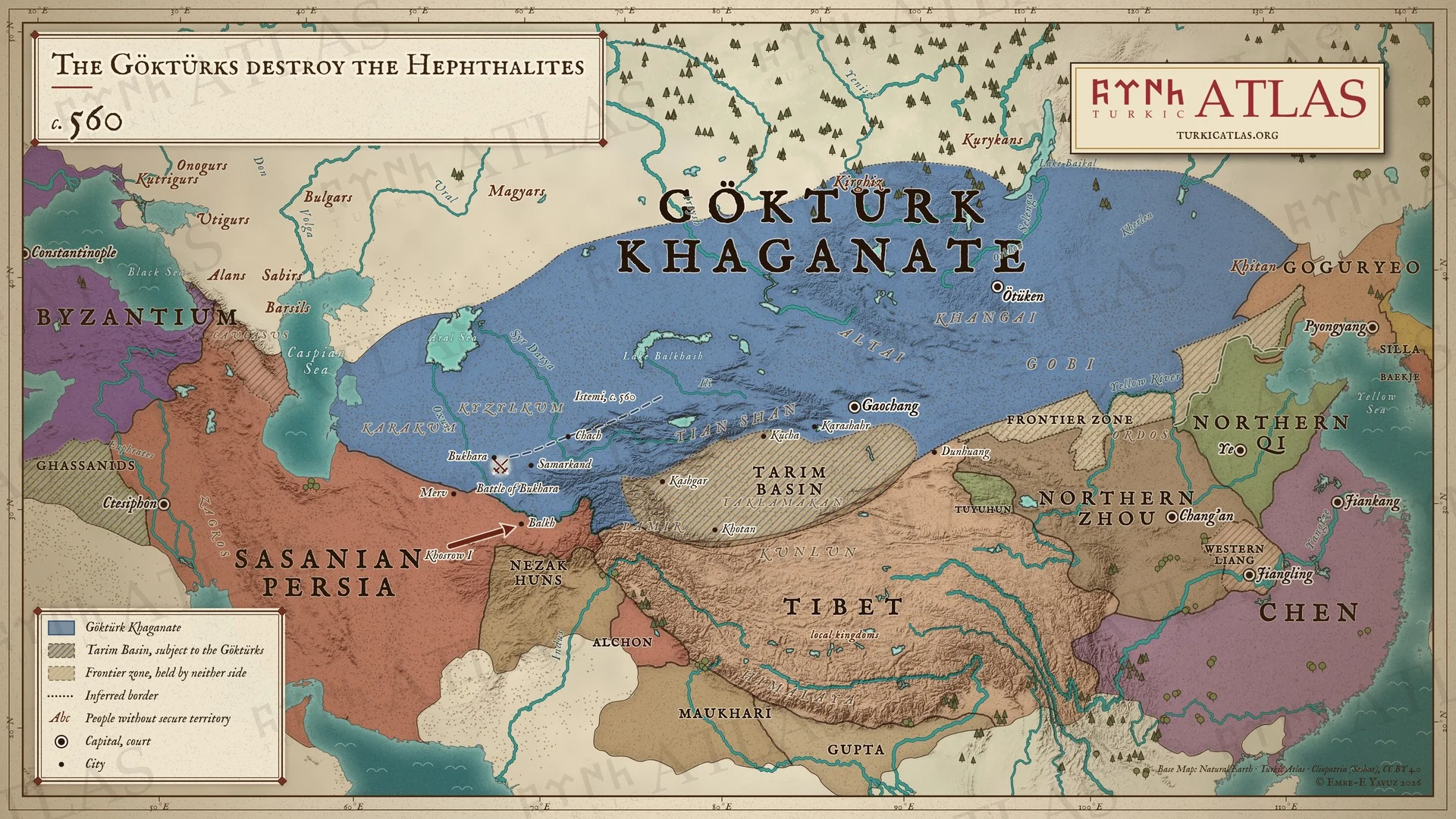
Динавари ар бир жеңүүчү эмне алганын кошот. Хосров эфталиттердин Тохаристан, Забулистан, Кабулистан жана Чаганиян жерлерин алды. Синжибу Чач, Фергана, Самарканд, Кеш жана Насаф шаарларын Бухарага чейин алды, Трансоксиананын негизги бөлүгүн.[1] Сильзибул эфталиттерге түндүктөн чабуул жасаганда Хосров болжол менен Балхка чейин жылган эле. Эки жеңүүчү ошондо ушунчалык жакын болгондуктан, чатакташууга аргасыз болушкан.[1] Археология көк түрк басып алуусу Пенжикентти бузбай калтырганын жана эфталит күмүшү жүгүртүүдө калганын көрсөтөт.[9]
Датасы
Салгылашуу болжол менен 560-жылга, ал эми эки падышанын Гурганда жолугушуусу ошол эле жылга таандык.[6] Бир эсептөө талкаланууну 557-жылга коёт.[3] Экинчи эсептөө 557-жылдан 565-жылга чейинки сунуштарды карап чыгат. Ал аягын 563-жыл менен 567-жылдын ортосуна коёт, анткени Менандрдын 568-жылдагы элчилери «бардыгы» деп жооп бере алган.[8] Табари жыл бербейт жана кытай бөлүмдөрү да бербейт. Менандр терминус гана берет. Он жылдык айырма кытай, перс, араб жана грек эсептөөлөрүнүн жолугушуусунан келип чыгат.
Кесепеттери
Окс чек ара болуп калды, согдулар анын көк түрк тарабында. Бир нече жылдын ичинде согдулук соодагерлер Истемиден Персияга элчилик сурап жатышты, Хосров алардын жибегин өрттөп жатты жана Маниах Константинополго бараткан жолдо эле.[5] Turkic Atlas бул уландыны Сасаниддик империя жана Хосров макалаларында баяндайт.[5] Бухара салгылаштан саясий салмак алды. Ал Согдиананын борбору болгон жок. Ал батыштагы Ашина асылзаадаларынын ордосу болду жана бөлүнгөндөн кийин эки империянын ортосунда жаткан шаар болду.[6] Turkic Atlas шаардын кийинки тарыхын Бухара макаласында берет. Ал согушту бүтүндөй Истеми макаласында баяндайт.
-
c. 402 Shelun takes the title khagan
Shelun, a fugitive who gathered a following in the Gobi, defeats the Tiele and takes the title khagan. The Wei Shu draws his realm in four directions: in the west the country of Karashahr, in the east the country of Korea, in the north across the desert to the Hanhai, in the south to the great desert. The line between these points is drawn, not recorded.
-
429 Taiwu crosses the Gobi
The Northern Wei emperor Taiwu leaves Pingcheng, crosses the Gobi and scatters the Rouran of Datan at the Li river; his armies sweep five thousand li from east to west. The route is drawn after the Wei Shu; the rivers it names are not located with certainty.
-
460 The Tölös subjected
In the west the Rouran subject the Tölös, that is the Tiele. That their reach then extended to Lake Balkhash and the Seven Rivers is the extent the modern literature gives; the sources do not state it. The Ashina, five hundred families, settle on the southern slope of the Altai as the smiths of the Rouran.
-
487 The Gaoche break away
More than a hundred thousand Gaoche tents under Afuzhiluo leave the khaganate and found a kingdom of their own north-west of Gaochang. The Rouran khan Tulun pursues them, is beaten again and again, and leads his people east.
-
525 Anagui fights for the Wei
In 520 Anagui has brought the Tiele under Rouran rule again; after the Chinese histories their lands reach as far as the Caspian and the Alans. In 523, in a year of hunger, Anagui raids the Six Garrisons on the Wei frontier. In 525, after the garrisons have risen themselves, he leads a hundred thousand men from Wuchuan west towards Woye against the rebels, on the Wei's behalf.
-
545 The Rouran at their height
The Rouran rule the eastern and central steppe; the Ashina in the Altai and the Tiele of Dzungaria are their subjects, and the Tiele range, after the Chinese histories, as far as the Caspian. The frontier drawn here, from the Khingan to the Seven Rivers and from Lake Baikal to the frontier of the Wei, is the extent the modern literature gives.
-
546 Bumin defeats the Tiele
In 546 the Tiele of Dzungaria move against the Rouran. Bumin, chief of the Ashina, intercepts them on the march and defeats them, and more than fifty thousand Tiele tents submit to him. The Ashina are still subjects of the Rouran, but now a power of their own.
-
552 Bumin destroys the Rouran
Early in 552 a Rouran army is beaten in Dzungaria and a second destroyed north of Huaihuang; Anagui dies. The Göktürks take the steppe, and a Rouran remnant holds out in the contested borderland between the Göktürks and China. The extent of the new khaganate follows the modern estimate.
-
553–555 The last Rouran; Istemi marches west
Issik breaks the Rouran of Dengshuzi at Mount Mulai north of Woye, and the remnant in the Northern Qi is destroyed by its hosts in 554. In the west Istemi marches from 553 and, by one reckoning, reaches the Seven Rivers by 555.
-
c. 560 The Hephthalites destroyed
Istemi destroys the Hephthalites and takes the trade of Sogdiana. One reading has him act with the Persian king Khosrow I and divide their lands along the Oxus, in 557 or 560. The route drawn follows one modern reconstruction: the Göktürks take Chach, cross the Chirchik and win after eight days in the hills at Nasaf; a second reading has the decisive fight at Bukhara itself. Khosrow comes up from the south as far as Balkh. In the east Mukan takes the Kirghiz on the Yenisei and the Khitan.
-
568–569 Embassies to Constantinople
Persia shuts its markets to the Sogdian silk. Istemi sends the Sogdian Maniakh to Constantinople, and the Roman envoy Zemarchos reaches him in 569 at a mountain called Ektag. Where Ektag lay is disputed: the Altai and the Tian Shan are both proposed.
-
576 Bosporos
In the year of Istemi's death a Göktürk army takes Bosporos in the Crimea, the western limit of the expansion into Europe. That the western wing then reached the Volga and the northern Caucasus is inferred.
-
581–584 The realm divides
Taspar dies in 581 with the khaganate at what is inferred to be its greatest extent. The succession divides the house, and Ishbara, Apa and Tardush go to war while the Sui take sides. The line between the eastern and the western wing is reconstructed as running from the Altai through Dzungaria to the Dzungarian Gate.
- Place named in a source (position as commonly identified)
- Position disputed or approximate
- Area or line drawn from a description in the sources
- Area as the modern literature gives it
- Subject people or its range (dashed outline)
- Frontier zone between the steppe and China, held by neither side (hatched)
- Movement named in a source (route drawn)
- Route after a modern reconstruction
Эскертүүлөр
Булактар
- ат-Табари
- Менандр Протектор
- Суй шу (Суй китеби), juan 84
- Чжоу шу (Чжоунун китеби), juan 50
- Наршахи, Бухара тарыхы
Адабият
- Emre-E. Yavuz, The Gokturk Empire: 2nd Edition (2025)
- Peter B. Golden, An Introduction to the History of the Turkic Peoples (1992)
- Aydogdy Kurbanov, The Hephthalites: Archaeological and Historical Analysis (2010)
- Étienne de la Vaissière, Sogdian Traders: A History (2005)
- Theodor Nöldeke, Geschichte der Perser und Araber zur Zeit der Sasaniden. Aus der arabischen Chronik des Tabari übersetzt und mit ausführlichen Erläuterungen und Ergänzungen versehn (1879)
- Richard N. Frye (trans.), The History of Bukhara. Translated from a Persian Abridgment of the Arabic Original by Narshakhi (1954)
Бул бетке шилтемелер9
- States
- Сасаниддер Персиясы
- Places
- Бухара · Согдиана · Тарим ойдуңу
- Peoples
- Эфталиттер
Макаладан цитата алуу
Yavuz, Emre-E. “Бухара салгылашы.” Turkic Atlas, revised 20 November 2026. https://turkicatlas.org/events/battle-of-bukhara/
Last revised: 20 November 2026

