
- 400
- 500
- 600
- 700
- 800
- 900
- Rouran 400–554
- First Göktürk 552–630
- Tang rule 630–682
- Second Göktürk 682–744
- Uyghur 744–840
- Kirghiz 840–924
- Huns 370–469
- Western Göktürk 552–659
- Türgesh 699–766
- Karluk 766–800
- Khazar 650–969
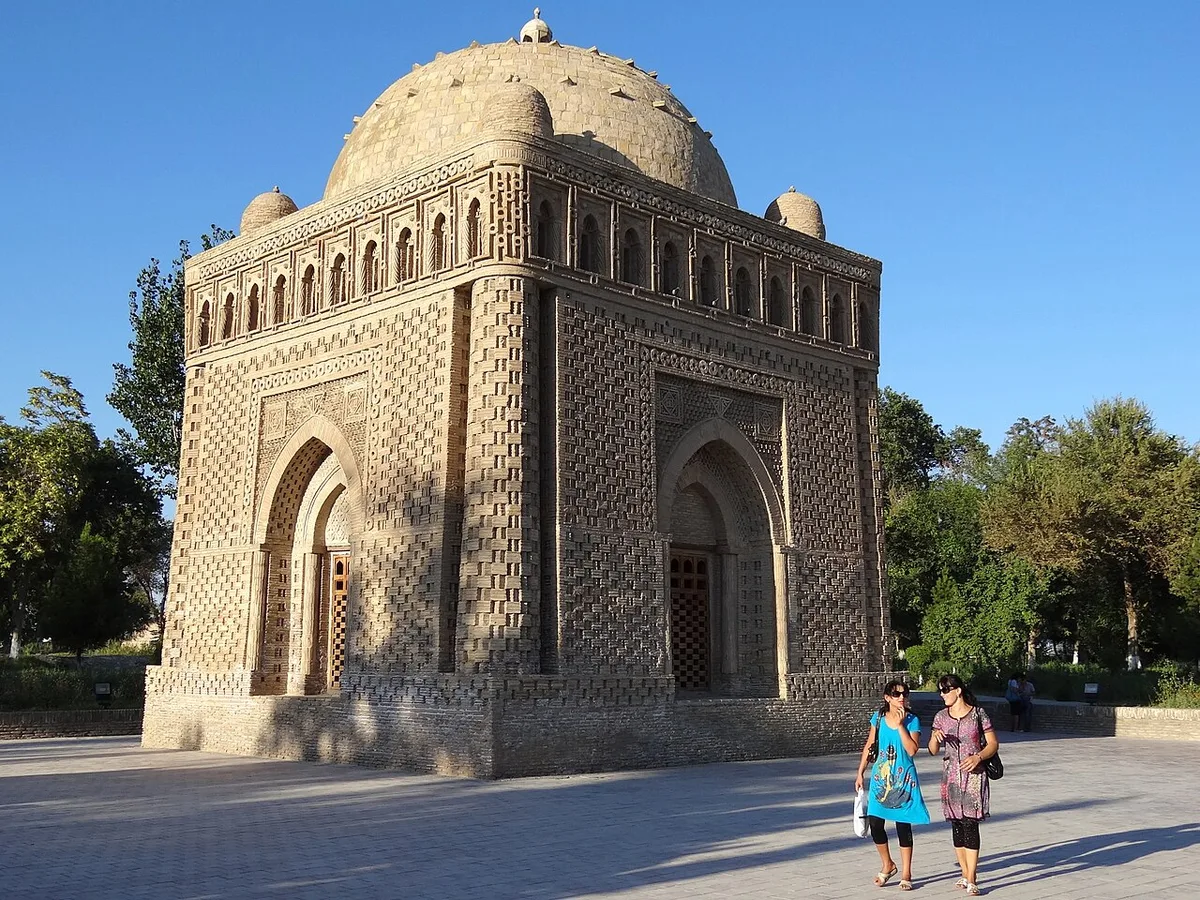
The Samanids were small nobles from the region of Termez. They ruled Samarkand from 819 under the Tahirid governors of Nishapur.[1] From 874, under Isma’il ibn Ahmad, they were independent in all but name. In 892 Isma’il moved the capital to Bukhara. He took all of eastern Iran and Transoxiana.[1] Isma’il is often called the founder of the dynasty. The family, however, had held Transoxiana since the beginning of the ninth century.[2]
In the tenth century the Samanid trade no longer carried the Sogdian name. It had also lost some of the economic and social traits of the earlier Sogdian trade.[3] The Samanid trade ran north-west from Bukhara through Khorezm to the Volga. Samanid coins are unknown in China.[4] North of Isfijab lay a buffer zone between the empire and the Turkic tribes, which paid Bukhara only a symbolic tribute. There the Samanids settled warriors of the faith as protection against surprises from the steppe.[5] In 893 Isma’il raided Taraz on the Talas. He turned its church into a mosque.[6][7] He took fifteen thousand captives, among them the wife of the Karluk yabgu.[7]
In the second half of the tenth century, dynastic quarrels troubled the dynasty. The Turkic guards of the rulers took a growing part in them. The dynasty fell in 999 to the Karakhanids.[1]
References
Literature
- Étienne de la Vaissière, Sogdian Traders: A History (2005)
- Faruk Sümer, Oğuzlar (Türkmenler). Tarihleri, boy teşkilâtı, destanları (1972)
What links here3
- States
- Kara-Khanid Khanate
- Peoples
- Sogdians
Cite this article
Yavuz, Emre-E. “Samanids.” Turkic Atlas, revised 7 November 2026. https://turkicatlas.org/polities/samanids/
Last revised: 7 November 2026


