
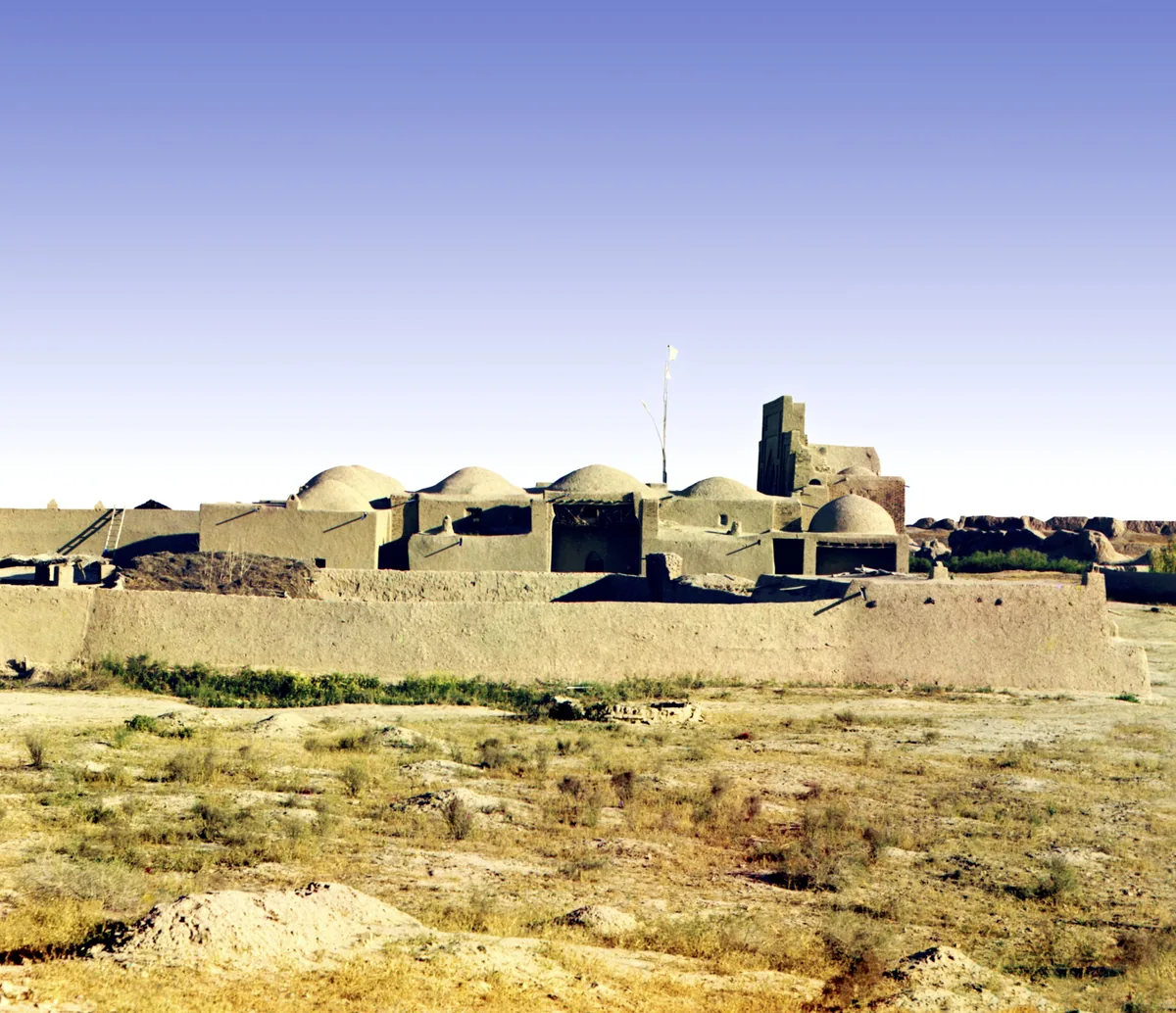
Merv lay in the oasis of the lower Murghab, south-west of the Oxus. Together with Samarkand and Bactra, it was one of the very great cities of western Central Asia.[1] The Hou Han Shu calls it the gateway to Parthia.[2] According to the Han Shu, Kangju reached from Ferghana to the Oxus near Merv at the beginning of the Christian era.[3] Buddhism did not spread to Merv before the fourth century.[4] Strabo describes Margiana, the country around Merv, as a land of vines. The stock of its vines was so thick that two men with outstretched arms could hardly clasp it, and the clusters were two cubits long.[5]
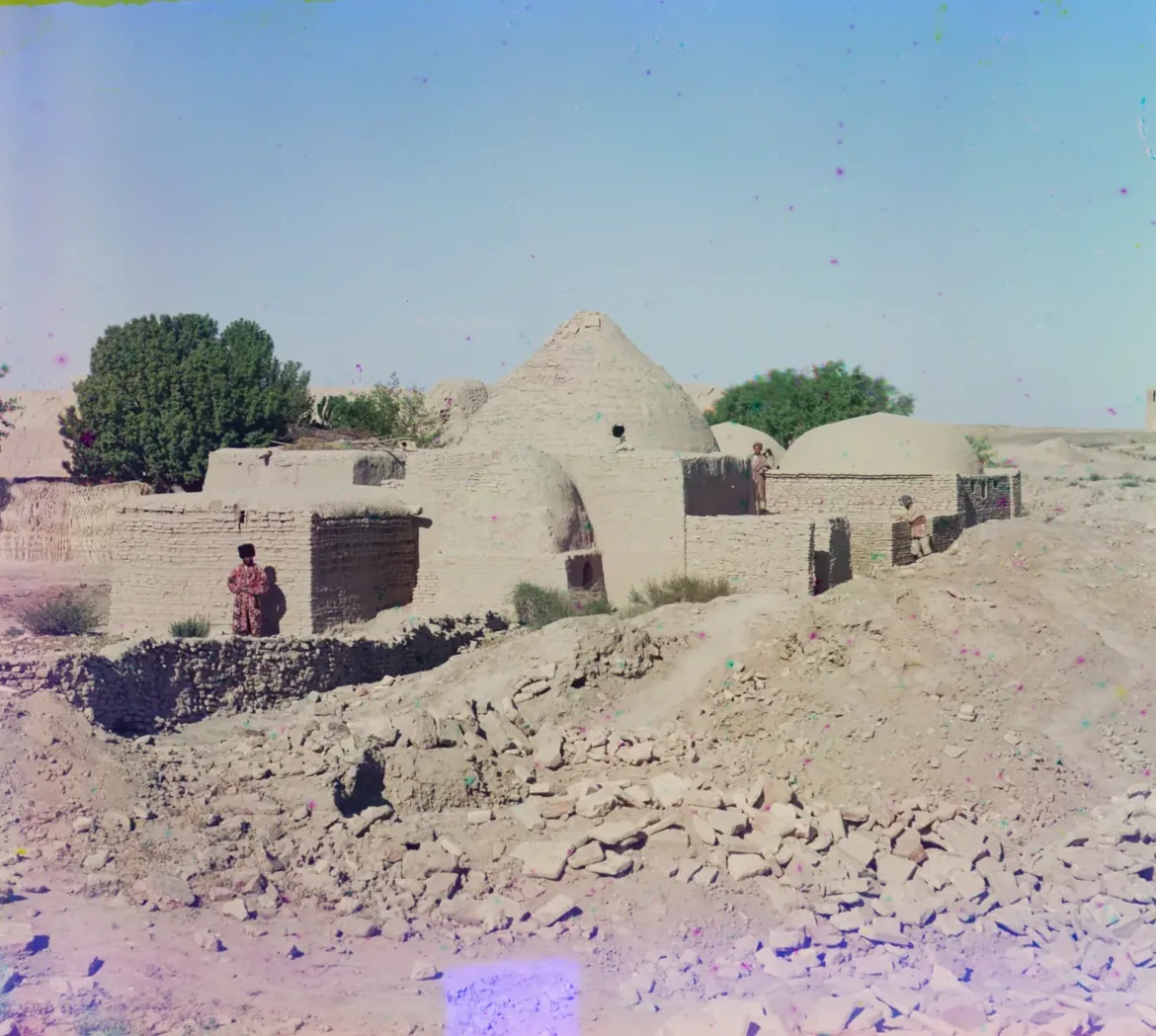
Merv was the great fortified town of the Sasanians in Central Asia. The last Sasanian king, Yazdgird III, died near it in 651. Merv then became the base of the Arab conquest of Transoxiana.[6] By the end of the seventh century, the Sogdians in Merv were the great moneylenders of the market. In 699 an Arab commander prepared a campaign against Bukhara. He went into debt with the Sogdians and their merchants to buy horses and weapons.[7] In 745–746 Tabari mentions at Merv a palace of the Bukhar Khuda, an avenue of the Sogdians and a Bukharan quarter.[8] The caliph al-Ma’mun resided at Merv before he took the caliphate. He brought Sogdian nobles from there, and they formed part of his army at Baghdad.[9]
References
Sources
Literature
- Étienne de la Vaissière, Sogdian Traders: A History (2005)
- Berthold Laufer, Sino-Iranica. Chinese Contributions to the History of Civilization in Ancient Iran (1919)
What links here15
- Persons
- An Nuopantuo
- States
- Sasanian Persia · The Umayyad Caliphate
- Conflicts
- Göktürk Expansion along the Silk Road · The Göktürk–Hephthalite war, 555–563 · The Göktürk–Sasanian Trade Conflict
- Battles & Events
- Smbat Bagratuni's war with the khan
- Peoples
- Hephthalites · Kidarites · Nezak Shahs · Sogdians
- Institutions and Titles
- Bukhar Khuda
Cite this article
Yavuz, Emre-E. “Merv.” Turkic Atlas, revised 7 November 2026. https://turkicatlas.org/places/merv/
Last revised: 7 November 2026

