
- 400
- 500
- 600
- 700
- 800
- 900
- Rouran 400–554
- First Göktürk 552–630
- Tang rule 630–682
- Second Göktürk 682–744
- Uyghur 744–840
- Kirghiz 840–924
- Huns 370–469
- Western Göktürk 552–659
- Türgesh 699–766
- Karluk 766–800
- Khazar 650–969
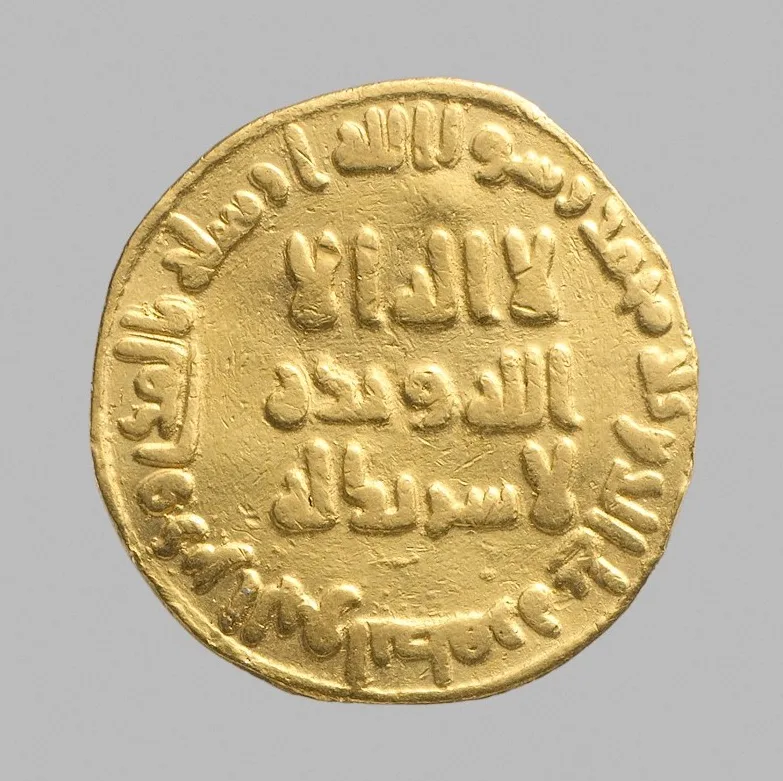
The Umayyad caliphate ruled from Damascus from 661 to 750. It was the power that brought the Arab conquests to the Oxus and beyond it. For the steppe, it is the state that took Sogdiana, the country whose merchants had carried the trade of the Göktürk khaganates. It then spent forty years failing to hold Sogdiana against Turkic armies from the north.
The conquest of Iran
The caliphate that the Umayyads inherited had already destroyed Sasanian Persia. The Persian field armies were broken at Qadisiyya and at Nihavand in the 630s and 640s. The last Sasanian king was killed in flight near Merv in 651. Khurasan then became the eastern frontier province of a new empire.
The Oxus lay beyond Khurasan. Beyond the Oxus lay the cities that had made the western khaganate rich.
Qutayba and the crossing of the Oxus
The conquest of Transoxiana was the work of one governor. Qutayba ibn Muslim was appointed to Khurasan in 705. In ten campaigning seasons he took Paikent, Bukhara, Samarkand and Khwarezm, and reached the Jaxartes. His own troops killed him in 715 when he refused to accept a new caliph.
What he had taken did not stay taken. The Sogdian cities revolted repeatedly. Every revolt looked north for help.
Forty years against the Turks
Help came from two directions at once.
In the north-west the Khazars fought the caliphate across the Caucasus for most of a century. The Arab historians treat this war as one of the great frontier struggles of the age. It ended only in 737, when an Arab army reached the Volga and forced the khagan to terms that did not last.
In the north-east the Türgesh under Sulu Khan made themselves the protectors of Sogdiana. From 717 until his murder in 738, Sulu beat Arab armies in the field and took back cities. As a result, the caliphate’s hold on Transoxiana became a question of garrisons rather than of rule. The Arab accounts give him a nickname that shows what the frontier thought of him.
The Türgesh broke from inside, not from the south. Sulu’s own commanders murdered him. The power that had held the north of the Oxus then fell apart, and the caliphate and the Tang moved into the space it left. The caliphate, by then under the Abbasids, met the Tang on the Talas in 751.
The name täzik in the inscriptions
- tezikOld Turkic
- 大食ChineseXin Tangshu 215
The Old Turkic inscriptions name a people called täzik. The older interpretation takes the word for the Muslim Arabs, and the alternative name above follows it.[1] Tekin reads it differently. He glosses it as the Tajiks, a name for the Iranians, and he translates it as the Persians in the Tonyukuk inscription.[2][3] On this second interpretation the word does not name the Arabs.
The end of the house
The Umayyads fell in 750 to a revolution that began in Khurasan. Their own eastern wars had built up this frontier province. The dynasty that succeeded them moved the capital east to Iraq. The relation between the caliphate and the Turkic world changed with it. A frontier war gave way to a trade in men, because the armies of the ninth century were raised in the steppe.
Relations with other states
Red is war, blue alliance, gold trade. Where several held at once, the line shows what prevailed; alliance and trade can run side by side. Each line rests on an article. Point at a state to see its weightiest relation, select it to see its events. The slider shows what stood in a given year, and Play runs through the years.
Khazar Khaganate661 to 737
- War661 to 737Arab–Khazar Wars (642–737)
- War730Battle of Ardabil (730)
- War737Campaign of Marwan (737)
Turk Shahi of Kabul and Kapisa671 to 698
- War671 to 698Arab raids on Kabul and tribute
References
Sources
- Tabari
- Xin Tangshu (New Book of Tang), juan 215 (after Jiu Tangshu)
Literature
- Peter B. Golden, An Introduction to the History of the Turkic Peoples (1992)
- Emre-E. Yavuz, The Gokturk Empire: 2nd Edition (2025)
- Étienne de la Vaissière, Sogdian Traders: A History (2005)
- Theodor Nöldeke, Geschichte der Perser und Araber zur Zeit der Sasaniden. Aus der arabischen Chronik des Tabari übersetzt und mit ausführlichen Erläuterungen und Ergänzungen versehn (1879)
- Hüseyin Namık Orkun, Eski Türk Yazıtları (1994)
- Talât Tekin, Orhon Türkçesi Grameri (2003)
- Talât Tekin, Tunyukuk Yazıtı (1994)
What links here1
- Conflicts
- Arab–Khazar Wars (642–737)
Cite this article
Yavuz, Emre-E. “The Umayyad Caliphate.” Turkic Atlas, revised 8 November 2026. https://turkicatlas.org/polities/umayyad-caliphate/
Last revised: 8 November 2026

