
- 400
- 500
- 600
- 700
- 800
- 900
- Rouran 400–554
- First Göktürk 552–630
- Tang rule 630–682
- Second Göktürk 682–744
- Uyghur 744–840
- Kirghiz 840–924
- Huns 370–469
- Western Göktürk 552–659
- Türgesh 699–766
- Karluk 766–800
- Khazar 650–969
The Northern Zhou was the dynasty of the Yuwen house. It ruled from Chang’an between 557 and 581, first over the western half of northern China and from 577 over all of it. It was the ally of the Göktürk khaganate for a generation. It took Mukan’s cavalry into its war with the Northern Qi and married his daughter. Under Taspar, it paid a hundred thousand pieces of silk a year.[1] In 577, it destroyed the Qi and united the north.[2] Four years later, one of its own dukes, Yang Jian, took the throne and founded the Sui.[3]
The Zhou Shu is the dynasty’s official history. The Tang court compiled it in the 630s, and it records in detail what the alliance cost. Its Göktürk chapter says that from Mukan’s time onward the Göktürk state was rich and strong and had the ambition to overawe China.[1] Having made the marriage alliance, the court gave a hundred thousand pieces of silk, floss and brocade a year. The Göktürks who lived at the capital were treated with honour, clothed in brocade and fed on meat, commonly a thousand at a time.[1]
Name and title
- 北周Chinese
- 周ChineseZhou Shu 50
- 大周ChineseZhou Shu 7
The dynasty took its name from the ancient Zhou, the dynasty of the classics. In the twelfth month of the last Western Wei year, at the turn of 556 and 557, the Wei emperor made Yuwen Jue, the son of Yuwen Tai, Duke of Zhou. He gave him the land of Qiyang as his fief.[4] Less than two weeks later, the Wei emperor abdicated in Yuwen Jue’s favour.[4] Qiyang lay below Mount Qi. The ancient Zhou had risen from this country. In the first month of 557, Yuwen Jue took the throne. He took the title not of emperor but of Heavenly King, tianwang 天王. He announced his accession to Heaven with a burnt offering.[4]
The new court announced at once what it claimed to be. It declared that the Wei calendar had ended and that the Zhou had received the mandate. The Zhou’s virtue of Wood now succeeded the Wei’s Water.[4] It adopted the calendar of the Xia. It chose black for its robes. The reason was that Yuwen Tai had been born under the sign of a dark vapour and a prophecy spoke of black water.[4] The edict of the first sacrifice traced the house back to the mythical ruler Shennong. It named a first ancestor, Marquis Xian, who had “opened the land at Liaohai”, on the sea of the north-east.[4] Liaohai is the country of the Xianbei Yuwen of the fourth century. The dynasty claimed descent from them.
The title of Heavenly King lasted two years. In the eighth month of 559, the second ruler, Ming, exchanged it for the title of emperor. He also raised Yuwen Tai posthumously to emperor.[5] The state was organised in the six offices of the Rites of Zhou, which Yuwen Tai had drawn up. In the first month of 561, Emperor Wu had them proclaimed before Yuwen Tai’s shrine in the ancestral temple.[6] Its own edicts speak of “our Great Zhou”, 我大周.[7] The name Northern Zhou, 北周, is a later convention. It separates the dynasty from the Zhou of antiquity. The Thirteen Emperors Scroll of the Tang period calls it the Later Zhou, 後周.
The emperors bore Chinese personal names, and beside them names of another kind. Ming’s childhood name, Tongwantu, came from the city of Tongwan, where he was born in 534. Wu’s courtesy name was Miluotu. Xiaomin’s was Tuoluoni.[8] Tuoluoni renders the Buddhist term dhāraṇī, a sacred formula.
The ruling class was a mixture of the same kind. The thirty-six states and ninety-nine clans had come south with the Wei and had called themselves men of Henan. In 558, an edict decreed that they should now be registered as men of Jingzhao, the capital district. The reason given was that the Zhou house had its seat in Guanzhong.[5] The thirty-six states and ninety-nine clans were the old confederates of the Tuoba. Yuwen Tai had granted new surnames to many of his officers.[3] The names were those of the Xianbei clans. The regency that ended the dynasty reversed the grants. An edict of the twelfth month of 580 ordered everyone who had received a new surname to return to his old one.[3]
Territory
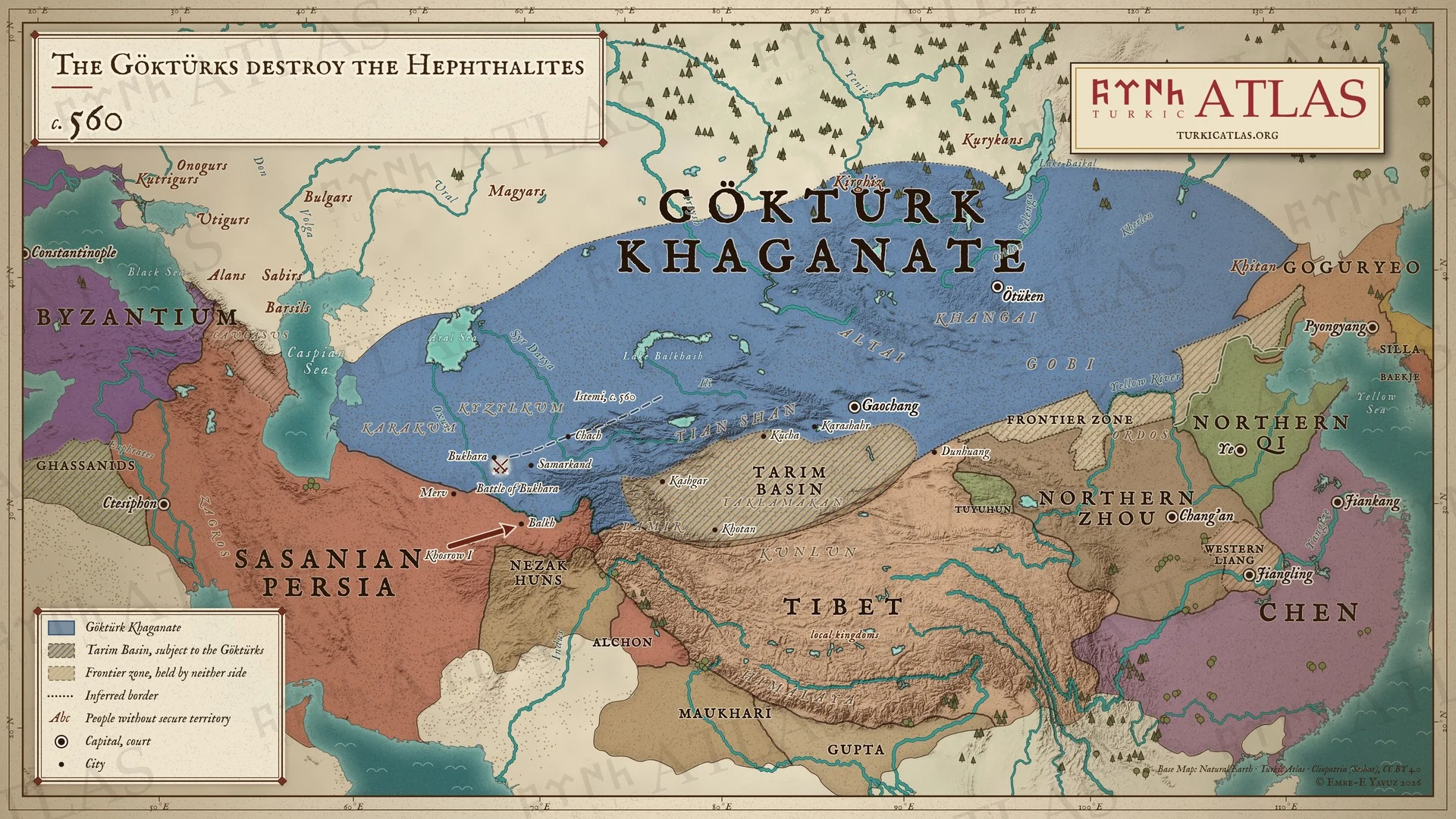
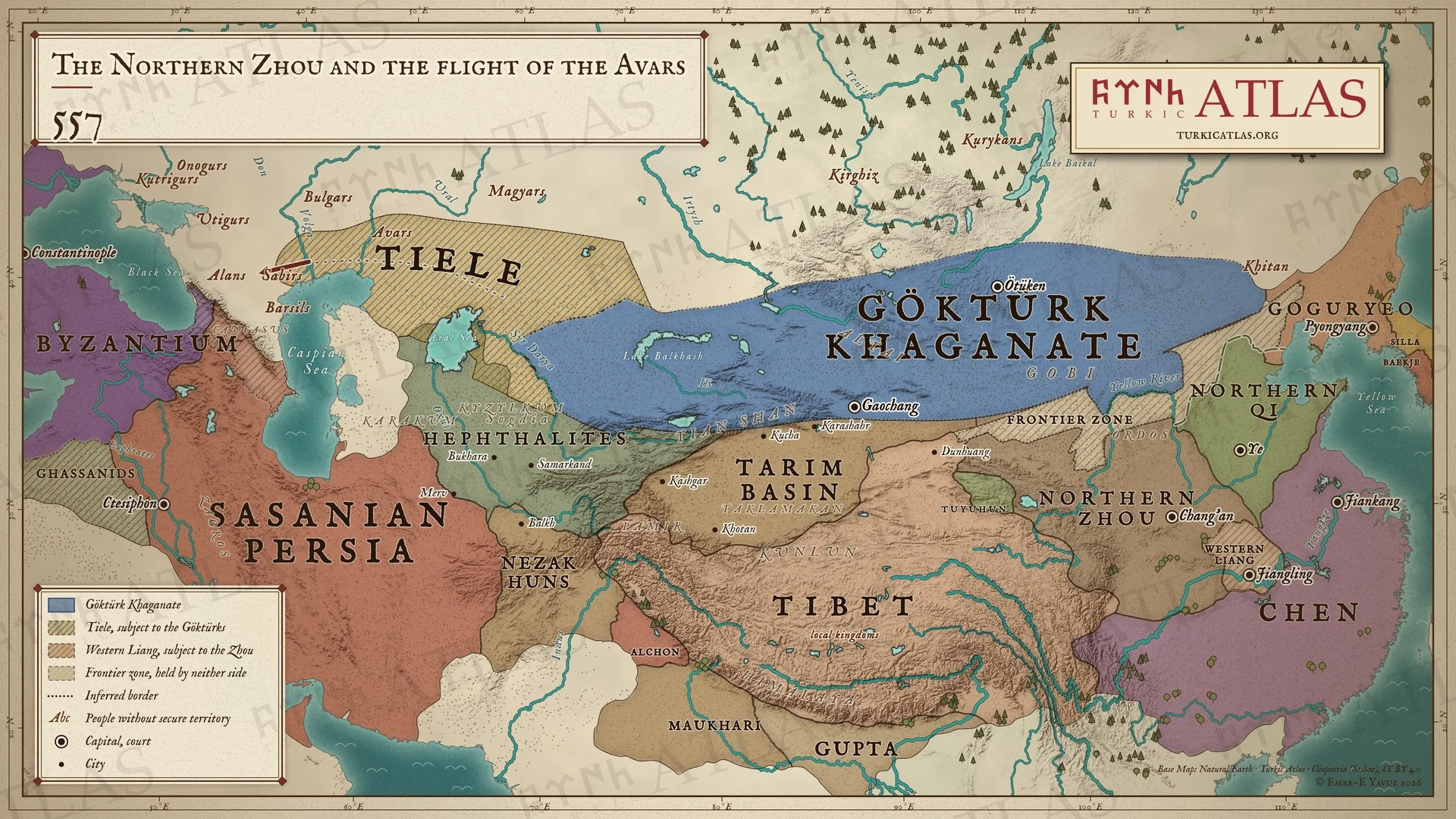
The Zhou held what the Western Wei had held. It held Guanzhong and the valley of the Wei, with the capital at Chang’an. It held the Gansu corridor as far as Dunhuang. It also held Sichuan, taken from the Liang in 553. The Yellow River and the hills of Shanxi divided the Zhou from the Qi. The Qi territory was larger and richer. On the northern frontier, the Zhou bordered the Göktürks along the Ordos and the loop of the Yellow River. A Zhou army went out from the garrison of Woye there to meet the Göktürks in 564.[9]
When the Qi fell in 577, the Zhou counted fifty-five provinces, 162 commanderies, 385 counties, 3,302,528 households and 20,006,886 people in the conquered lands.[2] From then on, the Zhou border ran along the whole southern edge of the Göktürk world, from the Gansu corridor to the north-east.
Rulers
The Zhou Shu gives five rulers in twenty-five years. They were three sons of Yuwen Tai, a grandson and a great-grandson.[10] The first was deposed and killed. The second was poisoned. The third died of an illness on campaign.[11]
- Xiaomin (Yuwen Jue 宇文覺), Heavenly King 557; deposed and killed the same year, aged sixteen.
- Ming (Yuwen Yu 宇文毓), Heavenly King from 557, emperor from 559; poisoned in 560.
- Wu (Yuwen Yong 宇文邕), 560–578.
- Xuan (Yuwen Yun 宇文贇), 578–579; abdicated to his son and ruled as Tianyuan emperor until his death in 580.
- Jing (Yuwen Chan 宇文闡, first named Yuwen Yan 宇文衍), 579–581; abdicated to Yang Jian in 581 and died the same year, aged nine.
Regency of Yuwen Hu (557–572)
In 556, Yuwen Tai fell ill on a journey to the west and sent for his nephew Yuwen Hu.[12] He told him that his sons were young and that the enemy was not yet quiet. The affairs of the realm were now Hu’s to finish.[13] Yuwen Tai died on the road at Yunyang. Hu kept the death secret until he reached Chang’an. There he had the last Wei emperor pressed to give up the throne.[13]
The first year of the Zhou was a year of purges. In the second month of 557, the Duke of Chu, Zhao Gui, was executed for plotting. In the third month, the Grand Protector, Dugu Xin, was made to take his own life.[4] The young Heavenly King resented the regent. He began to plan Hu’s death with a group of palace officers. One of them, Zhang Guangluo, told Hu everything.[12] Hu had the guard dismissed and the conspirators seized. He told the assembled ministers that he would rather fail Lüeyang, the king’s old title, than fail the altars of the state. Then he deposed him.[13] Xiaomin was confined in his old residence. A month later, at sixteen, he was killed.[4]
Hu then brought Yuwen Tai’s eldest son, Yuwen Yu, from his command at Qizhou and made him Heavenly King. He is known as Ming.[5] In the first month of 559, Hu handed the civil government back to him and kept the army.[5] Ming was clever and well read, and Hu came to fear him.[14] In the fourth month of 560, the emperor was poisoned in his food.[5] According to Yuwen Hu’s biography, Hu had ordered the cook Li An to put the poison in it.[13] Ming died at twenty-seven. On his deathbed, he dictated a testament. It passed over his own young son and named his brother Yuwen Yong. It also asked that he be buried on barren ground, without a mound and without trees.[5]
Yuwen Yong, Emperor Wu, was born in 543 and came to the throne in 560.[6] In the first month of 561, Hu was made commander of all armies inside and outside the capital. The other five offices were placed under his own.[15] From 563, edicts and documents were forbidden to use his personal name.[13] The Zhou Shu says that the emperor kept himself hidden. Nobody could tell how deep he was.[2]
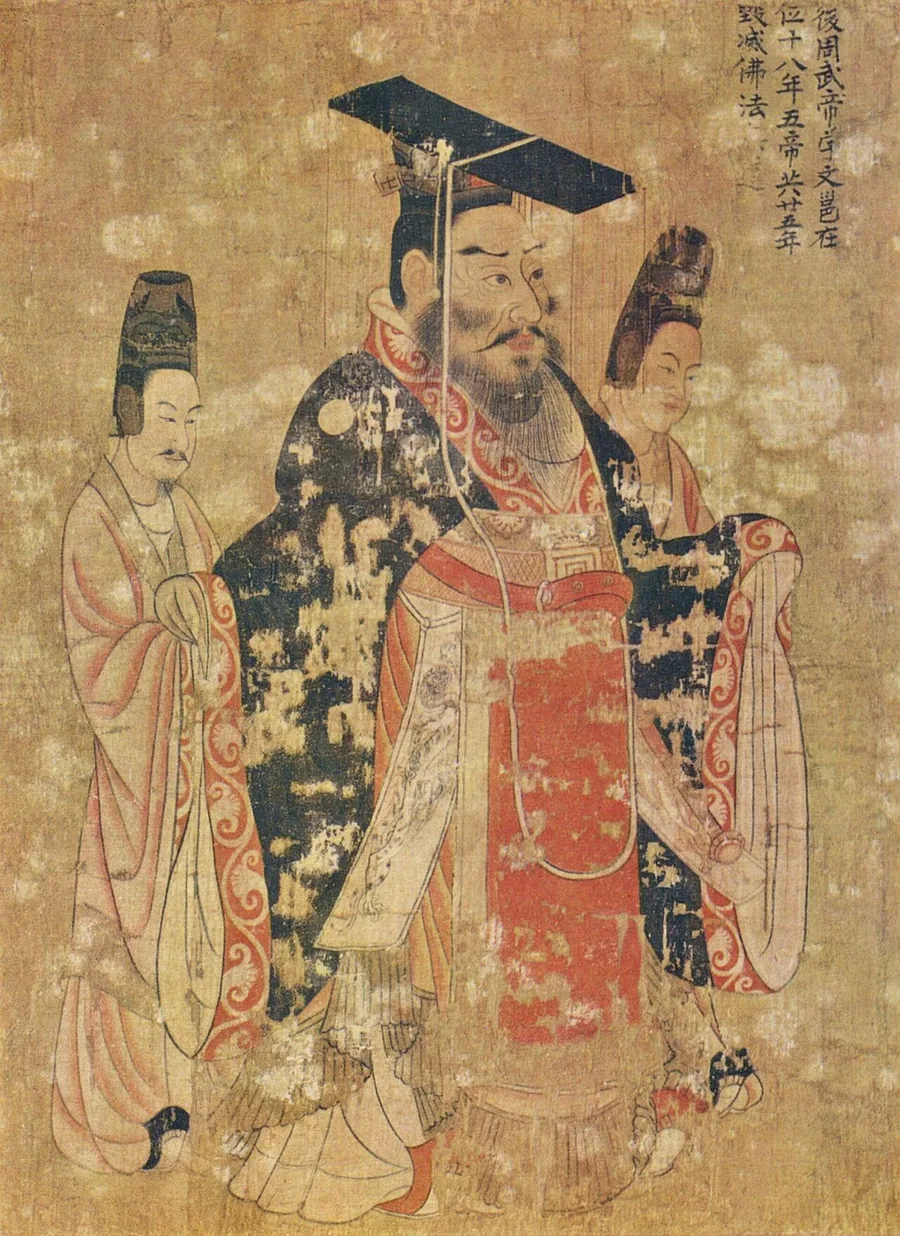
On the eighteenth day of the third month of 572, Hu came back to Chang’an from Tongzhou.[13] The emperor took him to call on the empress dowager, who drank more than was good for her. He handed Hu the Announcement about Drink from the Book of Documents and asked him to read it aloud to her as a warning.[13] Hu began to read. The emperor struck him from behind with his jade tablet, and Hu fell. The eunuch He Quan was too frightened to wound him. Prince Zhi came out of hiding and killed him.[13] Hu’s sons and his closest officers were put to death the same day. The cook Li An died with them, and the emperor told his brother Xian that Li An had caused Ming’s death.[13] One of Hu’s sons, Shen, Duke of Changcheng, had been sent to the Göktürks in the second month. An officer followed him to the steppe with a sealed edict and killed him there.[15]
The division of power at Chang’an shaped the relationship with the Göktürks. Yuwen Tai promised the marriage, Yuwen Hu negotiated it, and Emperor Wu completed it. The campaigns of 563 and 564 were fought at a time when neither the emperor nor the regent could finish the Qi alone. The steppe alliance was the one line of policy that survived every change at Chang’an. It survived because it was the state’s only answer to being the smaller half of China.
Marriage negotiations (557–563)
The alliance was older than the dynasty. It continued the alliance with the Western Wei. The Zhou–Göktürk alliance lasted thirty years, counted from the Wei embassy of 545. The marriage sealed it.[16] After the fall of the Rouran, the Göktürks kept friendly relations with Yuwen Tai but courted the Qi as well. Yuwen Tai sent his envoy Kudi Zhi to talk them round. The Göktürks seized the Qi envoys and sent them to Chang’an.[17] In the last year of his life, Yuwen Tai handed over to Mukan’s envoys three thousand Rouran who had fled to him. The envoys killed them outside the Qing gate of Chang’an.[1]
Mukan had promised a daughter to Yuwen Tai. The contract was not settled when Yuwen Tai died. Mukan then promised another daughter to Yuwen Tai’s son, the later Emperor Wu.[1] Soon after the accession of 557, the new dynasty sent Yang Jian, Duke of Yaogu, to the Göktürks to conclude the marriage.[17] His name is written 楊荐. He is a different man from Yang Jian, Duke of Sui, who ended the dynasty and whose name is written 楊堅.[18]
The khan’s younger brother, the Ditou Khan Ashina Kutou, lived in the east and was on good terms with the Qi. He urged the khan to break the earlier agreement. The two resolved to hand the Zhou envoys over to the Qi.[17] Yang Jian learned of it and rebuked the khan to his face, weeping as he spoke. The khan was silent for a long time. Then he said: “Have no doubt. We shall first pacify the eastern bandits together, and then I shall send my daughter.”[17] The khan of 557 was Mukan. The biography stands in a damaged chapter of the Zhou Shu. Its text is identical with that of the Bei Shi.[17]
The marriage was still not concluded when the Qi learned of the betrothal. They feared a combination of their two enemies. Therefore they sent envoys with far richer gifts to ask for a marriage of their own. Mukan, tempted by the gifts, was ready to go back on his word.[19] The Zhou court remembered that the Wei had once married into the Rouran and had lost them to the Qi all the same.[17] It sent Yang Jian, by then governor of Liangzhou, back to the steppe to hold the khan to his promise. Wang Qing went with him as his deputy. Wang Qing’s biography places the mission in the year of the Jinyang campaign, 563.[20] The envoys reached Mukan and reasoned with him about good faith. Mukan broke with the Qi envoys and settled the marriage. He asked for a war against the Qi with his whole people.[1]
The emperor offered the Göktürks everything they could carry out of Qi territory. In return, a daughter of the khan was to come to Chang’an.[21]
Göktürk envoys came to Chang’an nearly every year. The annals record embassies at the end of 558 and in the third month of 560. In 560, the emperor Ming entertained the envoys with his nobles in the Fanglin park. The annals record three embassies in 561, and further ones in 564, 567, 569 and 574.[22] The embassies of 569 and 574 brought horses.[6]
Campaigns of 563 and 564
The court debated the war in 562.[23] The ministers said that the Qi held half the empire and were rich and strong. They said that the road from the desert to Bingzhou was steep and hard. The Qi general Hulü Mingyue, they added, was not easily beaten. To reach the Qi heartland, they would need a hundred thousand men.[23] Yang Zhong alone disagreed. Victory depended on concord, he said, not on numbers. Ten thousand horsemen were enough.[23] Hulü Mingyue is Hulü Guang.
In the ninth month of 563, an edict sent Yang Zhong with ten thousand horse to attack the Qi together with the Göktürks.[6] He marched out by Wuchuan. He passed his family’s old home and sacrificed to his ancestors. He took more than twenty garrisons and broke the Qi force that held the pass of the Xing ridge.[23] In the twelfth month, Daxi Wu set out by the southern road towards Pingyang with thirty thousand men. He was to meet Yang Zhong at Jinyang.[24] Mukan came with the Ditou Khan and the Buli Khan and a hundred thousand horse.[9]
On the first day of 564, the allies attacked Jinyang.[23] It had snowed for weeks, and the cold was severe. The Qi brought out their best troops with drums beating.[23] Yang Zhong’s biography was written from the Zhou side. It says that the Göktürks were shaken. They drew back onto the western hills and would not fight. Yang Zhong led seven hundred men into battle on foot and lost four or five in every ten.[23] Daxi Wu never arrived. Yang Zhong withdrew, and the Qi did not dare to follow.[23] Daxi Wu was still at Pingyang. A letter from Hulü Mingyue told him that the northern army had gone: “The swan has already flown into the open sky, and the fowler is still watching the marsh.” He read it and turned back.[23]
Mukan’s men plundered the country from Jinyang to Pingcheng, a distance of more than seven hundred li. They left neither man nor beast behind.[9] For the Göktürks, the Jinyang campaign had kept its terms. The plunder of Qi territory had been promised, the plunder was taken, and they had lost nothing worth recording.[25] Yang Zhong came back with a judgement on his allies, which the Göktürk chapter preserves in full. He told the emperor that the Göktürks had bad armour, light rewards, many chiefs and no laws, and that they were not hard to handle. The envoys who talked up their strength, he said, should all be beheaded.[1] The emperor did not listen.[1] Yang Zhong had watched the Göktürks take what they had been promised and go home. He judged them by a war that was not theirs.
The second campaign of 564 was tied to a family matter of the regent.[13] The Qi had held Yuwen Hu’s mother and one of the emperor’s aunts for many years. The campaign of 563 frightened the Qi. They offered to send the two women back and asked for peace.[13] The aunt came first, in 564. Hu’s mother reached Chang’an in the ninth month of that year.[15] The Göktürks heard that the Zhou were talking peace with the Qi, and they grew suspicious. Wang Qing went back to the steppe to reassure the khan.[17] The same year, the Göktürks came again at the appointed time. Hu had just recovered his mother and did not want to fight. He feared, however, that breaking faith with the Göktürks would bring trouble on the frontier. Therefore he asked for the campaign.[13]
The edict of the ninth month said that Heaven had used the hand of the Göktürks to sweep the Fen country bare.[13] The edict went on to say that the Göktürk army still stood in the Qi borderlands after withdrawing. It was gathering its tribes and would come in full strength in midwinter to meet the Zhou armies at Bingzhou and Ye.[13] Hu raised two hundred thousand men, among them contingents of the foreign peoples of the frontier.[13] Yang Zhong went out by Woye to join the Göktürks.[9] His supplies ran short, and he found grain by a ruse. He called the Jihu chiefs of the district to his camp. Then he had a Göktürk envoy ride in before them.[23] The envoy announced that the khan had entered Bingzhou again. He said the khan had left more than a hundred thousand horse below the Long Wall, ready to help crush any Jihu who would not submit. The chiefs submitted and brought grain.[23]
Hu marched on Luoyang in the tenth month. Yuchi Jiong laid siege to the city. In the twelfth month, after days of fog, the Qi horse crossed the river and fell on the besiegers at dawn. The army besieging Luoyang broke and scattered.[15] The Zhou general Wang Xiong was killed. Yang Biao fell at the Zhi pass.[6] The Zhou Shu says that Hu had no gift for war and that the campaign had not been his wish.[13] Hu’s fighting went badly, and Mukan drew back. When Hu withdrew, Yang Zhong returned to his garrison.[9] One modern account has the Göktürks stay away from this second offensive altogether.[25] The Zhou Shu, by contrast, has them come at the appointed time and withdraw when Hu’s attack failed.[26]
The two campaigns of 564 took no city and gained no ground. The court preferred the alliance to Yang Zhong’s judgement. On its own terms, the court was right. Thirteen years later, it ended the war with the Qi without the steppe fighting on either side.
Bridal embassy (565–568)
In the second month of 565, an edict sent four dukes to the Göktürks to fetch the bride. They were the emperor’s brother Yuwen Chun, Duke of Chen; Yuwen Gui, Duke of Xu; Dou Yi, Duke of Shenwu; and Yang Jian of Yaogu.[27] Yang Jian had taken the betrothal gifts to the steppe the year before. For this mission he was made Duke of Nan’an.[17] The embassy took with it the insignia of an empress, a travelling palace, and a hundred and twenty persons of the women’s quarters.[28] Wang Qing went with Yuwen Gui. An officer named Zhao Wenbiao was put in charge of the ceremonial.[17]
When the embassy reached Mukan’s camp, he had again promised a marriage to the Qi and was wavering.[29] The dukes stayed with him for years and could not report back. Appeals to good faith did not move him.[28] The delegation of a hundred and twenty was held for three years.[25] Then a great storm of wind and thunder arose. It blew down his tents and did not stop for ten days. Mukan was terrified. He took it for a reproof of Heaven and sent the bride off with full ceremony.[28] The story of the storm is a Chinese story. It gives the khan the part that the Chinese histories often gave nomad rulers, that of a man stubborn until Heaven intervened. It also flatters the emperor, who is shown bearing no grudge.[30] The lost war against the Qi had changed the climate between the courts.[25]
The journey home had its own incidents. Yuwen Gui died on the road at Zhangye in the eleventh month of 567.[24] As the bride approached the frontier, her Göktürk escort slowed its pace and pleaded that the horses were thin. Zhao Wenbiao feared a trick and spoke to the Göktürk envoy, Luo Moyuan. He said that the princess had been on the road for a long time. The eastern enemy was watching for a chance, and the Tuyuhun might strike as well. To bring the khan’s favourite daughter to a great state without any precautions, he said, was not the conduct of a minister.[17] Luo Moyuan agreed. They doubled the marches and reached Ganzhou within a few days.[17]
On the guimao day of the third month of 568, Empress Ashina reached Chang’an. The emperor received her in person with the rite of the bridegroom.[27] The next day he proclaimed a general amnesty. On the fourth day after her arrival, he held a great assembly of the officials and the guests of the four quarters in the palace. He gave them clothes, horses, money and silk.[6] The Zhou Shu describes her as beautiful and graceful in her bearing. It says the emperor held her in deep respect.[28]
The same year brought a truce with the Qi. In the eighth month of 568, the Qi asked for peace. The two courts exchanged envoys.[6] In the first month of 569, a Zhou delegation attended the funeral of the Qi emperor Wucheng.[6] In the winter of 570, the Qi general Hulü Mingyue raided the frontier and built forts north of the Fen. In 571, the fighting began again.[6]
Göktürks at the Zhou court
The emperor’s respect was not the same as favour. A later history, the Jiu Tang Shu, tells that the empress was out of favour. It also tells how a child at court changed the emperor’s mind.[31] Lady Dou was the daughter of Dou Yi, one of the four dukes who had fetched the bride, and of the emperor’s elder sister. She was being brought up in the palace.[31] She said to the emperor privately: “The four borders are not yet quiet, and the Göktürks are still strong. I beg you, uncle, to master your feelings and comfort her, for the sake of the people. With the help of the Göktürks, the south and the lands east of the passes will not trouble you.”[31] The emperor took her advice to heart.[31] Lady Dou later married Li Yuan, the founder of the Tang.[31]
Many Göktürks lived at Chang’an and were well kept: a thousand of them at a time wore brocade and ate meat.[1] In turn, the Zhou envoys at the khan’s camp were expected to keep Göktürk custom.[17] On a later mission of Wang Qing’s, the khan died suddenly.[17] The Göktürks told him that every envoy who had arrived during a period of mourning had cut his face to show his grief. With the two states now joined by marriage, they said, he could not refuse.[17] Wang Qing refused all the same. The Göktürks saw that he held to his principle and did not force him. Emperor Wu heard of it and praised him.[17] Emperor Wu died in 578. Therefore the khan who died during that mission can only be Mukan, who died in 572. The custom is the cutting of the face in mourning.
The historians who compiled the Zhou Shu under the Tang disapproved of the whole arrangement. They said so in the comment that closes the chapter on the empresses. They wrote that Confucius had said the barbarians with a ruler were not equal to the Chinese states without one.[28] In their view, the Zhou had abandoned their own kind for strangers and used barbarians to disorder China. The Zhou had set aside the proper order of marriage to seek the profit of jackals and wolves.[28] Before long, what had been called a peace by marriage had become enmity.[28] The historians blamed the advisers who had kept silent while the emperor was still in the regent’s hands.[28] They wrote the comment at the Tang court in the 630s, the decade in which the Tang destroyed the eastern khaganate. It judges the Zhou by what the Göktürks had since become to China.
Taspar’s tribute (572–577)
Under Taspar, the alliance became a tribute. The Zhou gave the hundred thousand pieces a year and kept the Göktürks at the capital in brocade. The Qi feared Taspar’s raids and emptied their treasury likewise.[1] The Zhou Shu says that Taspar grew prouder still. He told his followers that as long as his two boys in the south were filial, he need not fear to lack anything.[1] The Göktürk chapter dates an embassy with horses to 573. The annals of Emperor Wu place it in the first month of 574.[32]
The Sui Shu tells the same from the other side. The Zhou and the Qi competed for a marriage with him and emptied their treasuries to serve him.[33] The silk of both courts is the silk that the Sogdian Maniakh carried west to Persia and Byzantium. Göktürk policy sided with both courts at once.[34]
Religion and coinage under Emperor Wu
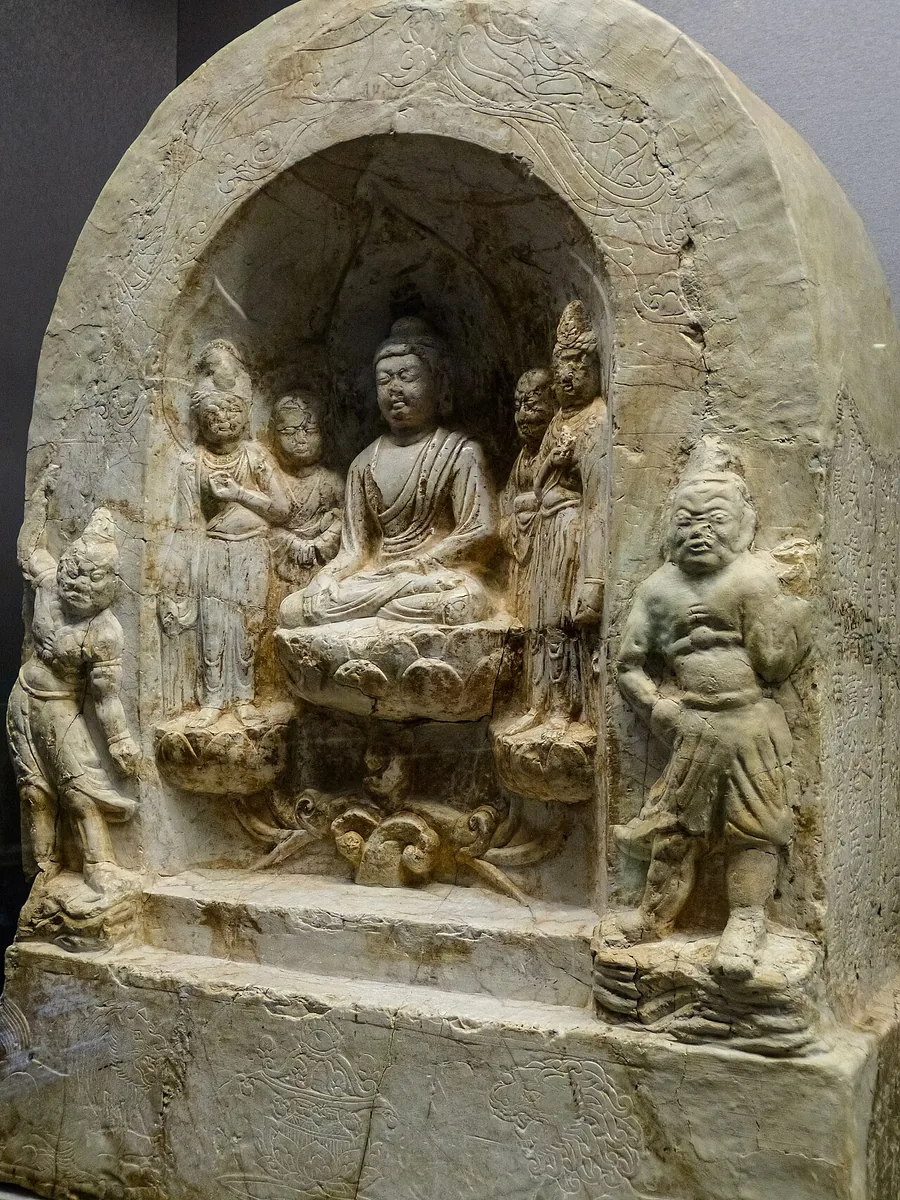
Emperor Wu took a personal part in the questions of doctrine. In 566, he lectured on the Book of Rites to his ministers. In 568, he did so again, this time also before Buddhist monks and Daoist priests.[6] In 569, he had the teachings of the Buddha and of Laozi debated before the officials, the monks and the Daoists.[6] In the twelfth month of 573, he mounted the high seat before them and ranked the three teachings: Confucianism first, Daoism second, Buddhism last.[6] In the fifth month of 574, he abolished Buddhism and Daoism together.[6] Scriptures and images were destroyed. Monks and Daoist priests were returned to lay life. All cults not in the ritual canon were forbidden.[6] A month later, he founded the Tongdao Guan, an academy meant to bring the doctrines of all the schools into one.[6]
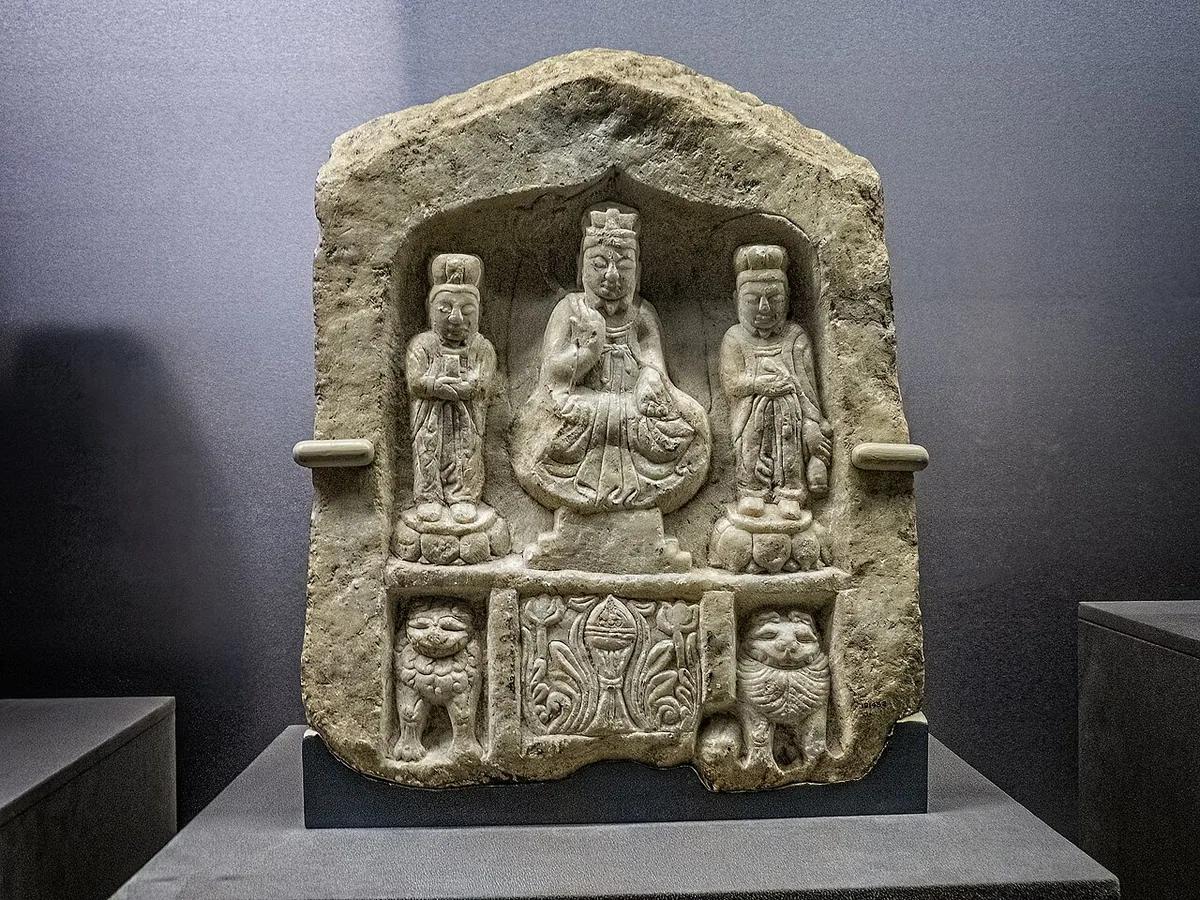
In the same years, Buddhism found a patron on the steppe. Huilin, a Buddhist monk of the Qi, had been carried off to the Göktürks. He told Taspar that the Qi were rich and strong because they had the Buddha’s law. Taspar believed him, built a monastery and sent to the Qi for sutras.[33] Taspar’s patronage of Buddhism may be connected with the persecution of the faith in the Zhou lands.[35] The prohibition did not outlast Emperor Wu by long. In 579, his son restored the images of the Buddha and of the Daoist Heavenly Worthy. In the sixth month of 580, both teachings were permitted again.[36]
The Zhou cast their own money. In the seventh month of 561, Emperor Wu issued a coin inscribed buquan, 布泉, valued at five of the old wuzhu pieces.[6] In the sixth month of 574, he added the wuxing dabu, 五行大布, valued at ten.[6] In 575, the wuxing dabu was forbidden to pass through the frontier passes. The buquan was allowed to come in but not to go out. In the first month of 576, the buquan was withdrawn, and private casting became punishable by strangling.[2] In the eleventh month of 579, Emperor Xuan issued the yongtong wanguo, 永通萬國, again valued at ten.[7]
Conquest of the Qi (575–577)
With Yuwen Hu dead, Emperor Wu took the war into his own hands.[2] In the seventh month of 575, he told his generals three things. Since he had taken the government himself, he had planned the eastern campaign. He had worn poor clothes and eaten plain food to build up arms. One battle, he said, would be enough.[2] He led sixty thousand men against Heyin on the Yellow River and took the outer city. Then he fell ill before the citadel. In the ninth month, the army turned back, and the fleet burned its boats.[2]
In the tenth month of 576, he tried again and chose a different target. This was Jinzhou, at Pingyang, the district from which the Qi founder Gao Huan had risen.[2] One of its commanders had secretly offered to surrender, and the city fell before dawn. Eight thousand Qi soldiers were sent to Guanzhong as prisoners.[2] The Qi emperor Gao Wei came with his army from Bingzhou. The Zhou withdrew and let him besiege Jinzhou. In the twelfth month, Wu came back with eighty thousand men and drew them up over more than twenty li. The Qi line gave way, and Gao Wei fled to Bingzhou with a few dozen horsemen.[2] Part of the Zhou Shu’s account of this battle was lost. It has been restored from the Bei Shi.[2]
Bingzhou was the old Qi stronghold of Jinyang. Gao Wei left his cousin Gao Yanzong there and fled on to Ye. Yanzong had himself proclaimed emperor and came out with forty thousand men.[2] Wu broke into the city by the east gate with a thousand horsemen. That night, Yanzong counter-attacked. The Zhou troops inside the walls were crushed in the press. The gate could not be shut for the dead heaped in the gateway, and the emperor escaped with a few riders by a dangerous path.[2] At dawn, he attacked again. He took Yanzong prisoner and held Bingzhou.[2]
In the first month of 577, the Zhou stormed Ye.[2] Gao Wei fled towards Qingzhou and was taken there with his heir.[2] In the second month, the Zhou counted the conquered provinces and set up governorships from Youzhou to Xuzhou.[2] In the same month, the Qi governor of Dingzhou, Gao Shaoyi, Prince of Fanyang, went over to the Göktürks.[2] Gao Wei was paraded at Chang’an in the fourth month and put to death in the tenth.[2]
The Zhou Shu’s portrait of the emperor ends with the plan he did not live to carry out. It says that after the conquest of the Qi, he meant to make war to the utmost. He meant to subdue the Göktürks, settle the south, and unite the empire within a year or two. That was his ambition.[2] In that list, the Göktürks come first, before the south.[2]
War with Taspar (578–580)
Gao Shaoyi fled from Mayi to Taspar. Taspar set him up as emperor of Qi and called his people together to avenge the Qi.[1] After thirty years of friendship with the Zhou, Taspar now backed their defeated rival. He may have done so to prevent a united Chinese state and to keep the balance of power in his own favour.[37] In the fourth month of 578, Taspar raided Youzhou. He killed and plundered, and he beat and killed the Zhou general Liu Xiong.[38] In the fifth month, Emperor Wu took command of the six armies himself and sent them north on five roads. He requisitioned every horse and donkey in Guanzhong, public and private.[2] He fell ill at the Yunyang palace and called off the campaign. On the way back to the capital, he died in his carriage, at thirty-six.[2]
His son freed the households that the Göktürk raids had ruined from taxes for a year.[7] In the eleventh month of 578, Taspar raided the frontier again. He besieged Jiuquan and plundered the country around it.[39] In 579, Taspar asked again for a marriage.[1] In the second month, the emperor Xuan gave the daughter of Yuwen Zhao, Prince of Zhao, the title of princess Qianjin. He promised her to the khan, on condition that Shaoyi be handed over.[39] Taspar did not comply. In the fifth month, his men raided Bingzhou.[39] In the sixth month of 579, the Zhou called up the men of the eastern provinces to repair the Long Wall.[7]
In the second month of 580, a Göktürk embassy came with tribute and to fetch the princess. Shaoyi was still kept back.[39] The emperor sent a further envoy, He Ruoyi, to press the matter. Only then was Shaoyi sent.[1] The annals of Emperor Jing record the handing over in the seventh month of 580.[3] Taspar had given up his protégé for a Zhou bride.[40] The war of 578 was the first sign that a united northern China would not be paid off for ever.[41]
Reign of Emperor Xuan (578–580)
Emperor Xuan came to the throne in the sixth month of 578. Within the month, he had his uncle Yuwen Xian, Prince of Qi, put to death. Xian was the general who had commanded in the Qi war.[42] In the first month of 579, the court put on the robes and caps of the Han and Wei. In the second month, the emperor handed the throne to his small son and styled himself the Tianyuan emperor.[36] His residence was called the Terrace of Heaven, and his crown carried twenty-four pendants. By 580, he had five empresses at the same time.[43] He had the palaces of Luoyang rebuilt with forty thousand conscripts. The work went on until his death.[7] The Zhou Shu lays the fall of the dynasty at his door. It describes him as a drinker who spied on his ministers. He had officials and palace women alike beaten a hundred and twenty strokes at a time, a punishment he called the Heavenly Rod.[36]
Empress Ashina rose with each change of title. Xuan honoured her as empress dowager in 578, as Tianyuan empress dowager in 579 and as Tianyuan Shang empress dowager in 580. Under his son, she was grand empress dowager.[28] In the twelfth month of 579, Xuan held a great entertainment in the palace. He let the Hu, the western foreigners, perform the “begging for cold”, in which they drenched one another with water for sport.[7] The festival was a custom of Central Asia. The Sogdians were the most numerous of the Hu in China.
In the fifth month of 580, Xuan fell ill and summoned his father-in-law Yang Jian, Duke of Sui, to attend him.[43] Two officials of the inner court, Liu Fang and Zheng Yi, forged an edict that made Yang Jian regent. Xuan died the same day, at twenty-two.[7]
Fall (580–581)
Yang Jian was the son of the Yang Zhong who had marched with Mukan in 563. As Left Grand Chancellor, he held the government for the child emperor Jing.[3] The great governors rose against him in the summer of 580: Yuchi Jiong at Xiangzhou, Sima Xiaonan at Yunzhou, and Wang Qian at Yizhou in Sichuan.[3] Wei Xiaokuan defeated Yuchi Jiong at Ye in the eighth month. Yuchi Jiong killed himself. The city of Ye, the old Qi capital, was razed. Its seat was moved to Anyang.[3] Sima Xiaonan fled to the Chen. Wang Qian was beaten and killed in the tenth month.[3] One after another, the princes of the Yuwen house who had come to court were put to death for plotting against the chancellor.[3]
In the second month of 581, the child emperor abdicated, and Yang Jian took the imperial title.[3] Jing was made Duke of Jie. He died in the fifth month of 581, aged nine. The Zhou Shu says that his death was the will of the Sui.[3] The historians’ comment reckons that the sacrifices of Yuwen Tai’s house ended within two twelve-year cycles of his work. It lays the blame on Emperor Xuan, not on the child.[3]
Aftermath
The fall of the Zhou turned the Göktürk frontier around. The Sui Shu records that Yang Jian treated the Göktürks coldly. It also records that Qianjin, now the wife of Ishbara, grieved for the extinction of her house and urged him day and night to restore the Zhou. Ishbara invaded with four hundred thousand archers.[33] Lady Dou heard of the abdication. She threw herself on her bed and wept that she had not been born a man to save her uncle’s house. Her parents covered her mouth and told her she would have the family destroyed.[31]
Empress Ashina outlived the dynasty by a year. She died in 582 at thirty-two sui. The Sui emperor had her buried with full rites beside Emperor Wu in his tomb, the Xiaoling.[28]
Qianjin lived on at the Göktürk court for more than a decade.[33] When Ishbara made peace with the Sui, she was given the surname Yang and the new title of Princess Dayi.[33] After the Sui conquered the Chen, the emperor sent her a screen that had belonged to the last Chen ruler. She wrote a poem on it about the fall of the Chen and her own fortunes. It contains the line: “I was born a daughter of an imperial house, and drifted into the court of the barbarians.”[33] The Sui emperor heard of the poem and disliked it. His gifts to her grew meagre.[33] An affair with one of the Hu of her retinue gave him the occasion to strip her of her title. Then Yami, a rival khan, asked for a Sui bride. The Sui made her death the price, and Tulan Khan killed her in his tent.[33]
Western embassies and the Sogdians
The Göktürk conquests in the west reached Chang’an as embassies. The Hephthalites sent tribute to the Zhou in 558. The Zhou Shu says that afterwards the Göktürks broke them, their tribes scattered, and their tribute ceased.[44] In 564, the king of Sute sent an embassy.[32] Sute is the name under which the Chinese histories know Sogdia. The Zhou Shu, however, identifies it with the ancient Yancai and places it north-west of Kangju, on a great lake.[1] In 567, envoys of Anxi arrived at Chang’an in the same month as envoys of the Göktürks and the Tuyuhun. The Zhou Shu places Anxi west of the Pamirs, between Kangju and Persia.[32] The embassies fall in the years in which the Göktürks, in league with Persia, destroyed the Hephthalite state in the Göktürk–Hephthalite war. They also took its lands north of the Oxus.
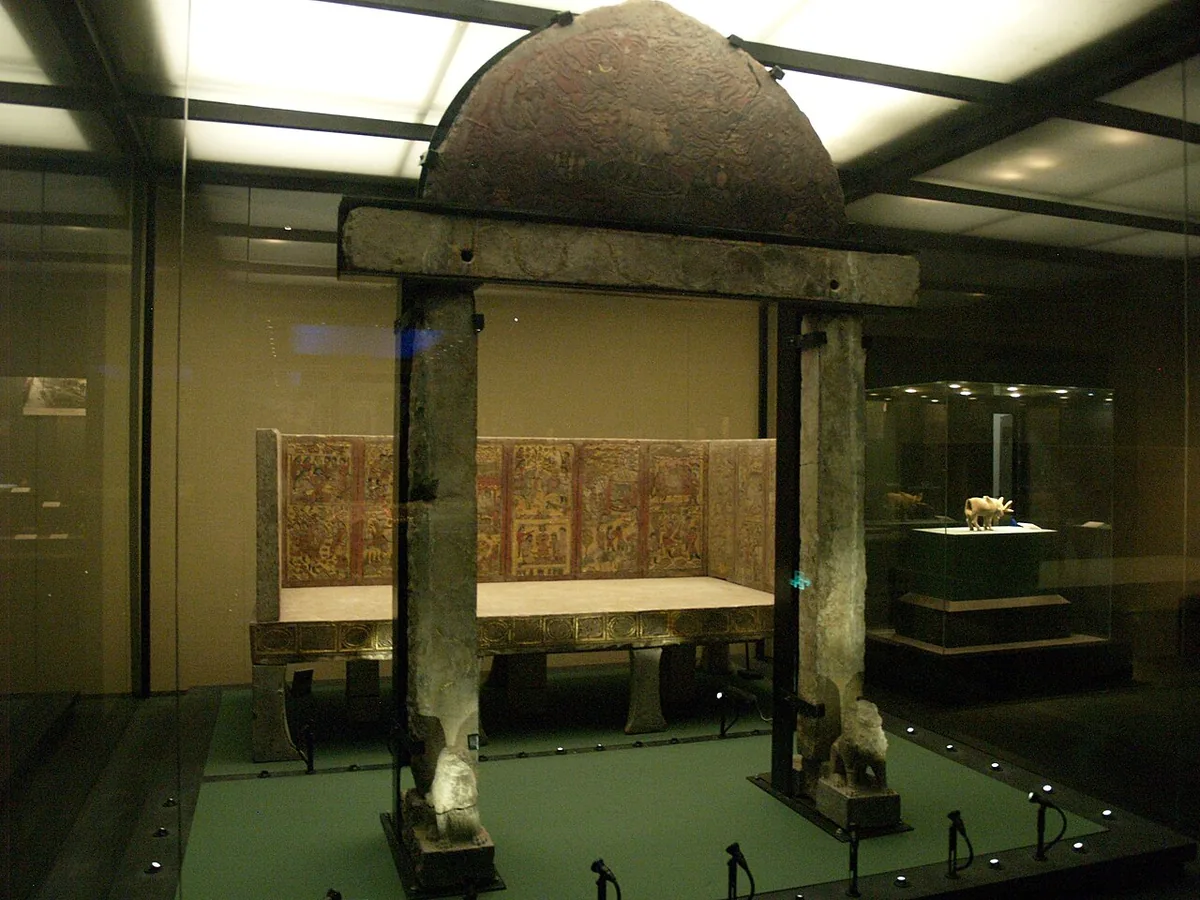
Sogdians carried the trade that the Göktürk silk set moving, and many of them lived in the Zhou lands. Chinese administrations gave the heads of their communities an official title, sabao. It transcribes a Sogdian word for the head of a caravan.[45] One of them, An Jia, was sabao under the Zhou. He died in 579 and presents himself in his tomb as a diplomat.[46] Reliefs from the Sogdian tombs of these years, his among them, show scenes of trade with the nomads and of Sogdians at work as envoys.[46]
Tombs and cave temples
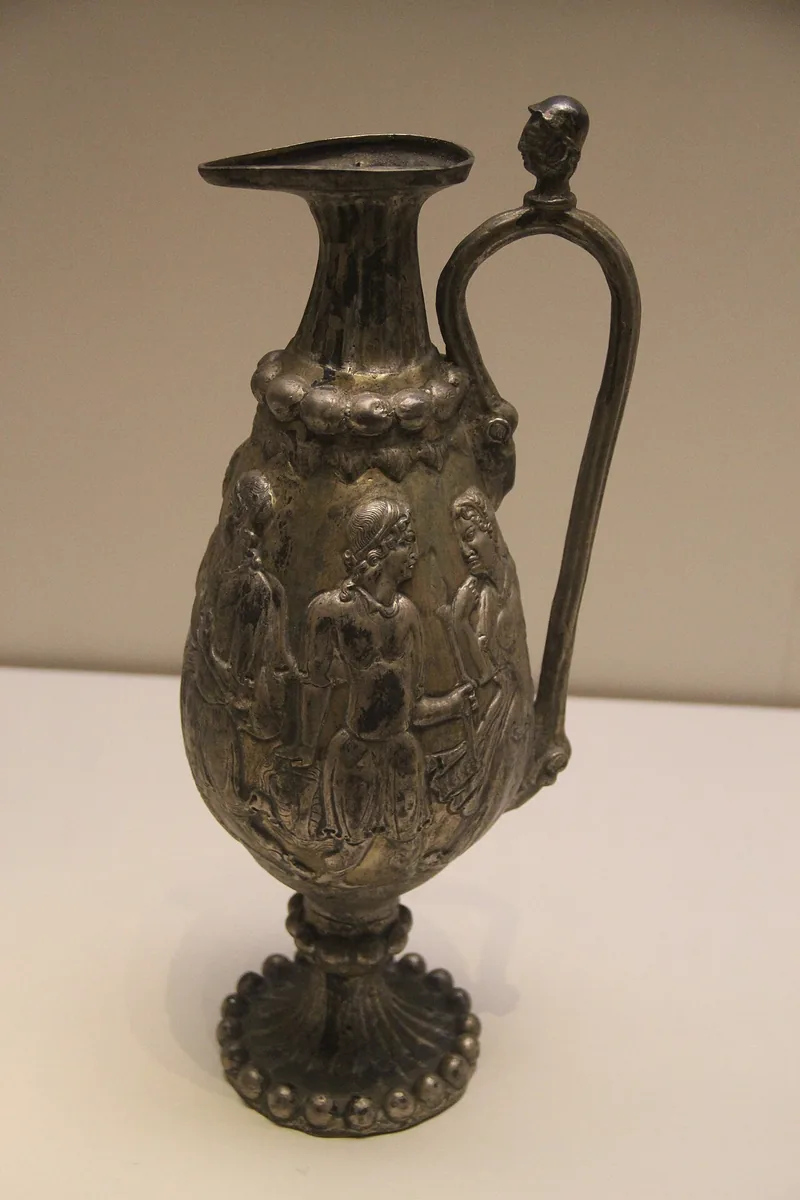
The Zhou elite was buried with goods from the far west. Li Xian, a general of Yuanzhou in the north-west, had the infant Emperor Wu and his brother Xian brought up in his own house for six years, because a taboo kept them from the palace.[47] On a tour of the west, the emperor visited the house. He sent gifts to Li Xian, who was then governor of Guazhou on the Gansu frontier.[47] Li Xian died at the capital in the third month of 569, aged sixty-eight. The emperor mourned him in person.[47] His tomb at Guyuan, the old Yuanzhou, was excavated in 1983. Among its goods were a gilded silver ewer made in Central Asia, with figures from Greek myth on its body, and a cut-glass bowl of Sasanian type.
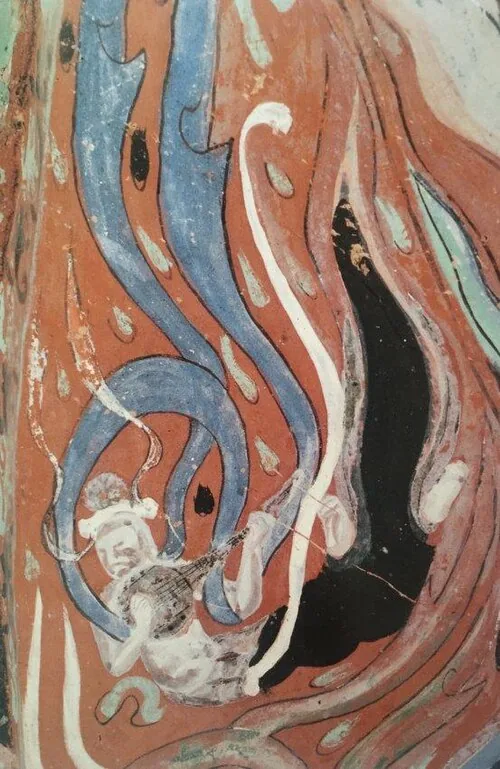
The western end of the Zhou state is still visible at Mogao, the cave temples outside Dunhuang. The style of the paintings dates a group of caves there to the Zhou decades. Among them are caves 428, 290, 296, 299 and 301. Cave 428 is the largest of them.
Assessment
For the Göktürks, the Zhou were the Chinese state that worked. It was an ally that paid, married, fought beside them and asked for the execution of their enemies. The best explanation is that the years of the alliance, from 545 to Taspar’s death, were the golden age of the khaganate on its southern frontier.[41] The price was a Chinese state that grew strong on the alliance. The Zhou used the Göktürk cavalry and the Göktürk bride to hold the Qi in check until they could finish them alone. The moment they had done so, Emperor Wu named the Göktürks as his next war.[2] The Sui inherited that state whole and carried the Hegemony Wars south against the Chen.
Rulers
Relations with other states
Red is war, blue alliance, gold trade. Where several held at once, the line shows what prevailed; alliance and trade can run side by side. Each line rests on an article. Point at a state to see its weightiest relation, select it to see its events. The slider shows what stood in a given year, and Play runs through the years.
First Göktürk Khaganate557 to 581
- Alliance557 to 577The Zhou–Qi war, 557–577
- Alliance557 to 581The Göktürk–Zhou alliance
- Alliance563 to 564Jinyang campaign, 563–564
- Alliance564The Woye and Luoyang Campaign (564)
- Tribute572 to 581Border Marketsa hundred thousand pieces of silk a year
- War578The Siege of Jiuquan (578)
- War578The Raid on Youzhou (578)
- Marriage580The Marriage of Princess Qianjin (580)Princess Qianjin for Taspar
Northern Qi557 to 577
- War557 to 577The Zhou–Qi war, 557–577
- War563 to 564Jinyang campaign, 563–564
- War564The Woye and Luoyang Campaign (564)
References
- ^ a b c d e f g h i j k l m n o Zhou Shu (Book of Zhou), juan 50
- ^ a b c d e f g h i j k l m n o p q r s t u v w x Zhou Shu (Book of Zhou), juan 6
- ^ a b c d e f g h i j k l Zhou Shu (Book of Zhou), juan 8
- ^ a b c d e f g h Zhou Shu (Book of Zhou), juan 3
- ^ a b c d e f Zhou Shu (Book of Zhou), juan 4
- ^ a b c d e f g h i j k l m n o p q Zhou Shu (Book of Zhou), juan 5
- ^ a b c d e f g Zhou Shu (Book of Zhou), juan 7
- ^ Zhou Shu (Book of Zhou), juan 3; Zhou Shu (Book of Zhou), juan 4; Zhou Shu (Book of Zhou), juan 5
- ^ a b c d e Zhou Shu (Book of Zhou), juan 19; Zhou Shu (Book of Zhou), juan 50
- ^ Zhou Shu (Book of Zhou), juan 3; Zhou Shu (Book of Zhou), juan 4; Zhou Shu (Book of Zhou), juan 5; Zhou Shu (Book of Zhou), juan 7; Zhou Shu (Book of Zhou), juan 8
- ^ Zhou Shu (Book of Zhou), juan 3; Zhou Shu (Book of Zhou), juan 4; Zhou Shu (Book of Zhou), juan 6
- ^ a b Zhou Shu (Book of Zhou), juan 3; Zhou Shu (Book of Zhou), juan 11
- ^ a b c d e f g h i j k l m n o p Zhou Shu (Book of Zhou), juan 11
- ^ Zhou Shu (Book of Zhou), juan 4; Zhou Shu (Book of Zhou), juan 11
- ^ a b c d Zhou Shu (Book of Zhou), juan 5; Zhou Shu (Book of Zhou), juan 11
- ^ Yavuz 2025, p. 298, 305
- ^ a b c d e f g h i j k l m n o Zhou Shu (Book of Zhou), juan 33
- ^ Zhou Shu (Book of Zhou), juan 6; Zhou Shu (Book of Zhou), juan 33
- ^ Zhou Shu (Book of Zhou), juan 33; Zhou Shu (Book of Zhou), juan 50
- ^ Zhou Shu (Book of Zhou), juan 5; Zhou Shu (Book of Zhou), juan 33; Zhou Shu (Book of Zhou), juan 50
- ^ Yavuz 2025, p. 297
- ^ Zhou Shu (Book of Zhou), juan 4; Zhou Shu (Book of Zhou), juan 5
- ^ a b c d e f g h i j k Zhou Shu (Book of Zhou), juan 19
- ^ a b Zhou Shu (Book of Zhou), juan 5; Zhou Shu (Book of Zhou), juan 19
- ^ a b c d Yavuz 2025, p. 298
- ^ Zhou Shu (Book of Zhou), juan 11; Zhou Shu (Book of Zhou), juan 50
- ^ a b Zhou Shu (Book of Zhou), juan 5; Zhou Shu (Book of Zhou), juan 9
- ^ a b c d e f g h i j Zhou Shu (Book of Zhou), juan 9
- ^ Zhou Shu (Book of Zhou), juan 9; Zhou Shu (Book of Zhou), juan 50
- ^ Yavuz 2025, p. 298–299
- ^ a b c d e f Jiu Tangshu (Old Book of Tang), juan 51
- ^ a b c Zhou Shu (Book of Zhou), juan 5; Zhou Shu (Book of Zhou), juan 50
- ^ a b c d e f g h Sui Shu (Book of Sui), juan 84
- ^ de la Vaissière 2005a, p. 209
- ^ Golden 1992, p. 131
- ^ a b c Zhou Shu (Book of Zhou), juan 7; Zhou Shu (Book of Zhou), juan 8
- ^ Yavuz 2025, p. 305
- ^ Zhou Shu (Book of Zhou), juan 6; Zhou Shu (Book of Zhou), juan 50
- ^ a b c d Zhou Shu (Book of Zhou), juan 7; Zhou Shu (Book of Zhou), juan 50
- ^ Yavuz 2025, p. 309
- ^ a b Yavuz 2025
- ^ Zhou Shu (Book of Zhou), juan 6; Zhou Shu (Book of Zhou), juan 7
- ^ a b Zhou Shu (Book of Zhou), juan 7; Zhou Shu (Book of Zhou), juan 9
- ^ Zhou Shu (Book of Zhou), juan 4; Zhou Shu (Book of Zhou), juan 50
- ^ de la Vaissière 2005a, p. 151
- ^ a b de la Vaissière 2005a, p. 208
- ^ a b c Zhou Shu (Book of Zhou), juan 25
Sources
- Zhou Shu (Book of Zhou), juan 3, 4, 5, 6, 7, 8, 9, 11, 19, 25, 33, 50
- Sui Shu (Book of Sui), juan 84
- Jiu Tangshu (Old Book of Tang), juan 51
Literature
- Emre-E. Yavuz, The Gokturk Empire: 2nd Edition (2025)
- Peter B. Golden, An Introduction to the History of the Turkic Peoples (1992)
- Étienne de la Vaissière, Sogdian Traders: A History (2005)
What links here34
- Persons
- Mukan Khan · Princess Qianjin · Yuwen Tai
- States
- First Göktürk Khaganate · Northern Qi · Northern Wei · Western Wei
- Conflicts
- Hegemony Wars in Northern China · The Göktürk–Sasanian Trade Conflict · The Zhou–Qi war, 557–577
- Battles & Events
- Death of Princess Dayi · Music of Empress Ashina (568) · The Bargain with Mukan (562–563) · The Göktürk–Wei alliance · The Göktürk–Zhou alliance · The Marriage of Princess Qianjin (580) · The Qi Court in Exile (577–580) · The Raid on Youzhou (578) · The Siege of Jiuquan (578) · The Woye and Luoyang Campaign (564)
- Peoples
- Tuoba
- Lineages
- Yuwen
- Institutions and Titles
- Border Markets · Levirate · Raw Materials and Trade among the Turkic Peoples · Six Garrisons · The Economy of the Steppe Empires
- Sources
- Tomb of An Jia · Tomb of Shi Jun · Tomb of Yu Hong
- Controversies
- The Bökli question
Cite this article
Yavuz, Emre-E. “Northern Zhou.” Turkic Atlas, revised 8 November 2026. https://turkicatlas.org/polities/northern-zhou/
Last revised: 8 November 2026




