
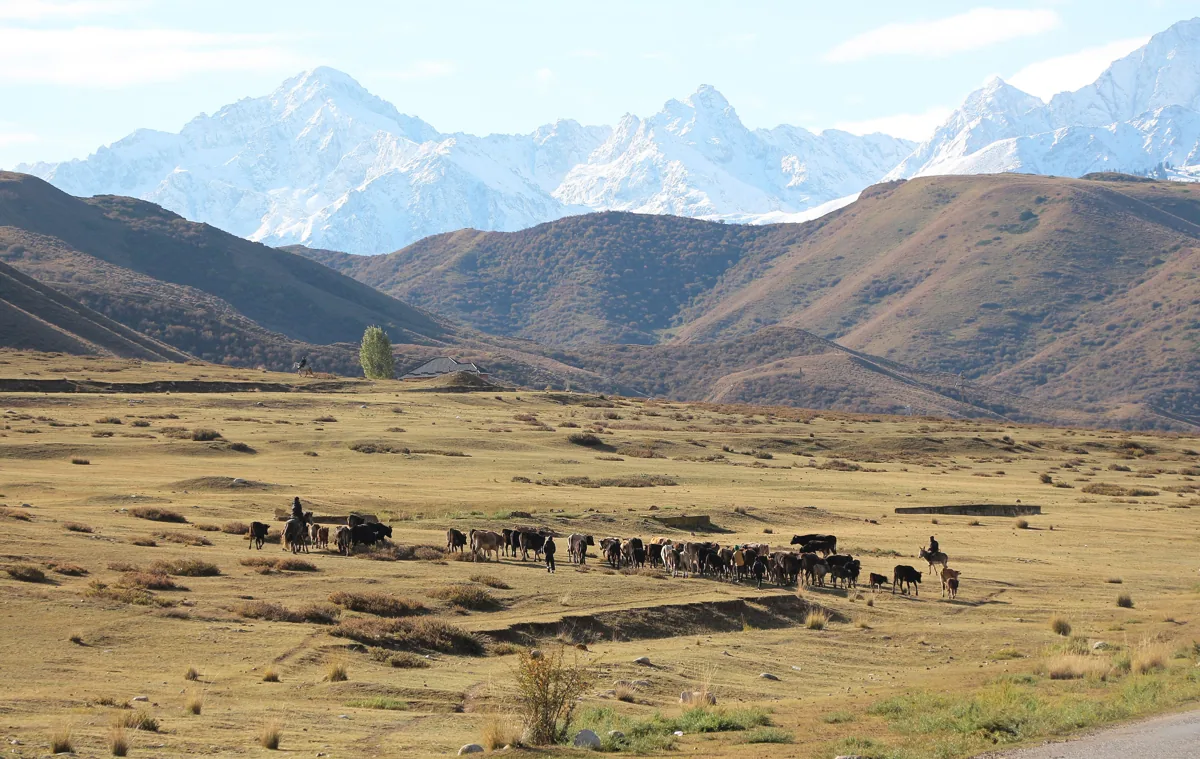
The Tian Shan, the Heavenly Mountains of the Chinese sources, runs east and west between Dzungaria in the north and the Tarim basin in the south. Grass lies on the one side and oasis on the other. The range is the line between two ways of living.
For this reason the range matters here. The western khaganate held both sides. Its seat was at Suyab north of the mountains, and its tribute came from the oasis states south of them.[1] When the Tang took the oases one at a time in the seventh century, they were cutting the khaganate’s income before they met its army.
References
- ^ Yavuz 2025
Sources
- Jiu Tangshu (Old Book of Tang), juan 194
- Xin Tangshu (New Book of Tang), juan 215 (after Jiu Tangshu)
- Sui Shu (Book of Sui), juan 84
Literature
- Peter B. Golden, An Introduction to the History of the Turkic Peoples (1992)
- Emre-E. Yavuz, The Gokturk Empire: 2nd Edition (2025)
- Étienne de la Vaissière, Sogdian Traders: A History (2005)
What links here27
- Persons
- Irbis Shegui Khan · Istemi · Su Dingfang · Tamim ibn Bahr · Yukuk Shad
- States
- Kara-Khanid Khanate
- Battles & Events
- Revolt of the Tiele (627) · The battle of the Talas, 751 · The embassy of Zemarchos, 569
- Places
- Beiting · Beshbalik · Cave of the ancestors · Dzungaria · Ektag · Gaochang · Issyk-Kul · Kucha · Syr Darya · Talas · Tarim Basin · Tuz Köl of the Karluks
- Lineages
- Ashina
- Religions
- Stone Figures
- Languages
- The Turkic languages
- Controversies
- The Kirghiz origin debate
Cite this article
Yavuz, Emre-E. “Tian Shan.” Turkic Atlas, revised 7 November 2026. https://turkicatlas.org/places/tian-shan/
Last revised: 7 November 2026


