- 400
- 500
- 600
- 700
- 800
- 900
- Rouran 400–554
- First Göktürk 552–630
- Tang rule 630–682
- Second Göktürk 682–744
- Uyghur 744–840
- Kirghiz 840–924
- Huns 370–469
- Western Göktürk 552–659
- Türgesh 699–766
- Karluk 766–800
- Khazar 650–969
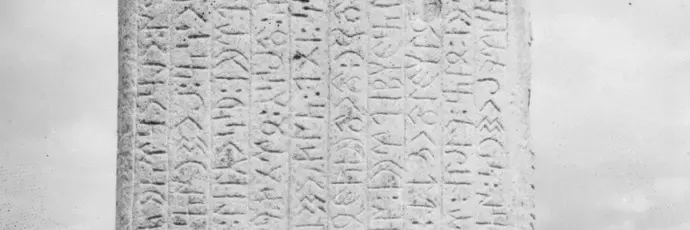
Two inscribed stone pillars at Bain Tsokto, on the right bank of the upper Tola, between the old post-station of Nalaikh and the river, east of the Orkhon monuments and east of the modern capital of Mongolia. Sixty-two lines of runiform Turkic, in which a man who calls himself Bilge Tonyukuk tells how the Göktürk state was restored after fifty years under China. He also tells how he served its first three khans.[1] Elisabeth Klementz found the stones in the summer of 1897. Wilhelm Radloff published them two years later, with an afterword by Friedrich Hirth on the Chinese sources.[2] Another account gives the finder as F. Klementz and the year of the edition as 1899.[3]
It is the third of the great Göktürk inscriptions, and the odd one out. The Kül Tegin and Bilge Khan monuments are royal. A khan speaks from the Orkhon, in the voice of the dynasty, and the two share their historical section word for word. Tonyukuk’s monument stands elsewhere. Its subject raised it in his own lifetime, and a counsellor wrote it about counsel. It names Ilterish, Kapgan and Bilge Khan. It does not name Kül Tegin, and the Kül Tegin inscription does not name Tonyukuk. Men who had fought on the same side composed the two accounts of the same forty years within a decade or so of each other. Each leaves the other out. For the events of 682 to 716, the Tonyukuk inscription is therefore a witness of its own, independent of the Orkhon stones.
Monument
Klementz’s report, printed by Radloff, describes a stone sarcophagus with carved ornament, the excavated foundation of a building, and the two square inscribed pillars. Around the pillars stood eight stone figures cut by skilled Chinese masons, every one of them with its head struck off. The whole was enclosed by a rectangular earth bank, open to the east. A line of upright stones ran eastward from it for several hundred fathoms.[2][4][5] Thomsen gives the line of stones as about a hundred and fifty metres and calls the arrangement that of the Orkhon monuments on a smaller scale.[6] A survey of 1997 measured the line of balbal at the monument as about 1300 metres and two further lines to the north of it as about 125 and 475 metres.[7] A count made on the ground between 1997 and 1999 found 271 balbal stones outside the fenced area. The line turns north after the 260th.[8] The two figures for the main line are not reconciled here. The row of stones is the balbal line of the royal tombs, with one stone for each enemy slain. Its length is one measure of how Tonyukuk wished to be remembered.
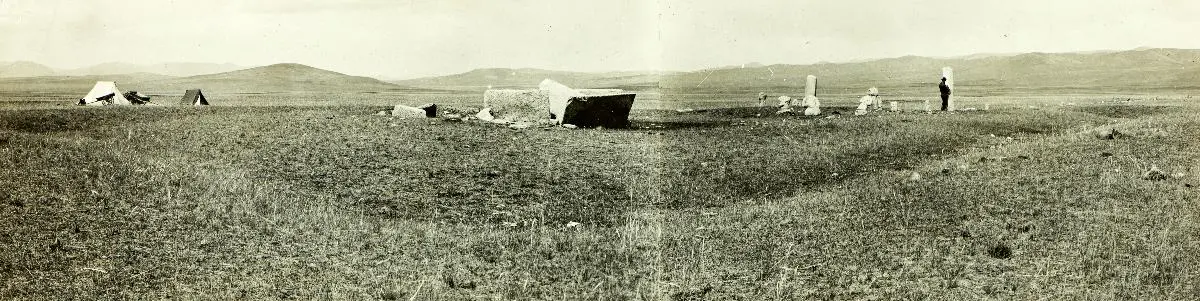
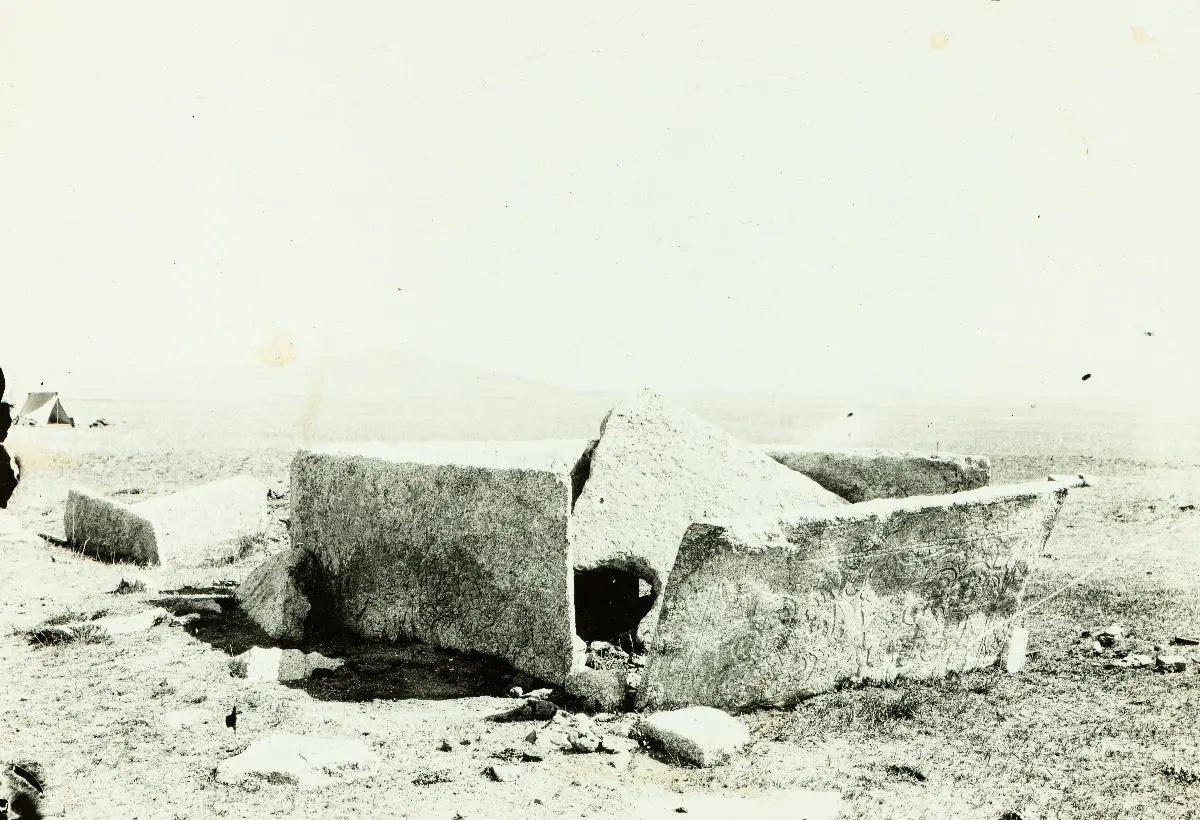
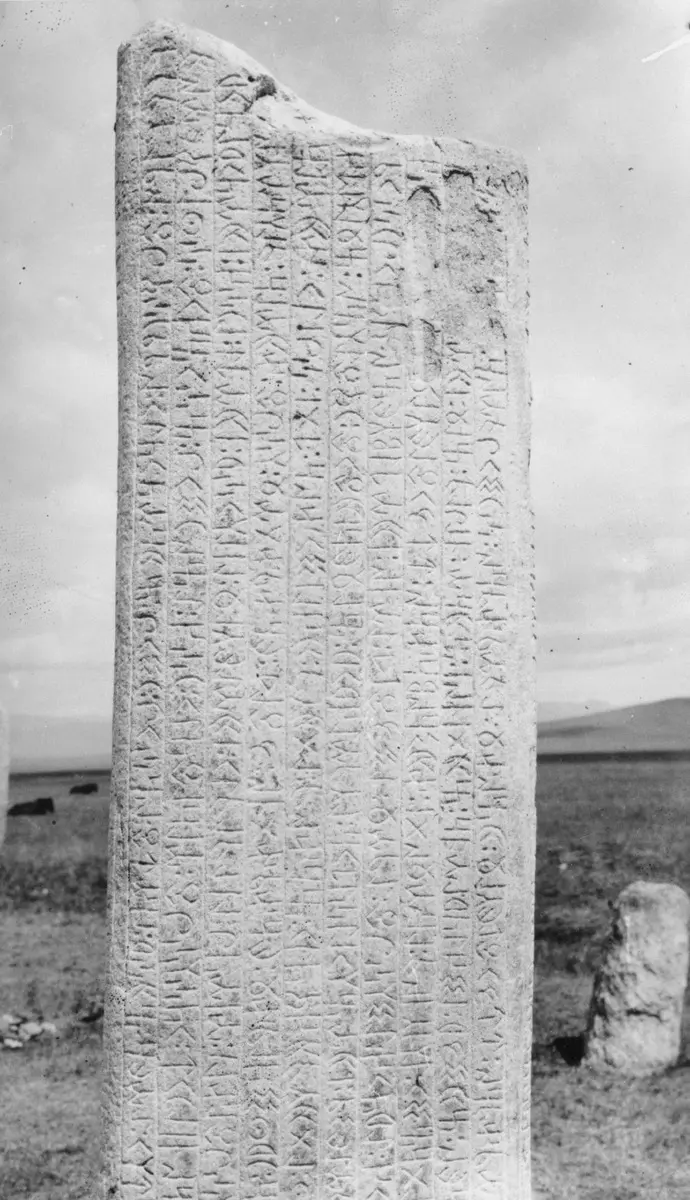
The first and larger pillar bears the inscription on all four faces: west, seven lines; south, ten; east, seven; north, eleven. The second, more weathered and less carefully cut, continues it: west, nine; south, six; east, eight; north, four.[1][4][9] The first stone is 243 centimetres high and the second 217.[4] The lines run vertically, as on the Orkhon, but they are read from left to right, the reverse of the Orkhon order.[2] Radloff numbered the lines 1 to 62 across both stones. Thomsen used that numbering, and so has everyone since. Turkic Atlas cites the text by it under Tonyukuk and under the khaganate.
The stones stand some forty to fifty kilometres from Ulaanbaatar, in the district of Nalaikh.[10][5] They are about 360 kilometres from the Kül Tegin and Bilge Khan monuments.[4] Around the stelae, the survey of 1997 recorded three lines of balbal, a ruin, a second monument group some two and a half kilometres away and many burial mounds. Its table of finds lists six pieces of sarcophagus.[11] After some 1,270 years in the open, the monument is badly worn. Digs in 1897, 1909, 1925 and 1957 damaged it, and where the finds went is not known.[12] The east face of the second stone, lines 51 to 58, can be read only by feeling the surface with a finger.[13] The monuments were placed under state protection in 1971 and fenced. By one account, they have had guards since 1998.[14]
Speaker and date
The speaker is Tonyukuk himself, in the first person from the first word to the last. Line 58 says so: “For the realm of the Turk Bilge Khan I have had this written. I, Bilge Tonyukuk.”[2] His full style in line 6 is Bilge Tonyukuk Boyla Baga Tarkan.[2] Radloff concluded that the monument is not a tomb inscription at all. In his view it is a memorial that Tonyukuk raised for himself in old age, tendentiously, to put on record the deeds of Ilterish and of his counsellor. A quarter-century of Kapgan’s reign had let those deeds fall out of memory.
The date follows from that, and scholars argue over it. The closing lines address Bilge Khan as reigning, so the text is later than 716.[15] It says nothing of Tonyukuk’s service under Bilge Khan, which the Tang history describes at length. That service includes his recall at over seventy, the Basmïl campaign of 721 and the embassy of 725.[16] Radloff took that silence to mean that the stone was cut in 716 itself. In that year, Tonyukuk had been spared in the coup that killed Kapgan’s court, because his daughter was the new khan’s katun. He had then been dismissed to his tribe. Radloff described his life there as a kind of exile far from the court, sulking over lost influence. Thomsen put the date at about 720.[17][18] Tekin puts it five to ten years after 716, most probably between 720 and 725.[19] A second dating, which Sertkaya has argued, takes the monument for Tonyukuk’s answer to the Kül Tegin inscription. It then falls between that monument and the Bilge Khan monument, in 732 to 734.[4] The datings stand side by side, and the difference is not decided. The stone is later than 716, and it was cut while its author lived.[2]
On the language, the stone belongs with the Ongi and Küli Čor stones. These inscriptions nearly always leave the vowel e unwritten, which the Kül Tegin and Bilge Khan stones do not. The Tonyukuk stone has ben as an independent pronoun, where those two have men everywhere.[20]
Name
- TuñuquqOld Turkic
- Bain Tsokto inscriptionsEnglish
- 暾欲谷ChineseJiu Tangshu 194
The stone writes 𐱃𐰆𐰪𐰸𐰸, which the Turkological literature normalises as Tuñuquq or Toñuquq. Tonyukuk is the common English form. The Tang histories write the name 暾欲谷. They describe the man as an old officer of Kapgan’s court, over seventy in 716, whose daughter was Bilge Khan’s katun.[16] A separate question is whether he is also the Ashide Yuanzhen of the same histories, the Chinese-trained Göktürk who went over to Ilterish in 682 and commanded his army as Apa Tarkan. Turkic Atlas argues it under Tonyukuk. Hirth said yes. The Tang histories let Yuanzhen die in battle against the Türgesh before Ilterish himself died, which makes the equation hard to hold.
Text
Line numbers follow Radloff. Each passage gives the runes first, then the transcription in italics, then the rendering. The runes are those of the runic text on Turkish Wikisource. They are checked word by word against the runic text and the transcription in Tekin’s edition of 1994, and corrected in the few places where Tekin’s runic print shows a different sign.[21] The transcription follows Tekin, simplified. The vowels he marks as unwritten are supplied, and his ä is written e. Gaps in the stone are marked … in the runes and in the transcription. A word in square brackets in the transcription, as in line 33, is one that the runic text leaves blank and that a reading of the stone itself supplies. Angle brackets in the transcription enclose words and letters that the carver left out and Tekin supplies, so the runes do not contain them. A passage without runes is one in which the runic text of the Wikisource file and Tekin’s reading do not agree. It stands in the rendering alone. The rendering follows Thomsen’s final translation as Ross gave it in English. It is checked line by line against the runic text, and it departs from Thomsen where the runes support the departure. Thomsen thought Radloff’s edition very unsatisfactory. He worked from a complete copy and photographs that Ramstedt made at two visits to the stone, and his German of 1924, revised against his Danish of 1922, is cited in the readings. Gaps in the stone are marked … in the rendering. Words supplied for the sense stand in square brackets. The translation writes khan where the Turkic has qaġan, and leaves shad, yabgu, tarkan, beg and katun untranslated. It gives the name of the people, türk, as Turk (plural Turks). It would write Göktürk only where the stone has kök türk, which no passage given here does. It keeps Sir where the stone pairs the two names.
First stone, west face (lines 1–7): the restoration
𐰋𐰃𐰠𐰏𐰀: 𐱃𐰆𐰪𐰸𐰸: 𐰋𐰤: 𐰇𐰕𐰢: 𐱃𐰉𐰍𐰲: 𐰃𐰠𐰭𐰀: 𐰶𐰠𐰦𐰢: 𐱅𐰇𐰼𐰚: 𐰉𐰆𐰑𐰣: 𐱃𐰉𐰍𐰲𐰴𐰀: 𐰝𐰇𐰼𐰼: 𐰼𐱅𐰃
bilge tuñuquq ben özüm tabgač iliŋe kılıntım türk bodun tabgačka körür erti
I am Bilge Tonyukuk. I myself was born into the realm of China. The Turk people were then subject to China.
𐱅𐰇𐰼𐰚: 𐰉𐰆𐰑𐰣: 𐰴𐰣𐰃𐰤: 𐰉𐰆𐰞𐰢𐰘𐰤: 𐱃𐰉𐰍𐰲𐰑𐰀: 𐰑𐰺𐰡𐰃: 𐰴𐰣𐰞𐰦𐰃: 𐰴𐰣𐰃𐰤: 𐰸𐰆𐰑𐰯: 𐱃𐰉𐰍𐰲𐰴𐰀: 𐰖𐰣𐰀: 𐰃𐰲𐰚𐰓𐰃
türk bodun kanın bulmayın tabgačda adrıltı kanlantı kanın kodup tabgačka yana ičikdi
The Turk people, not having a khan of their own, broke away from China and made themselves a khan. Then they abandoned their khan and submitted to China again.
𐱅𐰭𐰼𐰃: 𐰨𐰀: 𐱅𐰢𐰾: 𐰼𐰨: 𐰴𐰣: 𐰋𐰼𐱅𐰢: 𐰴𐰣𐰭𐰤: 𐰸𐰆𐰑𐰯: 𐰃𐰲𐰚𐰓𐰭: 𐰃𐰲𐰚𐰓𐰜: 𐰇𐰲𐰤: 𐱅𐰭𐰼𐰃: 𐰇𐰠𐱅𐰢𐰾: 𐰼𐰨
teŋri anča temiš erinč kan bertim kanıŋın kodup ičikdiŋ ičikdük üčün teŋri öl temiš erinč
Heaven must then have said: “I gave you a khan; you left your khan and submitted again.” Because they submitted, Heaven struck them dead.
𐱅𐰇𐰼𐰚: 𐰉𐰆𐰑𐰣: 𐰇𐰠𐱅𐰃: 𐰞𐰴𐰦𐰃: 𐰖𐰸: 𐰉𐰆𐰡𐰃: 𐱅𐰇𐰼𐰚: 𐰾𐰃𐰼: 𐰉𐰆𐰑𐰣: 𐰘𐰼𐰃𐰤𐱅𐰀: 𐰉𐰆𐰑: 𐰴𐰞𐰢𐰑𐰃
türk bodun ölti alkıntı yok boltı türk sir bodun yerinte bod kalmadı
The Turk people died, wasted away, and came to nothing. In the land of the Turk Sir people no ordered body was left.
𐰃𐰑𐰀: 𐱃𐱁𐰑𐰀: 𐰴𐰞𐰢𐰾𐰃: 𐰸𐰆𐰉𐰺𐰣𐰯: 𐰘𐱅𐰃: 𐰘𐰇𐰕: 𐰉𐰆𐰡𐰃: 𐰚𐰃: 𐰇𐰠𐰏𐰃: 𐱃𐰞𐰍: 𐰼𐱅𐰃: 𐰋𐰃𐰼: 𐰇𐰠𐰏𐰃: 𐰖𐰑𐰍: 𐰼𐱅𐰃: 𐰘𐱅𐰃: 𐰘𐰇𐰕: 𐰚𐰃𐰾𐰃𐰏: 𐰆𐰑𐰕𐰍𐰢𐰀: 𐰆𐰞𐰍𐰃: 𐱁𐰑𐰼𐱅𐰃: 𐰖𐰍𐰞: 𐱅𐰃𐰓𐰃: 𐰖𐰍𐰢𐰾𐰃𐰋𐰤𐰼𐱅𐰢: 𐰋𐰃𐰠𐰏𐰀: 𐱃𐰆𐰪𐰸𐰸
ıda tašda kalmıšı kubranıp yeti yüz boltı eki ülügi atlıg erti bir ülügi yadag erti yeti yüz kišig uduzugma ulugı šad erti aygıl tidi ayıgması ben ertim bilge tuñuquq
Those who had stayed out in the wilds, in wood and stone, gathered together, and they were seven hundred. Two parts of them were mounted, one part on foot. The one who led the seven hundred was the shad. “Be my spokesman,” he said; and his spokesman was I, Bilge Tonyukuk.
𐰴𐰍𐰣𐰢𐰆𐰶𐰃𐰽𐰖𐰃𐰤: 𐱅𐰓𐰢: 𐰽𐰴𐰦𐰢: 𐱃𐰆𐰺𐰸𐰉𐰆𐰸𐰞𐰃: 𐰾𐰢𐰕𐰉𐰆𐰸𐰞𐰃: 𐰃𐰺𐰴𐰑𐰀: 𐰋𐰃𐰠𐰾𐰼: 𐰾𐰢𐰕𐰉𐰆𐰸𐰀: 𐱃𐰆𐰺𐰸: 𐰉𐰆𐰸𐰀: 𐱅𐰘𐰤: 𐰋𐰃𐰠𐰢𐰕𐰼𐰢𐰾: 𐱅𐰘𐰤: 𐰨𐰀: 𐰾𐰴𐰦𐰢: 𐰦𐰀: 𐰚𐰃𐰾𐰼𐰀: 𐱅𐰭𐰼𐰃: 𐰋𐰃𐰠𐰏: 𐰋𐰼𐱅𐰝: 𐰇𐰲𐰤: 𐰇𐰕𐰢: 𐰝: 𐰴𐰍𐰣: 𐰴𐰃𐰽𐰑𐰢
kagan mu kıšayın tedim sakıntım toruk bukalı semiz bukalı ırakda bilser semiz buka toruk buka teyin bilmez ermiš teyin anča sakıntım anta kisre teŋri bilig bertük üčün özüm ök kagan kıšdım
“Shall I make him khan?” I said, and I thought it over. “If one can tell from far off that there are lean bulls and fat bulls, one still cannot say which is the fat one and which the lean” — so I thought. Afterward, because Heaven gave me understanding, I myself made him khan.
𐰋𐰃𐰠𐰏𐰀: 𐱃𐰆𐰪𐰸𐰸: 𐰉𐰆𐰖𐰞𐰀: 𐰉𐰍𐰀: 𐱃𐰺𐰴𐰣: 𐰋𐰃𐰼𐰠𐰀: 𐰃𐰠𐱅𐰼𐰾: 𐰴𐰍𐰣: 𐰉𐰆𐰞𐰖𐰣
bilge tuñuquq buyla baga tarkan birle ilteriš kagan boluyın
With Bilge Tonyukuk Boyla Baga Tarkan at his side he became Ilterish Khan.
𐰋𐰼𐰘𐰀: 𐱃𐰉𐰍𐰲𐰍: 𐰇𐰭𐰼𐰃: 𐰴𐰃𐱃𐰪𐰍: 𐰖𐰃𐰺𐰖𐰀: 𐰆𐰍𐰕𐰍: 𐰇𐰚𐰾: 𐰝: 𐰇𐰠𐰼𐱅𐰃: 𐰋𐰠𐰏𐰾𐰃: 𐰲𐰉𐰾𐰃: 𐰋𐰤: 𐰝: 𐰼𐱅𐰢: 𐰲𐰆𐰍𐰖: 𐰴𐰆𐰕𐰃𐰤: 𐰴𐰺𐰀: 𐰴𐰆𐰢𐰍: 𐰆𐰞𐰺𐰆𐰺: 𐰼𐱅𐰢𐰕
birye tabgačıg öŋre kıtañıg yırya oguzug üküš ök ölürti bilgesi čabıšı ben ök ertim čogay kuzın kara kumug olurur ertimiz
To the south he killed many of the Chinese, to the east many of the Kıtañ, to the north many of the Oguz. His wise one and his renowned one was I myself. We were living then at Čogay Kuzı and at Kara Kum.
First stone, south face (lines 8–17): the fugitive, the counsel, and Ötüken
𐰚𐰘𐰚: 𐰘𐰃𐰘𐰇: 𐱃𐰉𐰽𐰍𐰣: 𐰘𐰘𐰇: 𐰆𐰞𐰺𐰆𐰺: 𐰼𐱅𐰢𐰕: 𐰉𐰆𐰑𐰣: 𐰉𐰆𐰍𐰕𐰃: 𐱃𐰸: 𐰼𐱅𐰃: 𐰖𐰍𐰢𐰕: 𐱅𐰏𐰼𐰀: 𐰆𐰲𐰸: 𐱅𐰏: 𐰼𐱅𐰃: 𐰋𐰃𐰕: 𐰿𐰏: 𐰼𐱅𐰢𐰕: 𐰨𐰀: 𐰆𐰞𐰺𐰺: 𐰼𐰃𐰚𐰠𐰃: 𐰆𐰍𐰕𐰑𐰦𐰣: 𐰚𐰇𐰼𐰏: 𐰚𐰠𐱅𐰃
keyik yiyü tabıšgan yeyü olurur ertimiz bodun boguzı tok erti yagımız tegre očuk teg erti biz aš
We lived there eating deer and hare, and the people’s mouths were full. Our enemies were round about us like a hearth; we were like the food [in the middle of the hearth]. So we lived. From the Oguz there came a fugitive.
Tekin places the Čogay range, whose northern slope is Čogay Kuzı, in the Yin Shan. He places Kara Kum, “black sand”, in the Gobi.[37][38] Thomsen instead takes Čogay for a plain on the southern spurs of the Khangai.[38] In Tekin’s reading, the enemies are “like a hearth”, with the Göktürks like the food in its middle. Thomsen read the word as “birds of prey”.[39][31]
𐰚𐰇𐰼𐰏: 𐰽𐰉𐰃: 𐰦𐰍: 𐱃𐰆𐰴𐰕: 𐰆𐰍𐰕: 𐰉𐰆𐰑𐰣: 𐰇𐰕𐰀: 𐰴𐰍𐰣: 𐰆𐰞𐰺𐱃𐰃: 𐱅𐰃𐰼: 𐱃𐰉𐰍𐰲𐰍𐰺𐰆: 𐰸𐰆𐰣𐰃: 𐰾𐰭𐰇𐰤𐰏: 𐰃𐰑𐰢𐰾: 𐰴𐰃𐱃𐰪𐰍𐰺𐰆: 𐱃𐰆𐰭𐰺𐰀: 𐰾𐰢𐰏: 𐰃𐰑𐰢𐰾
küreg sabı antag tokuz oguz bodun üze kagan olurtı tir tabgačgaru kunı seŋünüg ıdmıš kıtañgaru toŋra ešimig ıdmıš
The fugitive’s words were these: “Over the Nine Oguz people a khan has seated himself,” he says. “To the Chinese he has sent Kunı Sengün, to the Kıtañ he has sent Toŋra Esim.
𐰽𐰉: 𐰨𐰀: 𐰃𐰑𐰢𐰾: 𐰕𐰴𐰪𐰀: 𐱅𐰇𐰼𐰚: …: 𐰖𐰆𐰺𐰃𐰖𐰺: 𐰼𐰢𐰾: 𐰴𐰍𐰣𐰃: 𐰞𐰯: 𐰼𐰢𐰾: 𐰖𐰍𐰆𐰲𐰃𐰾𐰃: 𐰋𐰃𐰠𐰏𐰀: 𐰼𐰢𐰾
sab anča ıdmıš azkıña türk … yorıyur ermiš kaganı alp ermiš aygučısı bilge ermiš
And this is his message: A few Turks have set out. Their khan is said to be brave and his counsellor is said to be wise.
𐰆𐰞: 𐰴𐰃: 𐰚𐰃𐰾𐰃: 𐰉𐰺: 𐰼𐰾𐰼: 𐰾𐰃𐰤𐰃: 𐱃𐰉𐰍𐰲𐰍: 𐰇𐰠𐰇𐰼𐱅𐰲𐰃: 𐱅𐰃𐰼: 𐰢𐰤: 𐰇𐰭𐰼𐰀: 𐰶𐰃𐱃𐰪𐰍: 𐰇𐰠𐰼𐱅𐰲𐰃: 𐱅𐰃𐰼: 𐰢𐰤: 𐰋𐰃𐰤𐰃: 𐰆𐰍𐰕𐰍: 𐰇𐰠𐰼𐱅𐰲𐰃𐰚: 𐱅𐰃𐰼: 𐰢𐰤
ol eki kiši bar erser sini tabgačıg ölürteči tir men öŋre kıtañıg ölürteči tir men bini oguzug ölürtečik tir men
If those two men live, they will kill you, the Chinese, I say; to the east they will kill the Kıtañ, I say; and us, the Oguz, they will kill, I say.
𐱃𐰉𐰍𐰲: 𐰋𐰼𐰓𐰤: 𐰘𐰤: 𐱅𐰏: 𐰶𐰃𐱃𐰪: 𐰇𐰭𐰓𐰤: 𐰘𐰤: 𐱅𐰏: 𐰋𐰤: 𐰘𐰃𐰺𐰑𐰦𐰖𐰣: 𐱅𐰏𐰘𐰃𐰤: 𐱅𐰇𐰼𐰚: 𐰾𐰃𐰼: 𐰉𐰆𐰑𐰣: 𐰘𐰼𐰃𐰤𐱅𐰀: 𐰃𐰓𐰃: 𐰖𐰆𐰺𐰢𐰕𐰆𐰣: 𐰆𐰽𐰺: 𐰃𐰓𐰃: 𐰖𐰸: 𐰶𐰃𐰽𐰞𐰢
tabgač birdin yen teg kıtañ öŋdün yen teg ben yırdınta yan tegeyin türk sir bodun yerinte idi yorımazun usar idi yok kıšalım
Let the Chinese strike from the south, let the Kıtañ strike from the east, and I will strike from the north. In the land of the Turk Sir people let no master arise. Let us destroy such a master, if we can.”
𐱅𐰃𐰼: 𐰢𐰤: 𐰆𐰞: 𐰾𐰉𐰍: 𐰾𐰓𐰯: 𐱅𐰇𐰤: 𐰆𐰑𐰾𐰃𐰴𐰢: 𐰚𐰠𐰢𐰓𐰃: 𐰚𐰇𐰤𐱅𐰕: 𐰆𐰞𐰺𐰽𐰴𐰢: 𐰚𐰠𐰢𐰓𐰃: 𐰦𐰀: 𐰇𐱅𐰼𐰇: 𐰴𐰍𐰣𐰢𐰀: 𐰇𐱅𐰤𐱅𐰢: 𐰨𐰀: 𐰇𐱅𐰤𐱅𐰢
tir men ol sabıg ešidip tün udısıkım kelmedi küntüz olursıkım kelmedi anta ötrü kaganıma ötüntüm anča ötüntüm
When I heard those words, sleep did not come to me at night nor rest by day. Then I laid it before my khan. I put it to him thus:
𐱃𐰉𐰍𐰲: 𐰆𐰍𐰕: 𐰶𐰃𐱃𐰪: 𐰉𐰆: 𐰲𐰏𐰇: 𐰴𐰉𐰽𐰺: 𐰴𐰡𐰲𐰃: 𐰋𐰕: 𐰇𐰕: 𐰃𐰲𐰃: 𐱃𐰽𐰣: 𐱃𐰆𐱃𐰢𐱁: 𐱅𐰏: 𐰋𐰃𐰕
tabgač oguz kıtañ bučegü kabıšsar kaltačı biz öz iči tašın tutmıš teg biz
“If these three, the Chinese, the Oguz and the Kıtañ, join together, we are lost; we are like a thing held fast from without and from within.
𐰖𐰆𐰖𐰴𐰀: 𐰼𐰚𐰠𐰃: 𐱅𐰆𐰯𐰞𐰍𐰞𐰃: 𐰆𐰲𐰕: 𐰼𐰢𐰾: 𐰘𐰨𐰏𐰀: 𐰼𐰚𐰠𐰏: 𐰇𐰕𐰏𐰠𐰃: 𐰆𐰲𐰕: 𐰖𐰆𐰖𐰴𐰀: 𐰴𐰞𐰣: 𐰉𐰆𐰞𐰾𐰺: 𐱃𐰆𐰯𐰞𐰍𐰆𐰞𐰸: 𐰞𐰯: 𐰼𐰢𐰾: 𐰘𐰨𐰏𐰀: 𐰖𐰆𐰍𐰣: 𐰉𐰆𐰞𐰽𐰺: 𐰇𐰕𐰏𐰠𐰝: 𐰞𐰯: 𐰼𐰢𐰾
yuyka erkli topulgalı učuz ermiš yinčge erklig üzgeli učuz yuyka kalın bolsar topulguluk alp ermiš yinčge yogun bolsar üzgülük alp ermiš
What is thin is easy to pierce, and what is slender is easy to break; but when the thin has grown thick it is hard to pierce, and when the slender has grown stout it is hard to break.
𐰇𐰭𐰼𐰀: 𐰶𐰃𐱃𐰪𐰑𐰀: 𐰉𐰺𐰖𐰀: 𐱃𐰉𐰍𐰲𐰑𐰀: 𐰴𐰆𐰺𐰖𐰀: 𐰴𐰆𐰺𐰑𐰦𐰀: 𐰖𐰃𐰺𐰖𐰀: 𐰆𐰍𐰕𐰑𐰀: 𐰚𐰃: 𐰇𐰲: 𐰋𐰃𐰭: 𐰾𐰇𐰢𐰕: 𐰚𐰠𐱅𐰲𐰢𐰕: 𐰉𐰺: 𐰢𐰆: 𐰤𐰀: 𐰨𐰀: 𐰇𐱅𐰤𐱅𐰢
öŋre kıtañda birye tabgačda kurya kurıdınta yırya oguzda eki üč biŋ sümüz keltečimiz bar mu ne anča ötüntüm
Eastward against the Kıtañ, southward against the Chinese, westward against the westerners, northward against the Oguz — will two or three thousand men of ours suffice?” So I put it.
…: 𐰇𐰕𐰢: 𐰋𐰃𐰠𐰏𐰀: 𐱃𐰆𐰪𐰸𐰸: 𐰇𐱅𐰤𐱅𐰝: …: 𐰾𐰓𐰇: 𐰋𐰼𐱅𐰃: 𐰚𐰇𐰭𐰠𐰭𐰲𐰀: 𐰆𐰑𐰕: 𐱅𐰓𐰃
… özüm bilge tuñuquq ötüntük … ešidü berti köŋlünče uduz tedi
My khan heard what I, Bilge Tonyukuk, laid before him. “Lead them as your heart tells you,” he said.
𐰚𐰇𐰚: 𐰇𐰭𐰏: 𐰖𐰆𐰍𐰺𐰆: 𐰇𐱅𐰚𐰤: 𐰘𐰃𐰽𐰍𐰀𐰺𐰆: 𐰆𐰑𐰕𐱅𐰢: 𐰃𐰤𐰏: 𐰚𐰝𐰠𐰚𐰤: 𐱃𐰆𐰍𐰞𐰑𐰀: 𐰆𐰍𐰕: 𐰚𐰠𐱅𐰃
kök öŋüg yoguru ötüken yıšgaru uduztum inigek kölekin toglada oguz kelti
Crossing the Kök Öng, I led them toward the Ötüken forest. Along the Tola the Oguz came against us, with cattle and carts.
The Kök Öŋ is a river, which one study identifies with the Ongi. The verb yogur- here means to cross a hard barrier such as a great river.[45] Ötüken is the land on the eastern foothills of the Khangai.[46] The words inigek kölekin are read either as “with cattle and pack animals” or as a pond or marsh named Inigek by the Tola.[47]
…: 𐰼𐰢𐰾: 𐰋𐰃𐰕: 𐰚𐰃: 𐰋𐰃𐰭: 𐰼𐱅𐰢𐰕: 𐰾𐰇𐰭𐰾𐰓𐰢𐰕: 𐱅𐰭𐰼𐰃: 𐰖𐰺𐰞𐰴𐰑𐰃: 𐰖𐰪𐰑𐰢𐰕: 𐰇𐰏𐰕𐰚𐰀: 𐱅𐰇𐰾𐰓𐰃: 𐰖𐰪𐰑𐰸: 𐰖𐰆𐰡𐰀: 𐰘𐰢𐰀: 𐰇𐰠𐱅𐰃: 𐰝𐰝: 𐰦𐰀: 𐰇𐱅𐰼𐰇: 𐰆𐰍𐰕: 𐰸𐰯𐰤: 𐰚𐰠𐱅𐰃
… ermiš biz eki biŋ ertimiz süŋüšdümüz teŋri yarlıkadı yañdımız ügüzke tüšdi yañduk yolta yeme ölti kök anta ötrü oguz kopın kelti
Their army was [three thousand or six thousand]; we were two thousand. We fought. Heaven favoured us, and we scattered them. They fell into the river, and those we had scattered died on the road as well. After that all the Oguz came over.
…: 𐱅𐰇𐰼𐰚: 𐰉𐰆𐰑𐰣𐰍: 𐰇𐱅𐰚𐰤: 𐰘𐰼𐰚𐰀: 𐰋𐰤: 𐰇𐰕𐰢: 𐰋𐰃𐰠𐰏𐰀: 𐱃𐰆𐰪𐰸𐰸: 𐰇𐱅𐰚𐰤: 𐰘𐰼𐰏: 𐰸𐰆𐰣𐰢𐰾: 𐱅𐰘𐰤: 𐰾𐰓𐰯: 𐰋𐰼𐰘𐰚𐰃: 𐰉𐰆𐰑𐰣: 𐰸𐰆𐰺𐰖𐰴𐰃: 𐰘𐰃𐰺𐰖𐰴𐰃: 𐰇𐰭𐰼𐰚𐰃: 𐰉𐰆𐰑𐰣: 𐰚𐰠𐱅𐰃
… türk bodunug ötüken yerke ben özüm bilge tuñuquq <kelürtüm> ötüken yerig konmıš teyin ešidip biryeki bodun kuryakı yıryakı öŋreki bodun kelti
When they heard that I, Bilge Tonyukuk, had brought the Turk khan and the Turk people into the Ötüken land, and that I myself had settled in the Ötüken land, the peoples of the south, of the west, of the north and of the east came to us.
The verb “brought” is not on the stone. The carver left it out, and Tekin supplies kelürtüm, which stands in angle brackets.[51]
First stone, east face (lines 18–24): Shantung, the three khans, the guide
We were two thousand, and we had two armies.
The words “we had two armies” stand in a gap and are restored as Thomsen restored them.[52]
𐱅𐰇𐰼𐰚: 𐰉𐰆𐰑𐰣: …: 𐱅𐰇𐰼𐰚: 𐰴𐰍𐰣: 𐰆𐰞𐰺𐰍𐰞𐰃: 𐰽𐰦𐰆𐰭: 𐰉𐰞𐰶𐰀: 𐱃𐰞𐰆𐰖: 𐰇𐰏𐰕𐰚𐰀: 𐱅𐰏𐰢𐰾: 𐰘𐰆𐰴: 𐰼𐰢𐰾
türk bodun … türk kagan olurgalı šantuŋ balıkka taloy ügüzke tegmiš yok ermiš
Since the Turk people came into being and a Turk khan first sat on the throne, they had never reached the towns of Shantung and the sea.
I laid it before my khan and had the army sent out, and I brought them to the towns of Shantung and to the sea.
𐰇𐰲: 𐰆𐱃𐰕: 𐰉𐰞𐰶: 𐰾𐰃𐰑𐰃: 𐰆𐰾𐰃𐰣: 𐰉𐰆𐰦𐱃𐰆: 𐰘𐰆𐰺𐱃𐰑𐰀: 𐰖𐱃𐰆: 𐰴𐰞𐰆𐰺: 𐰼𐱅𐰃
üč otuz balık sıdı usın buntutu yurtda yatu kalur erti
He sacked twenty-three towns and made his camp at Usın Buntatu.
𐱃𐰉𐰍𐰲: 𐰴𐰍𐰣: 𐰖𐰍𐰢𐰕: 𐰼𐱅𐰃: 𐰆𐰣: 𐰸: 𐰴𐰍𐰣𐰃: 𐰖𐰍𐰢𐰕: 𐰼𐱅𐰃
tabgač kagan yagımız erti on ok kaganı yagımız erti
The Chinese khan was our enemy. The khan of the Ten Arrows was our enemy.
The Ten Arrows (On Ok) are the Western Göktürks. Their khan is the Türgesh khan. The Türgesh are the tribe whose leader had made himself khan of all the Western Göktürks by the end of the seventh century.[54]
…: 𐰉𐰆𐰡𐰃: 𐰆𐰞: 𐰇𐰲: 𐰴𐰍𐰣: 𐰇𐰏𐰠𐰾𐰯: 𐰞𐱃𐰆𐰣: 𐰖𐰃𐰽: 𐰇𐰕𐰀: 𐰴𐰉𐰾𐰞𐰢: 𐱅𐰢𐰾
… boltı ol üč kagan öglešip altun yıš üze kabıšalım temiš
And beyond them the mighty khan of the Kırgız became our enemy. Those three khans took counsel and said: “Let us meet on the Altun forest.”
𐰨𐰀: 𐰇𐰏𐰠𐰾𐰢𐰾: 𐰇𐰭𐰼𐰀: 𐱅𐰇𐰼𐰚: 𐰴𐰍𐰣𐰍𐰺𐰆: 𐰾𐰇𐰠𐰠𐰢: 𐱅𐰢𐰾: 𐰭𐰺𐰆: 𐰾𐰇𐰠𐰢𐰾𐰼: 𐰴𐰲: 𐰤𐰭: 𐰼𐰾𐰼: 𐰆𐰞: 𐰋𐰕𐰤𐰃: …: 𐰇𐰠𐰼𐱅𐰲𐰃: 𐰝𐰜: 𐰇𐰲𐰏𐰇𐰤: 𐰴𐰉𐰽𐰯: 𐰾𐰇𐰠𐰠𐰢: 𐰓𐰃: 𐰖𐰸: 𐰶𐰃𐰽𐰞𐰢: 𐱅𐰢𐰾
anča öglešmiš öŋre türk kagangaru sülelim temiš aŋaru sülemeser kač neŋ erser ol bizni … ölürteči kök üčegün kabıšıp sülelim edi yok kıšalım temiš
So they agreed. “Let us march against the Turk khan in the east,” they said. “If we do not march against him, then he — for his khan is brave and his counsellor is wise — one way or another he will kill us. Let the three of us join together and march, and destroy him.” So they said.
𐱅𐰇𐰼𐰏𐰾: 𐰴𐰍𐰣: 𐰨𐰀: 𐱅𐰢𐰾: 𐰋𐰤𐰭: 𐰉𐰆𐰑𐰣𐰢: 𐰦𐰀: 𐰼𐰇𐰼: 𐱅𐰢𐰾: …: 𐰉𐰆𐰞𐰍𐰨: …: 𐰆𐰍𐰕𐰃: 𐰘𐰢𐰀: 𐱃𐰺𐰴𐰨: 𐰆𐰞: 𐱅𐰢𐰾
türgiš kagan anča temiš beniŋ bodunum anta erür temiš … bulganč … oguzı yeme tarkınč ol temiš
The Türgesh khan said: “My people will be there. The Turk people are in confusion,” he said, “and their Oguz are in trouble.”
Bulganč, “confused”, and tarkınč, “uneasy”, are the Türgesh khan’s words for the Göktürks and for the Oguz under them.[58]
𐰆𐰞: 𐰽𐰉𐰃𐰣: 𐰾𐰓𐰯: 𐱅𐰇𐰤: 𐰘𐰢𐰀: 𐰆𐰑𐰾𐰶𐰢: 𐰚𐰠𐰢𐰕: 𐰼𐱅𐰃: 𐰆𐰞𐰺𐰾𐰴𐰢: 𐰚𐰠𐰢𐰕: 𐰼𐱅𐰃: 𐰦𐰀: 𐰽𐰴𐰦𐰢𐰀
ol sabın ešidip tün yeme udısıkım kelmez erti <kün yeme> olursıkım kelmez erti anta sakıntım a
When I heard those words, again sleep did not come to me at night nor rest by day. Then I thought:
… tedim
“If we march first against the Kırgız, it will go well,” I said.
The sentence stands in a gap. Thomsen filled it with the sense “it would be better to march first against the Kırgız”.[59]
𐰝𐰇𐰏𐰢𐰤: 𐰖𐰆𐰞𐰃: 𐰋𐰃𐰼: 𐰼𐰢𐰾: 𐱃𐰆𐰢𐰾: 𐱅𐰘𐰤: 𐰾𐰓𐰯: 𐰉𐰆: 𐰖𐰆𐰞𐰣: 𐰖𐰆𐰺𐰽𐰺: 𐰖𐰺𐰢𐰲𐰃: 𐱅𐰓𐰢
kögmen yolı bir ermiš tumıš teyin ešidip bu yolun yorısar yaramačı tedim
I heard that there was only one road over the Kögmen and that it was closed by snow; “it is no good going that way,” I said.
𐰘𐰼𐰲𐰃: 𐱅𐰠𐰓𐰢: 𐰲𐰇𐰠𐰏: 𐰃𐰕: 𐰼𐰃: 𐰉𐰆𐰞𐱃𐰢
yerči tiledim čölgi az eri bultum
I asked for a guide, and I found a man of the Az from the steppe.
“My own land is Az,” he said; ” … there is a halting-place; one can go along the Anı; by that road a single horse can pass.” When I heard that, I said: “If we go that way, it can be done.” I thought it over, and to my khan
The Anı is a river on the north side of the Kögmen range.[55]
First stone, north face (lines 25–35): over the Kögmen, and the march to Bolchu
I laid it before him. I set the army in motion. “Mount,” I said.
𐰴𐱅𐰼𐰢𐰠: 𐰚𐰲𐰀: 𐰆𐰍𐰺𐰴𐰞𐱃𐰑𐰢
ak termel keče ugur kalıtdım
Beyond Ak Termil I had them gather.
I had them mount their horses and I broke a way through the snow. Then I had them climb on foot, leading the horses and holding on to the trees.
When the men in front had trampled the snow down … we crossed the pass of Ibar. We came down with difficulty.
𐰆𐰣: 𐱅𐰇𐰤𐰚𐰀: 𐰖𐰦𐰴𐰃: 𐱃𐰆𐰍: 𐰉𐰃𐰺𐰇: 𐰉𐰺𐰑𐰢𐰕
on tünke yantakı tug ebirü bardımız
For ten nights we made our way along the mountainside through the drifts.
𐰘𐰼𐰲𐰃: 𐰘𐰼: 𐰖𐰭𐰞𐰯: 𐰉𐰆𐰍𐰕𐰞𐰦𐰃: 𐰉𐰆𐰭𐰑𐰯: 𐰴𐰍𐰣: 𐰘𐰠𐰇: 𐰝𐰼: 𐱅𐰢𐰾: 𐰣𐰃: …
yerči yer yaŋılıp boguzlantı buŋadıp kagan yelü kör temiš anı …
The guide had led us wrong, and he was cut down. When we were in want, the khan said: “Ride on. This is the river Anı.”
𐰆𐰞: 𐰽𐰆𐰉: 𐰸𐰆𐰑𐰃: 𐰉𐰺𐰑𐰢𐰕: 𐰽𐰣𐰍𐰞𐰃: 𐱅𐰇𐰾𐰇𐰼𐱅𐰢𐰕: 𐱃𐰍: 𐰃𐰴𐰀: 𐰉𐰖𐰆𐰺: 𐰼𐱅𐰢𐰕
ol sub kudı bardımız asıŋgalı tüšürtümüz atıg ıka bayur ertimiz
We rode down along that river. To count the men we had them dismount, and we tied the horses to the trees.
The purpose of the halt is read in two ways. The rendering has “to count the men”. The other reading derives the verb from asın-, “to climb”, so that the men dismounted in order to climb.[65]
𐰝𐰇𐰤: 𐰘𐰢𐰀: 𐱅𐰇𐰤: 𐰘𐰢𐰀: 𐰘𐰠𐰇: 𐰉𐰺𐰑𐰢𐰕: 𐰶𐰃𐰺𐰴𐰕𐰍: 𐰆𐰴𐰀: 𐰉𐰽𐰑𐰢𐰕
kün yeme tün yeme yelü bardımız kırkızıg uka basdımız
By day and by night we rode at the gallop, and we fell on the Kırgız in their sleep.
…: 𐰾𐰇𐰭𐰏𐰤: 𐰲𐰑𐰢𐰕: 𐰴𐰣𐰃: 𐰾𐰇𐰾𐰃: 𐱅𐰼𐰠𐰢𐰾: 𐰾𐰇𐰭𐰾𐰓𐰢𐰕: 𐰽𐰨𐰑𐰢𐰕: 𐰴𐰣𐰃𐰤: 𐰇𐰠𐰼𐱅𐰢𐰕
… ? süŋügün ačdımız kanı süsi terilmiš süŋüšdümüz sančdımız kanın ölürtümüz
… We opened a way with our lances. Their khan and his army gathered; we fought and won. We killed their khan.
𐰴𐰍𐰣𐰴𐰀: 𐰶𐰃𐰺𐰴𐰕: 𐰉𐰆𐰑𐰣𐰃: 𐰱𐰚𐰓𐰃: 𐰘𐰝𐰤𐱅𐰃: 𐰖𐰦𐰢𐰕: 𐰝𐰇𐰏𐰢𐰤: 𐰖𐰃𐰽𐰍: 𐰋𐰼𐰇: 𐰚𐰠𐱅𐰢𐰕: 𐰶𐰃𐰺𐰴𐰕𐰑𐰀: 𐰖𐰦𐰢𐰕
kaganka kırkız bodunı ičikdi yükünti yantımız kögmen yıšıg ebirü keltimiz kırkızda yantımız
The Kırgız people submitted to the khan and bowed their heads. We came back; we came back over the Kögmen forest. We returned from the Kırgız.
Only this stone tells in detail how the Kırgız khan was killed in the campaign against the Kırgız.[68] The Kül Tegin inscription confirms only that the Kırgız khan and the Türgesh khan were killed in the same year.[68]
𐱅𐰇𐰼𐰏𐰾: 𐰴𐰍𐰦𐰀: 𐰝𐰇𐰼𐰏: 𐰚𐰠𐱅𐰃
türgiš kaganta küreg kelti
From the Türgesh khan there came a fugitive.
𐰽𐰉𐰃: 𐰦𐰏: 𐰇𐰭𐰓𐰤: 𐰴𐰍𐰣𐰍𐰺𐰆: 𐰾𐰇: 𐰘𐰆𐰺𐰃𐰞𐰢: 𐱅𐰢𐰾
sabı anteg öŋdün kagangaru sü yorılım temiš
His words were these: “‘Let us march with the army against the khan in the east,’ [the Türgesh khan] has said.
𐰖𐰆𐰺𐰢𐰾𐰺: 𐰋𐰃𐰕𐰤𐰃: 𐰴𐰍𐰣𐰃: 𐰞𐰯: 𐰼𐰢𐰾: 𐰖𐰍𐰆𐰲𐰃𐰾𐰃: 𐰋𐰃𐰠𐰏𐰀: 𐰼𐰢𐰾: 𐰴𐰲𐰤: 𐰤𐰭: 𐰼𐰾𐰼: 𐰋𐰃𐰕𐰤𐰃: 𐰇𐰠𐰼𐱅𐰲𐰃: 𐰚𐰝: 𐱅𐰢𐰾
yorımasar bizni kaganı alp ermiš aygučısı bilge ermiš kač neŋ erser bizni ölürtečik ök temiš
‘If we do not march, he — for his khan is brave and his counsellor is wise — will surely kill us,’ he has said.
𐱅𐰇𐰼𐰏𐰃𐰾: 𐰴𐰍𐰣𐰃: 𐱃𐰽𐰶𐰢𐰾: 𐱅𐰃𐰓𐰃: 𐰆𐰣: 𐰸: 𐰉𐰆𐰑𐰣𐰃: 𐰴𐰞𐰃𐰾𐰕: 𐱃𐰽𐰶𐰢𐰾: 𐱅𐰃𐰼: 𐱃𐰉𐰍𐰲: 𐰾𐰇𐰾𐰃: 𐰉𐰺: 𐰼𐰢𐰾
türgiš kaganı tašıkmıš tidi on ok bodunı kalısız tašıkmıš tabgač süsi bar ermiš
The Türgesh khan has set out,” said the fugitive; “the people of the Ten Arrows have set out to the last man, and there is a Chinese army with them.”
𐰆𐰞: 𐰽𐰉𐰍: 𐰾𐰓𐰯: 𐰴𐰍𐰣𐰢: 𐰋𐰤: 𐰋: 𐰏𐰼𐰇: 𐱅𐰇𐰾𐰘𐰤: 𐱅𐰃𐰓𐰃
ol sabıg ešidip kaganım ben ebgerü tüšeyin tidi
When my khan heard those words, he said: “I will go home.
The katun has died, and I will hold her funeral.
𐰾𐰇: 𐰉𐰺𐰭: 𐱅𐰓𐰃: 𐰞𐱃𐰆𐰣: 𐰖𐰃𐰽𐰑𐰀: 𐰆𐰞𐰺𐰭: 𐱅𐰓𐰃: 𐰾𐰇: 𐰉𐰽𐰃: 𐰃𐰤𐰠: 𐰴𐰍𐰣: 𐱃𐰺𐰑𐰆𐰾: 𐰽𐰑: 𐰉𐰺𐰕𐰆𐰤: 𐱅𐰓𐰃
sü barıŋ tedi altun yıšda oluruŋ tedi sü bašı inel kagan tarduš šad barzun tedi
You go on with the army,” he said. “Stay in the Altun forest,” he said. “Let Inel Khan and the Tardush Shad go at the head of the army,” he said.
𐰋𐰃𐰠𐰏𐰀: 𐱃𐰆𐰪𐰸𐰸𐰀: 𐰉𐰭𐰀: 𐰖𐰑𐰃: 𐰉𐰆: 𐰾𐰇𐰏: 𐰠𐱅: 𐱅𐰃𐰓𐰃: 𐰶𐰃𐰖𐰤𐰍: 𐰝𐰇𐰭𐰠𐰭𐰲𐰀: 𐰖: 𐰋𐰤: 𐰾𐰭𐰀: 𐰤𐰀: 𐰖𐰖𐰃𐰤: 𐱅𐰃𐰓𐰃: 𐰚𐰠𐰃𐰼: 𐰼𐰾𐰼: 𐰝𐰇𐰼: 𐰇𐰚𐰠𐰇𐰼: 𐰚𐰠𐰢𐰕: 𐰼𐰾𐰼: 𐱅𐰃𐰠𐰍: 𐰽𐰉𐰍: 𐰞𐰃: 𐰆𐰞𐰆𐰺: 𐱅𐰃𐰓𐰃
bilge tuñukukka baŋa aydı bu süg elet tidi kıyınıg köŋlünče ay ben saŋa ne ayayın tidi kelir erser körü kelür kelmez erser tılıg sabıg alı olur tidi
And to me, Bilge Tonyukuk, he said: “Lead this army. Decide their punishment as your heart tells you. What more shall I say to you? If they come, gather the men and stand; if they do not come, stay where you are and gather word and tidings.”
𐰞𐱃𐰆𐰣: 𐰖𐰃𐰾𐰑𐰀: 𐰆𐰞𐰺𐱃𐰢𐰕
altun yıšda olurtumuz
So we stayed in the Altun forest.
𐰇𐰲: 𐰝𐰇𐰼𐰏: …: 𐰚𐰠𐱅𐰃: 𐰽𐰉𐰃: 𐰋𐰃𐰼: 𐰴𐰍𐰣: 𐰾𐰇: 𐱃𐰽𐰶𐰑𐰃: 𐰆𐰣: 𐰸: 𐰾𐰇𐰾𐰃: 𐰴𐰞𐰃𐰾𐰕: 𐱃𐰽𐰶𐰑𐰃: 𐱅𐰃𐰼: 𐰖𐰺𐰽: 𐰖𐰕𐰃𐰑𐰀: 𐱅𐰃𐰼𐰠𐰠𐰢: 𐱅𐰢𐰾
üč küreg [yiyi] kelti sabı bir kaganı sü tašıkdı on ok süsi kalısız tašıkdı tir yarıš yazıda tirilelim temiš
Three fugitives came one after another, and their words were the same: “Their khan has led out his army; the army of the Ten Arrows has set out to the last man,” they say. “‘Let us assemble on the Yarısh plain,’ he has said.”
𐰆𐰞: 𐰽𐰉𐰍: 𐰾𐰓𐰯: 𐰴𐰍𐰣𐰍𐰺𐰆: 𐰆𐰞: 𐰽𐰉𐰍: 𐰃𐱃𐰢
ol sabıg ešidip kagangaru ol sabıg ıdtım
When I heard those words I sent word of them to the khan.
𐰴𐰦𐰖𐰤: 𐰽𐰉𐰍: 𐰖𐰣𐰀: 𐰚𐰠𐱅𐰃: 𐰆𐰞𐰺𐰭: 𐱅𐰃𐰘𐰤: 𐱅𐰢𐰾: 𐰘𐰠𐰢𐰀: 𐰴𐰺𐰍𐰆: 𐰓𐰏𐰇𐱅𐰃: 𐰆𐰺𐰍𐰞: 𐰉𐰽𐱃𐰢𐰀: 𐱅𐰢𐰾
kanta yan sabıg yana kel<ür>ti oluruŋ tiyin temiš yelme kargu edgüti urgıl basıtma temiš
From the khan word came back: “Stay where you are,” he had said; “do not ride out; keep a good watch; do not let yourselves be surprised.”
Tekin glosses yelme as a scouting party and kargu as a watch-tower, so that the khan’s order is “set scouts and watch-towers well”, not “do not ride out”.[73]
𐰋𐰇𐰏: 𐰴𐰍𐰣: 𐰉𐰭𐰺𐰆: 𐰨𐰀: 𐰖𐰃𐰑𐰢𐰾
bög<ü> kagan baŋaru anča yıdmıš
So Bögü Khan sent me word.
𐰯𐰀: 𐱃𐰺𐰴𐰣𐰍𐰺𐰆: 𐰨𐰼𐰀: 𐰽𐰉: 𐰃𐰑𐰢𐰾: 𐰋𐰃𐰠𐰏𐰀: 𐱃𐰆𐰪𐰸𐰸: 𐰪𐰃𐰍: 𐰆𐰞: 𐰇𐰕: 𐰆𐰞
apa tarkangaru ičre sab ıdmıš bilge tuñuquq añıg ol üz ol
But to Apa Tarkan he sent a secret message: “Bilge Tonyukuk is wilful and goes astray.
Apa Tarkan is a title, “great tarkan”, that here stands for the commander of the army.[41][55] The message calls Tonyukuk üz, “self-willed”. The word also means “deaf”, that is, not listening to others.[76]
𐰾𐰇: 𐰖𐰆𐰺𐰃𐰞𐰢: 𐱅𐰓𐰲𐰃: 𐰆𐰣𐰀𐰢𐰭
sü yorılım tedeči unamaŋ
If he says, ‘Let us ride out with the army,’ do not consent.”
𐰆𐰞: 𐰽𐰉𐰍: 𐰾𐰓𐰯: 𐰾𐰇: 𐰖𐰆𐰺𐱃𐰑𐰢: 𐰞𐱃𐰆𐰣: 𐰖𐰃𐰽𐰍: 𐰖𐰆𐰞𐰾𐰕𐰤: 𐰽𐰑𐰢: 𐰼𐱅𐰾: 𐰇𐰏𐰕𐰏: 𐰚𐰲𐰏𐰾𐰕𐰤: 𐰚𐰲𐰓𐰢𐰕: 𐱅𐰇𐰤: 𐰴𐱃𐰑𐰢𐰕: 𐰉𐰆𐰞𐰲𐰆𐰴𐰀: 𐱃𐰭: 𐰇𐰤𐱅𐰼𐰇: 𐱅𐰏𐰓𐰢𐰕
ol sabıg ešidip sü yorıtdım altun yıšıg yolsızın ašdım<ız> ertiš ügüzüg kečigsizin kečdimiz tün akıtdımız bolčuka taŋ üntürü tegdimiz
When I heard that, I led the army out. I crossed the Altun forest where there was no road; we crossed the Irtysh where there was no ford. We marched by night, and we reached Bolchu at first light.
Second stone, west face (lines 36–44): Bolchu
𐱃𐰞𐰍: 𐰚𐰠𐰇𐰼𐱅𐰃: 𐰽𐰉𐰃: 𐰦𐰍: 𐰖𐰺𐰽: 𐰖𐰕𐰃𐰑𐰀: 𐰆𐰣: 𐱅𐰇𐰢𐰤: 𐰾𐰇: 𐱅𐰼𐰠𐱅𐰃: 𐱅𐰃𐰼
tılıg kelürti sabı antag yarıš yazıda on tümen sü terilti tir
A messenger came. His words: “On the Yarısh plain a hundred thousand men have assembled,” he says.
When they heard those words, all the begs said: “Let us turn back; for the pure, humility is better.”
𐰋𐰤: 𐰨𐰀: 𐱅𐰼: 𐰢𐰤: 𐰋𐰤: 𐰋𐰃𐰠𐰏𐰀: 𐱃𐰆𐰪𐰸𐰸: 𐰞𐱃𐰆𐰣: 𐰖𐰃𐰽𐰍: 𐰽𐰀: 𐰚𐰠𐱅𐰢𐰕: 𐰼𐱅𐰾: 𐰇𐰏𐰕𐰏: 𐰚𐰲𐰀: 𐰚𐰠𐱅𐰢𐰕: 𐰚𐰠𐰢𐰾𐰃: 𐰞𐰯: 𐱅𐰃𐰓𐰃: 𐱃𐰆𐰖𐰢𐰑𐰃
ben anča ter men ben bilge tuñuquq altun yıšıg aša keltimiz ertiš ügüzüg keče keltimiz kelmiši alp tidi tuymadı
But I said, I, Bilge Tonyukuk: “We have come here across the Altun forest; we have come here across the Irtysh. Those who have come, they say, are brave; but they have not noticed us.
𐱅𐰭𐰼𐰃: 𐰆𐰢𐰖: 𐰃𐰑𐰸: 𐰘𐰼: 𐰾𐰆𐰉: 𐰉𐰽𐰀: 𐰋𐰼𐱅𐰃: 𐰼𐰨: 𐰤𐰚𐰀: 𐱅𐰕𐰼: 𐰋𐰃𐰕: 𐰜𐰇𐰾: 𐱅𐰘𐰤: 𐰤𐰚𐰀: 𐰸𐰆𐰺𐰸𐰆𐰺: 𐰋𐰃𐰕: 𐰕: 𐱅𐰘𐰤: 𐰤𐰀: 𐰉𐰽𐰣𐰞𐰢: 𐱅𐰏𐰠𐰢: 𐱅𐰃𐰓𐰢
teŋri umay ıduk yer sub basa berti erinč neke tezer biz üküš teyin neke korkur biz az teyin ne basınalım tegelim tıdım
Heaven, Umay and the holy Earth-and-Water have surely delivered them into our hands. Why should we flee? Why should we be afraid because they are many? Why should we be overcome because we are few? Let us attack!” I said.
We attacked, and we drove them apart.
Tekin glosses yulıdımız as “we plundered”, where the rendering has “we drove them apart”.[69]
On the second day they came on, burning like fire. We fought.
𐰋𐰃𐰕𐰤𐱅𐰀: 𐰚𐰃: 𐰆𐰲𐰃: 𐰾𐰃𐰭𐰺𐰲𐰀: 𐰺𐱃𐰸: 𐰼𐱅𐰃
bizinte eki učı sıŋarča artuk erti
Their two wings were half again as many as we were.
𐱅𐰭𐰼𐰃: 𐰖𐰺𐰞𐰴𐰑𐰸: 𐰇𐰲𐰤: 𐰜𐰇𐰾: 𐱅𐰘𐰤: 𐰸𐰆𐰺𐰴𐰢𐰑𐰢𐰕: 𐰾𐰇𐰭𐰾𐰓𐰢𐰕
teŋri yarlıkaduk üčün üküš teyin korkmadımız süŋüšdümüz
Because Heaven favoured us, we were not afraid that they were many; we fought.
𐱃𐰺𐰑𐰆𐰾: 𐰽𐰑𐰺𐰀: 𐰆𐰑𐰃: 𐰖𐰪𐰑𐰢𐰕
tarduš šadra udı yañdımız
Following the Tardush Shad we scattered them.
𐰴𐰍𐰣𐰃𐰤: 𐱃𐰆𐱃𐰑𐰢𐰕: 𐰖𐰉𐰍𐰆𐰾𐰃𐰤: 𐰽𐰑𐰃𐰤: 𐰦𐰀: 𐰇𐰠𐰼𐱅𐰃: 𐰠𐰏𐰲𐰀: 𐰼: 𐱃𐰆𐱃𐰑𐰢𐰕
kaganın tutdumuz yabgusın šadın anta ölürti eligče er tutdumuz
We took their khan; their yabgu and their shad were killed there. We took some fifty men prisoner.
𐰆𐰞: 𐰸: 𐱅𐰇𐰤: 𐰉𐰆𐰑𐰣𐰃𐰤: 𐰽𐰖𐰆: 𐰃𐱃𐰢𐰕
ol ok tün bodunın sayu ıdtımız
That same night we sent word to their peoples.
𐰆𐰞: 𐰽𐰉𐰍: 𐰾𐰓𐰯: 𐰆𐰣: 𐰸: 𐰋𐰏𐰠𐰼𐰃: 𐰉𐰆𐰑𐰣𐰃: 𐰸𐰆𐰯: 𐰚𐰠𐱅𐰃: 𐰘𐰇𐰝𐰤𐱅𐰃
ol sabıg ešidip on ok begleri bodunı kop kelti yükünti
When they heard it, the begs and the people of the Ten Arrows all came and submitted.
𐰚𐰠𐰏𐰢𐰀: 𐰋𐰏𐰠𐰼𐰃𐰤: 𐰉𐰆𐰑𐰣𐰃𐰤: 𐰃𐱅𐰯: 𐰖𐰃𐰍𐰯: 𐰕𐰲𐰀: 𐰉𐰆𐰑𐰣: 𐱅𐰕𐰢𐰾: 𐰼𐱅𐰃
keligme beglerin bodunın itip yıgıp azča bodun tezmiš erti
I gathered and set in order the begs and the people who had come; a few of the people had fled.
𐰆𐰣: 𐰸: 𐰾𐰇𐰾𐰃𐰤: 𐰾𐰇𐰠𐱅𐰓𐰢: 𐰋𐰃𐰕: 𐰘𐰢𐰀: 𐰾𐰇𐰠𐰓𐰢𐰕: 𐰣𐰃: 𐰼𐱅𐰢𐰕
on ok süsin sületdim biz yeme süledimiz anı ertdimiz
I sent out the army of the Ten Arrows, and we marched too, and we followed them up.
Tekin reads anı ertdimiz as “we passed them”. Tonyukuk sent the army of the Ten Arrows ahead, then followed and overtook it on the road.[87]
𐰘𐰨𐰇: 𐰏𐰕𐰏: 𐰚𐰲𐰀: 𐱅𐰃𐰤𐰾𐰃: 𐰆𐰍𐰞𐰃: 𐰖𐱃𐰍𐰢𐰀: 𐰋𐰭𐰠𐰏: 𐰚: 𐱃𐰍𐰍: 𐰼𐱅𐰇𐰼𐱅𐰢
yenčü ügüzüg keče tinsi oglı aytıgma beŋlig ek tagıg ertü
We crossed the Pearl River and came to the mountain called Tinsi Oglı, the Son of the Son of Heaven.
Second stone, south face (lines 45–50): the Iron Gate, and the reckoning
𐱅𐰢𐰼: 𐰴𐰯𐰍𐰴𐰀: 𐱅𐰏𐰃: 𐰃𐰼𐱅𐰢𐰕
temir kapıgka tegi irtimiz
We reached as far as the Iron Gate.
There, when they had crossed the Yerük, all the Sogdian people came, with Suk at their head, and submitted.
𐱅𐰇𐰼𐰝: 𐰉𐰆𐰑𐰣: 𐱅𐰢𐰼: 𐰴𐰯𐰍𐰴𐰀: 𐱅𐰃𐰤𐰾𐰃: 𐰆𐰍𐰞𐰃: 𐱅𐰃𐰤𐰾𐰃: 𐰆𐰍𐰞𐰃: 𐰖𐱃𐰍𐰢𐰀: 𐱃𐰍𐰴𐰀: 𐱅𐰏𐰢𐰾: 𐰃𐰓𐰃: 𐰖𐰸: 𐰼𐰢𐰾
türük bodun temir kapıgka tensi oglı tinsi oglı aytıgma tagka tegmiš idi yok ermiš
The Turk people had reached the Iron Gate and the mountain called Tinsi Oglı [in the days of the founders]; since then there had been no master there.
Because I, Bilge Tonyukuk, had brought the army into that land, they carried home yellow gold and white silver, girls and women, … and treasures without stint.
The words ägri täbi agı are not rendered: Tekin reads them as “humped camels” and “silk cloth”.[95]
Ilterish Khan, because of his wisdom and because of his valour, fought seventeen times with the Chinese, seven times with the Kıtañ, five times with the Oguz.
In all of it his counsellor was I myself, and his commander was I myself.
Aygučı is the khan’s counsellor or spokesman, and yagıčı is a fighter. Tonyukuk therefore claims both the counsel and the command.[96]
To Ilterish Khan, to the Turk Bögü Khan, to the Turk Bilge Khan …
Second stone, east face (lines 51–58): Kapgan, and the old man’s reckoning
Kapgan Khan, at twenty-seven years of age, … .
I seated Kapgan Khan on the throne.
𐱅𐰇𐰤: 𐰆𐰑𐰢𐱃𐰃: 𐰝𐰇𐰤𐱅𐰕: 𐰆𐰞𐰺𐰢𐱃𐰃
tün udımatı küntüz olurmatı
Not sleeping at night, not resting by day,
𐰶𐰃𐰕𐰞: 𐰴𐰣𐰢: 𐱅𐰝𐱅𐰃: 𐰴𐰺𐰀: 𐱅𐰼𐰢: …: 𐰾𐰏: 𐰝𐰇𐰲𐰃𐰏: 𐰋𐰼𐱅𐰢: 𐰝: 𐰆𐰕𐰣: 𐰘𐰠𐰢𐰏: 𐰘𐰢𐰀: 𐰃𐱃𐰢: 𐰸
kızıl kanım töküti kara terim … išig küčüg bertim ök uzun yelmeg yeme ıdtım ok
I shed my red blood and I let my black sweat run; I gave them my toil and my strength, and I sent them out on long reconnaissance.
“Red blood and black sweat” is an idiom for hard work.[98] Išig küčüg ber-, “to give work and strength”, is the Orkhon phrase for serving. The Kül Tegin inscription uses it of the service that the Göktürks gave to China.[99]
I made the guard-posts and the watch-stations great. I drove back the enemy who fell back before me; I brought my khan out to war.
By Heaven’s favour I let no armoured enemy ride among this Turk people, nor any branded horse gallop through them.
Tüğünlüg may mean “with knotted tail”, a horse made ready for a raid, and not “branded”.[101]
𐰃𐰠𐱅𐰼𐰾: 𐰴𐰍𐰣: 𐰴𐰕𐰍𐰣𐰢𐰽𐰺: 𐰆𐰑𐰆: 𐰋𐰤: 𐰇𐰕𐰢: 𐰴𐰕𐰍𐰣𐰢𐰽𐰺: 𐰃𐰠: 𐰘𐰢𐰀: 𐰉𐰆𐰑𐰣: 𐰘𐰢𐰀: 𐰖𐰸: 𐰼𐱅𐰲𐰃: 𐰼𐱅𐰃
ilteriš kagan kazganmasar udu ben özüm kazganmasar il yeme bodun yeme yok erteči erti
If Ilterish Khan had not toiled, and if I myself, following him, had not toiled, there would be neither a realm nor a people.
Because he toiled, and because I myself, following him, toiled, the realm became a realm and the people became a people.
𐰇𐰕𐰢: 𐰴𐰺𐰃: 𐰉𐰆𐰡𐰢: 𐰆𐰞𐰍: 𐰉𐰆𐰡𐰢
özüm karı boltum ulug boltum
Now I myself am old; I am far advanced in years.
𐰤𐰭: 𐰘𐰼𐰓𐰚𐰃: 𐰴𐰍𐰣𐰞𐰍: 𐰉𐰆𐰑𐰣𐰴𐰀: 𐰋𐰃𐰤𐱅𐰏𐰃: 𐰉𐰺: 𐰼𐰾𐰼: 𐰤𐰀: 𐰉𐰆𐰭𐰃: 𐰉𐰺: 𐰼𐱅𐰲𐰃: 𐰼𐰢𐰾
neŋ yerdeki kaganlıg bodunka büntegi bar erser ne buŋı bar erteči ermiš
If a people with a khan, in any land whatever, had such [worthless men at its head], what a misfortune that would be.
𐱅𐰇𐰼𐰝: 𐰋𐰃𐰠𐰏𐰀: 𐰴𐰍𐰣: 𐰃𐰠𐰭𐰀: 𐰋𐰃𐱅𐰃𐱅𐰓𐰢: 𐰋𐰤: 𐰋𐰃𐰠𐰏𐰀: 𐱃𐰆𐰣𐰪𐰸𐰸
türük bilge kagan iliŋe bititdim ben bilge tuñuquq
For the realm of the Turk Bilge Khan I have had this written. I, Bilge Tonyukuk.
Second stone, north face (lines 59–62): the closing
If Ilterish Khan had not toiled, if he had never been; and if I myself, Bilge Tonyukuk, had not toiled, if I had never been — then in the land of Kapgan Khan and the Turk Sir people there would be no clan, no people, no man, and no master at all.
A bod is a clan or tribe, and a bodun is the tribes taken together as a people.[104]
𐰃𐰠𐱅𐰼𐰾: 𐰴𐰍𐰣: 𐰋𐰃𐰠𐰏𐰀: 𐱃𐰆𐰣𐰪𐰸𐰸: 𐰴𐰕𐰍𐰦𐰸: 𐰇𐰲𐰤: 𐰴𐰯𐰍𐰣: 𐰴𐰍𐰣: 𐱅𐰇𐰼𐰝: 𐰾𐰃𐰼: 𐰉𐰆𐰑𐰣: 𐰖𐰆𐰺𐰃𐰑𐰸𐰃: 𐰉𐰆
ilteriš kagan bilge tuñuquq kazgantuk üčün kapgan kagan türük sir bodun yorıdukı bu
Because Ilterish Khan and Bilge Tonyukuk toiled, Kapgan Khan’s Turk Sir people prospered as they did.
𐱅𐰇𐰼𐰝: 𐰋𐰃𐰠𐰏𐰀: 𐰴𐰍𐰣: 𐱅𐰇𐰼𐰝: 𐰾𐰃𐰼: 𐰉𐰆𐰑𐰣𐰍: 𐰆𐰍𐰕: 𐰉𐰆𐰑𐰣𐰍: 𐰃𐰏𐰓𐰇: 𐰆𐰞𐰺𐰆𐰺
türük bilge kagan türük sir bodunug oguz bodunug igidü olurur
The Turk Bilge Khan now sits on the throne, nourishing the Turk Sir people and the Oguz people.
Readings
kanın bolmayın (line 2). The rendering takes the clause as a statement about the Göktürk people, “not having a khan of their own”. Thomsen’s German of 1924 reads it as Tonyukuk’s own words: “I will not be khan of the Türk people (?)”.[27] A note says that his Danish of 1922 had “if only I might not live to see a khan of the Türk people (?)”. He no longer held that reading.[27]
ıda tašda kalmıšı (line 4). “In wood and stone”: Thomsen’s German of 1924 gives “independent”, with “in tree and stone” as the literal sense. He explains the words from Chinese usage.[27]
aygıl tidi ayıgması (line 5). The transcription reads aygıl and ayıgması, from ay-, “to say”. The older reading was yaygıl and yaymışı, “join me”, which rests on a verb yay-, “to join”, that no old or living Turkic language has.[108][26] Giraud and Tezcan took the words to mean “give counsel” and “the one who gave counsel”. Tekin takes them to mean “speak in my name” and “his spokesman”.[109][110] The rendering follows Tekin.
toruk bukalı semiz bukalı ırakda bilser (lines 5–6). The transcription reads ırakda bilser, “if one can tell from afar”. The edition renders the proverb so: at a distance one cannot know which bulls are lean and which are fat.[111] The epigrapher who recorded the stone in 1997 to 1999 reads the second letter of the verb as a sign of the n series and so reads bölser or bülser. Clauson and Sprengling had read the verb with l, and Aalto and Ergin with a nasal. He still renders it “to know”.[112] The Wikisource rendering has the bulls kicking backward instead. Tekin had read the verb as böösür, with the bulls kicking one another at a distance, in 1968. He gave that reading up in 1994.[113] The rendering follows the edition. The sense of the passage as the editions give it is the same. Tonyukuk says that he could not know, from where he stood, whether the shad who led the seven hundred was a khan or not, and that he made him one regardless.
yagımız tegre očuk teg erti, biz aš
kürüg (lines 8, 29, 33). The word has been read körüg and rendered “spy”. Orkun renders it “messenger”. Tekin reads kürüg, “fugitive”, from the verb kür-, “to flee”, a reading he credits to Erdal.[117][118] The translation follows Tekin. With it, the news comes from men who had left the enemy, not from scouts sent out to watch him.
süsi [üç / altı biŋ] ermiş (line 16). The size of the Oguz army stands in a gap at the start of the line and is restored, not read. Thomsen restored three thousand, and Orkun follows him. Radloff restored six thousand, and Tekin follows him.[48][49] Neither figure is on the stone. The translation gives both, in brackets.
kaganı alp ermiš aygučısı bilge ermiš kač neŋ erser (lines 20–21). The epigrapher who recorded the stone gives the words before kač neŋ, where the transcription leaves a gap after bizni. They are kaganı alp ermiš aygučısı bilge ermiš, “his khan is brave, his counsellor is wise”.[112] Tezcan corrects kaçan neŋ to kač neŋ, “one way or another”, and finds the same words in Old Uyghur.[119] The word aygučı, “counsellor”, is the word the stone uses of Tonyukuk many times.[108]
üč küreg yiyi kelti (line 33). The word after küreg stands in a blank of the runic text. The epigrapher who recorded the stone reads it yiyi, “one after another”. He holds that the plate of the first edition had been retouched so that two of its signs read as k and š; Aalto reads yiyi too. Tekin’s edition has kiši, “three fugitive men”. The rendering takes yiyi.[120][121]
koop (line 36). The last word of the begs’ answer is koop, “all together”, in the reading of the epigrapher who recorded the stone, and not kopın; the rendering “all the begs said” agrees.[122]
yeti yegirmi (line 49). The runes 𐰘𐱅𐰃 𐰘𐰏𐰃𐰼𐰢𐰃 read yeti yegirmi, “seven toward twenty”, that is seventeen. Ilterish fought seventeen times with the Chinese. Ross’s English of Thomsen has “seven times”, which the stone does not have. The rendering gives seventeen.[123] Thomsen’s own German of 1924 has seventeen too, siebzehnmal, with the Chinese, seven times with the Kıtañ and five with the Oguz.[93] The Kül Tegin inscription’s own count for Ilterish is forty-seven campaigns and twenty pitched battles against all enemies. The two figures are not the same measure.[124]
türk sir bodun (lines 3, 11, 60–62). The stone pairs the Türk with a people called Sir, four times, and once speaks of “the land of the Türk Sir people”. Thomsen rendered the word as “united (?)”; Radloff already connected the Sir with the Xueyantuo, the Sir Tarduš of the Chinese sources. That identification has been the usual one since. It is an identification, not a reading, and the rendering keeps the name Sir. Thomsen’s German of 1924 has “united (?)” in each of the lines where the word occurs: 3–4, 11 and 60–62.[125] If the identification holds, the restored state understood itself as the union of the Göktürks with the people who had ruled the Orkhon between 630 and 646. The Xueyantuo article discusses this.
bögü kagan (lines 34, 50) and kapgan kagan (lines 51, 60–61). The same man, Kapgan Khan, is called Bögü Khan twice. The first instance is in line 34, in the passage where he sends Tonyukuk the secret order to do nothing. The second is in the damaged line 50, where the stone names Ilterish, Bögü and Bilge Khan in a row.[74][75] The Chinese Mochuo 默啜 answers to a form of the same title. Turkic Atlas takes up the names under Kapgan Khan. Sertkaya takes Kapgan for a title that the man won after his raids on China, with Čor and then Bögü as his earlier styles. He argues this from the broken line 51.[74] Thomsen made Bögü Khan a son of Kapgan Khan, who bore the title of khan in his father’s lifetime and was killed with his father’s whole family in 716. Then Bögü is another man.[55]
kapgan kagan olurtdum (line 51). In the readings of Tekin, of the epigrapher who recorded the stone, and of Li, the verb ends in the first person singular. Tonyukuk then says he seated Kapgan on the throne.[126][127][128] Radloff, Orkun, Ergin, Giraud and Sertkaya read olurdı or olurtı, “he sat down on the throne”, in the third person.[129] The rendering follows the first reading. The damaged start of the line gives “twenty-seven” with a gap on either side. It has been taken for Kapgan’s age when he took the throne, for his age when Ilterish died, and for the end of his time as čor. Clauson took it for Tonyukuk’s age when Kapgan took the throne.[130] One restoration reads the line “Kapgan Khan, at the age of twenty-seven, was shad over the Tölis people when my khan died”.[131] Another reads it “Kapgan Khan was a Chor until his twenty-seventh year; after that he became khan”.[132]
tün udımatı küntüz olurmatı (lines 51–52). The two clauses end in the negative converb -matı, so they are not sentences of their own. The rendering reads “not sleeping at night, not resting by day, I shed my red blood and let my black sweat run”. Sertkaya and Tekin read them so.[133][134]
ilteriš kagan kazganmasar (lines 54–56). Sertkaya’s transcription of the east face and Tekin’s edition give the same sense. Without the toil of Ilterish and of Tonyukuk, there would have been neither realm nor people.[135][126]
inel kagan (lines 31, 45). Inel Khan is a khan under the khan, sent with the Tardush Shad at the head of the army. The obvious equation is the Tang history’s Lesser Khan, Kapgan’s son, whom it also calls the Tuoxi Khan. Turkic Atlas rests its treatment of Inel Khan on this equation.
tinsi oglı aytıgma beŋlig ek tag (line 44). Tekin reads aytıgma, “called”. The rendering has “the mountain called Tinsi Oglı”, with tinsi the Chinese tianzi, Son of Heaven.[136][137] Ramstedt had read yatıgma, “lying”, and so a mountain “where the Son of the Son of Heaven lies”. Tekin names that reading and does not follow it.[91] Which mountain, in Sogdiana or beyond it, is not settled.[138]
teŋri umay ıduk yer sub (line 38). Before Bolchu, Tonyukuk invokes three powers: Heaven, Umay and the holy Earth-and-Water. The Kül Tegin inscription names the same three. The Tonyukuk stone is the second independent witness to them.[68] Turkic Atlas counts it so under Tengrism.
The old man’s reckoning (lines 57–58). The rendering has him say that a people with a khan, in any land, would suffer a misfortune if it had such worthless men at its head. Others have him speak of himself and ask what trouble a people would have if it “had such a man (like me)”.[139] The epigrapher who recorded the stone reads the first word as bintegi, from ben and teg, “one like me”, which supports that view.[140] Tekin keeps bünt(e)gi, “such a one”, and renders “such a statesman”.[141]
kiši yeme idi yok erteči erti (line 60). Idi may be the noun, which ends the list with “no master at all”. It may also be the adverb that strengthens a negative, which renders the list “neither tribes, nor people, nor human beings at all”.[142]
Historical content
The inscription is the primary witness on five points.
On the restoration itself, it is the only first-person account. It tells of seven hundred men under a shad, two-thirds of them mounted. It tells of a counsellor who “made him khan” and says so twice. It tells of a first winter at Čogay Kuzı and Kara Kum, north of the Chinese frontier, living on game.[143] The Kül Tegin inscription’s seventeen, seventy and seven hundred is the royal version of the same beginning. The two agree on the number seven hundred and on nothing else about how it was reached.
On the move to Ötüken, it is explicit where the Orkhon stones are not. The state was refounded north of the Chinese frontier. It was then transferred to the Orkhon country by a march across the Kök Öng and a battle on the Tola against the Nine Oguz. After that battle, “the peoples of the south, the west, the north and the east” came in.[144] That is the moment the Second Khaganate became a steppe empire rather than a frontier rising. Nothing in the text dates it.
On the three-front coalition, it is the sole source. It tells how the Chinese emperor, the khan of the Ten Arrows and the Kırgız khan agreed to meet on the Altai and destroy the eastern khan. It tells of the pre-emptive winter crossing of the Kögmen with a guide of the Az, who was killed for losing the way, and of the killing of the Kırgız khan. It tells of the disobeyed order, the night march over the Altai and the Irtysh, and the battle at Bolchu against an army said to be a hundred thousand strong. All of this is Tonyukuk’s. The Kül Tegin inscription confirms only the outline: the Kırgız khan and the Türgesh khan were killed in the same year, and Kül Tegin fought at Bolchu.[68] What the two stones share, they share as two participants, not as one text copied.
On the extent of the state under Kapgan, it gives the western limit. The army crossed the Pearl River, which is the Syr Darya, and reached the Iron Gate south of Samarkand. The Sogdians submitted, and gold, silver and captives were carried home.[145] The Kül Tegin inscription’s “westward as far as the Iron Gate” is the same campaign seen from the khan’s side.[124]
On the theory of the state, the inscription gives a counsellor’s version to set beside the khan’s. The Kül Tegin inscription says the realm is lost through disunity and Chinese guile and held from Ötüken. The Tonyukuk inscription says it is held by a khan who is brave and a counsellor who is wise. It repeats the pair, “his khan is brave, his counsellor is wise”, five times, three of them in the mouths of the enemy.[146] The closing lines make the claim outright: without Ilterish and without Tonyukuk, there would be no realm and no people. The Tang history, which had its own reasons, agrees with the stone about the man. He was over seventy in 716, “deep and full of stratagems, growing wiser with age”, and one of the three on whom the khaganate rested.[16]
References
- ^ a b Tonyukuk inscription; Tekin 1968, p. 10
- ^ a b c d e f Tonyukuk inscription
- ^ Tekin 1968, p. 15
- ^ a b c d e Alyılmaz 2000, p. 11
- ^ a b Tekin 1994, vii
- ^ Thomsen 1924, p. 160
- ^ Çay 2000, p. 81
- ^ Alyılmaz 2000, p. 12
- ^ Li 2013, p. 58
- ^ Çay 2000, p. 76
- ^ Çay 2000, p. 77–78
- ^ Alyılmaz 2000, p. 11–12
- ^ Li 2013, p. 59
- ^ Oyunbileg 2000, p. 288–289
- ^ a b c Tonyukuk inscription; Tekin 1968, p. 290
- ^ a b c Jiu Tangshu (Old Book of Tang), juan 194
- ^ Thomsen 1924, p. 161
- ^ Tekin 1968, p. 11
- ^ Tekin 1994, ix
- ^ Erdal 2004, p. 12
- ^ Tonyukuk inscription; Tekin 1994, p. 3–23
- ^ a b Tekin 1994, p. 66
- ^ Tekin 1994, p. 26
- ^ a b Tonyukuk inscription
- ^ Tekin o. J., p. 9
- ^ a b c d Tekin 1994, p. 27
- ^ a b c d e Thomsen 1924, p. 162
- ^ a b c d e f Thomsen 1924, p. 173
- ^ Tonyukuk inscription
- ^ Tekin 1994, p. 28–29
- ^ a b Thomsen 1924, p. 163
- ^ Tekin 1994, p. 54, 57, 66
- ^ Thomsen 1924, p. 171, 174
- ^ Tonyukuk inscription
- ^ Thomsen 1924, p. 172, 173
- ^ Tekin 1994, p. 29–30
- ^ Tekin 1994, p. 57, 61, 62
- ^ a b c d e f Thomsen 1924, p. 172
- ^ Tekin 1994, p. 30–31
- ^ a b Tekin 1994, p. 32
- ^ a b Tekin 1994, p. 54
- ^ Tonyukuk inscription
- ^ a b c Tekin 1994, p. 34
- ^ Tonyukuk inscription
- ^ Tekin 1994, p. 35
- ^ Tekin 1994, p. 64
- ^ Tekin 1994, p. 35–36
- ^ a b Orkun 1994, p. 104–105
- ^ a b Tekin 1994, p. 8–9
- ^ Tonyukuk inscription
- ^ Tekin 1994, p. 36
- ^ a b Tekin 1994, p. 37
- ^ Tekin 1994, p. 37–38
- ^ Thomsen 1924, p. 173, 174
- ^ a b c d e f g Thomsen 1924, p. 171
- ^ Tekin 1994, p. 53
- ^ Tekin 1994, p. 38
- ^ Tekin 1994, p. 38–39
- ^ a b Tekin 1994, p. 39
- ^ Tekin 1994, p. 39–40
- ^ a b c Tekin 1994, p. 67
- ^ Tekin 1994, p. 40
- ^ Thomsen 1924, p. 166
- ^ a b Tekin 1994, p. 41
- ^ Tekin 1994, p. 42
- ^ Tonyukuk inscription
- ^ Tekin 1994, p. 42–43
- ^ a b c d Tonyukuk inscription; Tekin 1968, p. 288
- ^ a b c Tekin 1994, p. 72
- ^ a b Tekin 1994, p. 43
- ^ a b c Thomsen 1924, p. 175
- ^ Tekin 1994, p. 70
- ^ Tekin 1994, p. 60, 69, 70
- ^ a b c Sertkaya 1986, p. 54
- ^ a b Tekin 1994, p. 20–21
- ^ Tekin 1994, p. 44
- ^ a b Tekin 1994, p. 45
- ^ Tekin 1994, p. 68
- ^ Tonyukuk inscription
- ^ a b Thomsen 1924, p. 168
- ^ Tekin 1994, p. 45–46
- ^ a b c Tekin 1994, p. 59
- ^ Tekin 1994, p. 46, 55
- ^ Tekin 1994, p. 65
- ^ Tonyukuk inscription
- ^ a b Thomsen 1924, p. 174
- ^ a b Tekin 1994, p. 46
- ^ Thomsen 1924, p. 173, 175
- ^ Tekin 1994, x
- ^ Tekin 1994, p. 71
- ^ a b Tekin 1994, p. 47
- ^ a b Tekin o. J., p. 93
- ^ a b Thomsen 1924, p. 169
- ^ a b Tekin 1994, p. 48
- ^ Tekin 1994, p. 49, 53
- ^ Tekin 1994, p. 54, 70
- ^ Tonyukuk inscription
- ^ Tekin 1994, p. 49
- ^ a b Tekin 1994, p. 50
- ^ Tekin 1994, p. 51
- ^ Tekin 1994, p. 51–52
- ^ Tekin 1994, p. 61
- ^ Tonyukuk inscription
- ^ a b Tekin 1994, p. 56
- ^ Tonyukuk inscription
- ^ Tonyukuk inscription
- ^ Tonyukuk inscription
- ^ a b Tezcan 1975–1976 (Ankara 1976), p. 174
- ^ Tezcan 1975–1976 (Ankara 1976), p. 174–175
- ^ Tekin 1994, p. 3, 27
- ^ Tekin 1994, p. 3–5
- ^ a b Alyılmaz 2000, p. 13
- ^ Tekin 1994, p. 29
- ^ Tekin 1994, p. 4
- ^ Tekin 1994, p. 31
- ^ Aksan 1990, p. 2
- ^ Tekin 1994, p. 5, 13, 14, 32
- ^ Orkun 1994, p. 102, 110, 112
- ^ Tezcan 1975–1976 (Ankara 1976), p. 179–180
- ^ Alyılmaz 2000, p. 14–15
- ^ Tekin 1994, p. 12–13
- ^ Alyılmaz 2000, p. 15–16
- ^ Tonyukuk inscription; Tekin 1968, p. 289
- ^ a b Kül Tegin inscription
- ^ Thomsen 1924, p. 162, 163–164, 170
- ^ a b Tekin 1994, p. 21
- ^ Alyılmaz 2000, p. 16
- ^ Li 2013, p. 64
- ^ Li 2013, p. 61–62
- ^ Li 2013, p. 60–63
- ^ Li 2013, p. 63–64
- ^ Sertkaya 1986, p. 55
- ^ Sertkaya 1986, p. 56
- ^ Tekin 1994, p. 20
- ^ Sertkaya 1986, p. 56–57
- ^ Tekin 1994, p. 19, 47
- ^ Kayra 1996, p. 148
- ^ Tekin 1968, p. 381
- ^ Tekin 1968, p. 290
- ^ Alyılmaz 2000, p. 17
- ^ Tekin 1994, p. 22, 52
- ^ Tekin 1968, p. 290, 334
- ^ Tonyukuk inscription; Tekin 1968, p. 283–284
- ^ Tonyukuk inscription; Tekin 1968, p. 285
- ^ Tonyukuk inscription; Tekin 1968, p. 288–289, 403
- ^ Tonyukuk inscription; Tekin 1968, p. 284–287
Sources
- Tonyukuk inscription
- Jiu Tangshu (Old Book of Tang), juan 194
- Xin Tangshu (New Book of Tang), juan 215 (after Jiu Tangshu)
- Kül Tegin inscription
Literature
- Wilhelm Radloff, Die alttürkischen Inschriften der Mongolei. Zweite Folge: Die Inschrift des Tonjukuk (1899)
- E. Denison Ross (after Vilhelm Thomsen), The Orkhon Inscriptions; The Tonyukuk Inscription. Being a Translation of Professor Vilhelm Thomsen's Final Danish Rendering (1930)
- Vilhelm Thomsen, Alttürkische Inschriften aus der Mongolei, in Übersetzung und mit Einleitung (1924)
- Friedrich Hirth, Nachworte zur Inschrift des Tonjukuk. Beiträge zur Geschichte der Ost-Türken im 7. und 8. Jahrhundert nach chinesischen Quellen (1899)
- Peter B. Golden, An Introduction to the History of the Turkic Peoples (1992)
- Marcel Erdal, A Grammar of Old Turkic (2004)
- Talât Tekin, A Grammar of Orkhon Turkic (1968)
- Talât Tekin, Tunyukuk Yazıtı (1994)
- Hüseyin Namık Orkun, Eski Türk Yazıtları (1994)
- Semih Tezcan, Tonyukuk Yazıtında Birkaç Düzeltme (1975–1976 (Ankara 1976))
- Osman Fikri Sertkaya, Einige Bemerkungen zur Ostseite des zweiten Steins der Tonyukuk-Inschrift (1986)
- Cengiz Alyılmaz, Bilge Tonyukuk Yazıtları Üzerine Birkaç Düzeltme (2000)
- Yong-Sŏng Li, On the 51st Line of the Tuñuquq Inscription / Tunyukuk Yazıtı’nın 51. Satırı Üzerine (2013)
- Tayfun Çay; Ayhan Ceylan; İbrahim Yılmaz; İsmail Şanlıoğlu; Hakan Karabörk; Murat Yakar, Göktürk anıtlarında jeodezik çalışmalar (2000)
- Z. Oyunbileg, Orhun Vadisindeki Tarihî ve Kültürel Anıtların Şu Anki Durumu ve Gerçek Sorunları (2000)
- Doğan Aksan, Göktürk Yazıtlarında Söz Sanatları: Güçlü Anlatım Yolları (1990)
- Osman Kemal Kayra, Orhun Anıtlarında Sıfatlar, Sıfat Tamlamaları ve Bunlara İlişkin Bazı Açıklamalar (1996)
- Talât Tekin, Orhon Yazıtları. Kül Tigin, Bilge Kağan, Tunyukuk (o. J.)
Articles resting on this source 62
Alara · Altai · Altın Köl Inscriptions · Ancestor Cult · Animism · Arçura · Army of the Steppe Empires · Ashide · Ashide Yuanzhen · Az · Baga · Bars Beg · Battle of Bolchu · Beg · Bilge Khan · Culture of the Turkic Peoples · Diplomacy of the Steppe Empires · Göktürk campaign against the Kirghiz (710) · Göktürk Ironworking · Göktürk war of restoration, 679–687 · History of the Turkic peoples · Hunting among the Göktürks · Ilterish Khan · Inel Khan · Iron Gate · Iye · Kapgan Khan · Kapgan's wars with the Tang, 698–716 · Kapgan's western war, 709–713 · Katun · Kögmen · Kül Tegin · Küli Čor inscription · Kyshtym · Metals and Metalworking in Kashgari's Dictionary · Nalaikh Inscription · Old Turkic · On Oq · Oxus · Pei Xingjian · Post and Communication · Qutayba ibn Muslim · Sacred Mountains · Second Göktürk Khaganate · Steppe Diet · Syr Darya · Tang · Tengri · The coup of 716 · The Göktürk Oath · The Old Turkic script · The twelve-year animal cycle · Tola · Tölis and Tardush · Tonyukuk · Ülgen and Kayra Khan · Umay · Uyghur–Kirghiz War · Warfare of the Steppe Empires · Water Cult · Women among the Turkic Peoples · Yer-Su Spirits
What links here34
- Persons
- Ashide Yuanzhen · Bilge Khan · Inel Khan · Kapgan Khan · Kül Tegin · Tonyukuk
- States
- Second Göktürk Khaganate
- Battles & Events
- Battle of Bolchu · The coup of 716
- Institutions and Titles
- Apa Tarkan · Baga · Tölis and Tardush · Women among the Turkic Peoples
- Religions
- Animism · Iye · Umay · Water Cult · Yer-Su Spirits
- Languages
- Old Turkic · The Old Turkic script
- Customs & Pastimes
- Hunting among the Göktürks
Cite this article
Yavuz, Emre-E. “Tonyukuk inscription.” Turkic Atlas, revised 8 November 2026. https://turkicatlas.org/sources/tonyukuk-inscription/
Last revised: 8 November 2026

