
99 artículos
Fuentes
Un artículo por obra de fuente.
Esta página y el menú están en español. De 99 artículos, 38 existen en español; el resto está en inglés y así se indica.
-
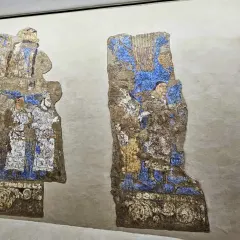 Afrasiab paintings Wall paintings of about 660 in the Hall of the Ambassadors at Samarkand. Long-haired Göktürks usher the embassies to the Sogdian king Varkhuman, and two figures in feathered caps are identified as Koreans.
- al-Balādhurī breve Arab historian of the ninth century, author of the Futūḥ al-buldān. He is a witness to the Khazar victory at Ardabil in 730 and to the khagan's submission to Marwan in 737.
-
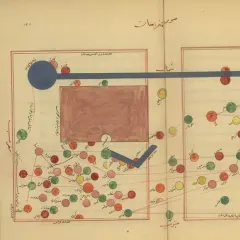 al-Iṣṭakhrī Arabic geographer of about 932. His chapter on the Khazars names a Jewish king over a mixed population, seven judges, and the strangling of the khagan at his investiture.
- al-Masʿūdī Arabic historian and geographer of the tenth century. Two of his works treat the Khazars, the Bulgars and the Turks; he wrote from Baghdad and from travel, and he names what he heard.
- Inscripciones rúnicas del Altái Más de cien textos rúnicos breves grabados en roca en la República del Altái, comunicados por primera vez en 1819. No tienen fecha, muchos están dañados y la mayoría de las lecturas son provisionales.
- Inscripciones de Altın Köl Dos estelas rúnicas halladas en 1878 en Jakasia, los textos del Yeniséi E 28 y E 29. La piedra I nombra un leopardo, a Erklig y quizá a Umay; la II es el epitafio de un héroe. Una lectura las vincula con Bars Beg.
-
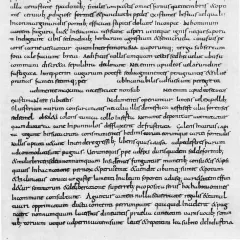 Amiano Marcelino Latin history of the Roman empire to the death of Valens in 378, finished about 392. Its last book holds the first full description of the Huns and of their attack on the Alans and the Goths.
- aṯ-Ṯaʿālibī Arabic history of the Persian kings, written for a Ghaznavid prince about 1017 to 1021 and ascribed to aṯ-Ṯaʿālibī. It preserves the Persian tradition on the khāqān and on Bahrām's war with Šāba.
- Begre inscription (E 11) Epitafio rúnico en una estela del noreste de Tuvá para Tör Apa, que a los quince años cabalgó contra el khan tabgach y murió a los setenta y siete. Las fechas propuestas van del siglo VII al IX y más tarde.
- Bei Qi Shu (Book of Northern Qi) Official history of the Northern Qi, largely lost and made good from the Bei Shi.
- Bei Shi (History of the Northern Dynasties) History of the northern dynasties from the Northern Wei to the Sui, completed by Li Yanshou in 659. It abridges the Wei Shu, the Zhou Shu and the Sui Shu and is not an independent witness.
- Inscripción de Bilge Khan Monumento rúnico para Bilge Khan junto al Orjón, con el texto de sus caras. Su sección histórica corre paralela a la inscripción de Kül Tegin; sus pasajes propios dan las campañas del khan según su edad.
- La corona de oro de Bilge Khan Diadema de oro con un ave rapaz en el panel frontal, hallada en 2001 en un cofre de plata del complejo de Bilge Khan. Los excavadores datan el tesoro en 735, una crítica posterior en la época uigur.
- Bugut inscription Una piedra de hacia 582 a 584 sobre una tortuga de piedra en el centro de Mongolia, en sogdiano. El monumento más antiguo del Estado göktürk, erigido para Taspar Khan según una lectura y para Mahan Tegin según otra.
- Cefu yuangui Chinese encyclopaedia arranged by topic, compiled under Wang Qinruo and Yang Yi and completed in 1013. Its chapters on foreign vassals date the embassies of the western Göktürks year by year.
- De administrando imperio Handbook of statecraft by the emperor Constantine VII, about 948 to 952. It tells how Sarkel was built and gives the only report of the Kabar secession from the Khazars.
-
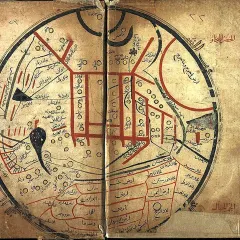 Dīvān Lughāt al-Turk Mahmud al-Kashgari's dictionary of the Turkic languages, written between 1073 and 1077 for the caliph. It contains a world map, the tribes and their brands, the animal calendar, proverbs and verse.
- Epitaph of Qarï Čor Tegin (Xi'an) breve Lápida hallada a finales de 2012 en Xi'an, la antigua capital Tang de Chang'an. Lleva un largo texto chino y diecisiete líneas breves en túrquico rúnico, para un príncipe uigur.
- Fengshi Wenjian Ji breve Collection of notes by the Tang official Feng Yan, written in the late eighth century. Its section on tea follows the custom from a monastery on Mount Tai to the capital and on to the Uyghurs.
- Gardīzī (Zayn al-akhbār) breve Persian history of about 1050 with chapters on the Turkic peoples. It gives the road from the Toghuzghuz to the Kirghiz khan's encampment and draws, like the Ḥudūd al-ʿĀlam, on an older common source.
- Han Shu Historia dinástica de los Han Anteriores. El capítulo 94 es el relato temprano más completo sobre los xiongnu, el 96 sobre los wusun y las Regiones Occidentales.
- Hou Han Shu Historia dinástica de los Han Posteriores, compilada en el siglo V. El capítulo 89 lleva a los xiongnu del sur, el 90 a los xianbei que ocuparon su lugar.
- Inscripciones de Hoyto Tamir Treinta y cuatro textos rúnicos pintados en la roca de Tayhar, junto al río Tamir, en Mongolia. Tres llevan fechas por año animal que un cómputo sitúa en 753 y 756, y tres mencionan un viaje a Beshbalik.
- Ḥudūd al-ʿĀlam Anonymous Persian geography of 982, the Regions of the World. It lists the Turkic peoples region by region, with their neighbours, their trade and their rulers.
- Ibn Fadlan Report of an Abbasid embassy that travelled from Baghdad to the Volga Bulgars in 921 and 922. The one eyewitness account of the Oguz, and a description of the Khazar state from just outside it.
- Ibn Rusta Arabic geographical encyclopaedia of about 903. It says that the Khazar ruler and his circle are Jews and that the rest keep a faith like that of the Turks. Part of its material is older.
-
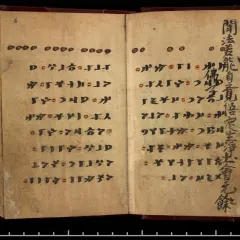 Irk Bitig El único texto largo en escritura rúnica sobre papel: sesenta y cinco presagios copiados en un monasterio de Dunhuang. El colofón da el monasterio, el día y las personas para quienes se escribió.
- Issyk inscription Inscripción en una copa de plata del kurgán de Issyk, cerca de Almaty, siglos V a III a. C. Una lectura llama a sus signos runas tempranas, otra los tiene por la escritura de nómadas iranios. Queda fuera del corpus asegurado.
- Jabogan inscription breve Cinco líneas rúnicas sobre una roca partida de Jabogan, en la República de Altái, halladas en 1927 y de nuevo en 2004. Una línea nombra tres caballos ensillados. La piedra no tiene fecha.
- Jiu Tangshu (Old Book of Tang) The first official history of the Tang, completed 945; the principal Chinese source for the western Göktürks after 618, the Ten Arrows and the Türgesh.
- John of Ephesus Syriac church history by John, Monophysite bishop of Ephesus, written at Constantinople in the 570s and 580s. Its sixth book carries the earliest account of Zemarchus's embassy to the Göktürks.
- Jordanes Latin history of the Goths, written by a Goth in 551 as an abridgment of the lost Gothic history of Cassiodorus. It contains the fullest surviving account of Attila, drawn from Priscus.
- Karabalghasun inscription Estela trilingüe de la capital uigur junto al Orjón, hallada en 1889. La única fuente temprana de la conversión de los uigures al maniqueísmo.
- Kartlis Tskhovreba The collection of Georgian chronicles. Its account of Heraclius's war brings 'Turks from the west' to the siege of Tiflis and names an eristaw Djibghou, whom some identify with the yabgu.
-
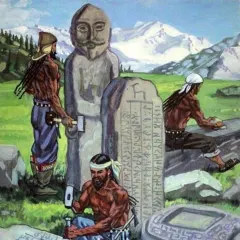 Inscripción de Kül Tegin Monumento rúnico de 732 junto al Orjón, con el texto completo de sus tres caras túrquicas. Contiene la historia del Estado göktürk, la hoja de servicios de un solo hombre y un discurso a los vivos.
- Inscripción de Küli Čor Estela rúnica en Ikhe Khushotu, en el centro de Mongolia, para Küli Čor, un señor de los tardush. Narra sus campañas hasta la Puerta de Hierro y su muerte en batalla. Fechada entre 719 y 725.
-
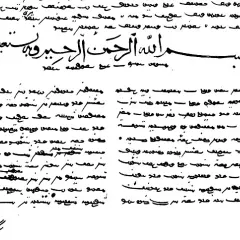 Kutadgu Bilig Espejo de príncipes en verso túrquico, terminado en la corte karajánida en 1069–1070. Sus cuatro figuras representan la ley, el Kut, el entendimiento y el fin, y es la obra más antigua de la literatura túrquica islámica.
- Las cartas de Li Deyu a los kirguises breve Letters of the Tang chief minister Li Deyu to the Kirghiz khan, written in the emperor's name from 843 to 845. They answer the envoys, claim kinship through Li Ling and refuse the title Tengri Khan.
- Liang Shu Chinese history of the Liang dynasty, 502 to 557, presented in 636. Its chapter 54 holds the entry on the Hephthalites, called Hua, with their embassies of 516, 520 and 526.
-
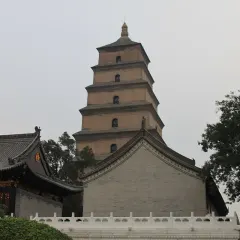 Life of Xuanzang Biography of the Chinese pilgrim Xuanzang, begun by his disciple Huili and completed by Yancong in 688. Its second book describes the pilgrim's reception by the western Yabgu Khan near Suyab.
- Marvazī (Ṭabāʾiʿ al-ḥayawān) breve Arabic compendium of about 1120 by the physician Marvazī, with chapters on the Chinese, the Turks and the Indians. Its chapter on the Turks describes the Kirghiz and their diviner, the faghīnūn.
- Menander Protector Greek history of the years 557 to 582, written under Maurice and surviving in fragments. It is the source for the embassies between the Göktürks and Byzantium.
- Mount Mugh documents breve The archive of Dēwāštīč, lord of Panjikent, found in 1933 on Mount Mugh in Tajikistan. Sogdian letters and contracts of the decade after 710, the chief Sogdian documents from Sogdiana itself.
- Movsēs Dasxurancʿi The Armenian History of the Caucasian Albanians. It records the mission of Bishop Israyēl to the Huns north of Derbent in 681 and names their ruler Alp Ilitʿuer.
- Murfatlar inscriptions Unas sesenta inscripciones rúnicas en las paredes de roca de las iglesias de un monasterio rupestre cerca de Constanza, en las tierras búlgaras del bajo Danubio. Siglos IX y X.
- Inscripción de Nalaikh Texto rúnico de cuatro líneas de Nalaikh, fechado por estimación hacia el 730 y leído como mención de Tengri y Umay. Un catálogo de 1983 lo registra como teja y como falsificación posterior para turistas.
- Nan Qi Shu Dynastic history of the Southern Qi, 479 to 502, compiled by Xiao Zixian under the Liang. Its chapter 59 records the Ruirui embassies of 478 to 483 and their plan for a joint war against the Wei.
- Nan Shi History of the Southern Dynasties, 420 to 589, completed by Li Yanshou in 659. It condenses the southern histories and records the Rouran embassies to the Liang up to 541.
- Narshakhī, History of Bukhara Local history of Bukhara, written in Arabic for the Samanid amir in 943 or 944 and kept in a Persian version of 1128. It runs from the oasis legend through the Arab conquest to the Samanids.
- Nikephoros Short History of the years 602 to 769 by Nikephoros, later patriarch of Constantinople, probably of the 780s. It tells how Heraclius crowned the Göktürk ruler and promised him his daughter.
- Informe en tibetano antiguo sobre los reyes del norte Old Tibetan manuscript from Dunhuang, Pelliot tibétain 1283, a report of about 750 on the kings and peoples of the north. It lists Göktürk tribes and tells three Göktürk myths.
- Inscripción de Ongi Estela rúnica junto al río Ongi, en el sur de Mongolia, erigida por un hijo para su padre en el reinado de Bilge Khan. Su fecha se discute, entre 716 y 740.
- Prisco Greek history of the eastern Roman empire from about 434 to the 470s by Priscus of Panium, surviving in fragments. Its author went on an embassy to Attila's court in 449 and described what he saw.
- Procopius Roman history of the wars of Justinian, written in the 550s. The Greek witness to the Hephthalites, and the one that calls them Huns with white bodies who had long lived apart from the Huns.
- Protobulgarian sign corpus Más de mil marcas de aspecto rúnico de Pliska, Madara, Preslav y otros lugares del primer Estado búlgaro, sobre todo del siglo IX. Si son letras o marcas es discutido.
- Record of the Western Regions Xuanzang's account of the lands he crossed between 629 and 645, set down by the monk Bianji. Its first book describes Suyab, the Thousand Springs and the states under Göktürk rule.
- Rock inscriptions found in Mongolia, 2018 to 2021 Quince textos rúnicos breves sobre roca, hallados en cuatro provincias. Contienen nombres como Ädiz, Tuŋrač, Čur y Yegän Irkin, y un tamga de los yaglakar. Ninguno está fechado.
- Runiform finds in Mongolia, 1990 to 1999 Trece inscripciones rúnicas breves halladas en Mongolia en los años noventa: siete textos de una línea en Bayan-Ölgii, cuatro en Del Uul, uno en Ikh Bichigt y una vasija de Tsetsuuhey.
- Runiform inscriptions of the Khazar lands Textos breves y marcas en signos rúnicos del Don, el Cáucaso septentrional y Crimea, siglos VII a X. Se han atribuido a los jázaros, a los búlgaros y a otros.
-
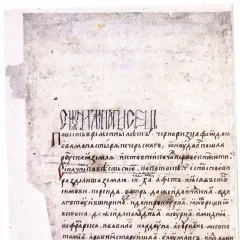 Russian Primary Chronicle Chronicle of the Rus, compiled about 1113. It records Khazar tribute from the Slavic tribes, the campaign of Sviatoslav against the Khazars in 965 and Khazar Jews at Vladimir in 986.
- Sanguozhi breve History of the Three Kingdoms by Chen Shou, with Pei Songzhi's commentary of 429. Its chapter 30 treats the Wuhuan and the Xianbei, and the commentary quotes an older account of their customs.
- Sebeos Armenian history of the seventh century, attributed to a bishop Sebeos. It follows the wars of Khosrow II to 661 and shows the Göktürks from the Persian side of the frontier.
-
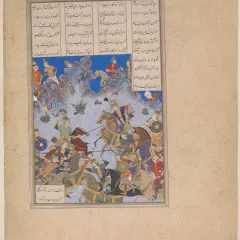 Shahnameh Ferdowsi's Persian verse epic, completed about 1010, four centuries after the events. The only narrative source for the war of 588.
- Shiji La historia de Sima Qian, terminada hacia 91 a. C. El capítulo 110 es el relato continuado más antiguo sobre los xiongnu, el 123 el más antiguo sobre los wusun.
- Šine-Usu inscription Estela conmemorativa rúnica hallada en el norte de Mongolia en 1909. Habla en primera persona en nombre del segundo khan de los uigures y cuenta sus campañas.
- Sogdian Ancient Letters Sogdian letters on paper, found sealed in 1907 in a Han watchtower west of Dunhuang. Written by Sogdian merchants in Gansu, most probably in 313. Letter II names the destroyers of Luoyang xwn.
- Sogdian inscriptions of the Talas valley breve Unos pocos grafitos en las gargantas al sur del río Talas, en sogdiano y en cursiva sogdiana tardía pero con nombres túrquicos. Del siglo X a principios del XI; el último es de 1026.
- Sogdian inscriptions of the upper Indus Más de 650 grafitis sogdianos en las rocas del alto Indo, por debajo de Gilgit, la mayoría en Shatial. Los dejaron mercaderes en el camino a la India, entre los siglos III y V. Un nombre frecuente entre ellos es *xwn*, el huno.
- Song Shu Dynastic history of the Liu Song, 420 to 479, compiled by Shen Yue in 487 and 488. Its chapter on the Tuoba ends with the Rouran under the southern name Ruirui.
- Inscripciones del Yenisei meridional breve Unos diecisiete textos breves en un segundo alfabeto rúnico, sobre roca, estelas y ajuares funerarios de Jakasia y Tuvá. Las tumbas los fechan entre los siglos VIII y X. Ninguno se ha leído con seguridad.
- Sui Shu (Book of Sui) The official history of the Sui and the principal Chinese source for the western wing.
- Suji inscription Inscripción rúnica en Mongolia, pronunciada por un oficial kirguís. Su fecha se discute: antes de 780 según una lectura, después de 840 según otra. Una traducción contiene un maestro llamado mar, otra no.
- Szarvas needle case inscription breve Texto rúnico breve sobre un estuche de agujas de hueso procedente de una necrópolis del avaro tardío en Szarvas, Hungría, hallado en 1983. Hacia el siglo VIII.
-
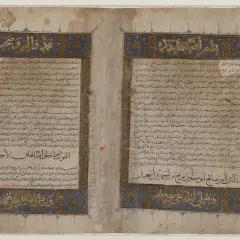 Tabari Arabic universal history of the early tenth century. Its Sasanian section preserves the Persian tradition on the Göktürk wars and the king Šāba.
- Inscripciones rúnicas de Talas y del Tian Shan Más de treinta inscripciones rúnicas en Kirguistán, del valle del Talas, del Issyk Kul y del valle de Kochkor. Sobre todo epitafios y textos de visitantes, sin fecha, con muchas lecturas poco fiables.
- Tang Huiyao (Institutional History of the Tang) breve Compendium of Tang institutions, completed in 961 by Wang Pu. Its chapter on the Uyghurs gives the only complete list of the nine tribes of the Toquz Oghuz.
- Tariat inscription Estela rúnica hallada en Mongolia en 1957. Habla en nombre del segundo khan uigur y relata sus campañas año por año, de 741 a 748.
- Inscripción de Tes breve Estela rúnica del Kaganato uigur procedente del valle del río Tes, en el noroeste de Mongolia, hallada en 1915. Se conserva solo en fragmentos, y su fecha se sitúa entre 750 y después de 761.
- The Khazar correspondence Hebrew letters of the 950s between Hasdai ibn Shaprut of Córdoba and a Khazar ruler named Joseph. Joseph's reply is the Khazar court's own account of its Judaism, and its authenticity is still argued.
- The Kievian letter Tenth-century Hebrew recommendation letter from the Cairo Genizah. Its closing line was read as a Khazar word in runes. That reading and the letter's origin at Kiev are both disputed.
- The Schechter letter Carta hebrea anónima del siglo X procedente de la Genizá de El Cairo, escrita por un judío jázaro. Cuenta la conversión de otra manera y refiere una guerra con los rus y Bizancio. Su fiabilidad es discutida.
- Theophanes of Byzantium Lost Byzantine history of the years 566 to 581, known from a summary by Photios. It tells of the first Göktürk embassy to Justin II and of the Göktürk victory over the Hephthalites.
- Theophanes the Confessor Byzantine chronicle of the years 284 to 813, compiled about 810 to 814 under the name of Theophanes the Confessor. It records Heraclius's alliance with the Göktürk commander Ziebel before Tiflis.
- Theophylact Simocatta Byzantine history of the reign of Maurice, 582 to 602, written under Heraclius. It is the Greek witness to the Göktürk civil war, to the war of 588, and to Göktürk religion.
-
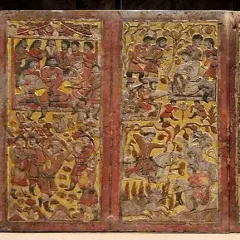 Tumba de An Jia breve Tomb of the Sogdian sabao An Jia at Xi'an, buried in 579 under the Northern Zhou. The reliefs of its stone funerary couch show him at talks with a long-haired Göktürk ruler in a tent.
- Tumba de Kang Ye breve Tomb of Kang Ye at Xi'an, a man of Central Asian descent who died in 571 under the Northern Zhou. Of four such tombs found since 1999, his stone couch alone has no Zoroastrian scenes.
-
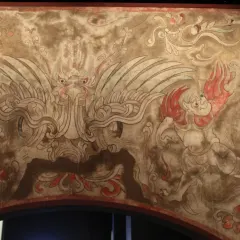 Tomb of Princess Linhe breve Tomb of Princess Linhe, granddaughter of the Rouran khan Anagui, near Cixian in Hebei. Excavated in 1978 and 1979, with wall paintings and an epitaph that dates her death to 550.
- Tumba de Shi Jun Tomb of the Sogdian leader Shi Jun (Wirkak), buried at Xi'an in 580. Its sarcophagus shows him with a caravan before a king in a yurt whose winged crown is identified as Hephthalite.
- Tumba de Yu Hong breve Tomb of Yu Hong at Taiyuan, who died in 592 under the Sui. His epitaph gives a career that begins at a Rouran khan's court, and his marble sarcophagus shows Zoroastrian ritual and paradise.
- Tongdian Encyclopaedia of Chinese institutions by Du You, completed in 801. Its frontier chapters treat the Göktürks from their origin to the Türgesh, a century and a half before the Jiu Tangshu.
-
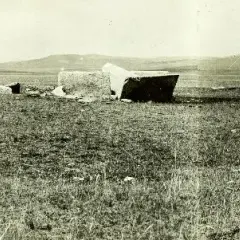 Inscripción de Tonyukuk Monumento rúnico de dos piedras en Bain Tsokto, en el alto Tola. En sesenta y dos líneas, el consejero cuenta en primera persona cómo se restauró el Estado.
-
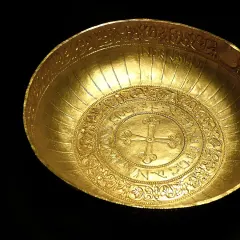 Treasure of Nagyszentmiklós Tesoro de vasijas de oro conocido desde 1799, con inscripciones rúnicas y griegas, de la época avara en la cuenca de los Cárpatos. La fecha de las inscripciones rúnicas respecto a las vasijas es discutida.
- Inscripción de Ulaangom breve Lápida de ocho líneas en letras uigures, hallada en 1955 cerca de Ulaangom, en Mongolia. Su lengua es el túrquico antiguo de tipo Orjón, el nombre de la línea 1 se lee de cuatro maneras y su fecha es discutida.
- Wei Shu Dynastic history of the Northern Wei, presented in 554. Its chapter 103, the principal Chinese account of the Rouran and the Gaoche, was lost and survives in the form the Bei Shi gave it.
- Xin Tangshu (New Book of Tang) The second official history of the Tang, completed 1060; for the Uyghurs and the Kirghiz the companion of the Jiu Tangshu, briefer, less precisely dated, and drawing on it.
-
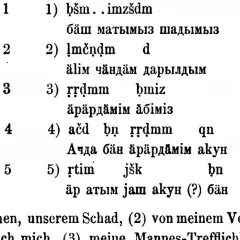 Yenisei inscriptions Más de 150 epitafios rúnicos y textos breves sobre piedra a lo largo del alto Yenisei. Son la escritura de los kirguises, en una forma regional de la escritura de las piedras del Orkhon.
- Yuefu Shiji breve Anthology of songs and ballads compiled under the Northern Song. Juan 86 gives the Chile song and a song of the general Xue Rengui against the Göktürks of the Nine Surnames.
- Zhou Shu (Book of Zhou) The official history of the Northern Zhou and the earliest sustained account of the Göktürks.
-
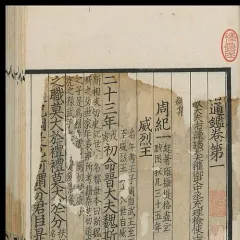 Zizhi tongjian (Comprehensive Mirror in Aid of Governance) An eleventh-century chronicle compiling the earlier histories; useful for chronology, not for attestation.
Créditos de las imágenes
- Afrasiab paintings: The left half of the west wall of the Hall of the Ambassadors, as mounted in the museum beside the Afrasiab mound: in the lower file three figures in white caftans, above them the caftan bearing the long Sogdian inscription. Photograph: Richard Mortel, 2023, CC BY 2.0.
- al-Iṣṭakhrī: Map of Khurasan from a manuscript of al-Istakhri's geography, the Book of Routes and Realms. Al-Istakhri, manuscript map, reproduction, public domain.
- Amiano Marcelino: Page of a ninth-century manuscript of Ammianus Marcellinus (Vaticanus lat. 1873) with Res gestae 31,2, the description of the Huns. Ammianus Marcellinus, Res gestae, Biblioteca Apostolica Vaticana, Vat. lat. 1873, reproduction, public domain.
- Dīvān Lughāt al-Turk: The world map of Mahmud al-Kashgari's dictionary, from a manuscript of the work. Mahmud al-Kashgari, eleventh century, manuscript copy, reproduction, public domain.
- Irk Bitig: The booklet open at page 6: runiform lines in black with red punctuation, and the Chinese Buddhist text of the other side showing at the edge. British Library, Or.8212/161, via the International Dunhuang Project. Public domain.
- Inscripción de Kül Tegin: The cutting of runic stones on the steppe, in a modern illustration. The inscription names its makers otherwise: the carvers were sent by the Chinese emperor, and Yollug Tegin wrote the text. Illustration as published by e-history.kz.
- Kutadgu Bilig: A page of the Vienna manuscript, copied at Herat in 1439 in Uyghur script, with a heading in Arabic letters. Facsimile of the Vienna manuscript, St Petersburg 1890, public domain.
- Life of Xuanzang: The Big Wild Goose Pagoda in the Ci'en monastery at Xi'an, the former Chang'an, where Xuanzang translated the scriptures he brought back. Photograph: Gary Todd, 2009, CC0.
- Russian Primary Chronicle: Opening leaf of the Radziwiłł (Königsberg) Chronicle, a fifteenth-century copy of the Rus chronicle. Radziwiłł Chronicle, 15th century, reproduction of the manuscript, public domain.
- Shahnameh: Folio 707v of the Shahnama made for Shah Tahmasp, showing Khusrau Parviz's charge against Bahram Chubina. Painted in Iran, about 1530–35. The Metropolitan Museum of Art, New York, 1970.301.72, Gift of Arthur A. Houghton Jr., 1970, Open Access, public domain (CC0).
- Tabari: Opening pages of the Persian version of al-Tabari's History by Bal'ami, a manuscript of the Il-Khanid period. Library of Congress, African and Middle East Division, Persian Manuscript Collection, 1-85-154.69, item record, public domain (no known restrictions).
- Tumba de An Jia: The painted and gilded back panels of the stone funerary couch from the tomb of An Jia at Xi'an, buried in 579. Photograph: Momo and Gary Todd, 2022, file page, CC0.
- Tomb of Princess Linhe: Modern copy of the painting above the gate of the tomb: a monster mask between two winged figures, over the arch of the doorway. Hebei Museum. Copy: Hebei Museum. Photograph: Gary Todd, 2014, CC0.
- Inscripción de Tonyukuk: The Tonyukuk tomb, seen from the southwest corner of its earth bank, in 1909. Photograph: Sakari Pälsi, 1909, Finnish Heritage Agency, CC BY 4.0.
- Treasure of Nagyszentmiklós: Gold bowl from the Treasure of Nagyszentmiklós, seventh to ninth century, in the Kunsthistorisches Museum, Vienna. Photograph: Wolfgang Sauber, 2015, CC BY-SA 4.0.
- Yenisei inscriptions: The inscription of Ujuk-Archan on the upper Yenisei, five lines of runiform script with transcription, as Wilhelm Radloff printed it from the squeezes of the Finnish expedition. W. Radloff, Die alttürkischen Inschriften der Mongolei, St Petersburg 1895, p. 305. Public domain.
- Zizhi tongjian (Comprehensive Mirror in Aid of Governance): Opening of chapter 1 of the Zizhi tongjian in a printed edition of the Song period. Sima Guang, Zizhi tongjian, Song-period edition, reproduction, public domain.

