
290 artículos
Personas
Gobernantes, enviados, jefes militares y parentela.
Esta página y el menú están en español. De 290 artículos, 77 existen en español; el resto está en inglés y así se indica.
- Abangbu breve Chief of the people of Suo in the Zhou Shu's second origin story of the Göktürks. Brother of the wolf-born Yizhi Nishidu, he and his kin lost their state through their folly.
- Abaoji Ruler of the Khitan, 872 to 926. In 924 he led an army to the Orkhon, the old home ground of the Göktürks and Uyghurs, in the year that marks the conventional end of Kirghiz power on the steppe.
- Aecio Commander of the western Roman empire, d. 454. Once a hostage among the Huns, he relied on Hun auxiliaries for two decades and in 451 led the coalition that met Attila in Gaul.
-
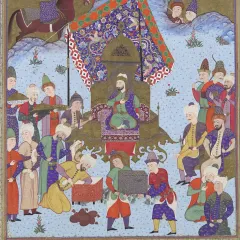 Afrasiab Legendary king of Turan and the great enemy of the Iranian kings, from the Avesta to the Shahnameh. Kashgari's Turkic verse mourns him as Alp Er Tunga, and the mound of old Samarkand bears his name.
- Afuzhiluo Chief of the Fufuluo clan of the Gaoche. In 487 he led more than a hundred thousand tents out of the Rouran khaganate and founded a Tiele kingdom north-west of Gaochang.
- al-Jarrah ibn Abdallah breve Arab governor killed in 730 at Ardabil, when a Khazar army under Barjik defeated his force.
- Alp Inanch breve Kirghiz envoy to the Tang court in 863, named in the Zizhi tongjian. He asked once more to take Anxi from the Uyghurs, and the Tang refused.
- Amrak Son of Taspar, elected khan at Ötüken in 581 as the compromise the assembly could accept. He abdicated within the year in Ishbara's favour, and the revolt came anyway.
-
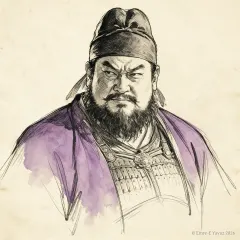 An Lushan General Tang de ascendencia sogdiana y göktürk, nacido en 703. Su rebelión de 755 a 763 arruinó a los Tang, les costó el Asia Central y llevó a los uigures a China.
- An Nuopantuo The Sogdian of Jiuquan whom Yuwen Tai sent to the Göktürks in 545, the first envoy of a Chinese state to Bumin. His name transcribes the Sogdian Anāhitā-banda.
- Anagai breve Ruler of the Utigurs under Göktürk overlordship. In 576 he lay before the Roman city of Bosporos with a Göktürk force when Bochan was sent to take it.
- Anagastes Eastern Roman general on the Danube frontier of Thrace under the emperor Leo. In 469 he defeated and killed Attila's son Dengizich, whose head was shown in Constantinople.
-
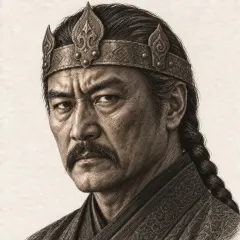 Anagui Último khan de los rouran. Dominó la estepa durante tres décadas, llamó a Bumin su esclavo herrero y murió en 552, cuando el ejército göktürk se acercaba a su capital.
- Anankhast breve Envoy between the Göktürks and Constantinople in the years before 576, with whose embassy some of the Göktürks came whom Valentinos took home. Whether he was a Göktürk or a Roman is disputed.
-
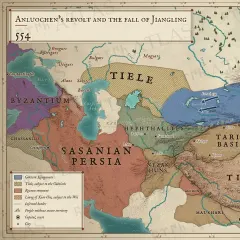 Anluochen Hijo de Anagui. Huyó a los Qi del Norte en 552, y a finales de 553 estos lo establecieron como soberano del resto rouran. Se rebeló en 554, fue derrotado, y con él terminó la casa.
- Aoshe Shad breve Son of Chula Khan. When his father died in 620, the princess Yicheng passed him over as ugly and weak and set up his uncle as Ilig Khan.
- Apa (canciller de los kirguises) Chancellor of the Kirghiz. In 848 he led a force of 70,000 against the Shiwei and brought the remaining Uyghurs back north of the desert. The Tang histories write his name Abo.
- Ardarico King of the Gepids, Attila's trusted vassal and counsellor. After Attila's death he led the subject peoples against Attila's sons and defeated them at the Nedao.
-
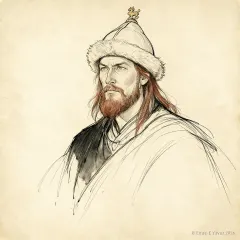 Are Khan Soberano de los kirguises del Yeniséi que hacia 820 se llamó a sí mismo khan y en 840 destruyó el kaganato uigur. La corte Tang lo inscribió en el registro del clan imperial.
- Arsilas breve Senior ruler of the Göktürks at the time of the Roman embassy of Valentinos in 576. Whether he held the supreme rule or was only the eldest of the leaders is disputed.
- Ashide Wumo Chur breve Göktürk irkin of the Ashide clan, taken prisoner by the Tang general Yuchi Jingde at Jingyang in 626, when Ilig Khan marched on Chang'an.
- Ashide Yuanzhen Göktürk officer of the Tang frontier who went over to Ilterish in 682 and commanded his army as Apa Tarkan. The Tang history has him fall against the Türgesh; his identity with Tonyukuk is disputed.
-
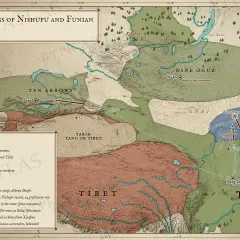 Ashina Funian Khan of 680, a son of Ilig's elder cousin, raised on the Yellow River while the tribes answered him. He surrendered to Pei Xingjian and was beheaded in the East Market.
- Ashina Helu Last independent khan of the western Göktürks, d. 659. He proclaimed himself Shaboluo Khan over the Ten Arrows, and Su Dingfang hunted him down across the Ili and the Chu.
- Ashina Simo The khan the Tang gave back, 639 to 643. A clansman of Ilig whom two khans had refused to trust, set over a hundred thousand people north of the Yellow River.
- Askel breve King of the Hermichiones, whose envoys came to Constantinople in July 563. He is a western Göktürk chief and the sender of their first embassy on one account, a king of the Avars on another.
-
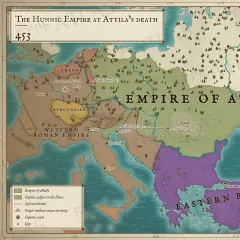 Atila Rey de los hunos desde los años 430 hasta 453, con su hermano Bleda hasta hacia 445. Hizo pagar tributo al Imperio de Oriente, invadió la Galia en 451 e Italia en 452 y murió en la noche de su última boda.
- Awusili Irkin breve Göktürk irkin who raided Yami's people south of the Yellow River during Yang Su's northern campaign of 601–602. Yang Su broke him and returned the captives and herds to Yami.
- Axian Shad breve Legendary chief of the Ashina in the Chinese origin stories of the Göktürks. The Zhou Shu has him chosen by a leap at a great tree; the Sui Shu has him lead the people out of the cave.
-
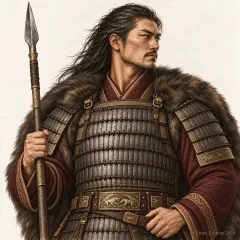 Bagatur (Modu Chanyu) Chanyu de los xiongnu, de 209 a 174 a. C. Mató a su padre, destruyó a los donghu y a los yuezhi, cercó a un emperador Han en Baideng e hizo de los xiongnu el primer imperio de la estepa oriental.
-
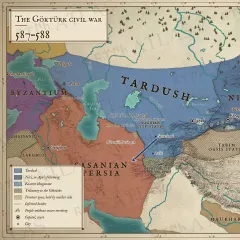 Bagha Khan Hermano de Ishbara y, por voluntad de este, khan de los göktürk orientales desde 587. Capturó vivo a Apa y cayó en una campaña en el oeste en 588. Su identidad con el Šāba persa es discutida.
- Bagha Shad breve Göktürk prince who served under Tong Yabgu and was the father of Nishu, later Duolu Khan. He came to the Tang court in the Wude years and swore brotherhood with the future emperor Taizong.
- Baghatur Khan Uncle and murderer of Tong Yabgu, who made himself khan of the western Göktürks as Quli Sibi Khan. His war with Tong Yabgu's son Si Yabgu cost the khaganate its subjects; Nishu killed him in 630.
-
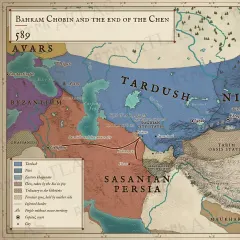 Bahram Chobin Sasanian general who destroyed the Göktürk army in 588 or 589. He then rose against his own kings and lost. He fled to the Göktürks at Suyab and was poisoned there.
- Balamber breve King of the Huns in the Gothic tradition preserved by Jordanes, who conquered the Ostrogoths in the 370s and killed their king Vinitharius. No other source names him.
- Ban Chao Oficial han en las Regiones Occidentales, de 73 a 102. Arrebató los oasis del Tarim a los xiongnu del norte uno tras otro, empezando en Shanshan con treinta y seis hombres, y como Protector General desde 91 sostuvo la cuenca.
- Barjik breve Son of a Khazar khagan and commander of the Khazar army that defeated and killed the Arab governor al-Jarrah at Ardabil in 730.
- Bars Beg Khan of the Yenisei Kirghiz, named in the Kül Tegin inscription. The Göktürks gave him the title of khan and a sister of Bilge Khan as wife. Modern histories date his fall to 710 or 711.
- Basich Hun leader who with Kursich led a raid into Media, probably the invasion of 395 across the Caucasus. The two later came to Rome with many men to make an alliance.
-
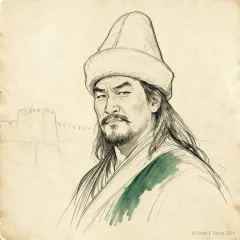 Bayanchur Khan Segundo khan de los uigures, de 747 a 759, y el hombre que hizo del kaganato un Estado. Construyó la capital amurallada junto al Orjón y dejó su propio relato en la piedra de Shine-usu.
- Bi Chanyu Primer chanyu de los xiongnu meridionales, de 48 a 56 d. C. Postergado dos veces, tomó el título de su abuelo Huhanye con ocho tribus del sur y llevó a su pueblo al interior de la frontera Han.
- Bigilas Interpreter of the eastern Roman government and go-between in the plot of 449 to murder Attila. Caught with the gold, he confessed when Attila threatened his son, and was ransomed for 50 pounds.
-
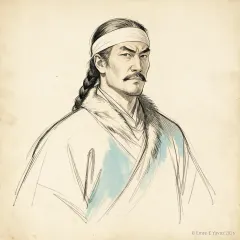 Bilge Khan Khan del Segundo Kaganato göktürk de 716 a 734, puesto en el trono por el golpe de su hermano Kül Tegin y aconsejado por Tonyukuk. Envenenado por un ministro en 734.
- Bleda King of the Huns with his younger brother Attila from the 430s until about 445, when Attila had him killed. He ruled a great part of the Huns and kept a Moorish jester at his court.
- Bochan breve Göktürk commander whom Turxanthos sent in 576 with a very large army against the Roman city of Bosporos in the Crimea, where Anagai of the Utigurs already lay.
- Bögü Khan Third khan of the Uyghurs, 759 to 779, under whom the khaganate reached its height. He made Manichaeism the faith of his people and was killed by his cousin.
- Börü Khan breve Lesser khan of the west of the Göktürk realm from 572, a nephew of Taspar Khan and son of Rudan Khan, or by one Chinese history Rudan Khan himself. The Chinese call him Buli Khan.
- Börü Shad Nephew of Tong Yabgu with an independent command in the north-west. He led some forty thousand Göktürks through Derbent in 627 and took Tiflis with Heraclius.
- Boyla Kutlug Yargan Kirghiz officer who speaks on the Suji stone in Mongolia, the commissioned man of Kutlug Baga Tarkan. The stone dates from the end of the eighth century or from after 840.
- Bulan King of the Khazars whom the reply of King Joseph names as the first of his line to take up Judaism. The letter tells of an angel's dream, a debate between three faiths and the king's circumcision.
- Buli Shad breve Younger brother of Chula Khan. In 620 he led two thousand Göktürk horsemen to join the Tang army against the rebel Liu Wuzhou, and under Ilig Khan he held the Xi tribe.
- Buluzhen Khan Khan rouran en 414. Depuso a su tío Hulü por intriga y dejó el gobierno al ministro Shuli. En el mismo año Datan lo hizo estrangular, el elegido del jefe gaoche Chiluohou.
-
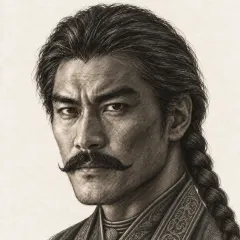 Bumin Khan Legendario göktürk de los Ashina que en 552 derribó a los poderosos rouran en Mongolia y fundó en su lugar el Kaganato göktürk.
- Busir Glavan Khazar khagan who received the exiled emperor Justinian II, gave him his sister Theodora as wife and then agreed to have him killed. The sources call him only Chagan. Busir Glavan is a modern name.
- Caratón breve King of the Huns about 412, called by Olympiodorus the first of the kings. He was appeased with presents from the emperor after the murder of Donatus.
- Chebi Khan Ashina khan of the far north, 630s to 650, who took the great title himself rather than receive it. His own chiefs went over and his army did not come when he called.
- Chelchal Hun officer in the eastern Roman army, about 467. His speech to blockaded Goths, that the Huns lived off their labour like wolves, made the Goths kill the Huns in their ranks.
- Chiji Shad breve Younger brother of Shibi Khan. Around 614 the Sui official Pei Ju offered him a Sui princess and the title of Southern Khan to divide the khaganate, and he did not dare accept.
- Chorpan Tarkhan breve Göktürk commander with the title tarkhan, leader of the vanguard of the army of the north in the Caucasus. In 629 or 630 he destroyed a Persian army of 10,000 by Lake Sevan.
-
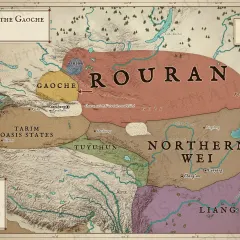 Chounu Khan Khan de los rouran de 508 a 520 y hermano mayor de Anagui. Aplastó a los gaoche en 516, elevó a una chamana a khatun y fue muerto por su madre y sus ministros.
- Crisafio Eunuch and leading minister of the emperor Theodosius II, d. 450. In 449 he plotted Attila's murder through Edeco; Attila demanded him for punishment, and Marcian had him executed.
- Chula Khan Khan of the eastern Göktürks, 619 to 620, and brother of Shibi. He died within the year, by one account poisoned by a Chinese official at his court.
- Chunyu Tan breve Funcionario chino en la corte del khan rouran Anagui. Enviado como emisario en los años 530, se quedó, llevó la correspondencia del khan y le enseñó a escribir a las cortes chinas como a un igual.
- Damozhi breve Officer of the Yabgu Khan of the western Göktürks, identified with Tong Yabgu. The khan sent him to take the pilgrim Xuanzang to his camp near Suyab and settle him there.
- Datan Khan Khan de los rouran de 414 a 429 y el más fuerte de su casa antes de Anagui. Cercó al emperador Taiwu en Yunzhong en 424 y fue dispersado en el río Li en 429.
- Daxi Wu breve The Northern Zhou general who led the southern front against Pingyang in 563 while Mukan and Yang Zhong marched on Jinyang. Hulü Guang beat him twice.
-
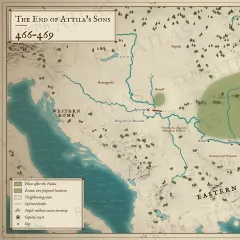 Dengizich Son of Attila and the last king of the Huns on the Danube. He made war on the eastern empire in the 460s and was killed by the Roman general Anagastes in 469; his head was shown in Constantinople.
- Dengzhu Tío de Anagui, puesto como soberano por los restos de los rouran en 552. Derrotado por Issik Khan al norte de Woye en 553, huyó a los Wei Occidentales y fue muerto ante Chang'an a petición de Mukan en 555.
- Dēwāštīč breve Lord of Panjikent in the decade after 710 and leader of the Sogdian nobles against the Arabs. Claimed the title king of Sogdiana in 721–722. Died in 722; his archive is the Mount Mugh documents.
- Dieluozhi breve Son of Ilig Khan, the last khan of the eastern Göktürks. At Chang'an after 630 he would not touch his ration of meat while his mother had none, and the emperor Taizong praised him.
- Diqincha breve Göktürk prince of the house of Ashina, a younger cousin of Ishbara Khan with tribes of his own. He quarrelled with Ishbara and went over to Apa with his people in 583.
- Diwan Chamana en la corte de Chounu Khan, conocida solo por el Wei Shu. Este cuenta cómo fue proclamada Mujer Santa y hecha khatun, cómo su calumnia llevó al khan a hacer matar a su hijo y cómo fue estrangulada por orden de la madre del khan en 520.
- Dou Xian General han que quebró al chanyu del norte en el monte Jiluo en 89 d. C. con la caballería de los xiongnu del sur, de modo que ochenta y una tribus pasaron a los Han. Hizo grabar la victoria en el monte Yanran.
- Du-lü-shi Alp breve General of the Kirghiz whom the khan sent to escort the Taihe princess back to the Tang. The Kirghiz petition of 842 names him; the Chinese histories speak of ten dagan, and the escort was killed.
- Duliu breve Göktürk prince of the sixth century, father of Shegui Khan and on the Sui Shu's account a son of Tardush. The Sui official Pei Ju names him in 610 when he proposed raising Shegui against Heshana.
-
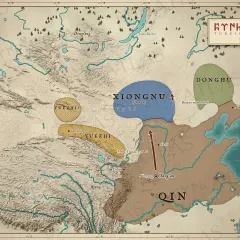 Duman (Touman) El primer chanyu de los xiongnu que nombra alguna fuente, muerto en 209 a. C. Según el Shiji, los Qin lo empujaron al norte, fuera del Ordos, y su hijo Bagatur lo hizo abatir a flechazos.
- Duoxifu breve Hermano menor de Kapgan Khan. Ilterish lo hizo yabgu cuando tomó el título de khan, y Kapgan lo puso al frente del ala izquierda en 699. Dos ediciones de la inscripción de Ongi sitúan junto a él al Eletmiš Yabgu de la piedra.
- Dusuliu breve Göktürk prince of the house of Ashina, a younger brother of Tulan Khan. In 599 he left his wife and children and went over with Yami to the Sui, where Yami had to lose treasures to him at chupu.
- Edecón Hun warrior of Attila's inner circle and his envoy to Constantinople. The eunuch Chrysaphius won his promise to kill Attila; Edeco revealed the plot to his master.
- Ellac breve Eldest son of Attila and Kreka, set by his father as king over the Akatziri. He fell at the Nedao in 454, when the subject peoples rose against Attila's sons.
- Emperador Gaozu de Han Emperador fundador de los Han. Encerrado siete días en Baideng en 200 a. C., salió por una brecha que Bagatur dejó abierta. El heqin que acordó después se mantuvo hasta la emboscada de Mayi de 133 a. C.
- Emperador Wu de Han Emperador Han que puso fin al heqin en Mayi en 133 a. C. y combatió a los xiongnu hasta el final de su reinado. Sus generales tomaron el Ordos y Gansu, sus enviados fueron al oeste, y la guerra dejó exhaustos a ambos bandos.
- Emperor Wu of Northern Zhou breve Emperor of the Northern Zhou, 560 to 578. He bought Mukan's cavalry with the plunder of Qi territory and a marriage, destroyed the Qi in 577, and died marching north against Taspar.
- Emperor Wucheng of Northern Qi breve Emperor of the Northern Qi, 561 to 565. He rode to Jinyang in the winter of 563 to face Mukan's hundred thousand, nearly left the city, stayed, and held it.
- Emperador Wuzong de los Tang Tang emperor, 840 to 846. The Uyghur khaganate fell and the Kirghiz first sent envoys in his reign. He persecuted Manichaeism and Buddhism and died before his own envoy left for the Kirghiz.
- Emperador Xuanzong de los Tang (846–859) Tang emperor from 846 to 859, Wuzong's uncle. He dismissed Li Deyu, shelved the title prepared for the Kirghiz khan and then sent Li Ye to invest the Kirghiz in 847.
- Emperador Yizong de los Tang breve Tang emperor from 859 to 873. Three Kirghiz embassies came to his court in the Xiantong years, and a Kirghiz ruler was invested in 867. The record of later embassies is lost.
- Emperatriz Ashina Daughter of Mukan Khan, married to the Northern Zhou emperor Wu in 568 to seal the alliance against the Qi. Her tomb yielded the only ancient genome of an Ashina.
-
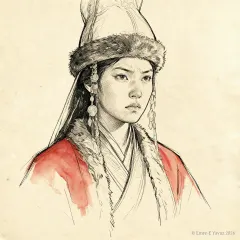 Emperatriz Yujiulü Hija mayor del khan rouran Anagui, emperatriz de los Wei Occidentales desde 538. Casada con el emperador Wen para mantener a los rouran lejos de la frontera, murió de parto en 540, a los dieciséis años.
- Er Chanyu Chanyu de los xiongnu, de 105 a 102 a. C. aproximadamente, llamado el Chanyu Niño. Hizo dar muerte a un comandante que conspiraba contra él, destruyó el ejército Han de Zhao Ponu y murió en la marcha hacia Shouxiang.
- Ernak breve Younger son of Attila, whom seers foretold would restore his house. After his father's death he settled with his Huns on the lower Danube; the Bulgarian princes' list names an Irnik.
- Faghfura breve Brother of Šāba-Šāh, the khagan of the Turks in aṯ-Ṯaʿālibī's history of the Persian kings. He carried his brother's offer to Bahram Chobin and fell in the battle that followed.
- Futu Khan Hijo y sucesor de Nagai, khan de los rouran de hacia 506 a 508. Rechazado dos veces por los Wei cuando pidió la paz, marchó al oeste y fue muerto por el rey gaoche Mi'etu.
- Fuzhulei Chanyu Chanyu de los xiongnu, de 31 a 20 a. C. El primero de los hijos de Huhanye que subió al trono por el orden de los hermanos; se casó con Wang Zhaojun tras la muerte de su padre y mantuvo la paz con los Han.
- Genserico King of the Vandals in Africa. In Jordanes he bribed Attila to attack the Visigoths in 451; after the murder of Valentinian III in 455 he sacked Rome.
- Gala Placidia Roman empress, daughter of the emperor Theodosius and mother of Valentinian III and Honoria. When Honoria's appeal to Attila was discovered in 450, she took her daughter into her keeping.
- Gao Huan General who held the eastern Wei court from 534 to 547 and founded the power of the Northern Qi house. He won Anagui away from the Western Wei and in 546 married the khan's daughter.
- Gao Kan The Tang commander who took Chebi Khan in 650 by raising the Uyghurs and the Pugu against him. He beat a khan without fighting his army.
- Heraclius Emperor of the eastern Romans, 610 to 641. In the war with Persia he renewed the alliance with the western Göktürks, whose army joined him before Tiflis in 627.
- Hermanarico breve King of the Greuthungi, the Ostrogoths of the Gothic tradition, north of the Black Sea. The Huns broke his realm in the 370s, and he took his own life.
- Hesa Khan Last khan of the Uyghur khaganate, 839 to 840. Raised to the throne after the coup of the minister Kürabir, never invested by the Tang, and killed when the Kirghiz took the court.
- Heshana Khan Khan of the western Göktürks, 603 to about 611, and Tardush's successor. Deposed by his sub-khan Shegui and executed at Chang'an by eastern Göktürk envoys in 619.
- Hezhi Khan breve Khan named in the Sui edict of 583 as the slayer of the Göktürk Suopi Shad. The edict recalls the killing as one sign that the Göktürks were surrounded by enemies.
- Honoria Sister of the western emperor Valentinian III. Her appeal to Attila in 450, with her ring, gave him a claim to her hand and to half the western empire.
- Hormizd IV Sasanian king of kings, 579 to 590, son of Khosrow I and, by the Persian tradition, grandson of a Göktürk khagan. In his reign the first great Göktürk–Persian war was fought.
-
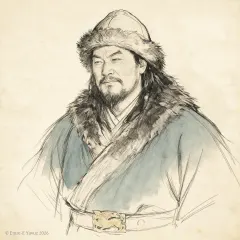 Huhanye Chanyu Chanyu de los xiongnu, de 58 a 31 a. C. Derrotado en la guerra de los cinco chanyus, fue a Chang'an y se inclinó, y inclinándose conservó el trono que sus rivales perdieron.
- Hulü Guang breve The Northern Qi general who held the southern front in 564 and beat Daxi Wu there while the Göktürks lay before Jinyang.
- Hulü Khan Hermano menor y sucesor de Shelun, khan de los rouran de 410 a 414. Mantuvo la paz con los Wei y fue apresado en su tienda por su propio sobrino.
- Hulugu Chanyu Chanyu de los xiongnu, de 96 a 85 a. C. Recibió en 90 a. C. la rendición del general Han Li Guangli y lo hizo matar en sacrificio. A su muerte, Wei Lü y la consorte pusieron en el trono a su hijo, no a su hermano.
- Hunye King Rey de los xiongnu del oeste que mató al rey de Xiutu y se sometió a los Han con su pueblo en 121 a. C. Los Han lo hicieron marqués, y su tierra pasó a ser las comandancias de Wuwei y Jiuquan.
- Huo Qubing General han que tomó el corredor de Gansu a los xiongnu en 121 a. C., cuando el rey Hunye pasó a los Han con su pueblo. En 119 venció al Rey Sabio de la Izquierda al norte del Gobi.
- Huyandi Chanyu Chanyu de los xiongnu, de 85 a 68 a. C. Puesto en el trono muy joven por una orden falsificada, reinó diecisiete años. Cinco ejércitos Han y los wusun lo golpearon en 72 a. C., y el invierno siguiente costó tres de cada diez de su gente.
- Ildico breve Attila's last wife, whom he married early in 453 on the night before his death. Her name is Germanic.
- Ilig Khan Last khan of the eastern Göktürks, 620 to 630. He stood before Chang'an in 626 and swore peace on the Bian bridge over the Wei, was taken alive in 630 and died a captive in 634.
-
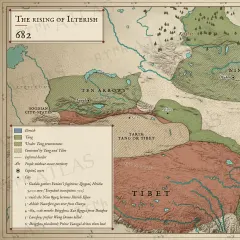 Ilterish Khan Fundador y primer gobernante del Segundo Imperio göktürk en 682 y padre de Bilge Khan y de Kül Tegin.
- Inel Khan Son of Kapgan Khan, made Lesser Khan over the Ten Surnames of the west in 699. He led the army against the Türgesh and was killed by his cousin Kül Tegin in 716.
- Irbis Ishbara Yabgu Khan Khan of the Nushibi from 639 to 641, nephew of Ishbara Tolis. He held the Southern Court with the oasis states from Kucha to Samarkand under him, and was killed on Yukuk Shad's orders.
-
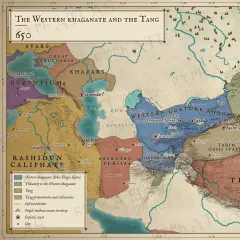 Irbis Shegui Khan Khan of the Nushibi from 642 to 651, grandson of Ishbara Tolis, chosen with a Tang envoy present. He drove Yukuk Shad to Tokharistan and lost his people to Ashina Helu.
-
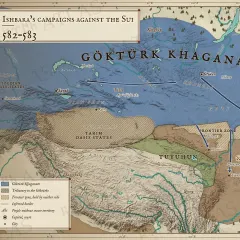 Ishbara Khan Hijo de Issik y khan menor bajo Taspar. Obligó a la asamblea de 581 a pasar por alto a Töremen, invadió China, empujó a Apa hacia el oeste y en 585 se hizo vasallo de los Sui.
- Ishbara Tolis Khan Khan of the western Göktürks from 634 to 639, brother and successor of Duolu Khan Nishu. He divided his people into the Ten Arrows, lost the north to Yukuk Shad, and died in Ferghana.
-
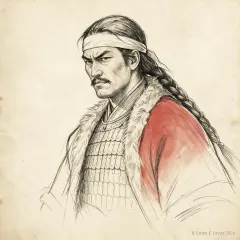 Issik Khan Hijo mayor de Bumin y segundo khan de los göktürk. Acabó con los rouran en el Ordos en 553 y murió ese mismo año.
-
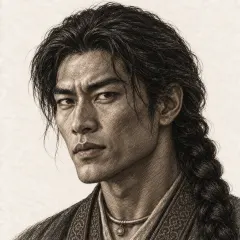 Istemi Hermano menor de Bumin, yabgu del oeste durante veintitrés años. Destruyó a los heftalitas junto con Persia, tomó Sogdiana y duplicó el kaganato.
- Jin Midi Hijo del rey Xiutu, llevado al palacio Han a los catorce años en 121 a. C. Salvó al emperador Wudi del asesino Mang Heluo y llegó a ser regente del emperador niño Zhao.
- Joseph of Khazaria Khazar ruler of the mid-tenth century, writer of the reply to Hasdai ibn Shaprut of Córdoba. He lists his Jewish royal line from Bulan to himself and tells of guarding the river mouth against the Rus.
- Jujian Tegin breve Göktürk tegin whom Chula Khan left at Bingzhou in 620, after his men had plundered the city, to help the Tang hold their garrison.
- Junchen Chanyu Chanyu de los xiongnu, de 161 a 126 a. C. aproximadamente. El acuerdo de heqin se mantuvo durante la primera mitad de su reinado y se derrumbó en Mayi; las ofensivas Han de Wudi comenzaron bajo él.
- Justin II Emperor of the eastern Romans, 565 to 578. He received Maniakh's embassy in 568, sent Zemarchos to Istemi, and made the alliance with the Göktürks against Persia.
- Kang Shaoli breve Göktürk tegin whom Shibi Khan sent with horses to Li Yuan, the founder of the Tang, during his rising of 617. Two months later he came back with Göktürk soldiers.
- Kang Sumi breve Chief of the hu at the court of Ilig Khan, regarded as a Sogdian. In 630 he went over to the Tang with the Sui empress Xiao and Yang Zhengdao and became a Tang governor-general.
- Kapgan Khan Second khan of the Second Göktürk Khaganate, 691 to 716. He raided China to the plain of Hebei and destroyed the Türgesh; killed by a Bayirku straggler in a willow wood.
- Katulph Hephthalite noble of the sixth century, known only from Menander. He went over to the Göktürks, then to Persia, and advised Khosrow I to burn the silk of the Sogdian embassy.
- Kayen Göktürk princess, wife of the Persian king Khosrow I and mother of Hormizd IV. She may have been a daughter of Istemi, married to Khosrow to seal the Oxus frontier about 560.
- Kebineng breve Xianbei chief who brought much of the confederation under one hand in the 220s and 230s. A Chinese governor had him assassinated in 235, and what he had built fell apart.
- Khosrow I King of kings of Sasanian Persia, 531 to 579, and Istemi's partner in the destruction of the Hephthalites. He burned the Sogdians' silk and so sent them to Constantinople.
- Kreka breve Wife of Attila and mother of his eldest son. Priscus visited her in her house in 449 and found her among her maids, who embroidered cloths for clothing.
- Kuhanzhen breve Seventh son of Ishbara Khan, who carried his father's memorial of submission to the Sui court in 585. The emperor made him a zhuguo and duke of Anguo.
- Kül Tegin Prince of the Second Göktürk Khaganate, younger son of Ilterish. In 716 he killed his uncle's heirs and made his brother khan; d. 731, mourned by the monument of 732.
- Külüg Bagha Uyghur general who went over to the Kirghiz at the turn of 839 and 840 and led their army against the Uyghur court on the Orkhon. The Chinese texts call him Julu Mohe.
- Kunaxolan breve One of three great khagans whom a Göktürk khagan called to his aid against the rebel Turum, according to Theophylact Simocatta. The Greek gives his name as Kunaxolan and as Kunaxola.
- Kürabir Minister of the last Uyghur khans. He moved against the khan in 839 with Shatuo troops and was beheaded in 840 when the Kirghiz took the court. The Chinese texts call him Jueluowu.
- Kursich breve Hun leader who with Basich led a raid into Media, probably the invasion of 395 across the Caucasus. The two later came to Rome with many men to make an alliance.
-
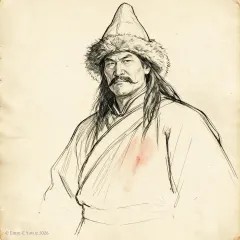 Kutlug Bilge Kül Khan Fundador del Kaganato uigur, de 744 a 747. Derribó al último khan göktürk junto con los basmil y los karluk, y luego se volvió contra ambos aliados por turno.
- Kutluk Tegin breve Envoy of Shibi Khan to the Tang court in 618, the first year of the new dynasty. The emperor feasted him with the nine-part music and led him up onto the imperial seat.
- Dama Poshi breve Mother of Ilig Khan, the last khan of the eastern Göktürks. The Tang histories name her through her retainer Tuyuhun Hunye, who raised the khan from his birth.
- Dama Xiang Chinese-born wife of Niri Khan of the western Göktürks and mother of Heshana Khan. Kept at the Sui court, she was used twice, in 608 and 611, to bring her son to submission.
-
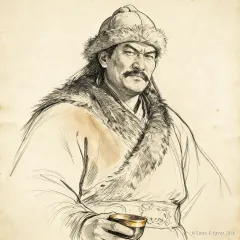 Laoshang Chanyu Chanyu de los xiongnu, de 174 a 161 a. C. aproximadamente. Destruyó al rey de los yuezhi y convirtió su cráneo en copa, y su corte acogió al eunuco Han que le enseñó a llevar cuentas.
- Li Deyu Chief minister of the Tang under Wuzong, 840 to 846. He shaped the court's answer to the fall of the Uyghurs and wrote its letters to the Kirghiz khan. Exiled to Hainan in 848, he died there in 850.
- Li Guangli General Han que tomó Dayuan en 102 a. C. Los xiongnu lo cercaron en 99, y en 90 se rindió al chanyu Hulugu, que le dio a su hija y más tarde lo hizo matar en un sacrificio.
- Li Jian breve Kirghiz envoy at the Tang court, named in an edict of 856. He came with some Uyghurs. His Chinese surname has been taken as a trace of the Kirghiz claim of kinship with the Tang house.
- Li Ling Comandante de caballería de los Han que se rindió a los xiongnu en 99 a. C. tras combatir al chanyu con 5.000 soldados de infantería. Vivió veinte años entre ellos. Los kirguises lo nombraron su antepasado.
- Li Shi (enviado de los Tang) Tang official named in 845 to carry the title of khan to the Kirghiz. Wuzong died before he left, and the embassy was never sent.
- Li Ye (enviado de los Tang) breve Tang minister of the Court of State Ceremonial, named in 847 to invest the Kirghiz as Yingwu Chengming Khan. The title was shorter than the one prepared in 845.
- Lijicha breve Göktürk leader of the late sixth century. The Sui edict of 583 recalls that Goguryeo and the Mohe had beaten him badly, as one sign that all the Göktürks' neighbours were their enemies.
- Maniakh Sogdian of standing at Istemi's court. He led the Göktürk embassy to Persia, and when Khosrow burned the silk, the embassy of 568 to Constantinople.
- Marciano Emperor of the eastern Romans, 450 to 457. He stopped the tribute to the Huns, had Chrysaphius executed and, after Attila's death, received the peoples that broke free of Hun rule.
- Marwan ibn Muhammad breve Umayyad general who invaded the Khazar lands in 737 and forced the khagan to accept Islam. He later became caliph.
- Maximino Eastern Roman envoy to Attila in 449, whom the historian Priscus accompanied. He was sent without knowing of the plot to murder Attila, and died in the Thebaid after a peace with the Blemmyes.
- Meng Tian General de Qin que quitó a los xiongnu el país al sur del río Amarillo y lo sostuvo con una muralla, ciudades y un camino. Duman no pudo vencerlo; los xiongnu volvieron al río tras su muerte.
- Moduo Daguan breve Young man in the army of the western Yabgu Khan who had lived for years in Chang'an. The khan made him an officer and sent him with the pilgrim Xuanzang as interpreter and guide as far as Kapisa.
- Mugulü El antepasado epónimo de la casa reinante rouran según lo cuenta el Wei Shu: un esclavo capturado de los tuoba que huyó de una sentencia de muerte al Gobi con un centenar de fugitivos.
-
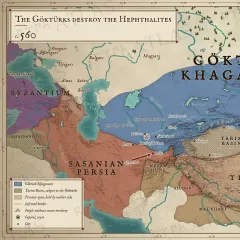 Mukan Khan Segundo hijo de Bumin y tercer khan de los göktürk, de 553 a 572. Bajo su reinado el kaganato sometió a los kirguises y a los kitán y combatió a los Qi del Norte junto a los Zhou.
- Mundzuco breve Father of Attila and Bleda, brother of the kings Octar and Rua. His name is understood as Turkic.
- Nadulu Shad breve Eldest son of Yizhi Nishidu in the Zhou Shu's Suo story. He saved his people with fire and was raised as lord under the name Türk. The Xin Tang Shu makes him Tuwu's grandfather.
- Nagai Khan Tío de Tulun, hecho khan en 492 después de que los rouran mataran a su sobrino. Reinó hasta hacia 506; del reinado el Wei Shu registra solo su título y su era.
- Nanai-vandak breve Sogdian merchant in Gansu, writer of Ancient Letter II, most probably in 313. He ran a trading network into China for a principal in Samarkand. His letter reports the fall of Luoyang to the Huns.
- Nasr ibn Sayyar breve The last Umayyad governor of Khurasan. He made peace with the Sogdians on their terms and brought the exiles home. Under him the front was stabilised between Samarkand and Ustrushana.
- Natra Brother of the khagan of the Turks who sheltered Bahram Chobin. He sought the hand of Bahram's sister Gordiya, pursued her with 12,000 warriors when she left, and fell by her hand.
- Niri Khan Khan of the western Göktürks raised by Apa's people after Apa's capture in 587, and father of Heshana Khan. He joined the princess Dayi against the Sui and was beaten by the Tiele about 601.
- Nishu Bagha Shad Göktürk prince of the west who refused the throne after Tong Yabgu's murder, raised Si Yabgu as khan and killed the murderer. He reigned himself as Duolu Khan from 632 to 634.
-
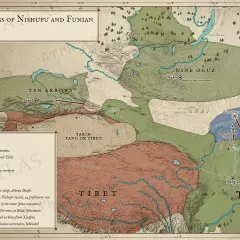 Nishufu Khan The khan of the rising of 679, raised by two Ashide chiefs when twenty-four prefectures went over at once. Killed by his own men when the second Tang army came.
- Obadiah of Khazaria breve Khazar king in the reply of King Joseph, a descendant of Bulan. The letter credits him with reorganising the kingdom, building synagogues and schools and firmly establishing the Jewish religion.
- Octar breve Hun king and uncle of Attila, who ruled before him with his brother Rua. He died about 430 on a campaign against the Burgundians east of the Rhine.
- Ögä Khan Khan of the Uyghurs who survived 840. He took the Tang princess Taihe from the Kirghiz escort, raided the Tang frontier, lost to a Tang army at Shahu Mountain in 843 and was killed about 846.
- Onegesio Attila's chief minister and, after him, the most powerful man among the Huns. Priscus stayed at his house in 449 and recorded his refusal to come over to the Romans.
- Orestes Roman from Pannonia, Attila's secretary and envoy. He came to Constantinople with Edeco in 449 and later carried the purse of the plot to the emperor. Father of Romulus Augustulus.
- Ozmish Khan The Left Shad of the Second Göktürk Khaganate and a cousin of Bilge Khan. He killed the boy khan Tengri in 741 and was swept away with the dynasty by 744.
- Pan Die breve Tudun whom Ishbara Khan sent to govern the Khitan for the Göktürks in the 580s. By the Bei Shi the Khitan killed him and fled.
- Parmudha Son of Šāba, the king of the Turks in the Perso-Arabic tradition. Bahram Chobin besieged him in his fortress, took his surrender and sent him with its treasure to Hormizd IV.
- Pei Ju Funcionario Sui que dirigió los tratos de la corte con las Regiones Occidentales y con los göktürk bajo Yangdi. Su Registro ilustrado de 607 describió tres caminos hacia el oeste; su plan de 610 enfrentó a Shegui con Heshana.
-
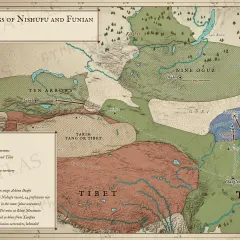 Pei Xingjian The Tang commander of the risings of 679 to 681. He broke two Göktürk restorations in three years, and the third, two years after his last victory, succeeded.
- Pofu Katun Tonyukuk's daughter, katun of Bilge Khan, and regent for her young son. The state she ran with a minor official at her side came apart in her hands in 741.
- Poliuhan Baling Man of the Woye garrison who began the revolt of the northern garrisons of the Northern Wei in 523 or 524 and took the era name True King. In 525 Anagui's army broke him for the Wei.
- Poluomen Khan Primo de Anagui, hecho khan por los rouran en 521 tras destruir al usurpador Shifa. Derrotado en pocos meses, asentado por los Wei en Dunhuang, murió prisionero en 524.
- Poshi Tegin breve Göktürk prince, younger brother of Niri Khan of the western Göktürks. He married Niri's widow, Lady Xiang, and stayed with her at the Sui court from about 600.
- Princesa Anyi breve Sui princess of the imperial clan, married in 597 to Yami, then Tuli Khan in the north. The Sui used the marriage to divide the Göktürks; she had died by 599, and Yicheng took her place.
- Princesa Changle The Western Wei princess given to Bumin in 551. The marriage sealed the alliance against the Rouran, a year before Bumin took the title of khan.
- Princesa Huainan breve Sui princess married to Töles, the son of Shibi Khan, while he still bore the title Nibu Shad and commanded the eastern camp of the Göktürks.
-
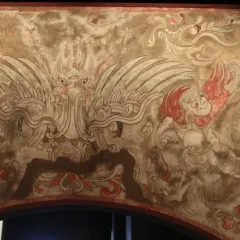 Princess Linhe Nieta del khan rouran Anagui, casada en 542 con Gao Zhan, hijo de Gao Huan, en la corte de los Wei Orientales. Su tumba, cerca de Cixian, en Hebei, se abrió en 1978 y 1979.
- Princesa Qianjin Princess of the Northern Zhou, katun of Taspar, Ishbara and Tulan from 580. She drove Ishbara to war on the Sui, who renamed her Princess Dayi and later demanded her death.
- Princesa Taihe Princesa Tang casada en 821 con el khan de los uigures. Los kirguises la tomaron en 840 y la enviaron de vuelta, un príncipe uigur la capturó y el general Tang Shi Xiong la recuperó. Llegó a Chang'an en 843.
- Princesa Xinyi breve Sui princess married in 614 to Heshana Khan, the western Göktürk khan who had submitted and lived at the Sui court. The emperor gave him a thousand robes and ten thousand bolts of silk with her.
- Princess Yicheng The Sui princess who married four Göktürk khans in succession and turned the policy of her own house against China. She was killed when the Tang took the khaganate's court in 630.
- Qiedihou Chanyu Chanyu de los xiongnu, de 101 a 96 a. C. Devolvió a los enviados Han, estuvo a punto de destruir en 99 a. C. el ejército de Li Guangli y recibió la rendición de Li Ling, a quien casó con su hija.
- Qinyu Shad breve Göktürk shad of the house of Ashina, a younger brother of Tulan Khan. His tribes grew strong, and Tulan, jealous of him, attacked him and had him beheaded on the field.
- Que Dadu Shad Göktürk prince, younger brother of Heshana Khan, who kept his brother's people at Huining for the Sui. He raided the Tuyuhun for Pei Ju, called himself Que Khan, and was destroyed by Li Gui.
- Qutayba ibn Muslim The Arab governor who took Sogdiana for the caliphate between 705 and 715: Paikent, Bukhara, Samarkand, Khwarezm. He was killed by his own army when the caliph who backed him died.
- Rehan Tegin breve Envoy of Ilig Khan whom the Tang held at their court while Ilig held the Tang envoys. He was sent home with gold and silk when the two courts made peace in 621 or 622.
- Right Shad (d. 741) Cousin of Bilge Khan and commander of the western half of the army under Tengri Khan. Tengri and his mother lured him to them and beheaded him in 741; his death began the end of the khaganate.
- Rua King of the Huns and uncle of Attila, who ruled with his brother Octar and alone after about 430. He received a yearly tribute from Constantinople and helped Aetius to power in the West.
- Rudan Khan breve Göktürk khan of the house of Ashina, a younger brother of Taspar Khan. He was the father of Börü Khan, the lesser khan of the west from 572, or by one Chinese history that khan himself.
- Rudan Tegin breve Göktürk prince of the house of Ashina, a younger brother of Tulan Khan by the same mother. He brought a staff of Khotan jade to the Sui court and was made a zhuguo and duke of Kang.
- Šāba The king of the Turks in the Perso-Arabic tradition. He marched on Persia in Hormizd IV's eleventh year and fell to Bahram Chobin's arrow. Whether he is Bagha Khan or a son of Tardush is disputed.
- Scottas Hun noble of Attila's inner circle and brother of Onegesius. He came to receive the Roman gold after the peace of Anatolius and won Priscus an audience with Attila in 449.
- Sebüktegin breve Turkic slave soldier who founded the Ghaznavid dynasty in the tenth century. Born at Barskhan on Issyk Kul, stolen as a child by the Tukhsi and sold at Chach, he rose to rule at Ghazna.
- Shegui Khan Khan of the western Göktürks, 611 to 618 or 619, and younger brother of Tardush. The Sui set him up against his overlord Heshana and he drove him to Gaochang.
-
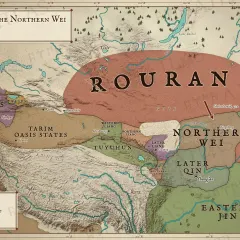 Shelun Khan Fundador del Kaganato rouran, m. 410. Fugitivo de los Wei del Norte, absorbió a los gaoche y, según una lectura, fue el primer soberano de la estepa que se llamó a sí mismo kagán.
- Shi Xiong Tang general who broke the camp of the Uyghur khan Ögä at Shahu Mountain in 843 and brought the princess Taihe home. Cashiered under Xuanzong, he died in 848.
- Shibi Khan Son of Yami and khan of the eastern Göktürks, 609 to 619. He besieged the Sui emperor at Yanmen in 615 and lent Li Yuan the horsemen who took Chang'an.
- Shiboqu Azhan Chief of the Kirghiz with the title silifa. He came in person to the court of Taizong in 648, and the emperor made the Kirghiz land the Jiankun governorship and him its governor-general.
- Shishu Huxi breve Adviser of Shibi Khan, one of the hu at the Göktürk court. The Sui official Pei Ju lured him to Mayi with a pretended market and had him killed, and Shibi broke with the Sui.
- Si Yabgu Khan Son of Tong Yabgu and khan of the western Göktürks from his father's murder to 632, first beside the murderer, then alone. Beaten by the Xueyantuo and deserted by his lords, he fled to Kangju.
- Sijie Irkin breve Chief of the Sijie, a Tiele tribe subject to the eastern Göktürks. In 630, after the fall of Ilig Khan, he went over to the Tang with forty thousand people.
- Silifa breve Göktürk prince of the house of Ashina, a nephew of Tardush or by one Chinese history his son. In 600 Tardush sent him against Yami from east of the desert; he withdrew when the Sui held the passes.
- Sparzeugun breve One of the three great khagans whom a Göktürk khagan called to his aid against the rebel Turum, according to Theophylact Simocatta. Some scholars take him for an Ishbara Yabgu.
- Su Dingfang The Tang general who ended the western khaganate. In 657 he broke Ashina Helu in two battles and a winter march, and the Ten Arrows passed under Chinese administration.
- Su Wu Enviado de los Han a los xiongnu, retenido en el norte durante diecinueve años desde 100 a. C. Rechazó todas las ofertas de cambiar de bando, pastoreó carneros junto al mar del Norte con la vara de los Han en la mano y volvió con nueve hombres.
- Sulu Khan The Türgesh khan who held the western steppe against the caliphate for twenty-one years. He beat the Arab armies twice and married into three courts at once. His own commanders killed him in 738.
- Suni Shi Younger brother of Yami Khan and Shaboluo Shad over fifty thousand households north-west of Lingzhou. He took in Ilig Khan in 630, gave him up to the Tang and followed him in death in 634.
- Suopi Shad breve Göktürk shad of the late sixth century, killed by the Hezhi Khan. The Sui edict of 583 recalls his death as one sign that all the Göktürks' neighbours were their enemies.
- Ta-bu-he-zu General of the Kirghiz and their first envoy to the Tang after the fall of the Uyghurs. He reached the frontier city of Tiande in the winter of 842 with a petition about the Taihe princess.
- Tagma Tarkhan breve Göktürk envoy with the title tarkhan, sent by Istemi to Constantinople with the returning embassy of Zemarchos in place of the Sogdian Maniakh, who had died.
- Tahan breve Hermano menor del khan rouran Anagui. En 538 los Wei Occidentales lo casaron con una hija de uno de sus funcionarios, con el título de princesa Huazheng.
- Tamim ibn Bahr breve Arab envoy who travelled to the Uyghur capital on the Orkhon, probably in 821. His account shows the Uyghurs in control of the steppe north of the Tianshan as far as Chach, with relays and a post.
- Tanhan Khan breve Göktürk khan of the early 580s and a long-standing friend of Apa. He fought beside Ishbara against the Sui in 583; Ishbara then took his people and deposed him, and he fled to Tardush.
-
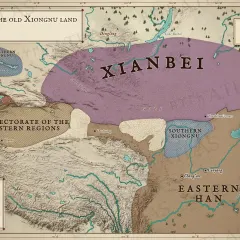 Tanshihuai Gran jefe de los xianbei, de hacia 136 a 181. Tomó toda la antigua tierra xiongnu, rechazó el sello de rey de los Han, derrotó a tres ejércitos Han en un solo día y no dejó nada que le sobreviviera.
- Tardu Shad Eldest son of the western Yabgu Khan and lord of Huo, the later Kunduz, about 630. Married to a princess of Gaochang, he was poisoned by his second wife, and his eldest son seized his rank.
-
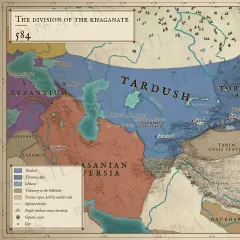 Tardush Hijo de Istemi y yabgu del oeste, de 576 a 603. Trasladó la sede a Suyab, aspiró a todo el kaganato y fue empujado al exilio por un levantamiento tiele.
-
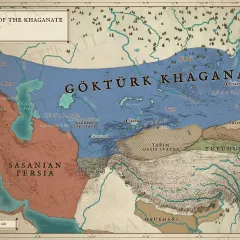 Taspar Khan Hijo menor de Bumin y cuarto khan de los göktürk, de 572 a 581. Gobernó el kaganato en su máxima extensión y dio su patrocinio a un monje budista. Su deseo para la sucesión quebró la casa.
- Tatik Iznanchu General of the Kirghiz and their fourth envoy to the Tang, probably the last under Wuzong. He brought two white horses and a petition to Chang'an in 844.
- Tengri Khan Boy khan of the Second Göktürk Khaganate from 734, under the regency of his mother. Invested by the Tang in 740 and killed in 741 by his father's cousin.
- Theodora of Khazaria Sister of a Khazar khagan and wife of the exiled Byzantine emperor Justinian II. After he regained the throne, he brought her from Khazaria to Constantinople and crowned her with their son Tiberios.
- Teodorico I King of the Visigoths, 419 to 451. His Goths destroyed the Hun auxiliaries of the Romans before Toulouse in 439; in 451 he joined Aetius against Attila and fell on the Catalaunian Plains.
- Teodosio II Emperor of the eastern Romans, 408 to 450. His government paid the Huns of Rua and Attila a rising tribute, and in 449 his minister Chrysaphius plotted Attila's murder.
- Turismundo King of the Visigoths, 451 to 453, son of Theodoric I. He fought Attila on the Catalaunian Plains and, in Jordanes, beat him a second time beyond the Loire.
- Töles Khan Son of Shibi and nephew of Ilig, lesser khan of the eastern wing from 620. Ilig had him flogged in 627; he went over to the Tang in 629 and died at Bingzhou in 631, twenty-nine years old.
-
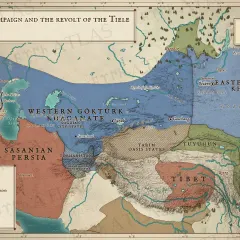 Tong Yabgu Soberano de los göktürk occidentales, de 618 a 630. Reunificó el oeste, recuperó Bactriana y se alió con Heraclio; asesinado por su tío, tras lo cual el oeste se disolvió.
-
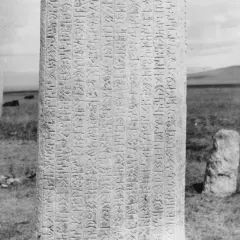 Tonyukuk Consejero y comandante de los tres primeros khanes del Segundo Kaganato göktürk. El autor del único relato en primera persona de la restauración.
- Tör Apa breve Man named on the Begre stele (E 11) in Tuva, who rode against the Tabgach khan at fifteen and died at seventy-seven. Whether Tör Apa is his name, his chief's name or a title is understood in three ways.
-
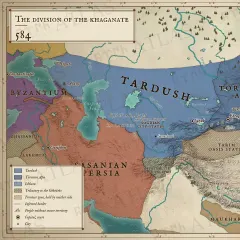 Töremen Apa Hijo de Mukan, a quien Taspar quiso como sucesor y a quien la asamblea de 581 rechazó. Como Apa Khan combatió a Ishbara con el ala occidental a sus espaldas hasta que Bagha lo capturó vivo en 587.
- Tuhezhen Khan Khan de los rouran desde antes de 449 hasta 464 según el cómputo del Wei Shu. Asedió una columna Wei en 449 y luego huyó nueve días y nueve noches y perdió su bagaje y un millón de cabezas de ganado.
-
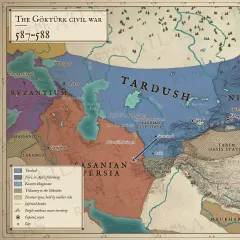 Tulan Khan Khan de los göktürk orientales desde 588, tras Bagha, de quien había sido yabgu. Intentó sacudirse a los Sui, fue traicionado por su sobrino Yami y murió a manos de sus propios seguidores en 599.
- Tuldich breve One of three great khagans whom a Göktürk khagan called to his aid against the rebel Turum, according to Theophylact Simocatta. Some scholars give his name the Turkic form Tuldïq.
- Tulun Khan Khan de los rouran de 485 a 492. Perdió a los gaoche cuando Afuzhiluo condujo cien mil tiendas al oeste en 487 y fue muerto con su madre por su propio pueblo.
- Tun Bagha Tarkan Fourth khan of the Uyghurs, 779 to 789. Chief minister and cousin of Bögü, he killed him rather than let him invade China, and the Sogdian party fell with him.
- Türk-shad Göktürk prince in the west, brother of Tardush. He received the Roman envoy Valentinos in 576 and sent the army that took Bosporos in the Crimea.
- Turum breve Göktürk prince and kinsman of the khagan who rose against him and fell at Ikar against the khagan and three allied khagans, as Theophylact Simocatta reports from the khagan's letter.
- Tuwu Father of Bumin and Istemi, and the chief under whom the Ashina worked iron for the Rouran in the Altai. The Sui Shu knows him as the Great Yabgu, d. about 542.
- Tuyuhun Hunye breve Retainer of the mother of Ilig Khan, who raised the khan from his birth. When Ilig died a captive at Chang'an in 634, he cut his own throat to follow him.
- Tzitzak breve Daughter of a Khazar khagan who married the Byzantine heir Constantine, later Constantine V, in 732. She was baptised Irene and was the mother of Leo IV, called the Khazar.
- Üç Tuğlu Khan Yukuk Shad, khan of the Duolu tribes from 638 as Yipi Duolu Khan. He split the western Göktürks at the Ili, killed the khan of the Nushibi, took Tokharistan, and fled to Tokharistan himself in 642.
- Uldin breve Hun king on the lower Danube about 400 to 408, the first Hun whose name is certain. He killed the rebel Gainas, fought for Stilicho against Radagaisus and invaded Thrace.
- Valamiro King of the Ostrogoths under Attila, who prized him and the Gepid Ardaric above all his other kings. After Attila's death he routed Attila's sons in Pannonia.
- Valentiniano III Emperor of the western Romans, 425 to 455. He refused Attila the hand of his sister Honoria and half his empire, killed his commander Aetius in 454 and was murdered a year later.
- Valentinos Roman envoy, one of the imperial sword-bearers, sent by Tiberius Caesar to the Göktürks in 576. He found Turxanthos mourning Istemi and was held while the Göktürks took Bosporos.
- Wang Zhaojun Dama de palacio Han entregada al chanyu xiongnu Huhanye en 33 a. C. Le dio un hijo y, como esposa de su sucesor, dos hijas. La muerte de su hijo contribuyó a desencadenar la escisión de 48.
- Wei Jie Censor Sui que viajó con Du Xingman a las tierras occidentales bajo el emperador Yang y escribió el Xifan ji, que cita el Tongdian. En 610 llevó la convocatoria a Heshana.
- Wei Lü Enviado Han de ascendencia hu que huyó a los xiongnu y llegó a ser rey de los dingling. Interrogó a Su Wu, dispuso el sacrificio de Li Guangli y ayudó a instalar a Huyandi como chanyu en 85 a. C.
- Wei Qing General han de las guerras contra los xiongnu, de 129 a 119 a. C. Tomó el Ordos a los xiongnu en 127, sorprendió al Rey Sabio de la Derecha en su campamento en 124 y se enfrentó al chanyu al norte del Gobi en 119.
- Wen-wu Alp General of the Kirghiz and the third envoy they sent to the Tang. He reached Chang'an in July 843 with 100 horses and ten falcons, asked for the title Heavenly Khan for his lord and was refused it.
- Woyanqudi Chanyu Chanyu de los xiongnu, de 60 a 58 a. C. Lo alzó una conjura de palacio; purgó la corte de su predecesor, perdió al rey Rizhu en favor de los Han y se dio muerte cuando los nobles del este instituyeron a Huhanye contra él.
- Wuti Khan Hijo y sucesor de Datan, khan de los rouran desde 429 hasta los años 440. Hizo la primera alianza matrimonial con los Wei del Norte y rompió la paz en 436.
- Wuwei Chanyu Chanyu de los xiongnu, de 114 a 105 a. C. aproximadamente, hijo de Yizhixie. Hizo desterrar al enviado de Wudi al Mar del Norte, se negó a enviar a su heredero a los Han y pidió una y otra vez el heqin.
- Xulihu Chanyu Chanyu de los xiongnu, de 102 a 101 a. C., hermano menor de Wuwei. Derribó los fuertes Han al norte de Wuyuan, asoló Dingxiang, Yunzhong y el corredor de Hexi, y murió dentro del año.
- Xulüquanqu Chanyu Chanyu de los xiongnu, de 68 a 60 a. C. Buscó un heqin con los Han en medio de la hambruna y de la pérdida de Cheshi. A su muerte, la consorte a la que había apartado hizo chanyu a su amante, y su hijo volvió como Huhanye.
-
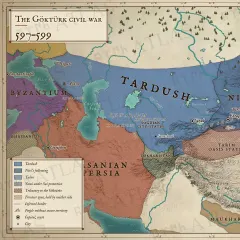 Yami Khan Son of Ishbara, and the traitor of the Göktürk cause. He sold his khan to the Sui, led Chinese troops into sacred Ötüken in 603, and ruled the east as the emperor's client.
- Yang Zhong breve The Northern Zhou general who led the Chinese column into Qi territory in 563 beside Mukan, and told his emperor afterwards that the Göktürks were not hard to handle.
- Yangsu Tegin breve Göktürk prince of the sixth century and father of Niri Khan of the western Göktürks. The Chinese histories name him when Apa's people raised his son as khan after 587.
- Yinan Khan Zhenzhu Bilge Khan of the Xueyantuo, d. 645. He beat Ilig in the field, took the khanship with a Tang patent in 628, and ruled the steppe north of the Gobi for seventeen years.
- Yinnai Tegin breve Göktürk tegin who went over to the Tang with Töles and the Yushe Shad in the twelfth month of 629, as the Tang armies marched against Ilig Khan.
- Yintou Tegin breve Göktürk tegin, envoy of Tulan Khan to the Sui court in 599. The emperor set him to argue Tulan's case against Yami and judged Yami in the right.
- Yiran Khan Son and successor of Bilge Khan, set up by the people after the poisoning of 734 and dead of illness within months. His younger brother Tengri followed him.
- Yiwu Tudun Shad breve Lord of the oasis of Yiwu, the later Hami, under a Göktürk title in 609. He came to the Sui emperor at Mount Yanzhi and offered him several thousand li of land in the Western Regions.
- Yizhi Nishidu breve Wolf-born ancestor in the Zhou Shu's Suo story of Göktürk origins. He summoned wind and rain, married daughters of the gods of summer and winter, and fathered four sons.
- Yizhi-lianji breve Kirghiz envoy to the Tang court in 866, a general named in the Tang huiyao. His name may be a distorted form of the Turkic rank ičräki, which would set him beside the man of the Begre stele.
- Yizhixie Chanyu Chanyu de los xiongnu, de 126 a 114 a. C. aproximadamente. Tomó el trono al heredero de su hermano, perdió el corredor de Hexi ante los ejércitos de Wudi y rompió el cerco Han en Mobei con unos cientos de jinetes.
- Yucheng Khan Khan de los rouran de 464 a 485 según el cómputo del Wei Shu y el primero en proclamar una era de reinado propia. Derrotado en el río Nü en 470, pidió durante diez años un matrimonio Wei y se lo negaron.
- Yukuk Shad Göktürk prince under Ilig Khan who commanded the Tiele tribes north of the desert. The Uyghurs broke his army in the rising of 627, and in 630 he fled to Gaochang and then went over to the Tang.
- Yushe Shad Son of Chula Khan who held Göktürk tribes on the Ordos frontier of the Tang in the 620s. He besieged Wucheng in 626 and went over to the Tang at the end of 629.
- Yuwen Hu breve Regent of the Northern Zhou from 557 to 572, nephew of Yuwen Tai. He made and unmade three emperors and lost the Luoyang offensive of 564 that Mukan had asked for.
- Yuwen Tai Chancellor and commander of the Western Wei, d. 556. He sent the first embassy to Bumin in 545 and gave him the princess Changle in 551.
- Zemarchos Byzantine envoy sent by Justin II with Maniakh in 569 to Istemi's camp at Ektag. He came home with a Göktürk embassy and used silk as bait to shake off a Persian army.
- Zercón Moorish jester of the Hun king Bleda. Attila gave him to Aetius after Bleda's death; in 449 he came back for his wife and made Attila's banquet laugh in Latin, Hunnic and Gothic.
- Zhang Qian Han envoy to the Yuezhi in the second century BC, held ten years by the Xiongnu. The first Chinese to reach Ferghana and Bactria and report on them. His report is the core of Shiji 123.
- Zhang Renyuan The Tang official who built the three Cities of Surrender beyond the Yellow River and closed the southern road to the Göktürk raiders.
- Zhao Fan breve Tang minister of the Imperial Stud, named in 843 to console the Kirghiz country and to receive their envoy. He carried the Kirghiz offer of a joint campaign to the emperor.
- Zhenzhu Tong Irkin breve Envoy of Tong Yabgu to the Tang court in 627. He brought a gold belt set with ten thousand studs and five thousand horses for the Tang princess whom the khan was to marry.
- Zhishi Sili Göktürk chief and confidant of Ilig Khan, his envoy to the Tang in 626 and 630. After the fall of the khaganate he served the Tang as a general and married a Tang princess.
-
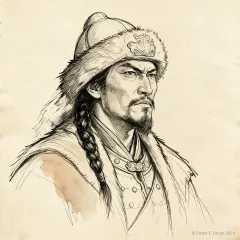 Zhizhi Chanyu Chanyu de los xiongnu, de 56 a 36 a. C. Se negó a someterse a los Han, llevó el primer imperio xiongnu hasta el Talas por el oeste y allí lo mató una columna Han que actuaba sin órdenes.
- Zhonghang Yue Eunuco Han que pasó a los xiongnu mientras escoltaba a una princesa hacia Laoshang Chanyu. Enseñó al chanyu a contar por escrito personas y rebaños y a responder a los Han en tablillas más largas.
- Zhu-wu Alp Sol Envoy of the Kirghiz khan who reached Chang'an on 16 March 843. Wuzong ranked him above the envoy of Bohai, had the envoys painted and ordered the khan entered in the register of the imperial clan.
Créditos de las imágenes
- Afrasiab: Afrasiab on the throne of Iran, which he took after killing Nowzar. A page of the Shahnameh made for Shah Tahmasp at Tabriz, about 1525–30, painting attributed to Bashdan Qara. The Metropolitan Museum of Art, New York, 1970.301.16, gift of Arthur A. Houghton Jr., 1970; detail. Public domain.
- An Lushan: An Lushan in a modern portrait. © Emre-E Yavuz 2026
- Anagui: Anagui in a modern portrait. © Emre-E Yavuz 2026
- Anluochen: 554: Anluochen rises against the Northern Qi. The Rouran raid Sizhou, and the Qi emperor pursues them from Jinyang to the Huanggua hill. He takes more than 30,000 of their people. In the south the Western Wei take Jiangling and set Xiao Cha over a Liang dependent on them. Modern map. The roads are drawn. © Emre-E Yavuz 2026
- Are Khan: Are Khan in a modern portrait. © Emre-E Yavuz 2026
- Ashina Funian: 679–681: In 679 the Göktürks of the Chanyu protectorate raise Nishufu as khan, and twenty-four prefectures rise with them. Pei Xingjian beats them at Black Mountain in 680, and Nishufu is killed by his own men. Funian, raised next at Xiazhou, surrenders to Pei Xingjian in 681 and is beheaded at Chang'an. The numbers follow the order of events. Modern map; the roads are drawn, not recorded. © Emre-E Yavuz 2026
- Atila: 453: At Attila's death the Hunnic Empire reaches from the Rhine to the Caspian Sea, and the Gepids and other peoples are subject to the Huns. Thin lines mark Attila's campaigns in Gaul in 451 and in Italy in 452. Modern map; the borders of the realm are approximate, and the site of the Catalaunian Fields is disputed. © Emre-E Yavuz 2026
- Bagatur (Modu Chanyu): Bagatur in a modern portrait. © Emre-E Yavuz 2026
- Bagha Khan: 587–588: Ishbara dies, and Bagha succeeds him in the east. Bagha marches west and takes Apa alive; Niri leads Apa's following. In 588 Bagha falls and Tulan succeeds, while the west is at war with Persia. Modern map; the roads are drawn, and the divisions within the khaganate are approximate. © Emre-E Yavuz 2026
- Bahram Chobin: 589: Bahram Chobin retakes Herat and crosses the Oxus to Paikent; Parmūdha and the treasure are sent to Ctesiphon. In the same year the Sui take the Chen and unite China. Modern map; the roads are drawn, and the divisions of the khaganate are approximate. © Emre-E Yavuz 2026
- Bayanchur Khan: Bayanchur Khan in a modern portrait. © Emre-E Yavuz 2026
- Bilge Khan: Bilge Khan in a modern drawing. © Emre-E Yavuz 2026
- Bumin Khan: Bumin Khan in a modern portrait. © Emre-E Yavuz 2026
- Chounu Khan: 516: The Rouran khan Chounu marches west, defeats the Gaoche and takes and kills their king Mi'etu. The Ashina in the Altai are subject to the Rouran. Modern map; the road is drawn, the site of the battle is not recorded, and the borders in the steppe are approximate. © Emre-E Yavuz 2026
- Dengizich: 466–469: Dengizich marches against Bassiana. Ernak stands in two proposed places, at the mouth of the Tisza and in the Dobruja. Emnetzur and Ultzindur hold towns on the Danube. Dengizich falls in 469, and his head is shown in Constantinople. Modern map. The place of his death is not recorded. © Emre-E Yavuz 2026
- Duman (Touman): c. 215 BC: The First Emperor of Qin sends Meng Tian north. He takes the Ordos inside the great bend of the Yellow River and makes the river the frontier. The Xiongnu chanyu Duman withdraws to the north; how far, the source does not say. The Donghu hold the east, the Yuezhi the land between Dunhuang and the Qilian mountains; another view places them in the Tian Shan. Modern map; the borders in the steppe are approximate. © Emre-E Yavuz 2026
- Emperatriz Yujiulü: Empress Yujiulü in a modern portrait. © Emre-E Yavuz 2026
- Huhanye Chanyu: Huhanye Chanyu in a modern portrait. © Emre-E Yavuz 2026
- Ilterish Khan: 682: After Funian's defeat Gudulu gathers the fugitives at Zongcai Mountain and Heisha, raids the Nine Oguz and makes himself Ilterish Khan. Ashide Yuanzhen goes over to him. In the tenth month the Göktürks raid Bingzhou, Lanzhou and Dingzhou. The numbers follow the order of events. Modern map; the roads are drawn, not recorded. © Emre-E Yavuz 2026
- Irbis Shegui Khan: Asia in 650: the Western Göktürk Khaganate under Irbis Shegui Khan reaches from the Tarbagatai to the Oxus, with Sogdia and Tokharistan as dependants. In the east the Tang rule the steppe through the protectorate of Yanran; the Kirghiz and the oasis states of the Tarim pay them tribute, and Anxi sits at Kucha. In the west the Caliphate has taken Iraq and western Iran, and Yazdegerd III holds only Khorasan and Sistan. Modern map; the edges of the khaganate and the protectorates are approximate. © Emre-E Yavuz 2026
- Ishbara Khan: 582–583: In 582 the Göktürks under Ishbara cross the Long Wall and plunder the Sui frontier from Wuwei to Yan'an. In 583 Ishbara marches from Ötüken to Baidao, is defeated and withdraws, and Apa flees west to Tardush. Modern map; the roads of the raids are drawn. © Emre-E Yavuz 2026
- Issik Khan: Issik Khan in a modern drawing. © Emre-E Yavuz 2026
- Istemi: Istemi in a modern portrait. © Emre-E Yavuz 2026
- Kutlug Bilge Kül Khan: Kutlug Bilge Kül Khan in a modern portrait. © Emre-E Yavuz 2026
- Laoshang Chanyu: Laoshang Chanyu in a modern portrait. © Emre-E Yavuz 2026
- Mukan Khan: Around 560 Istemi advances through Chach into Sogdiana and destroys the Hephthalites in the battle of Bukhara, while Khosrow I takes their lands south of the Oxus as far as Balkh. The Oxus becomes the frontier between the Göktürks and Persia. Modern map; Istemi's route is drawn. © Emre-E Yavuz 2026
- Nishufu Khan: 679–681: In 679 the Göktürks of the Chanyu protectorate raise Nishufu as khan, and twenty-four prefectures rise with them. Pei Xingjian beats them at Black Mountain in 680, and Nishufu is killed by his own men. Funian, raised next at Xiazhou, surrenders to Pei Xingjian in 681 and is beheaded at Chang'an. The numbers follow the order of events. Modern map; the roads are drawn, not recorded. © Emre-E Yavuz 2026
- Pei Xingjian: 679–681: In 679 the Göktürks of the Chanyu protectorate raise Nishufu as khan, and twenty-four prefectures rise with them. Pei Xingjian beats them at Black Mountain in 680, and Nishufu is killed by his own men. Funian, raised next at Xiazhou, surrenders to Pei Xingjian in 681 and is beheaded at Chang'an. The numbers follow the order of events. Modern map; the roads are drawn, not recorded. © Emre-E Yavuz 2026
- Princess Linhe: Modern copy of the painting above the gate of her tomb: a monster mask between two winged figures. Hebei Museum. Copy: Hebei Museum. Photograph: Gary Todd, 2014, CC0.
- Shelun Khan: c. 402: Shelun leads the Rouran, whose land reaches from Karashahr to Goguryeo, and raids the frontier of the Northern Wei. In the south the Wei, the Later Qin, the Liang states, the Yan states and the Eastern Jin divide China. Modern map; the borders in the steppe and some borders in China are approximate. © Emre-E Yavuz 2026
- Tanshihuai: c. 155: Under Tanshihuai the Xianbei hold the old land of the Xiongnu in the Mongolian steppe. The Southern Xiongnu live inside the Han frontier, and the Han govern the oases of the west through the protectorate of the Western Regions. An alternative placement puts Northern Xiongnu north-west of Kangju. Modern map; the borders in the steppe are approximate. © Emre-E Yavuz 2026
- Tardush: The Göktürk realm in 584, when the civil war broke out: Tardush in the west, Töremen Apa in the middle and Ishbara in the east, beside the Sui, the Chen, Sasanian Persia and the Eastern Roman Empire. Between the steppe and China stand the wall of the Northern Qi (556) and a frontier zone held by neither side. Modern map; the zones are approximate. © Emre-E Yavuz 2026
- Taspar Khan: The Göktürk Khaganate in 581, the year of Taspar's death, still undivided from the Black Sea to the Khitan, with the court at Ötüken; beside it the Sui, whose rule began that year, the Chen, Sasanian Persia and the Eastern Roman Empire. Between the steppe and China stand the wall of the Northern Qi (556) and a frontier zone held by neither side. Modern map; the frontiers are approximate. © Emre-E Yavuz 2026
- Tong Yabgu: 627: In the west Tong Yabgu's army breaks through Derbent, and before Tiflis Jebu Xak'an meets the emperor Heraclius. In the east the Tiele rise against Ilig Khan, and a great snow kills the herds of his people. Modern map; the borders in the steppe are approximate. © Emre-E Yavuz 2026
- Tonyukuk: The upper part of the south face of the first Tonyukuk stone in the Nalaikh valley, photographed in June 1909. Photograph: G. J. Ramstedt and Sakari Pälsi, 1909, Finnish Heritage Agency, CC BY 4.0.
- Töremen Apa: The Göktürk realm in 584, when the civil war broke out: Tardush in the west, Töremen Apa in the middle and Ishbara in the east, beside the Sui, the Chen, Sasanian Persia and the Eastern Roman Empire. Between the steppe and China stand the wall of the Northern Qi (556) and a frontier zone held by neither side. Modern map; the zones are approximate. © Emre-E Yavuz 2026
- Tulan Khan: 587–588: Ishbara dies, and Bagha succeeds him in the east. Bagha marches west and takes Apa alive; Niri leads Apa's following. In 588 Bagha falls and Tulan succeeds, while the west is at war with Persia. Modern map; the roads are drawn, and the divisions within the khaganate are approximate. © Emre-E Yavuz 2026
- Yami Khan: 597–599: Yami, who has married a Sui princess, is attacked below the Long Wall in 599 by Tulan and Tardush. He flees to the Sui court at Chang'an and is made Qimin Khan, and the Sui give his people pastures in the Ordos. Modern map; the roads are drawn, and the divisions within the khaganate are approximate. © Emre-E Yavuz 2026
- Zhizhi Chanyu: Zhizhi Chanyu in a modern portrait. © Emre-E Yavuz 2026

