
92 artículos
Pueblos
Etnónimos y pueblos con nombre propio.
Esta página y el menú están en español. De 92 artículos, 15 existen en español; el resto está en inglés y así se indica.
Artículo central
-
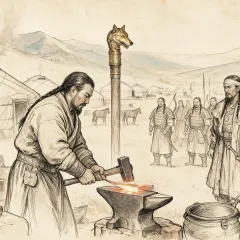 Göktürk The self-designation of the people ruled by the Ashina, attested in the runiform inscriptions of the eighth century.
-
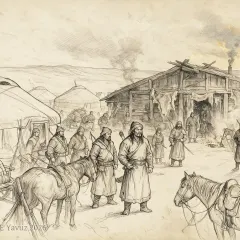 Hunos Pueblo nómada que entró en Europa en los años 370 y que, bajo Atila, gobernó del Cáucaso al Rin. Su imperio se deshizo después de 453. Su identidad con los xiongnu se discute.
-
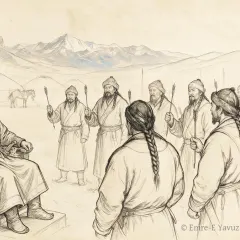 On Oq The Ten Arrows: ten tribes, five Üç Tuğlu east of Suyab and five Nushibi west of it, each chief holding an arrow. The western Göktürks dissolved into them after 630.
-
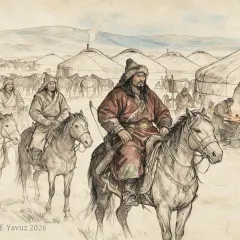 Rouran El pueblo del Kaganato rouran, señores de los Ashina hasta 552. De origen donghu y xianbei según el Wei Shu, paramongólico según la clasificación habitual.
-
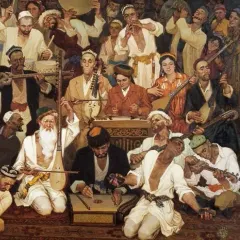 Uyghurs A Tiele people of the Nine Oguz, subject in turn to the Rouran and the Göktürks. They overthrew the last Göktürk khan in 744 and held the Orkhon for ninety-six years.
-
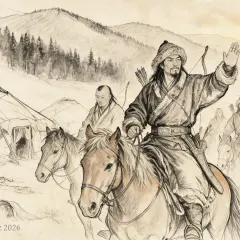 Xianbei El pueblo que tomó la estepa oriental a los xiongnu en el siglo I y le dio su orden siguiente. De ellos salieron la casa reinante rouran y los tuoba de los Wei del Norte.
-
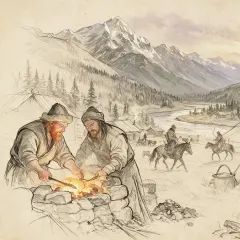 Yenisei Kirghiz Misterioso pueblo de lengua túrquica del alto Yeniséi, conocido por el hierro y el oro. Parte del Imperio göktürk durante la mayor parte del tiempo, pusieron fin al Kaganato uigur y al mandato de gobierno centrado en Ötüken.
- Abusi breve Tiele tribe, the eighth of the nine of the Toquz Oghuz in the Tang Huiyao, ranked with the others only after the Tianbao era. Also the name of a chief who went over to the Tang.
-
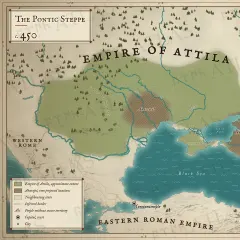 Acatziros Nomadic people of the steppe north of the Black Sea, ruled by many chiefs. Attila subdued them in the 440s and set his eldest son over them; the Saragurs defeated them about 463.
- Alans Nómadas de lengua irania de la estepa más allá del Don y del Cáucaso septentrional. Los hunos los sometieron en la década de 370; en 576 el príncipe göktürk Türk-shad los contó entre los esclavos del kaganato.
- Hunos alchón Dinastías hunas del valle de Kabul, Gandhara y el norte de la India, conocidas por monedas con la palabra bactriana alxono. Khingila, Toramana y Mihirakula reinaron en su nombre. Los textos indios las llaman huna.
- Amilzuros breve People on the lower Danube in the fifth century, named first among those whom the Hun king Rua wanted to fight because they had fled to the Romans. Jordanes splits the name in two.
- Angisciros breve Tribe among the last followers of Attila's son Dengizich in the 460s, named only by Jordanes. The name may be Turkic or may mean the grassland Sciri.
-
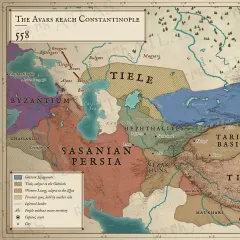 Avars Steppe people who held a khaganate in Pannonia until 796. Their khagans and ruling nobility most likely came from the Rouran, and with them the title khagan came to Europe.
- Az People of the mountain country between the western Sayan and the Altai, named beside the Kırgız in the Göktürk inscriptions. A man of the Az guided Tonyukuk, and Kül Tegin took their iltäber.
- Bardoros breve Hun tribe among the last followers of Attila's son Dengizich in the 460s, named only by Jordanes. Its name has been read as Turkic.
- Basmïl Turkic people of the Beiting country north of the Tianshan. Used by the Tang against the Second Khaganate, they rose against the last Ashina khan in 742 and fell in 744.
- Bayirku A Tiele people of the Nine Surnames, north-east of the Orkhon. Beaten by Kül Tegin at Lake Türgi Yargun; one of their stragglers killed Kapgan Khan in 716.
- Bittuguros breve Hun tribe among the last followers of Attila's son Dengizich in the 460s. Part of it later joined the Ostrogoths on their march to Italy in 488.
- Boiscos breve People on the lower Danube in the fifth century, among those whom the Hun king Rua wanted to fight because they had fled to the Romans. The name has been explained as Celtic.
- Boma People of the far north near the northern sea, named for their piebald horses, which they kept for milk. They lived under birch bark and often fought the Kirghiz.
- Bugu breve One of the nine Tiele tribes of the Toquz Oghuz. Pugu Huai'en, who served the Tang against An Lushan and then revolted himself, came from its ruling family.
- Bulgars breve A Turkic people of the Pontic steppe. When the western steppe broke apart in the middle of the seventh century it left two states behind it, the Bulgar union and the Khazars.
- Chik People on the upper Yenisei between the river and the Sayan, named with the Kırgız and the Az. Bilge Khan beat their army at Orpin after crossing the river Kem.
- Chumukun breve A tribe of the western Göktürks, first of the five that the Tang histories name under the Duolu, the eastern wing of the Ten Arrows. Its chief carried the rank of chur.
- Cimmerians breve Mounted nomads who held the western steppe from about 1000 to 800 BC, before the Scythians. Their raids reached Assyria, and what they were is still argued: a people, or a word for a band of riders.
- Dingling Pueblo del norte, sometido por Bagatur hacia 201 a. C. y atacante de los xiongnu en el siglo I a. C. Una línea de derivación hace descender de ellos a los tiele.
-
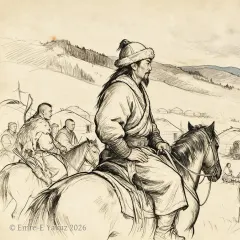 Donghu Los vecinos orientales de los xiongnu, destruidos por Bagatur hacia 206 a. C. A lo que quedó de ellos se remontan los xianbei y los wuhuan.
- Dubo Tiele people north of the Uyghurs and south of a small sea, hunters who ate lily roots. The Xin Tangshu names them with the Mielie and Geezhi the Wooden-Horse Tujue, whom the Kirghiz could subject.
- Ediz breve A tribe of the Toquz Oghuz that supplied the Uyghur khagans from 795. Whether it belonged to the nine from the start is argued.
-
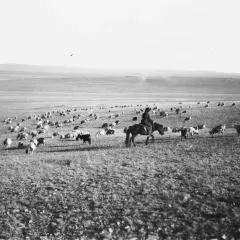 Nómadas euroasiáticos Los pueblos pastores del cinturón de estepas, de Hungría a Manchuria, y el modo de vida que compartían. Vivían de ovejas y caballos y dependían del comercio, del tributo y de las incursiones contra sus vecinos sedentarios.
- Furi Forest and marsh people east of the Kirghiz in the Muslim geographers, written Fūrī or Qūrī, called man-eaters in the Ḥudūd. Usually taken for the Kurykan.
- Gépidos breve Germanic people, subjects of the Huns under Attila. Their king Ardaric led the subject peoples against Attila's sons, won at the Nedao in 454 and took the Hunnic seats in Dacia.
- Godos breve Germanic people north of the Black Sea and on the lower Danube. The Huns broke the eastern Goths in the 370s and ruled them until after Attila; the western Goths fought him in Gaul in 451.
- Gulun Wugu breve Tiele tribe, the ninth of the nine of the Toquz Oghuz in the Tang Huiyao, ranked with the others only after the Tianbao era.
- Heichezi (Carros Negros) People called the Black Carts, with whom the Uyghur khan Ögä took refuge after 843. The Xin Tangshu has them kill him for a Tang reward, and a Tang letter calls them a Shiwei people.
-
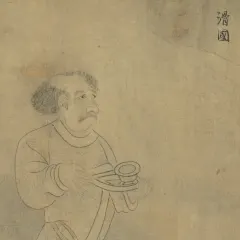 Hephthalites The last of the Hunnic powers of Central Asia, a confederation rather than a people, crushed between Istemi and Khosrow I about 560.
-
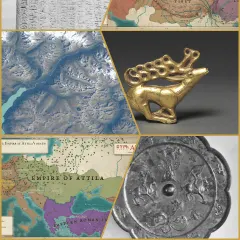 History of the Turkic peoples The history of the Turkic-speaking steppe peoples, with their land, economy and belief, from the Bronze Age through the Xiongnu and the Göktürk and Uyghur khaganates to the Kirghiz and the Khazars.
- Hu breve The Chinese word for the peoples of the north and north-west. In the Han texts it names the Xiongnu; in the Göktürk and Tang period it mostly means the Sogdians and other Iranian-speakers.
- Hun (Tiele tribe) breve One of the nine Tiele tribes of the Toquz Oghuz. Its chieftaincy stayed in one family for several generations, and Hun Shizhi led it into Tang service.
- Itimaros breve People on the lower Danube in the fifth century, among those whom the Hun king Rua wanted to fight because they had fled to the Romans. Their origin is unknown.
- Jie breve A group counted among the Xiongnu in the Chinese records of the fourth century. Shi Le founded the Later Zhao out of them, and one recorded sentence of their speech is at the centre of the debate over their origin.
- Cabaros Grupo de origen jázaro que abandonó el kaganato tras una guerra civil y se unió a la unión húngara. Constantino VII los llama los primeros de sus clanes.
- Kangju Potencia nómada del Sir Daria medio en las fuentes Han, más tarde señora de Sogdiana. Invitó a Zhizhi al oeste, y este murió allí en 36 a. C. Su nombre se convirtió en Kang, el apellido chino de los sogdianos.
- Karluk Turkic tribal group of the Altai. They revolted against Tong Yabgu about 627, moved into the western Göktürk lands about 745, and defected to the Arabs on the Talas in 751.
- Khalaj breve Turkic-speaking people of Afghanistan, named in a Bactrian manuscript of 711 and by the geographers of the tenth century. Their language survives in central Iran.
-
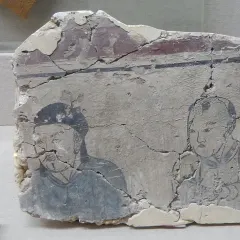 Khitan People of the pine-moors between the Xianbei and Manchuria. Tributaries of the Northern Wei from the 440s, driven east by the Göktürks under Mukan, and mourners at the Orkhon monuments.
- Kidarites Hun dynasty named after its founder Kidara. It took Bactria, Gandhara and, after 440, Sogdiana. The Wei Shu calls it Xiongnu. Weakened by the Sasanians and the Hephthalites from 456.
- Kimek breve Turkic tribal union of the Irtysh and the steppes of western Siberia and Kazakhstan, north of the Qarluqs. The Kipchak, who belonged to it, later took its place.
- Kipchak breve Turkic people of the northern steppe. Kashgari counts their speech with that of the Oghuz, and later Arabic and Persian writers use their name for the whole western steppe.
- Kotzager breve People who fled from the Göktürks into Europe with the Tarniach and joined the Avar khan. Some scholars identify them with the Kutrigurs.
- Kurykan Tiele people north of the desert, the Gulikan of the Tang, known for their horses. The Göktürk inscriptions name the Three Kurıkan as mourners of the founders and as enemies of the restored state.
-
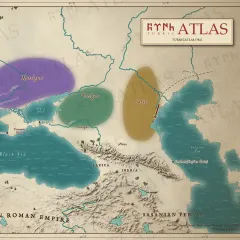 Kutrigurs Hunnic steppe people west of the Sea of Azov, kin to the Utigurs. They raided the Roman Balkans in the 550s and went west with the Avars when the Göktürks came.
- Kyshtym Mountain people of the Kirghiz country in the Ḥudūd al-ʿĀlam, written K.SAYM, hunters of furs and musk. The restored name Kishtim later covers the dependants of the Kirghiz.
- Shahs nezak Reyes de Kapisa, Kabul y Ghazni conocidos por dracmas con corona de cabeza de toro y la leyenda pahlavi Nezak Malka. Las lecturas los hacen hunos, gobernantes locales o una dinastía turca occidental.
- Nushibi breve The western half of the Ten Arrows, five tribes under five irkin. With the Duolu they made up the tribal body of the western khaganate.
- Oghuz breve Turkic people of the western steppe and the Syr Darya. Kashgari treats their speech as one of the two great Turkic dialect groups, and the Seljuk house came from their tribe of Qïnïq.
- Ogurs Steppe people named by Priscus about 463 among the tribes the Sabirs drove west. A century later their chief held the country west of the Volga for Istemi.
- Onogurs Steppe people north of the Caucasus and the Sea of Azov, named by Priscus about 463. They came under Göktürk hegemony in the 560s; later Byzantine writers join their name to the Bulgars.
- Pechenegos breve Turkic steppe people who entered the Pontic steppe from the Volga-Ural region in the late ninth century. Byzantium's chief steppe neighbour in the tenth century; their power ended in 1091.
- Qibi breve Tiele tribe, one of the nine of the Toquz Oghuz in the Tang Huiyao. Its leaders served the Tang as generals in the seventh century.
-
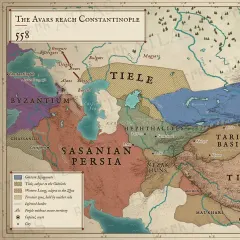 Sabirs Steppe people of the north Caucasus and the lower Volga from the early sixth century. They fought for Rome and for Persia, and the Göktürks absorbed their union.
- Saka The Persian name for the eastern Iranian nomads, from Kazakhstan to the Tarim. The Achaemenid inscriptions count four kinds of them, and one group gave its name to Sistan.
-
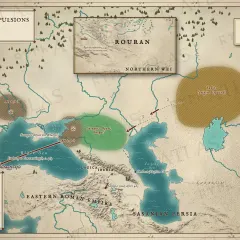 Saraguros breve Oguric people who came to the Black Sea steppe about 463, driven west by the Sabirs. They defeated the Akatziri, sought an alliance with Constantinople and raided Iberia and Armenia.
- Sarmatians Nómadas iranios que tomaron la estepa occidental a los escitas. La presión del este los empujó hacia el oeste, y en el siglo II a. C. esa presión se remonta al ascenso de los xiongnu.
- Scythians Iranian mounted nomads who held the western steppe from the eighth century BC. Three of the customs Herodotus records of them reappear among the Xiongnu and the Turkic peoples.
- Shatuo breve Turkic union of Western Göktürk origin, foes of the Uyghurs, who became the military prop of the Tang and then founded dynasties in northern China.
- Shiwei Peoples north of the Khitan in eastern Mongolia and Heilongjiang, ruled through Göktürk tudun. In 848 seven Shiwei clans held the last Uyghurs until the Kirghiz took them back.
- Sijie breve One of the nine Tiele tribes named in the Tang histories as part of the Toquz Oghuz confederation.
- Sogdians The Iranian-speaking people of the Zarafshan valley and the merchants of Central Asia. They gave the Göktürks their script, their chancellery, their envoys and their silk trade.
- Sorosgos breve People of Scythia against whom Bleda and Attila made war after the treaty of Margus. Priscus names them once, and no other source mentions them.
- Tarniach breve People who fled from the Göktürks into Europe with the Kotzager and joined the Avar khan. Theophylact derives them from the Var and Chunni.
- Cultura de Tashtyk Cultura arqueológica de las cuencas de Jakasia y Minusinsk, en el Yeniséi, conocida por sus tumbas con máscaras de yeso pintadas. Quiénes eran sus gentes y su vínculo con los kirguises se debate.
- Tártaros Confederation of the Mongolian east, the Thirty Tatars of the Göktürk inscriptions and the Nine Tatars of the Uyghur stones. Mourners of the founders, then enemies of the restored khaganate.
- Los grandes imperios de la estepa Los grandes imperios de la estepa, de los xiongnu a los jázaros, por orden de ascenso. De cada uno, la fundación, la casa reinante, el centro, la extensión y el final.
-
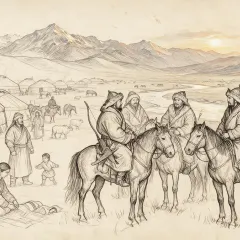 Tiele La federación de grupos túrquicos al oeste del Altái, llamada Töles en las inscripciones en túrquico antiguo. Bumin interceptó su levantamiento en 546, y sus cincuenta mil hicieron de los Ashina una potencia.
- Tongra breve A tribe of the Toquz Oghuz. The Kül Tegin inscription records ten of its champions killed at a funeral feast.
- Toquz Oghuz The Nine Oguz, a confederation of Tiele peoples north of the Orkhon country. The Göktürk inscriptions call them enemies and my own people in the same sentence; the Uyghurs came out of them.
- Tunsuros breve People on the lower Danube in the fifth century, among those whom the Hun king Rua wanted to fight because they had fled to the Romans. Jordanes calls them Tuncarsi.
- Tukhsi breve Turkic tribe of the land between Lake Balkhash and Issyk Kul in the ninth and tenth centuries. One of the tribes whose federation became the Karakhanid state. They abducted the boy Sebüktegin.
- Tuoba breve The Xianbei house that founded the Northern Wei and ruled north China for a century and a half. The Rouran wars were fought against them, and their collapse in 534 made the two Weis.
- Türgesh Tribe of the Üç Tuğlu wing of the Ten Arrows, in the Ili basin. Its khans ruled the western Göktürk lands from Suyab, 699 to 744, and were broken at Kharistan in 737.
-
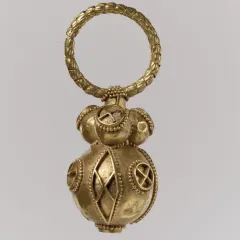 Tribus túrquicas en Europa Los pueblos de habla túrquica o de dirección túrquica de la estepa póntico-caspia y del Cáucaso septentrional, del siglo V al VII. Desde la década de 560 la mayoría estuvo bajo la hegemonía göktürk.
-
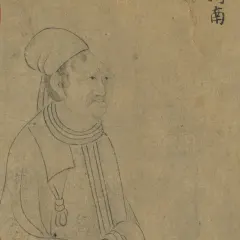 Tuyuhun breve A people of the Koko Nor country between China and Tibet, of Xianbei descent. Their land was where a beaten Göktürk khan could vanish.
- Ultzinzuros breve Hun tribe on the lower Danube after Attila's death. It followed Attila's son Dengizich against the Goths in the 460s; a later historian calls it well known until the reign of Leo.
- Utigurs Hunnic steppe people east of the Sea of Azov, kin to the Kutrigurs. Under their ruler Anagai they fought for the Göktürks at Bosporos in 576.
- Vándalos breve People who crossed from Spain into Africa under their king Gaiseric and took Carthage in 439. Their fleet drew Roman forces away from the Danube, and in 455 they sacked Rome.
- Wuhuan Pueblo de la estepa oriental, sometido a los xiongnu desde la victoria de Bagatur sobre los donghu y luego a los Han, que lo asentaron en la frontera y lo emplearon contra los xiongnu y los xianbei.
- Wusun Pueblo de la estepa del valle del Ili, clientes y luego rivales de los xiongnu y principal aliado de los Han en el oeste. Su fundador fue expuesto al nacer y amamantado por una loba.
- Yueban La parte de los xiongnu del norte que se quedó al norte de Kucha cuando el resto se fue al oeste. El Wei Shu sitúa su país al noroeste de los wusun y registra sus embajadas a los Wei del Norte.
- Yuezhi El pueblo del corredor de Gansu al que los xiongnu quebrantaron dos veces y cuya huida hacia el oeste desencadenó el movimiento que acabó en Bactriana.
- Zabender breve People whom Theophylact derives from the Var and Chunni, named beside the Tarniach and Kotzager who fled from the Göktürks to the Avars.
Créditos de las imágenes
- Acatziros: c. 450: The realm of Attila reaches from the Danube into the steppe. The Akatziri stand in two proposed places, north-west of the Black Sea and by the Sea of Azov. Modern map. No source records the frontier. © Emre-E Yavuz 2026
- Avars: 558: The first embassy of the Avars comes through the Alans and Lazica to Constantinople. The Avars then break the Onogurs and destroy the Sabirs. Modern map. The road of the embassy is drawn, and the places of the battles are not recorded. © Emre-E Yavuz 2026
- Donghu: Donghu in a modern illustration. © Emre-E Yavuz 2026
- Nómadas euroasiáticos: A herder on horseback with a flock of sheep and goats on the open steppe of Mongolia, photographed in 1909. Finnish Heritage Agency (Museovirasto), General Ethnographic Photo Collection, VKK156:33. Photograph by Sakari Pälsi, 1909. Finna, CC BY 4.0.
- Göktürk: Göktürks in a modern illustration. © Emre-E Yavuz 2026
- Hephthalites: Envoy of the Hua (滑國), as the Liang court called the Hephthalites, carrying a bowl. From “Foreign Visitors Coming to Court”, a copy after a painting ascribed to Emperor Yuan of Liang (r. 552–555); an inscription of the Song emperor Lizong names Gu Deqian of the Southern Tang as the copyist. Handscroll, ink on paper; National Palace Museum, Taipei, 故畫001389N. Copy of Emperor Yuan of Liang’s “Foreign Visitors Coming to Court”, The National Palace Museum, Taipei, CC BY 4.0 @ www.npm.gov.tw.
- History of the Turkic peoples: Runes of the Tonyukuk stone, the Göktürk realm in 552, the Altai from space, a Scythian gold stag, the empire of Attila in 453 and riders on a Tang bronze mirror. Photographs: G. J. Ramstedt and Sakari Pälsi, Finnish Heritage Agency (CC BY 4.0); NASA, astronaut photograph iss069e071176 (public domain); The Cleveland Museum of Art, 1985.77 (CC0); The Metropolitan Museum of Art, 25.20.3 (CC0). Maps: © Emre-E Yavuz 2026
- Hunos: Huns in a modern illustration. © Emre-E Yavuz 2026
- Khitan: Fragment of a Liao-dynasty tomb mural showing a Khitan man and a Khitan boy, from a tomb at Paolou Hill in Lindong, excavated in 1988. Photograph: BabelStone, 2016, CC BY-SA 3.0.
- Kutrigurs: c. 550: The Kutrigurs live west and the Utigurs east of the Don and the Sea of Azov, the Sabirs and the Onogurs north of the Caucasus. The Kutrigurs raid in 551 and, under Zabergan, reach Constantinople in 558–559. The Avars arrive in 557. Modern map. The roads are drawn. © Emre-E Yavuz 2026
- On Oq: On Oq in a modern illustration. © Emre-E Yavuz 2026
- Rouran: Rouran in a modern illustration. © Emre-E Yavuz 2026
- Sabirs: 558: The first embassy of the Avars comes through the Alans and Lazica to Constantinople. The Avars then break the Onogurs and destroy the Sabirs. Modern map. The road of the embassy is drawn, and the places of the battles are not recorded. © Emre-E Yavuz 2026
- Saraguros: c. 463: The Abares drive out the Sabirs, and the Sabirs drive the Saragurs, Ogurs and Onogurs west. The Saragurs defeat the Akatziri and send an embassy to Constantinople. Later they raid through the Caucasus. Modern map. The arrows are a reconstruction. © Emre-E Yavuz 2026
- Tiele: Tiele in a modern illustration. © Emre-E Yavuz 2026
- Tribus túrquicas en Europa: One of a pair of gold earrings, Avar work, 550 to 650. The Metropolitan Museum of Art, New York, 17.191.4, CC0.
- Tuyuhun: Envoy of the Tuyuhun, labelled 河南, the name under which the southern histories treat their kingdom. From “Foreign Visitors Coming to Court”, a copy after a painting ascribed to Emperor Yuan of Liang (r. 552–555); an inscription of the Song emperor Lizong names Gu Deqian of the Southern Tang as the copyist. Handscroll, ink on paper; National Palace Museum, Taipei, 故畫001389N. Copy of Emperor Yuan of Liang’s “Foreign Visitors Coming to Court”, The National Palace Museum, Taipei, CC BY 4.0 @ www.npm.gov.tw.
- Uyghurs: Muqam, a painting of 1984 by the Uyghur painter Ghazi Ehmet: singers and musicians of the Uyghur muqam with long-necked lutes, fiddles, a dulcimer, frame drums and flutes. It shows the Uyghurs of the twentieth century, eleven centuries after the dispersal of 840. Painting: Ghazi Ehmet, 1984.
- Xianbei: Xianbei in a modern illustration. © Emre-E Yavuz 2026
- Yenisei Kirghiz: Yenisei Kirghiz in a modern illustration. © Emre-E Yavuz 2026

