
146 artículos
Instituciones y títulos
Títulos, cargos, derecho consuetudinario y la legitimación del poder.
Esta página y el menú están en español. De 146 artículos, 24 existen en español; el resto está en inglés y así se indica.
- Aco breve Word the Tang histories write 阿熱 for the lord of the Yenisei Kirghiz. The Xin Tang Shu says the ruling clan took its name from it; scholars have proposed several explanations of the word.
- Anchan Juni breve Göktürk title formed on anchan, the word for meat. The Tongdian makes the anchan juni the officer who managed the affairs of the household.
- Apa Tarkan breve A compound office of the Göktürk court, and the rank the Tang history gives Tonyukuk. Apa names a command, tarkan a standing at the khan's side.
- El ejército de los imperios de la estepa Cómo ordenaban sus ejércitos los imperios de la estepa: mandos decimales de los xiongnu, alas y mandos de príncipes de los göktürk, la guardia del khan, las tribus uigures y las cifras de las fuentes.
- Atabeg Father-lord: the commander set over a Seljuk prince as guardian and tutor, who governed the province in the prince's name. In several places the office replaced the dynasty.
- Los artesanos de los ávaros Goldsmiths and metalworkers of the Avar khaganate, who worked in Byzantine techniques for Avar taste. The khagan also brought in foreign specialists, and the Avars bought arms in Constantinople.
-
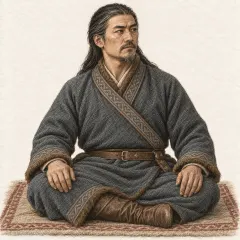 Baga Göktürk title written 莫何 or 莫賀 in the Chinese histories. It stands in the titles of Ishbara and Bagha Khan and in Tonyukuk's own style, Boyla Baga Tarkan.
- Baghatur breve Göktürk title written 莫賀咄 in the Chinese histories. Ilig held it as Baghatur Shad before he became khan, and Tong Yabgu's murderer took the throne under it in the west.
- El algodón baidie The cotton cloth of the Turfan oasis. The Liang Shu describes a plant with a cocoon-like fruit and thread inside, woven into soft white cloth that served in trade. The Tang histories repeat it.
- Beg The lord of a tribe or a clan, and the estate of such men. The rank between the khan above and the commons below, named on every face of the Orkhon stones.
- Los hornos de reducción del Altái meridional Early medieval iron-smelting furnaces in the Chuya and Kurai basins of the south-east Altai, the densest cluster in the region. The excavators tie the smelting district to the Göktürks.
- El trabajo del hueso y del cuerno Bone plates of the bow, bone arrowheads, bone fittings of the horse and horn knife handles, with the bowyers who made the composite bow. The sources name the objects and describe no workshop.
- Mercados fronterizos The markets on the Chinese frontier where the Göktürks traded their herds for silk. They first came to the border for silk before 545 and asked the Sui for markets in 588 and the Tang in 624.
- Böri (guardia) breve The guard of the Göktürk khan, called 附離, fuli, in the Chinese histories. The Zhou Shu says the name means wolf, because the Göktürks were born of a wolf.
- El precio de la novia en ganado Betrothal gifts paid in horses, cattle, camels and sheep among the Gaoche, Rouran, Xueyantuo, Uyghurs, Kirghiz and Oghuz. The sums range from the herds of a bridegroom's family to the 20,000 horses of the Uyghur marriage of 821, and one bride-price was lost on the road.
- Los espejos de bronce de la estepa Chinese bronze mirrors in the graves of the Xiongnu and later peoples, and the local copies cast when the supply from China stopped. They came as gifts, as trade goods and as heirlooms.
- Bukhar Khuda breve The title of the rulers of Bukhara before and under the Arab conquest, lord of Bukhara. The house survived the conquest, commanded Transoxian troops for the caliphs and lost its power in 874.
- Buyruk The khan's minister. The inscriptions name the buyruks directly after the khan and make the quality of a reign depend on them; a buyruk poisoned Bilge Khan in 734.
- Camellos The camels of the steppe peoples in the Chinese and Muslim sources: a rare animal among the Xiongnu, a gift of tens or thousands from the Gaoche, Göktürks and Uyghurs, and the pack animal of the caravans. The Kimek kept none, because the camel did not live in their country.
- Cautivos y no libres Personas tomadas en las incursiones y guerras de los imperios de la estepa, desde los xiongnu hasta los jázaros: rescatadas, canjeadas, esclavizadas, vendidas o retenidas como tránsfugas, y lo que las fuentes muestran sobre su condición.
- Chakar breve Sogdian title of the sovereign's bodyguard, warriors bound to a lord. Chakar fought in the army of An Lushan, and the caliphs of the ninth century built guards on the model.
- Chanyu El título supremo del gobernante xiongnu, cuatro siglos anterior al de khan. El Han Shu da el estilo completo como Chengli Gutu Chanyu y lo glosa como hijo del cielo.
- Chepetukh Title of the commander of the great khagan's army in the Armenian history of Sebeos, also written Chembukh. It may be a garbled form of yabgu.
- Las prohibiciones chinas de exportar hierro Chinese measures to keep iron from the nomads, from the Han court to a Tang decree of 714. In 177 a Han councillor charged that fine iron had passed to the Xianbei.
- Los artesanos chinos de los monumentos del Orjón Carvers, builders and painters sent by the Tang court to the Orkhon for the memorials of Kül Tegin and Bilge Khan, 731 to 735. Bilge Khan asked for them, and the emperor did not refuse.
- Armeros chinos entre los xianbei breve Chinese refugees who taught the Xianbei chief Kebineng to make weapons, armour and shields. In 177 a Han councillor had already named Han fugitives as counsellors of the Xianbei.
- Chur A rank of command below the princes of the ruling house. It stands among the twenty-eight hereditary grades, names the five chiefs of the Duolu wing, and is carried in the name of Kapgan Khan.
- Çigşi breve Título que los epitafios del Yeniséi llevan siete veces en cinco piedras. Procede del chino 刺史 cishi, «prefecto», y los Tang hicieron a los jefes de las tribus sometidas prefectos de su propio pueblo.
- La moneda de los pueblos huna breve Coins of the Kidarites, Alchons and Hephthalites in Bactria, Sogdiana and northwest India, from the late fourth century to the Göktürk conquest. They are a main source on these peoples.
- Arco compuesto El arco de capas de cuerno, madera y tendón que hizo posible el tiro con arco a caballo. Es el arma en la que descansó todo imperio de la estepa, desde los xiongnu hasta los göktürk.
- Los artesanos de los imperios de la estepa How the steppe empires from the Xiongnu to the Uyghurs got their craftsmen: by capture, by invitation and by foreign settlers. The sources name the practice and hardly ever the craftsman.
- Daguan breve Title of the officers around the Göktürk khan, written 達官. Xuanzang saw two hundred of them at Tong Yabgu's court, and Ilig's servant, the Hulu Daguan Tuyuhun Hunye, died at his grave.
-
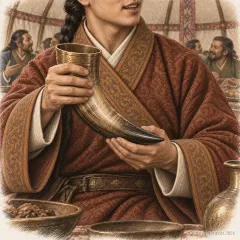 Daluobian breve Göktürk title for the fat and stout, named after a short, thick wine vessel. The Tongdian calls it an especially noble office, held only by sons and younger brothers.
-
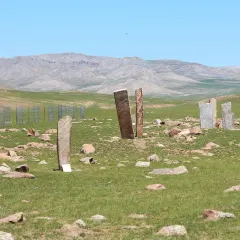 Deer stones breve Standing stones of Mongolia and South Siberia, carved with stylised deer, from the late Bronze Age. They stand near burials and are the oldest monumental sculpture of the eastern steppe.
- Dihqan breve The landed noble of Sogdiana and eastern Iran, great or small. In the ninth century the class lost its standing; by the tenth the word meant peasant.
- La diplomacia de los imperios de la estepa Cómo trataron los gobernantes de la estepa con China, Persia y Bizancio: alianzas matrimoniales, rehenes, títulos, juramentos y cartas en el lenguaje del parentesco, desde los xiongnu hasta los uigures y los kirguises.
- Tambores y estandartes para los khanes Drums, wind instruments and banners that the courts of northern China granted to steppe rulers. The Sui gave them to Ishbara, Bagha and Yami; the Tang invested khans with a drum and a standard.
- Enviados y embajadas Sogdianos, príncipes y ministros que llevaron cartas, credenciales y regalos entre las cortes de la estepa y sus vecinos: cómo se los recibía, ordenaba y traducía, los riesgos del camino y su número.
- La agricultura de los búlgaros del Volga Grain growing and food storage among the Volga Bulgars in 922. Ibn Fadlan found millet, wheat and barley, harvests that belonged to the sower, a marten skin from each house, and food kept in pits.
- Agricultura e impuestos en Gaochang The oasis economy of Gaochang, 500 to 640: two harvests a year, an office for water and fields in each town, taxes in silver coin or hemp cloth, and a toll on merchants paid to the Tiele.
- Fieltro breve Lana apelmazada, la tela de la estepa. Con ella se hacen la tienda, el suelo, el abrigo y la manta de la silla, y se hace sin telar.
- Fieltro, tela, cuero y madera en el diccionario de al-Kashgari Words for felt, cloth, leather and wood in Kashgari's dictionary of the 1070s: raincoat felt, an embroidered Kashgar felt, a weaver's reed, tanning, leather bags, a carpenter's axe and a resin glue.
- Fulin Khan breve Göktürk khan's title named after the wolf and its greed to kill. The Tongdian says that such a khan was set up at times.
- Funi Rehan breve Göktürk title tied to the word for wine. The Tongdian makes the rehan the officer who watched over wrongdoing and kept the order of precedence.
- Pieles y almizcle entre los pueblos túrquicos Cebellina, ardilla, armiño, zorro y almizcle de los bosques al norte y al este de la estepa. El Ḥudūd al-ʿĀlam de 982 los enumera pueblo por pueblo, y la inscripción de Bilge Khan nombra cebellinas entre los regalos.
-
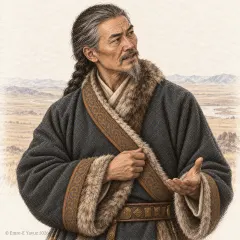 Geli Daguan breve Göktürk title formed on geli, the word for old, and the rank daguan. The Tongdian gives it among the early titles that took their names from age.
- Ghulam breve The slave soldier of the caliphs and of the eastern Muslim dynasties, bought as a boy and trained as a page. Most were Turks from beyond the Syr Darya, sold through the markets of Samarkand and Chach.
- Vestimenta y cabello de los göktürk Clothing and hair of the Göktürks as their neighbours saw them: robes closed on the left, furs and coarse wool, hair worn long or plaited. In 585 a khan called the plaits too old a custom to change.
- La herrería de los göktürk The ironwork of the Ashina, smiths of the Rouran on the Altai before 546. Anagui called Bumin his smith slave, and in 569 Göktürks offered iron for sale to a Roman embassy in Sogdiana.
- Armas de los göktürk The arms of the Göktürks: bows and whistling arrows, armour, lances, sabres and swords, as the Chinese histories list them. A Zhou general who fought beside them in 564 called their armour poor.
- El oro y la plata en las inscripciones del Orjón Gold and silver in the Orkhon inscriptions. Chinese envoys bring them to the funerals of Kül Tegin and Bilge Khan, and Bilge Khan names them among the gifts that draw in distant peoples.
- Vasijas de oro y plata como regalos de los Tang a los uigures Gold and silver vessels that the Tang court gave to the Uyghurs in 757, 758 and 813. In 758 the Uyghur khan shared the whole gift among his officers and chiefs.
- El oro de la corte xiongnu Gold in the Xiongnu sources: burials with gold and silver, and a gold-adorned belt with a gold belt ornament that the Han emperor sent the chanyu in 174 BC. The gift of 51 BC again names gold.
- Gran Khan Title by which the Chinese histories set one Göktürk khan above the others, written 大可汗. Tulan claimed it in 597, and the Sui promised it to Shegui in 610 to split the west.
- Los obsequios de los Han a los chanyu Gifts of the Han court to a chanyu at audience, 51 BC to AD 143: regalia, horses, gold, cash, grain and silk. By 1 BC the silk reached 30,000 bolts, and in AD 50 a yearly gift began.
- Colonias militares de los Han en las Regiones Occidentales Farms worked by Han soldiers and convicts at Luntai, Quli, Cheshi and Yixun. The Han and the Xiongnu fought over Cheshi's fields before the Han took the Western Regions in 60 BC.
-
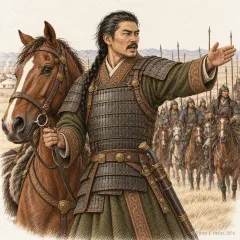 Helan Suni Que breve Göktürk title formed on helan, the word for horse, and suni, the officer who commanded troops. The Tongdian gives it among the early titles that took their names from animals.
-
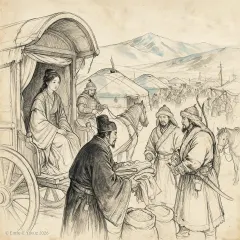 Heqin El acuerdo de los Han con los xiongnu tras Baideng: una novia imperial, entregas anuales fijas de seda y víveres, mercados fronterizos abiertos y un juramento que hacía hermanos a los dos soberanos.
- El honor de morir en combate breve The value the Chinese histories ascribe to the Göktürks: death in battle was an honour, death from illness a shame, and men in their prime counted for more than the old.
- Arreos del caballo Brida, bocado, silla y estribo. Cada añadido cambió lo que un jinete podía hacer, y la brida se data hacia el siglo VII a. C. en el Altái.
- El caballo en el derecho göktürk The penalties of the Göktürks that name the horse: death for stealing a horse's tether, a repayment of ten times or more for stolen horses, and a horse as the price of a broken limb. The Chinese histories give the rules in one sentence, and the Tuyuhun had a harsher one.
- Los calderos de los hunos Cast copper cauldrons with solid conical stands and scalloped lugs, found from Silesia to the High Altai. They were cooking vessels cast by Hunnic smiths and have close kin in the Xiongnu cauldrons.
- Las diademas de los hunos breve Headbands of gold sheet over bronze plaques, set with almandines or glass in cells, from graves between Hungary and Kazakhstan. They are the finest goldwork that archaeology ties to the Huns.
- Idi breve Old Turkic word for a lord or master. The Kül Tegin inscription uses it in the formula that land and water must not be left without one, and Rashīd ad-Dīn names it a rank of Kirghiz nobles.
- Illig breve Element of the title Illig Khan, written 伊利, which Bumin took in 552 after the fall of the Rouran. Ishbara's title begins with the same word.
- Ilteber The rank of a subject ruler: a man left on his own throne under a khan not of his people, with a tax officer beside him. Attested from the Caucasus to Turfan.
- Inal breve Title of the Kirghiz princes before the Mongol conquest, according to Rashīd ad-Dīn. It appears also among the Kimek and the Oghuz, and the Chinese 阿熱 has been identified with it.
- Irkin A chief's rank at the lower end of the twenty-eight grades. Five irkins held the Nushibi wing of the western khaganate, and the chiefs the Tang bought carry this title most often.
- El hierro de los bayegu breve Fine iron of the Bayegu, a Tiele people east of the Pugu, in the Tang histories. The Xin Tang Shu and the Tongdian both name iron among the products of their country, beside good horses.
-
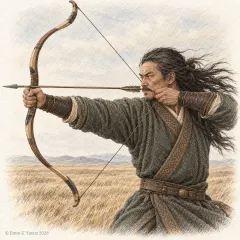 Ishbara (título) Göktürk title for the brave and strong. Ishbara Khan bore it among his titles, a man on the Kül Tegin stone carried it before his name, and two western khans of the Tang era kept it.
- Katun The khan's consort, named beside him in the formula of rule. The inscriptions have Heaven raise khan and katun together; a regency in her hands ended the Second Khaganate.
-
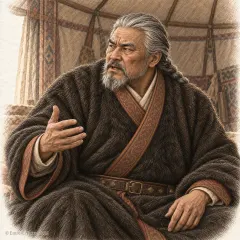 Keluo Chuo breve Göktürk title formed on the word for black and the rank chur. The Tongdian calls it a very high office, held by men of great age.
-
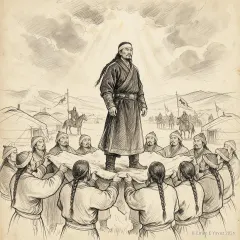 Khan (kagan) El título del soberano supremo de la estepa, que Bumin tomó de los rouran en 552. Sus formas, su historia y los rangos que lo rodean se exponen aquí, y solo aquí.
- Aduanas y tributos de los jázaros Revenue of the Khazar khagan: a tenth on goods that crossed his land, and tribute in kind from subject peoples, paid in swords, pelts and money. The Bulgar king passed marten skins up the same chain.
- Doble realeza jázara El gobierno de los jázaros estaba dividido entre un kagan sacro, que reinaba, y un rey, el bek, que mandaba el ejército y gobernaba. Su antigüedad y su origen son discutidos.
- La cota de malla jázara y los armeros del Cáucaso breve Mail and iron arms in the Khazar lands in al-Masʿūdī. The Khazar king's Muslim guard rode as archers in cuirass, helmet and mail, and a Caucasian people made mail, stirrups, bits and swords.
- El hierro y el oro de los kirguises Metals of the Kirghiz on the upper Yenisei in the Tang histories: gold, iron and tin. The Kirghiz made weapons of their iron, called qiasha, and regularly delivered them to the Göktürks.
- Los caballos de Kül Tegin The mounts that the Kül Tegin inscription names in the prince's battles: grey, white, brown and chestnut horses, three of them killed under him in one fight. The text gives the colour of each horse and sometimes its name or owner.
-
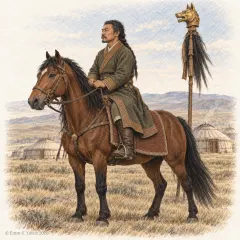 Külüg Chur breve The first of the great Göktürk offices in the Tongdian and the Jiu Tang Shu, written 屈律啜. It was hereditary and had no fixed number of holders.
- Kunçuy breve Palabra para una mujer de rango. Las inscripciones de Orkhon la usan para la hermana del khan y las princesas de su casa, los epitafios del Yeniséi para la esposa de un hombre y los textos en uigur antiguo para princesas.
- Kurgan breve El túmulo funerario de la estepa: una cámara bajo un montón de tierra o piedra, con ajuar, y a menudo con caballos. Es la práctica de la estepa más continua, desde la Edad del Bronce hasta los göktürk.
-
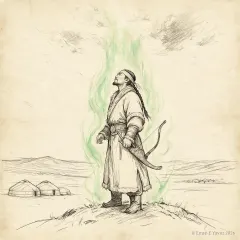 Kut El Kut es la fortuna celeste que concede Tengri, y hacía a un hombre apto para gobernar. Parte del título del soberano xiongnu, esta aura mística permitió a guerreros carismáticos de la estepa dominar y conquistar.
- Objetos de laca Chinese lacquered cups, weapons, drums and fans that reached the steppe as gifts and trade, from the princely graves of the Xiongnu to the gift lists of the Wei court for the Rouran and the Gaoche.
- Lesser Khan breve The second throne of the Göktürk khaganate, held under the khan. Kapgan set his own son on it, and Kül Tegin killed him on it in 716.
- Levirato Göktürk marriage of a dead man's widows by his sons, younger brothers and nephews. The Zhou Shu and the Sui Shu record the rule, and Chinese princesses passed by it from khan to khan.
- El ganado en el Hudud al-Alam The herds of the Turkic peoples in the Hudud al-Alam of 982: sheep in every notice, horses in all but the Kimek, cows in four of eight, no camels. Marvazi adds why the Kimek kept none.
- Pérdidas de ganado en los anales Reports of herds lost to snow, drought, locusts and disease, from the Xiongnu of 105 BC to the Uyghurs of 839 and 840. The Chinese annals give the cause and, in several cases, the share of the herds that died.
- Incursiones por ganado Raids for herds in the Chinese histories and the Bilge Khan inscription, from the seven commanderies of the Sui to the Tang horse pastures of Longyou. A raid for sheep and horses brought Ilterish his first following, and Bilge Khan fed a hungry people with a captured herd.
- Lógades breve The leading men around Attila, so called by Priscus: Onegesius, Scottas, Edeco, Berichus and Orestes. They served as envoys and guards and governed parts of the realm.
-
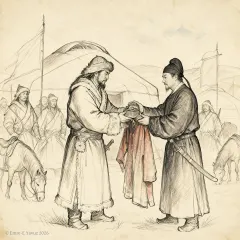 Loose-rein prefectures El recurso Tang para gobernar a los pueblos de la estepa sometidos sin absorberlos: la tribu se mantiene entera, su propio jefe es nombrado prefecto, la unidad se inscribe en el registro.
- Metales y metalurgia en el diccionario de al-Kashgari Words for metals and metalwork in Kashgari's dictionary of the 1070s: gold, silver, copper, iron, a smelting place, bellows, a copper mountain and a fortress above gold mines.
- Los rebaños de los oguz en el relato de Ibn Fadlán Sheep, horses and camels of the Oghuz in the winter of 921 and 922. Ibn Fadlan saw men with 10,000 horses and 100,000 sheep, flocks that grazed through the snow, and a trade in which merchants from Khwarezm bought sheep and left camels and horses with Oghuz hosts.
-
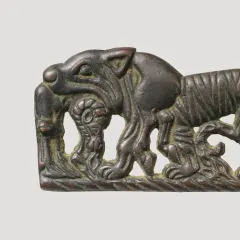 Ordos bronzes breve The animal-style bronze plaques, buckles and fittings of the northern frontier, from about the sixth century BC. They are the material record of the Xiongnu world and of what came before it.
- Ordu El campamento del gobernante: el centro móvil de un reino de la estepa, donde estaban la corte, la guardia y el tesoro. La palabra llegó a Europa como horda.
- Post and Communication Cómo viajaba la palabra entre los khanes göktürk, sus hombres y sus vecinos: enviados, cartas, escritura sogdiana y rúnica, sellos, maderas con muescas, flechas, caballos de relevo y lo que las fuentes omiten.
- Materias primas y comercio entre los pueblos túrquicos Hierro, sal, metales preciosos, pieles, jade, caballos y seda en las tierras túrquicas, y los mercados y mercaderes por los que circularon. Los ashina trabajaron el hierro en el Altái y los uigures vendieron caballos por seda.
- Las tejas del Kaganato uigur Unglazed clay tiles in the Chinese pattern, made locally for the walled seats of the Uyghur khans and for the Göktürk memorials before them. They show Chinese methods at work in the steppe.
- Sabao Chinese title for the head of a foreign community, above all a Sogdian one. It renders the Sogdian sartapao, caravan master. The post is attested from the sixth century to the early eighth.
- La sal entre los pueblos túrquicos La sal en las tierras túrquicas: el yacimiento de sal gema de Dus-Dag en Tuvá, los lagos salados de la estepa del Irtysh y el lago de siete tribus karluk en el Ḥudūd al-ʿĀlam de 982. Los mercaderes llevaron sal a los kimak.
- Saŋun breve Título tomado del chino 將軍 jiangjun, «general». La forma de Orkhon seŋün nombra a generales chinos y a jefes de delegaciones. Los epitafios del Yeniséi llevan saŋun once veces.
- Pastos estacionales The movement of the steppe peoples from winter to summer grazing, as the Chinese and Muslim sources record it. The Chinese say the peoples followed water and grass. A few sources name a winter and a summer place, and Tonyukuk gives the reason the Göktürks refused to live behind walls.
- Shad The command of a wing or a subject people, reserved for princes of the Ashina. Bilge Khan's uncle made him shad over the Tarduš; the office was where a khan's heir was tried out.
- Ovejas The sheep of the steppe peoples in the sources: a main animal of the Xiongnu and of every people in the Hudud al-Alam, a payment in bride-prices and tribute, and the meat that the Tang and the Xi supplied to Uyghur armies. Ibn Fadlan saw Oghuz owners of 100,000.
-
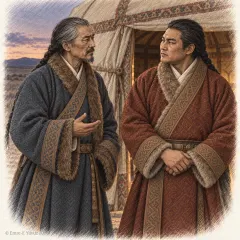 Sifa breve Office of the western Göktürks, written 俟發. The Sui Shu names it with the yanhongda as the council that deliberated on the affairs of state.
- La seda en la estepa Chinese silk in the steppe from the 540s to 840: bought at the frontier, paid as peace money, traded for horses, used as currency and sold on to the west by the Sogdians.
- Six Garrisons breve The Northern Wei's line of frontier posts along the Hetao plain, manned against the Rouran. Their revolt in 524 broke the dynasty and made the two Weis.
- La copa de cráneo Copa para beber hecha con el cráneo de un soberano enemigo muerto. Las historias chinas la registran entre los xiongnu y los rouran, y una crónica bizantina entre los búlgaros de Krum.
-
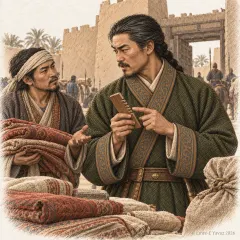 Suoge Tudun breve Göktürk title formed on suoge, the word for hair, and the rank tudun. The Tongdian likens the office to that of an official of a Chinese prefecture.
- Taisan breve Title of the ruler of Taugast, China, in Theophylact Simocatta, who explains it as 'son of god'. The report reached Constantinople with a Göktürk embassy.
- Las tablillas de muescas y la flecha de oro The Göktürk record of a levy: the number of troops, horses or livestock cut as notches in wood, sealed with wax together with an arrow whose head was of gold or metal, as a token of trust.
- Tamga breve La marca de una casa o de una tribu, grabada en el ganado, en la roca y en las monedas. Es un signo de propiedad y de linaje, y las casas emparentadas llevan marcas emparentadas.
- Tarkhan A rank of command carrying exemption from tax. A Roman envoy recorded it from inside the court, and Tonyukuk held it in the compound Apa Tarkan.
-
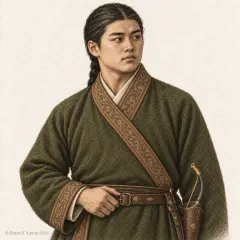 Tegin Title of the sons and younger brothers of the Göktürk khan, third among the great offices of the Zhou Shu. Kül Tegin bore it in his name.
- Terken breve Título de alto rango en tres epitafios del Yeniséi, dos de ellos en el nombre Bögü Terken. Cortes posteriores lo usaron para las esposas de los gobernantes, y los estudiosos discrepan sobre si pertenecía solo a las mujeres.
- La economía de los imperios de la estepa De qué vivían los pueblos de la estepa, de los xiongnu a los uigures: rebaños y pastos, agricultura, hierro y sal, artesanos, mercados, tributo, monedas y los mercaderes sogdianos.
- El juramento göktürk Oath-taking among the Göktürks. Their envoys swore before Justin II with raised hands and a curse upon themselves, and Ilig Khan swore a covenant with the Tang emperor at the Bian bridge in 626.
- El juramento sobre el hierro Oath of the Qirqiz, Yabaqu and Qifchaq in Kashgari's dictionary. The swearer faced a drawn sword and prayed that the iron go in blue and come out red if he broke the treaty.
- El ciclo animal de doce años La cuenta de los años de los göktürk: una serie de doce, cada uno con el nombre de un animal. Las inscripciones la atestiguan, y el diccionario del siglo XI la enumera completa.
-
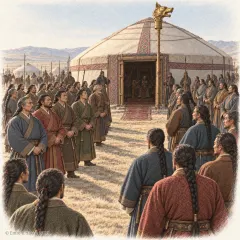 Los veintiocho rangos The hereditary order of Göktürk offices, from the yabgu down, counted at twenty-eight grades in the Zhou Shu and the Sui Shu. The Tongdian counts ten early grades and explains their names.
- Los khanes del oeste y del sur breve Khans named after a side of the realm, written 西面可汗 and 南面可汗. Tardush had been the Western Khan; the Sui planned a Southern Khan to divide Shibi's power.
- Tölis y Tardush Two peoples of the Göktürk inscriptions, which İlteriš organised and gave a yabgu and a shad. They are taken to be the eastern and the western half of the realm.
- Tongpu duwei (comandante de los esclavos) Xiongnu office over the oasis states of the Tarim Basin, seated between Yanqi, Weixu and Yuli. It taxed the states and drew supplies from them until the Rizhu King went over to the Han in 60 BC.
-
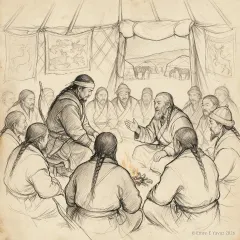 Töre El derecho consuetudinario de los göktürk: sucesión, castigo, matrimonio, entierro y los límites de lo que podía tomarse de la tierra. Un soberano estaba sujeto a él como cualquier otro.
- Ciudades y aldeas de los turcos en el Hudud al-ʿĀlam The settlements of the Turkic countries in the Persian geography of 982. The Karluk had towns, villages and fields, the Yaghma little agriculture, and the Kirghiz no town but the seat of their khan.
-
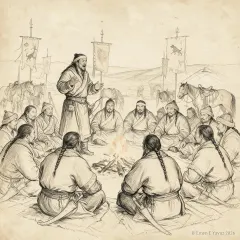 Toy La asamblea de la nobleza Ashina. Elevó a Bumin a yabgu en 542, se reunía cada año en la cueva ancestral y en 581 eligió a un khan contra el deseo de un khan muerto.
- Las rutas comerciales de la estepa Los caminos de la estepa y de sus oasis según las fuentes: la ruta norte hacia Fulin, el camino a Suyab, las rutas del Tarim, el camino de Zemarco, los caminos uigures a Chang'an y el camino a los búlgaros del Volga.
- Misiones de tributo y regalos de respuesta Exchange between a steppe ruler and a Chinese court. The ruler's envoys brought tribute, the court answered with bestowals and yearly payments. The words claimed rank for the court.
- Tudun The overseer a khan left behind in a subject country. He supervised its own ruler and collected the tribute. The Zhou Shu ranks the office fifth among the great offices of the khaganate.
-
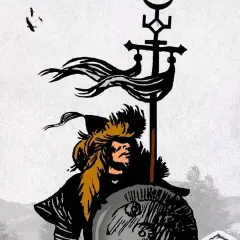 Tuğ El estandarte del soberano de la estepa: una asta con un remate de metal y colas de caballo, llevada ante el khan y contada por colas. El signo visible de la autoridad.
- La moneda de los türgesh y de los karluk Copper coins with Sogdian legends and Turkic tamgas, struck in the Chu and Talas valleys in the eighth and early ninth centuries. 533 coins found at Taraz are the largest published group.
- Tutuk Rango de un gobernador o de un jefe tribal, tomado del chino 都督, «gobernador militar». Las inscripciones de Orkhon lo dan a un comandante chino y al gobernador de los az, y los epitafios del Yeniséi lo llevan catorce veces.
- La agricultura de los uigures Grain growing in the Uyghur khaganate, 744 to 840. The Uyghurs began as herders and raised towns within a generation. An Arab envoy found villages and farmland on the road to the capital.
- El comercio uigur de caballos y seda Exchange of Uyghur horses for Tang silk from 757 to the fall of the khaganate in 840. The Uyghurs asked forty bolts of silk a horse. The Tang paid single sums of 200,000 bolts and more.
- Los carros de los pueblos de la estepa Wooden wagons of the steppe peoples: the camp wagons of the Huns, the high-wheeled carts of the Gaoche and the felt carts of the Göktürks. The sources name them and never say how they were built.
- La guerra en los imperios de la estepa Cómo combatían los imperios de la estepa: caballo y arco, luna y estación, exploradores, retirada fingida y sorpresa, saqueo y asedios, estandarte del lobo, consejo del khan y secuelas de la batalla.
- Las mujeres entre los pueblos túrquicos Mujeres en las cortes de la estepa, de la yanzhi de los xiongnu al Volga. Las consortes influyeron en las sucesiones, las princesas llevaron tratados y las lápidas del Orjón nombran a la madre del khan.
- La madera y la carpintería Timber and wooden work among the steppe peoples: planks for coffins, felled timbers, gilded pillars at a Göktürk court, wooden cups and figures, and the khadang and khalanj woods of the Hudud.
- Worthy Kings of the Left and Right Los Reyes Sabios de la Izquierda y de la Derecha, dos de las cuatro grandes dignidades reales de la corte xiongnu. El Rey Sabio de la Izquierda ocupaba el primer rango, gobernaba el este y solía ser el heredero. El Rey Sabio de la Derecha tenía el oeste.
- La agricultura de los xiongnu Grain growing and storage among the Xiongnu. The Shiji denies them tilling, the Han Shu records crops, granaries and farmers, and excavated settlements hold wheat, barley and millet.
- Los rebaños de los xiongnu The animals of the Xiongnu as the Shiji, the Han Shu and the Hou Han Shu give them: horses, cattle and sheep in the herds, camels, donkeys and mules besides. The annals count the herds in booty, gifts and trade, and one Han general was accused of inflating his count.
- La metalurgia del hierro de los xiongnu Iron of the Xiongnu: knives and iron-shafted lances in the Chinese histories, a smelting furnace at Ivolga and slag at seasonal camps in the Khanui valley. Iron-making was small and widespread.
- La cerámica de los xiongnu Grey, coil-built and partly wheel-finished household pottery of the Xiongnu, with narrow-necked jars and flat-rimmed bowls. It was made locally in the valleys where it was used.
-
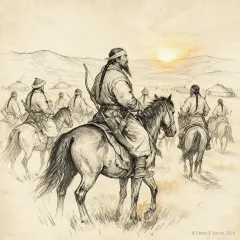 Yabgu El segundo rango del orden göktürk, que ostentaba el soberano del ala occidental. Istemi lo llevó durante cincuenta años sin reclamar nunca el título de khan.
-
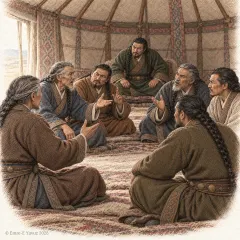 Yanhongda breve Office of the western Göktürks, written 閻洪達. The Sui Shu names it with the sifa as the council that deliberated on the affairs of state.
- Yi Khan breve House khan, the title by which great Göktürk families addressed one another. The Tongdian derives it from yi, the Göktürk word for house.
-
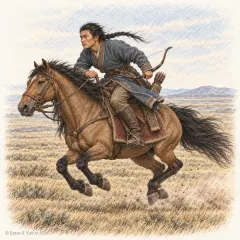 Yinghefu breve Göktürk word for the brave and strong, given by the Tongdian beside shiboluo. It stands among the early titles that took their names from the body.
Créditos de las imágenes
- Baga: A Göktürk nobleman seated on a felt rug, in a modern drawing. © Emre-E Yavuz 2026
- Daluobian: A holder of the title at a feast with a drinking horn, in a modern illustration. © Emre-E Yavuz 2026
- Deer stones: Deer stones at Uushgiin Uvur in Mongolia. Photograph: Bernard Gagnon, 2023, CC0.
- Geli Daguan: An elder officer of the khaganate in a modern illustration: the age that the title names. © Emre-E Yavuz 2026
- Helan Suni Que: A commander with his horse before his riders, in a modern illustration: the horse and the command that the title names. © Emre-E Yavuz 2026
- Heqin: Heqin in a modern illustration. © Emre-E Yavuz 2026
- Ishbara (título): A Göktürk archer in a modern illustration: the strength and courage that the title names. © Emre-E Yavuz 2026
- Keluo Chuo: An aged dignitary in a modern illustration: the high office that men of great age held. © Emre-E Yavuz 2026
- Khan (kagan): Khan (Khagan) in a modern illustration. © Emre-E Yavuz 2026
- Külüg Chur: A Göktürk chur on horseback before a camp, with a golden wolf-head standard behind him, in a modern drawing. © Emre-E Yavuz 2026
- Kut: Kut in a modern illustration. © Emre-E Yavuz 2026
- Loose-rein prefectures: Loose-rein prefectures in a modern illustration. © Emre-E Yavuz 2026
- Ordos bronzes: Bronze plaque of a tiger devouring a ram, attributed to the Xiongnu, about the second century BCE. The Metropolitan Museum of Art, New York, 49.132, Rogers Fund, 1949, Open Access, public domain (CC0).
- Sifa: Two Göktürk dignitaries in conversation at the entrance of a felt tent at dusk, in a modern drawing. © Emre-E Yavuz 2026
- Suoge Tudun: An officer with a comb at a walled market town, in a modern illustration: the hair of the title's name and the office likened to a prefect's. © Emre-E Yavuz 2026
- Tegin: A young Göktürk prince, a tegin, in a modern drawing. © Emre-E Yavuz 2026
- Los veintiocho rangos: The officers of the khaganate before the khan's tent in a modern illustration, beneath the standard with the golden wolf's head. © Emre-E Yavuz 2026
- Töre: Töre in a modern illustration. © Emre-E Yavuz 2026
- Toy: Toy in a modern illustration. © Emre-E Yavuz 2026
- Tuğ: A steppe warrior beneath a standard with a metal finial and long streamers, in a modern drawing. Drawing: signed jonele_art.
- Yabgu: Yabgu in a modern illustration. © Emre-E Yavuz 2026
- Yanhongda: Elders of the western Göktürks in council inside a felt tent, the khan listening at the back, in a modern drawing. © Emre-E Yavuz 2026
- Yinghefu: A Göktürk rider at the gallop in a modern illustration: the bravery and strength that the word names. © Emre-E Yavuz 2026

