
92 Artikel
Völker
Ethnonyme und benannte Völker.
Diese Seite und das Menü sind deutsch. Von 92 Artikeln gibt es 87 auf Deutsch, die übrigen sind englisch und als englisch gekennzeichnet.
Kernartikel
-
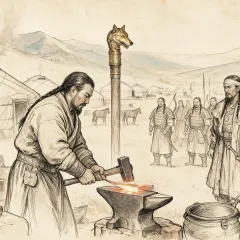 Göktürken Die Selbstbezeichnung des Volkes, über das die Ashina herrschten, belegt in den Runeninschriften des achten Jahrhunderts.
-
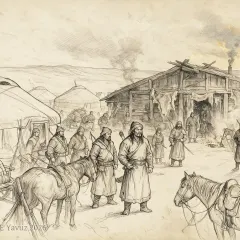 Hunnen Nomadisches Volk, das in den 370er Jahren nach Europa kam und unter Attila vom Kaukasus bis zum Rhein herrschte. Sein Reich zerfiel nach 453. Ob die Hunnen mit den Xiongnu identisch sind, ist umstritten.
-
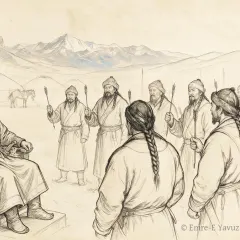 On Oq Die Zehn Pfeile: zehn Stämme, fünf Üç Tuğlu östlich von Suyab und fünf Nushibi westlich davon, jeder Anführer mit einem Pfeil. Die westlichen Göktürken lösten sich nach 630 in ihnen auf.
-
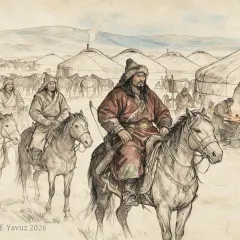 Rouran Das Volk des Rouran-Khaganats, bis 552 die Oberherren der Ashina. Nach dem Wei Shu Donghu und Xianbei, nach der üblichen Einordnung para-mongolisch.
-
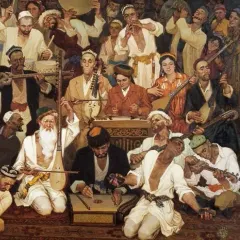 Uyghurs Ein Tiele-Volk der Neun Oguz, nacheinander den Rouran und den Göktürken untertan. Sie stürzten 744 den letzten Khan der Göktürken und hielten sechsundneunzig Jahre den Orkhon.
-
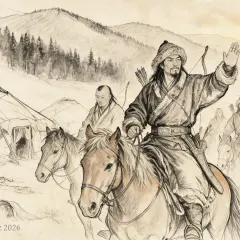 Xianbei Das Volk, das im ersten Jahrhundert den Xiongnu die östliche Steppe abnahm und ihr ihre nächste Ordnung gab. Das Herrscherhaus der Rouran und die Tuoba der Nördlichen Wei gingen aus ihnen hervor.
-
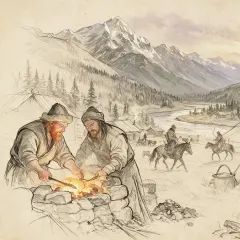 Yenisei Kirghiz Geheimnisvolles türkischsprachiges Volk am oberen Jenissei, bekannt für Eisen und Gold. Die meiste Zeit Teil des Göktürk-Reiches, beendeten sie das Uigurische Khaganat und den Herrschaftsauftrag, der an Ötüken hing.
- Abusi kurz Tiele-Stamm, im Tang Huiyao der achte der neun Stämme der Toquz Oghuz, der erst nach der Ära Tianbao mit den anderen gleichrangig geführt wurde. Auch der Name eines Häuptlings, der zu den Tang überging.
-
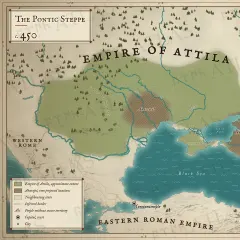 Akatziren Nomadisches Volk der Steppe nördlich des Schwarzen Meeres, das von vielen Häuptlingen beherrscht wurde. Attila unterwarf es in den 440er Jahren und setzte seinen ältesten Sohn über es; die Saraguren besiegten es um 463.
- Alans Iranischsprachige Nomaden der Steppe jenseits des Don und des Nordkaukasus. Die Hunnen unterwarfen sie in den 370er Jahren; 576 zählte der Göktürk-Prinz Türk-shad sie zu den Sklaven des Khaganats.
- Alchon-Hunnen Hunnische Herrscherhäuser im Kabultal, in Gandhara und Nordindien, bekannt aus Münzen mit dem baktrischen Wort alxono. Khingila, Toramana und Mihirakula herrschten in ihrem Namen. Indische Texte nennen sie Huna.
- Amilzuren kurz Volk an der unteren Donau im fünften Jahrhundert, als erstes unter denen genannt, die der Hunnenkönig Rua bekämpfen wollte, weil sie zu den Römern geflohen waren. Jordanes teilt den Namen in zwei.
- Angisciren kurz Stamm unter den letzten Anhängern von Attilas Sohn Dengizich in den 460er Jahren, nur bei Jordanes genannt. Der Name kann türkisch sein oder die Sciri des Grases bezeichnen.
-
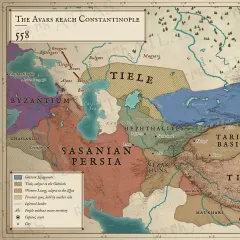 Avars Steppenvolk, das bis 796 ein Khaganat in Pannonien hielt. Ihre Khagane und der herrschende Adel stammten höchstwahrscheinlich von den Rouran, und mit ihnen kam der Titel Khagan nach Europa.
- Az Volk des Berglandes zwischen dem westlichen Sajan und dem Altai, in den Göktürk-Inschriften neben den Kırgız genannt. Ein Mann der Az führte Tonyukuk, und Kül Tegin nahm ihren Elteber gefangen.
- Bardoren kurz Hunnenstamm unter den letzten Anhängern von Attilas Sohn Dengizich in den 460er Jahren, nur bei Jordanes genannt. Sein Name ist als türkisch gelesen worden.
- Basmïl Türkisches Volk im Land Beiting nördlich des Tianshan. Von den Tang gegen das Zweite Khaganat eingesetzt, erhoben sie sich 742 gegen den letzten Ashina-Khan und fielen 744.
- Bayirku Ein Tiele-Volk der Neun Familiennamen, nordöstlich des Orchon. Von Kül Tegin am See Türgi Yargun geschlagen; einer ihrer Nachzügler tötete 716 Kapgan Khan.
- Bittuguren kurz Hunnenstamm unter den letzten Anhängern von Attilas Sohn Dengizich in den 460er Jahren. Ein Teil schloss sich später den Ostgoten auf ihrem Zug nach Italien im Jahr 488 an.
- Boisker kurz Volk an der unteren Donau im fünften Jahrhundert, unter denen, die der Hunnenkönig Rua bekämpfen wollte, weil sie zu den Römern geflohen waren. Der Name ist als keltisch gedeutet worden.
- Boma Volk des äußersten Nordens nahe dem nördlichen Meer, nach seinen gescheckten Pferden benannt, die es der Milch wegen hielt. Es lebte unter Birkenrinde und kämpfte oft gegen die Kirgisen.
- Bugu kurz Einer der neun Tiele-Stämme der Toquz Oghuz. Pugu Huai'en, der den Tang gegen An Lushan diente und dann selbst revoltierte, stammte aus seiner Herrscherfamilie.
- Bulgars kurz Ein Turkvolk der pontischen Steppe. Als die westliche Steppe Mitte des siebten Jahrhunderts auseinanderbrach, hinterließ sie zwei Staaten: die Bulgarenunion und die Chasaren.
- Chik Volk am oberen Jenissei zwischen dem Fluss und dem Sajan, genannt neben den Kırgız und den Az. Bilge Khan schlug ihr Heer bei Orpin, nachdem er den Fluss Kem überquert hatte.
- Chumukun kurz Ein Stamm der westlichen Göktürken, der erste der fünf, die die Tang-Geschichtswerke unter den Duolu nennen, dem östlichen Flügel der Zehn Pfeile. Sein Häuptling trug den Rang eines Chur.
- Cimmerians kurz Berittene Nomaden, die die westliche Steppe von etwa 1000 bis 800 v. Chr. vor den Skythen beherrschten. Ihre Raubzüge reichten bis Assyrien, und was sie waren, ist weiter umstritten: ein Volk oder ein Wort für eine Reiterschar.
- Dingling Volk des Nordens. Um 201 v. Chr. von Modu Chanyu unterworfen, überfiel es im ersten Jahrhundert v. Chr. die Xiongnu. Eine Linie der Ableitung führt die Tiele auf sie zurück.
-
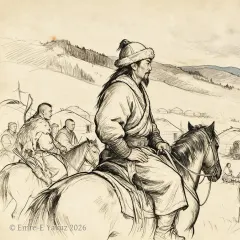 Donghu Die östlichen Nachbarn der Xiongnu, um 206 v. Chr. von Modu Chanyu vernichtet. Auf ihre Reste werden die Xianbei und die Wuhuan zurückgeführt.
- Dubo Tiele-Volk nördlich der Uiguren und südlich eines kleinen Meeres, Jäger, die Lilienwurzeln aßen. Das Xin Tangshu nennt sie zusammen mit den Mielie und Geezhi die Holzpferd-Tujue, die die Kirgisen unterwerfen konnten.
- Ediz kurz Ein Stamm der Toquz Oghuz, der ab 795 die uigurischen Khagane stellte. Ob er von Anfang an zu den neun gehörte, ist umstritten.
-
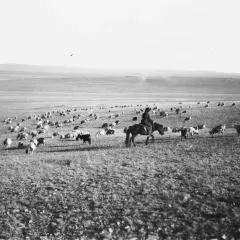 Eurasische Nomaden Die Hirtenvölker des Steppengürtels von Ungarn bis zur Mandschurei und die Lebensweise, die sie teilten. Sie lebten von Schafen und Pferden und waren auf Handel, Tribut und Raubzüge gegen sesshafte Nachbarn angewiesen.
- Furi Wald- und Sumpfvolk östlich der Kirgisen bei den muslimischen Geographen, Fūrī oder Qūrī geschrieben, im Ḥudūd Menschenfresser genannt. Gewöhnlich für die Kurykan gehalten.
- Gepiden kurz Germanisches Volk, Untertanen der Hunnen unter Attila. Ihr König Ardarich führte die unterworfenen Völker gegen Attilas Söhne, siegte 454 am Nedao und übernahm die Sitze der Hunnen in Dakien.
- Goten kurz Germanisches Volk nördlich des Schwarzen Meeres und an der unteren Donau. Die Hunnen brachen die Ostgoten in den 370er Jahren und beherrschten sie bis nach Attila; die Westgoten kämpften 451 in Gallien gegen ihn.
- Gulun Wugu kurz Tiele-Stamm, im Tang Huiyao der neunte der neun Stämme der Toquz Oghuz, den anderen erst nach der Tianbao-Ära gleichgestellt.
- Heichezi (Schwarzwagen) Volk der Schwarzen Wagen, bei dem der uigurische Khan Ögä nach 843 Zuflucht nahm. Das Xin Tangshu lässt sie ihn für eine Belohnung der Tang töten, und ein Brief der Tang nennt sie ein Volk der Shiwei.
-
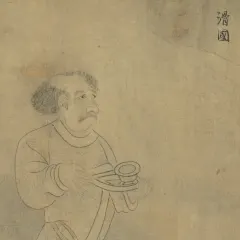 Hephthalites Die letzte der hunnischen Mächte Zentralasiens, eher eine Konföderation als ein Volk, um 560 zwischen Istemi und Chosrau I. zerschlagen.
-
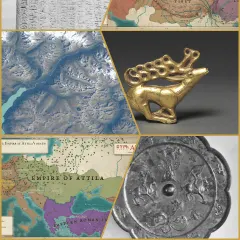 History of the Turkic peoples The history of the Turkic-speaking steppe peoples, with their land, economy and belief, from the Bronze Age through the Xiongnu and the Göktürk and Uyghur khaganates to the Kirghiz and the Khazars.
- Hu kurz Das chinesische Wort für die Völker des Nordens und Nordwestens. In den Han-Texten nennt es die Xiongnu; in der Göktürk- und Tang-Zeit bezeichnet es meist die Sogder und andere Iranischsprachige.
- Hun (Tiele tribe) kurz Einer der neun Tiele-Stämme der Toquz Oghuz. Sein Häuptlingsamt blieb mehrere Generationen in einer Familie, und Hun Shizhi führte ihn in den Dienst der Tang.
- Itimaren kurz Volk an der unteren Donau im fünften Jahrhundert, unter denen, gegen die der Hunnenkönig Rua Krieg führen wollte, weil sie zu den Römern geflohen waren. Ihre Herkunft ist unbekannt.
- Jie kurz Eine Gruppe, die in den chinesischen Aufzeichnungen des vierten Jahrhunderts zu den Xiongnu gezählt wird. Shi Le gründete aus ihnen die Späteren Zhao, und ein überlieferter Satz ihrer Sprache steht im Mittelpunkt der Debatte um ihre Herkunft.
- Kabaren Gruppe chasarischer Herkunft, die das Khaganat nach einem Bürgerkrieg verließ und sich dem ungarischen Verband anschloss. Konstantin VII. nennt sie die ersten seiner Klans.
- Kangju Nomadische Macht am mittleren Syrdarja in den Han-Quellen, später Herr über Sogdien. Es lud Zhizhi nach Westen ein, der dort 36 v. Chr. getötet wurde. Sein Name wurde zu Kang, dem chinesischen Familiennamen der Sogder.
- Karluk Türkische Stammesgruppe des Altai. Sie erhoben sich um 627 gegen Tong Yabgu, zogen um 745 in die westlichen Göktürk-Länder und liefen 751 am Talas zu den Arabern über.
- Khalaj kurz Türkischsprachiges Volk in Afghanistan, genannt in einer baktrischen Handschrift von 711 und bei den Geographen des zehnten Jahrhunderts. Ihre Sprache hat sich in Zentraliran erhalten.
-
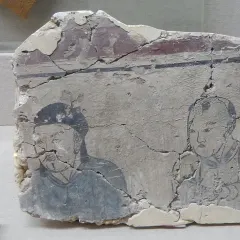 Khitan Volk der Kiefernmoore zwischen den Xianbei und der Mandschurei. Tributpflichtige der Nördlichen Wei seit den 440er Jahren, von den Göktürken unter Mukan nach Osten getrieben und Trauergäste an den Denkmälern am Orkhon.
- Kidarites Hunnische Dynastie, benannt nach ihrem Gründer Kidara. Sie nahm Baktrien, Gandhara und nach 440 Sogdien. Das Wei Shu nennt sie Xiongnu. Seit 456 von den Sasaniden und den Hephthaliten geschwächt.
- Kimek kurz Türkischer Stammesverband am Irtysch und in den Steppen Westsibiriens und Kasachstans, nördlich der Qarluq. Die Kiptschaken, die zu ihm gehörten, nahmen später seinen Platz ein.
- Kipchak kurz Turkvolk der nördlichen Steppe. Kaschgari zählt ihre Sprache zu der der Oghusen, und spätere arabische und persische Autoren verwenden ihren Namen für die gesamte westliche Steppe.
- Kotzager kurz Volk, das mit den Tarniach vor den Göktürken nach Europa floh und sich dem Khan der Awaren anschloss. Manche Forscher setzen sie mit den Kutriguren gleich.
- Kurykan Volk der Tiele nördlich der Wüste, die Gulikan der Tang, bekannt für ihre Pferde. Die Göktürk-Inschriften nennen die Drei Kurıkan als Trauergäste der Gründer und als Feinde des wiederhergestellten Staates.
-
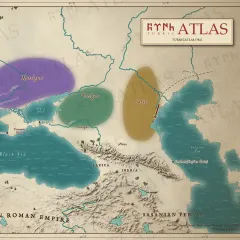 Kutrigurs Hunnisches Steppenvolk westlich des Asowschen Meeres, mit den Utiguren verwandt. Es überfiel in den 550er Jahren den römischen Balkan und zog mit den Awaren nach Westen, als die Göktürken kamen.
- Kyshtym Bergvolk des Kirgisenlandes im Ḥudūd al-ʿĀlam, geschrieben K.SAYM, Jäger von Pelzen und Moschus. Der wiederhergestellte Name Kishtim bezeichnet später die Abhängigen der Kirgisen.
- Nezak-Schahs Könige von Kapisa, Kabul und Ghazni, bekannt aus Drachmen mit Stierkopfkrone und der mittelpersischen Legende Nezak Malka. Die Deutungen machen sie zu Hunnen, zu örtlichen Herrschern oder zu einem westtürkischen Herrscherhaus.
- Nushibi kurz Die westliche Hälfte der Zehn Pfeile, fünf Stämme unter fünf Irkin. Zusammen mit den Duolu bildeten sie den Stammeskörper des westlichen Khaganats.
- Oghuz kurz Turkvolk der westlichen Steppe und des Syrdarja. Kaschgari behandelt ihre Sprache als eine der beiden großen türkischen Dialektgruppen, und das Haus der Seldschuken stammte aus ihrem Stamm der Qïnïq.
- Ogurs Steppenvolk, das Priscus um 463 unter den Stämmen nennt, die die Sabiren nach Westen trieben. Ein Jahrhundert später hielt ihr Anführer das Land westlich der Wolga für Istemi.
- Onogurs Steppenvolk nördlich des Kaukasus und des Asowschen Meeres, von Priscus um 463 genannt. In den 560er Jahren kam es unter die Hegemonie der Göktürken; spätere byzantinische Autoren verbinden seinen Namen mit den Bulgaren.
- Petschenegen kurz Turkvolk der Steppe, das im späten neunten Jahrhundert aus dem Wolga-Ural-Raum in die pontische Steppe zog. Im zehnten Jahrhundert der wichtigste Steppennachbar von Byzanz; ihre Macht endete 1091.
- Qibi kurz Stamm der Tiele, einer der neun Stämme der Toquz Oghuz im Tang Huiyao. Seine Anführer dienten den Tang im siebten Jahrhundert als Generäle.
-
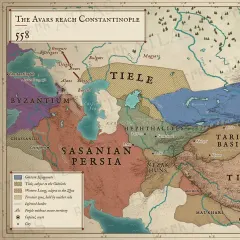 Sabirs Steppenvolk des nördlichen Kaukasus und der unteren Wolga seit dem frühen sechsten Jahrhundert. Sie kämpften für Rom und für Persien, und die Göktürken nahmen ihren Verband in sich auf.
- Saka Der persische Name für die ostiranischen Nomaden von Kasachstan bis zum Tarimbecken. Die achämenidischen Inschriften zählen vier Arten von ihnen, und eine Gruppe gab Sistan seinen Namen.
-
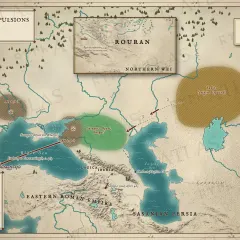 Saraguren kurz Ogurisches Volk, das um 463 in die Steppe am Schwarzen Meer kam, von den Sabiren nach Westen getrieben. Sie besiegten die Akatziren, suchten ein Bündnis mit Konstantinopel und fielen in Iberien und Armenien ein.
- Sarmatians Iranische Nomaden, die den Skythen die westliche Steppe abnahmen. Druck aus dem Osten trieb sie nach Westen, und im zweiten Jahrhundert v. Chr. lässt sich dieser Druck auf den Aufstieg der Xiongnu zurückführen.
- Scythians Iranische Reiternomaden, die seit dem achten Jahrhundert v. Chr. die westliche Steppe beherrschten. Drei der Bräuche, die Herodot von ihnen überliefert, kehren bei den Xiongnu und den Turkvölkern wieder.
- Shatuo kurz Türkischer Verband mit Ursprung bei den Westgöktürken, Gegner der Uiguren, der zur militärischen Stütze der Tang wurde und danach in Nordchina Dynastien gründete.
- Shiwei Völker nördlich der Kitan in der östlichen Mongolei und in Heilongjiang, von den Göktürken durch Tudun beherrscht. 848 hielten sieben Shiwei-Klans die letzten Uiguren, bis die Kirgisen sie zurückholten.
- Sijie kurz Einer der neun Tiele-Stämme, die die Tang-Geschichtswerke als Teil des Verbandes der Toquz Oghuz nennen.
- Sogdians Das iranischsprachige Volk des Serafschan-Tals und die Kaufleute Zentralasiens. Sie gaben den Göktürken ihre Schrift, ihre Kanzlei, ihre Gesandten und ihren Seidenhandel.
- Sorosger kurz Volk Skythiens, gegen das Bleda und Attila nach dem Vertrag von Margus Krieg führten. Priscus nennt sie einmal, und keine andere Quelle erwähnt sie.
- Tarniach kurz Volk, das mit den Kotzager vor den Göktürken nach Europa floh und sich dem Khan der Awaren anschloss. Theophylaktos leitet sie von den Var und Chunni ab.
- Taschtyk-Kultur Archäologische Kultur der Chakassisch-Minussinsker Becken am Jenissei, bekannt durch Gräber mit bemalten Gipsmasken. Wer ihre Träger waren und ihr Bezug zu den frühen Kirgisen, ist umstritten.
- Tataren Verband des mongolischen Ostens, die Dreißig Tataren der Göktürk-Inschriften und die Neun Tataren der uigurischen Steine. Trauergäste bei den Gründern, später Feinde des wiederhergestellten Khaganats.
- Die großen Reiche der Steppe Die großen Reiche der Steppe von den Xiongnu bis zu den Chasaren, in der Reihenfolge ihres Aufstiegs. Zu jedem Gründung, Herrscherhaus, Mittelpunkt, Ausdehnung und Ende.
-
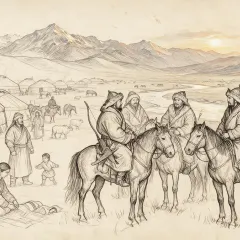 Tiele Der Verband türkischer Gruppen westlich des Altai, in den alttürkischen Inschriften Töles genannt. Bumin fing 546 ihren Aufstand ab, und ihre fünfzigtausend machten die Ashina zu einer Macht.
- Tongra kurz Ein Stamm der Toquz Oghuz. Die Kül-Tegin-Inschrift verzeichnet zehn seiner Kämpfer, die bei einem Totenmahl getötet wurden.
- Toquz Oghuz Die Neun Oguz, ein Verband von Tiele-Völkern nördlich des Orkhon-Landes. Die Göktürk-Inschriften nennen sie im selben Satz Feinde und mein eigenes Volk; die Uiguren gingen aus ihnen hervor.
- Tunsuren kurz Volk an der unteren Donau im fünften Jahrhundert, unter denen, die der Hunnenkönig Rua bekämpfen wollte, weil sie zu den Römern geflohen waren. Jordanes nennt sie Tuncarsi.
- Tukhsi kurz Türkischer Stamm des Landes zwischen dem Balchaschsee und dem Issyk-Kul im neunten und zehnten Jahrhundert. Einer der Stämme, aus deren Verband der Staat der Karachaniden wurde. Sie entführten den Knaben Sebüktegin.
- Tuoba kurz Das Xianbei-Haus, das die Nördlichen Wei gründete und anderthalb Jahrhunderte über Nordchina herrschte. Die Rouran-Kriege wurden gegen sie geführt, und ihr Zusammenbruch 534 schuf die beiden Wei.
- Türgesh Stamm des Üç-Tuğlu-Flügels der Zehn Pfeile im Ili-Becken. Seine Khane beherrschten von 699 bis 744 von Suyab aus die westlichen Göktürk-Länder und wurden 737 bei Kharistan gebrochen.
-
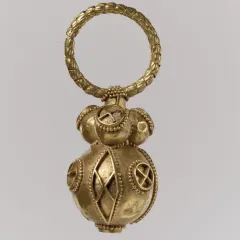 Türkische Stämme in Europa Die türkischsprachigen und türkisch geführten Völker der pontisch-kaspischen Steppe und des Nordkaukasus, fünftes bis siebtes Jahrhundert. Seit den 560er Jahren standen die meisten von ihnen unter der Herrschaft der Göktürken.
-
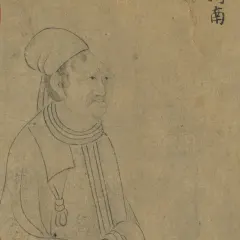 Tuyuhun kurz Ein Volk im Land um den Kokonor zwischen China und Tibet, Xianbei-Abstammung. In ihrem Land konnte ein geschlagener Göktürk-Khan verschwinden.
- Ultzinzuren kurz Hunnischer Stamm an der unteren Donau nach Attilas Tod. Er folgte in den 460er Jahren Attilas Sohn Dengizich gegen die Goten. Ein späterer Geschichtsschreiber nennt ihn bis zur Regierung Leos wohlbekannt.
- Utigurs Hunnisches Steppenvolk östlich des Asowschen Meeres, mit den Kutriguren verwandt. Unter ihrem Herrscher Anagai kämpften sie 576 bei Bosporos für die Göktürken.
- Vandalen kurz Volk, das unter seinem König Geiserich von Spanien nach Afrika übersetzte und 439 Karthago nahm. Seine Flotte zog römische Kräfte von der Donau ab, und 455 plünderte es Rom.
- Wuhuan Volk der östlichen Steppe, seit Modu Chanyus Sieg über die Donghu den Xiongnu untertan und dann den Han, die es an der Grenze ansiedelten und gegen die Xiongnu und die Xianbei einsetzten.
- Wusun Steppenvolk des Ili-Tals, erst Klienten, dann Rivalen der Xiongnu und der wichtigste Verbündete der Han im Westen. Ihr Gründer wurde bei der Geburt ausgesetzt und von einer Wölfin gesäugt.
- Yueban Der Teil der Nördlichen Xiongnu, der nördlich von Kutscha zurückblieb, als die übrigen nach Westen zogen. Das Wei Shu setzt ihr Land nordwestlich der Wusun an und verzeichnet ihre Gesandtschaften an die Nördlichen Wei.
- Yuezhi Das Volk des Gansu-Korridors, das die Xiongnu zweimal brachen und dessen Flucht nach Westen die Bewegung auslöste, die in Baktrien endete.
- Zabender kurz Volk, das Theophylaktos von den Var und Chunni herleitet. Er nennt es neben den Tarniach und Kotzager, die vor den Göktürken zu den Awaren flohen.
Bildnachweise
- Akatziren: c. 450: The realm of Attila reaches from the Danube into the steppe. The Akatziri stand in two proposed places, north-west of the Black Sea and by the Sea of Azov. Modern map. No source records the frontier. © Emre-E Yavuz 2026
- Avars: 558: The first embassy of the Avars comes through the Alans and Lazica to Constantinople. The Avars then break the Onogurs and destroy the Sabirs. Modern map. The road of the embassy is drawn, and the places of the battles are not recorded. © Emre-E Yavuz 2026
- Donghu: Donghu in a modern illustration. © Emre-E Yavuz 2026
- Eurasische Nomaden: A herder on horseback with a flock of sheep and goats on the open steppe of Mongolia, photographed in 1909. Finnish Heritage Agency (Museovirasto), General Ethnographic Photo Collection, VKK156:33. Photograph by Sakari Pälsi, 1909. Finna, CC BY 4.0.
- Göktürken: Göktürks in a modern illustration. © Emre-E Yavuz 2026
- Hephthalites: Envoy of the Hua (滑國), as the Liang court called the Hephthalites, carrying a bowl. From “Foreign Visitors Coming to Court”, a copy after a painting ascribed to Emperor Yuan of Liang (r. 552–555); an inscription of the Song emperor Lizong names Gu Deqian of the Southern Tang as the copyist. Handscroll, ink on paper; National Palace Museum, Taipei, 故畫001389N. Copy of Emperor Yuan of Liang’s “Foreign Visitors Coming to Court”, The National Palace Museum, Taipei, CC BY 4.0 @ www.npm.gov.tw.
- History of the Turkic peoples: Runes of the Tonyukuk stone, the Göktürk realm in 552, the Altai from space, a Scythian gold stag, the empire of Attila in 453 and riders on a Tang bronze mirror. Photographs: G. J. Ramstedt and Sakari Pälsi, Finnish Heritage Agency (CC BY 4.0); NASA, astronaut photograph iss069e071176 (public domain); The Cleveland Museum of Art, 1985.77 (CC0); The Metropolitan Museum of Art, 25.20.3 (CC0). Maps: © Emre-E Yavuz 2026
- Hunnen: Huns in a modern illustration. © Emre-E Yavuz 2026
- Khitan: Fragment of a Liao-dynasty tomb mural showing a Khitan man and a Khitan boy, from a tomb at Paolou Hill in Lindong, excavated in 1988. Photograph: BabelStone, 2016, CC BY-SA 3.0.
- Kutrigurs: c. 550: The Kutrigurs live west and the Utigurs east of the Don and the Sea of Azov, the Sabirs and the Onogurs north of the Caucasus. The Kutrigurs raid in 551 and, under Zabergan, reach Constantinople in 558–559. The Avars arrive in 557. Modern map. The roads are drawn. © Emre-E Yavuz 2026
- On Oq: On Oq in a modern illustration. © Emre-E Yavuz 2026
- Rouran: Rouran in a modern illustration. © Emre-E Yavuz 2026
- Sabirs: 558: The first embassy of the Avars comes through the Alans and Lazica to Constantinople. The Avars then break the Onogurs and destroy the Sabirs. Modern map. The road of the embassy is drawn, and the places of the battles are not recorded. © Emre-E Yavuz 2026
- Saraguren: c. 463: The Abares drive out the Sabirs, and the Sabirs drive the Saragurs, Ogurs and Onogurs west. The Saragurs defeat the Akatziri and send an embassy to Constantinople. Later they raid through the Caucasus. Modern map. The arrows are a reconstruction. © Emre-E Yavuz 2026
- Tiele: Tiele in a modern illustration. © Emre-E Yavuz 2026
- Türkische Stämme in Europa: One of a pair of gold earrings, Avar work, 550 to 650. The Metropolitan Museum of Art, New York, 17.191.4, CC0.
- Tuyuhun: Envoy of the Tuyuhun, labelled 河南, the name under which the southern histories treat their kingdom. From “Foreign Visitors Coming to Court”, a copy after a painting ascribed to Emperor Yuan of Liang (r. 552–555); an inscription of the Song emperor Lizong names Gu Deqian of the Southern Tang as the copyist. Handscroll, ink on paper; National Palace Museum, Taipei, 故畫001389N. Copy of Emperor Yuan of Liang’s “Foreign Visitors Coming to Court”, The National Palace Museum, Taipei, CC BY 4.0 @ www.npm.gov.tw.
- Uyghurs: Muqam, a painting of 1984 by the Uyghur painter Ghazi Ehmet: singers and musicians of the Uyghur muqam with long-necked lutes, fiddles, a dulcimer, frame drums and flutes. It shows the Uyghurs of the twentieth century, eleven centuries after the dispersal of 840. Painting: Ghazi Ehmet, 1984.
- Xianbei: Xianbei in a modern illustration. © Emre-E Yavuz 2026
- Yenisei Kirghiz: Yenisei Kirghiz in a modern illustration. © Emre-E Yavuz 2026

