
- 400
- 500
- 600
- 700
- 800
- 900
- Rouran 400–554
- First Göktürk 552–630
- Tang rule 630–682
- Second Göktürk 682–744
- Uyghur 744–840
- Kirghiz 840–924
- Huns 370–469
- Western Göktürk 552–659
- Türgesh 699–766
- Karluk 766–800
- Khazar 650–969
The Second Göktürk Khaganate was the state that Ilterish raised in 682. He raised it out of a band of five thousand in the hills north of the Chinese frontier. By then fifty-two years had passed since the Tang had taken the last khan of the first.[1] Within Ilterish’s reign the state moved to Ötüken.[1] Under his brother Kapgan it became an empire. The Tang histories thought it the equal of Ilig’s, ten thousand li across with four hundred thousand bowmen.[1] Under Ilterish’s son Bilge Khan it was a power at peace with China and paid in silk for it.[1] It fell in 744, within a decade of Bilge’s death, to the peoples it had ruled.[1] It is the state that carved the Tonyukuk, Kül Tegin and Bilge Khan inscriptions. They are the earliest texts in a Turkic language. This was the only steppe empire before the Mongols that explained itself in its own words. Everything the Göktürks wrote in their own language about rule, its loss and its restoration comes from these sixty years.
The khans, the counsellor, the battle of Bolchu and the inscriptions have their own articles.
Name
- 𐱅𐰇𐰼𐰜: 𐰉𐰆𐰑𐰣𐱅𐰇𐰼𐰜: 𐰃𐰠türk sir boduntürk bodun, türk elOld TurkicKül Tegin inscription · Tonyukuk inscription
- 突厥ChineseJiu Tangshu 194
- Eastern Türk Khaganate; Later Türk KhaganateEnglish
The Tang histories call it what they called its predecessor, Tujue. They treat the whole period from 682 to 744 as a continuation of the chapter on the eastern Göktürks.[1] The Orkhon monuments call the people türk bodun and the realm türk el, as the first khaganate had done.[2] Only the Tonyukuk stone has a name of its own: türk sir bodun, the Türk Sir people. It uses the name four times. Once it speaks of “the land of the Türk Sir people” as the thing that was to have no master and got one.[3] Modern accounts usually identify the Sir with the Xueyantuo, the Sir Tarduš of the Chinese. The Xueyantuo had ruled the Orkhon country between 630 and 646. If so, the restored state named itself as a union of the Göktürks with the people who had held Ötüken in their absence. This is a fact about 682 that no Chinese source records. “Second Khaganate” is the name used in modern accounts.
Foundation
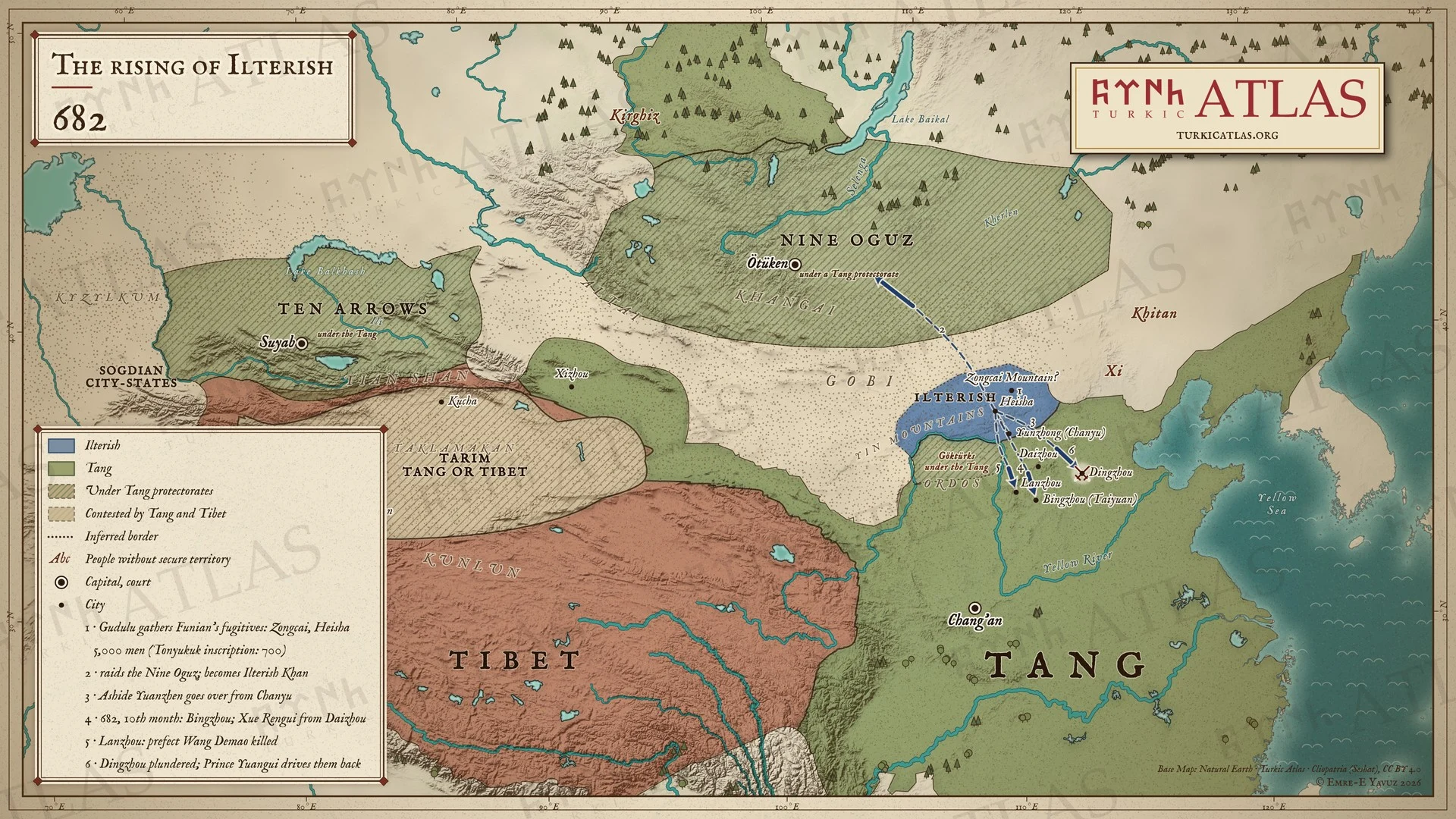
For fifty years after 630 the eastern Göktürks had lived under the Tang. They lived along the frontier and in the six prefectures of the Ordos loop. Their own chiefs governed them under Chinese protectorates, and the Tang levied them for Chinese wars.[1] The Kül Tegin inscription’s “for fifty years they gave their toil and their strength” is the same half-century seen from Ötüken.[2] Revolts began in the late 670s. In 680 the Ashide chiefs fetched Ashina Funian, the son of an elder cousin of Ilig, from Xiazhou to make him khan. Pei Xingjian broke the rising. Funian was beheaded in the market of Chang’an in 681.[1]
Gudulu, Kutluk in Turkic, was a distant kinsman of Ilig. He was an Ashina, and his grandfather had been a chieftain with a hereditary title under the Tang governor of Yunzhong.[1] He gathered Funian’s fugitives in the Zongcai mountains. He lived by robbery and by raiding the herds of the Nine Surnames until he had five thousand men.[1] Then he set himself up as khan. His brother Mochuo became shad, and one Duoxifu became yabgu.[1] Ashide Yuanzhen was the Chinese-trained supervisor of the surrendered tribes. He went over to Gudulu and was given the army as Apa Tarkan.[1][4] The Tonyukuk stone gives the same beginning as seven hundred men, two-thirds mounted, under a shad. It adds a counsellor who made him khan.[5] The Orkhon monuments give it as seventeen men who became seventy and then seven hundred. They describe Heaven raising Ilterish and his wife Il-Bilge Katun “by the crown of the head”.[2] The first seat of the state was in the hills north of the frontier. By the stone it was at Čogay Kuzı and Kara Kum. By the Chinese account it was in the Zongcai mountains and the fortified town of Heisha, the Black Sands.[6]
Only Tonyukuk tells of the move to Ötüken. A fugitive warned that the new khan of the Nine Oguz was building a coalition with China and the Kıtañ against “the land of the Türk Sir people”.[7] The counsellor persuaded the khan to strike first.[8] He crossed the Kök Öng and beat the Oguz on the Tola with two thousand men against an army put at three or six thousand.[9][10][11] Then he settled the khan and the people in the Ötüken land, “and the peoples of the south, of the west, of the north and of the east came to us”.[11] The march is undated but falls within Ilterish’s reign. At that moment the frontier rising became a steppe empire on the ground the first khaganate had held.
Government and structure
The state rebuilt the first khaganate from memory. The Kül Tegin inscription says that Ilterish set the people in order “according to the law of my forefathers”. He organised the Tölis and the Tardush, the eastern and western halves of the people, and gave them a yabgu and a shad.[2] The Second Khaganate may be seen as a restoration of the First. Ilterish and his successors saw themselves as descendants of Bumin and Istemi and as restorers of Göktürk greatness. They took the century between for a misfortune that they had allowed the Chinese to exploit.[12] The Tang history lists the first appointments as it saw them. The khan’s brother became shad, another man became yabgu, and a Chinese-trained officer became Apa Tarkan in command of the army.[1] Beside the khan stood the counsellor, ayguči. The Tonyukuk stone makes him the second pillar of the state. Five times it says: “his khan is brave, his counsellor is wise”.[3]
In 699 Kapgan gave the state the form it kept.[1] Two shads, of the left and of the right, each had more than twenty thousand men.[1] Above them stood a Lesser Khan, his own son. He had more than forty thousand men of the Ten Surnames of the west and the title “Khan Who Expands the West”. The khan stood over all.[1] Bilge Khan had been shad of the Tardush at fourteen under that system.[1] In the regency after his death the army was again divided between a Left Shad in the east and a Right Shad in the west, “and all the best troops were under the two shads”.[1] The articles on shad, yabgu and Khan and khagan treat the offices. What the second khaganate adds to them is the Lesser Khan, a viceroy over the west with a royal title.
The subject peoples paid. The Khitan and the Xi “had been subject to his levies and services since 697”. The Ten Arrows furnished the Lesser Khan’s forty thousand.[13] The six prefectures of the Ordos were the Sogdo-Göktürk settlements that the Tang handed over in 698 with seed and ploughs. They gave the state back farmers and traders.[13] The Sogdians among them gave it its merchants and some of its officers. One of these officers was the father of An Lushan.[13] The legitimating ideas are Heaven, Kut, Töre and the holy ground of Ötüken. They are treated in their own articles. They are known almost entirely from this state’s monuments.
Territory
Bilge Khan’s own measure stands on the south face of his brother’s monument. The armies went eastward to the plain of Shantung and within a little of the sea. They went southward to the Nine Ersin and within a little of Tibet. They went westward across the Pearl River to the Iron Gate. They went northward to the country of the Yir Bayırku.[2] The Tang history gives its own measure for Kapgan. The empire was more than ten thousand li from east to west, with four hundred thousand bowmen. The Khitan and Xi were tributary, “and since Ilig no one had been so powerful”.[1] Both are measures of where the armies had been, not of a bounded territory. Neither draws a line. The state held the Ordos only as the six prefectures. It held the Ten Arrows only from Bolchu in 711 to the defections of 715. It held the country beyond the Syr Darya only for the length of one campaign. The seat throughout was Ötüken. The monuments say it is the only seat from which the realm can be held.[2]
Ilterish (682–691)
The founder’s decade was war with the Tang, every year. The Jiu Tang Shu records fighting at Weizhou in 683, where the governor of Fengzhou was killed. It records Shuozhou in 684, Shuozhou and Daizhou in 686, with five thousand Tang dead at Xinzhou, and Changping in Hebei and Shuozhou again in 687.[1] That year the Tang general Heichi Changzhi beat the khan at Huanghuadui and drove him north of the desert. A colonel who followed with thirteen thousand picked men to finish him lost them all.[1] Tonyukuk counts seventeen battles with the Chinese, seven with the Kıtañ and five with the Oguz.[14] The Orkhon monuments count forty-seven campaigns and twenty pitched battles against every neighbour: “to the south the Chinese, to the north Baz Khan and the Nine Oguz, the Kırgız, the Kurıkan, the Thirty Tatar, the Kıtañ and the Tatabı”.[2] Ilterish died of illness between 690 and 692, leaving sons of eight and seven. His brother took the throne.[1]
Kapgan (691–716)
Kapgan’s reign has its own article. The turn from raiding to empire came in 696. Empress Wu was at war with the Khitan. She took his offer to crush them in exchange for the Göktürk households that had surrendered west of the Yellow River.[1] He broke the Khitan and took their families, and “from this time his forces grew”.[1] In 698 he extracted the six prefectures of the Ordos, forty thousand bushels of seed and three thousand implements by detaining an envoy.[1] He rejected the Wu bridegroom sent for his daughter. The Tang history preserves his speech about the Li house.[1] He detained the bridegroom and the envoy Yan Zhiwei, and had Yan proclaimed khan.[1][15] Then he led a hundred thousand men into Hebei. He withdrew with eighty or ninety thousand captives before the Tang armies moved.[1] The reorganisation of 699 followed, then the yearly raids. In 703 he sent Baga Tarkan to ask again, this time for a son of the crown prince as bridegroom. The empress agreed. Kapgan sent a high officer with a thousand horses to give thanks, and she feasted him in the Suyu pavilion.[1][16] In 705 the Göktürks destroyed a Tang army at Mingsha and stole the Longyou herds. The Tang answered with the three Shouxiang cities, built beyond the river to close the road south.[1] After the accession of the emperor Ruizong, Kapgan asked for a bride once more. The court named a daughter of Prince Chengqi of Song the Princess of Jinshan. Kapgan sent his son Yangwozhi Tegin to court, and the emperor gave him a general’s rank. Then Ruizong handed on the throne, and the marriage never took place.[1][17]
In the west, Tonyukuk broke the three-khan coalition of the Tang, the Ten Arrows and the Kirghiz. He did it with a winter crossing of the Sayan, which killed the Kirghiz khan.[18] The night march over the Altai and the Irtysh to Bolchu followed. There the Türgesh khan was taken and the Ten Arrows submitted.[19] The army went on across the Syr Darya to the Iron Gate. The Sogdians came in.[20] Whether the Iron Gate of the inscriptions lay between Samarkand and Balkh or between Sogdiana and Ferghana has been argued, and so has the question whether the Göktürks ever met Arabs there.[21] The Tang history dates the destruction of the Türgesh khan Suoge to 710 or 711.[1] This was the widest the state ever reached. It did not last. The Lesser Khan’s attack on Beiting failed in 714.[1] Huoba Jielifa, the husband of Kapgan’s sister, had taken part in it. The Tang commander held the city and killed Tong’e Tegin under the walls. Huoba did not dare to go home. He came over to the Tang with his wife, and the court made him Prince of Yanbei and gave his wife the title Princess of Jinshan.[1][22] In 715 the Ten Surnames of the west and more than ten thousand tents went over to the Tang. The Nine Surnames were beaten so hard that their leader fled to China too.[1] In 716 Kapgan, riding home carelessly from a victory over the Bayirku on the Tola, was beheaded in a willow wood by a straggler.[1] “When Mochuo grew old, the tribes increasingly fled and scattered.”[1]
Bilge Khan (716–734)
Kül Tegin killed the Lesser Khan, his uncle’s brothers and his uncle’s court. He set his elder brother on the throne. Bilge offered it back and was refused, and Kül Tegin took the army.[1] Tonyukuk was the one survivor of the old court. His daughter was the new katun, and he was recalled as chief counsellor at over seventy.[1] In his own words, the state Bilge took over was “a people who had no food inside them and no clothes on their backs, a wretched and broken people”.[2] The defectors came back from the Tang side by force of arms. The Nine Oguz fought him five times in one year. In the west, the Türgesh under Sulu made themselves a khan again.[2]
Tonyukuk’s counsel set the policy. There was to be no raid on China while the state was weak, no walled towns and no temples. Mobility was the ground of strength.[1][23] The Tang test came in 721: a three-sided attack, of which only the Basmïl arrived. The Göktürks followed them home, cut them off from Beiting and took them whole. On the way back they stripped Liangzhou of its herds.[1] “From this the Little Shad’s power grew greatly, and he had the whole of Mochuo’s following.”[1] He asked for peace the same year, offering to be the emperor’s son.[1] The Tang accepted the sonship and refused the bride. They refused again in 725, after Bilge asked the envoy angrily why the Tibetans, the Xi and the Khitan had princesses and the Göktürks did not.[1] In 727 he sent the Tibetan proposal for a joint invasion to Chang’an. He was granted a market at the western Shouxiang city with several hundred thousand bolts of silk a year.[1] One survey puts the Tang gift of 727 alone at a hundred thousand pieces of silk for a token tribute of thirty horses.[24] The south face of the Kül Tegin inscription describes that settlement from Ötüken. It speaks of gold, silver and silk “without our having to ask”, and it warns against going to live in the south.[2]
Kül Tegin died in 731. His monument, which sets out the whole Göktürk theory of the state, was finished in 732. A Chinese stele composed by the emperor stood beside it, and craftsmen were sent from Chang’an.[2] In 734 a minister poisoned Bilge Khan. Before he died he had the minister and his faction destroyed.[1]
Decline and fall (734–744)
His son Yiran was set up. The Tang invested him with a stele and shrine of his own. He died of illness within months.[1] His younger son Tengri, a boy, followed. The state was run by his mother, Tonyukuk’s daughter, and her lover, “and the people would not submit to her”.[1] The army lay with two cousins of Bilge, the Left Shad in the east and the Right Shad in the west. In 740 the Tang invested Tengri once more. Soon afterward he and his mother lured the Right Shad to them and beheaded him. The Left Shad, fearing the same, killed Tengri and set himself up as Ozmish Khan.[1] The Basmïl rose against him and beat him, and “the whole country fell into chaos”.[1] In the eighth month of 742 the remnant of the house arrived at Chang’an: the Right Shad’s widow and children, a grandson of Kapgan, a daughter of Bilge Khan, a widow of Yiran and a daughter of Tengri.[1] The emperor received them and wrote a poem about it.[1]
The Göktürk chapter of the Jiu Tang Shu ends there. The lower chapter of the Xin Tang Shu continues the story. In its telling the Uyghurs, Karluk and Basmïl rose together at the start of Tianbao against a yabgu who had killed two sons of Bilge and taken the throne. They killed him and raised the Basmïl chief as khan.[6] The people set up Ozmish.[6] In 744 the Basmïl killed Ozmish and sent his head to Chang’an. His brother Baimei was set up.[6] The Uyghurs and Karluk killed the Basmïl khan and raised the Uyghur Guli Peiluo. In 745 they killed Baimei too, while Bilge’s widow, the Katun Pofu, came in to the Tang with her people.[6] Two surveys put the end of the Göktürk state in 745, when the Uyghurs, kin of the Göktürks, brought it down.[25][26] The last mention of the Göktürks in the Chinese sources dates to 941.[26] Modern accounts tell the same story down to 744.[27] A coalition of Basmïl, Karluk and Uyghurs toppled the dynasty in 742. A Basmïl khan held the Orkhon for two years. In 744 an Uyghur-led coalition toppled him in turn, which is the birth of the Uyghur Khaganate.[27] In the third year of Tianbao, 744, the Uyghur chapter of the same Tang history has the Uyghur ruler “attack and conquer the Basmïl”. It has him take the title Kutluk Bilge Kül Khan.[28] The Uyghurs were a people of the Nine Oguz, whom every Göktürk khan since Ilterish had fought. They took the Orkhon and kept Ötüken as the centre of the realm. On their own monuments they repeated the Göktürk creed of Heaven and Earth.
Causes of the fall
The state’s own monuments give one theory. On the Kül Tegin stone the realm is lost when lords and commons are not straight with one another, when younger brother is set against elder, and when the people are drawn south by sweet words and soft silk.[2] The stone says the realm is held from Ötüken and nowhere else.[2] The speaker says he has set down “how they will go wrong and die” for the people of a later day.[2] The quarrels the stones describe have been taken for social as well as tribal and personal ones. The conflict is then one between the nobles, the begs, and the commoners, the budun. The restoration is the work of the “black” commoners, the qara budun, whom the stones also name.[29] The Tonyukuk stone gives another theory. A realm lasts while its khan is brave and its counsellor wise. Tonyukuk, old, asks what misfortune it would be for a people with a khan to have worthless men at its head.[3] Another translation has him ask instead what trouble a people would have if it had such a man as he.[30] The Tang history gives the plainest account. Kapgan “used his people cruelly”, and the tribes fled him. Bilge was murdered. A regent and her lover ruled a boy.[1] Two shads with all the troops turned on the throne and on each other. The subject peoples, the Basmïl, Karluk and Uyghurs, did the rest.[1] All three agree that the state broke from inside before it was struck from outside.
The record from the Mongolian lakes adds a setting. The sediments of Lake Telmen place the Second Göktürk state within the run of good years that the lake record gives the steppe empires. They show central Mongolia turning drier from about 700 and staying so.[31] Under climate and the steppe empires, Turkic Atlas holds open what that meant for a state whose strength, by Tonyukuk’s own account, lay in moving in search of water and grazing.
Sources
The state is known from three inscriptions of its own and from two chapters of the Tang histories. The two kinds do not overlap where one would wish. The Tonyukuk inscription covers 682 to 716 from the counsellor’s side. It is independent of the royal monuments. The Kül Tegin inscription of 732 and the Bilge Khan inscription of 735 cover the same years from the khan’s side. They also cover Bilge’s reign. They share their historical section word for word. Therefore they are one witness where they agree. The Ongi inscription is a smaller monument of the same dynasty.[32] None of the three names the other’s hero. None dates anything by a year the Chinese would recognise. The stones count by the animal cycle and by the ages of princes.
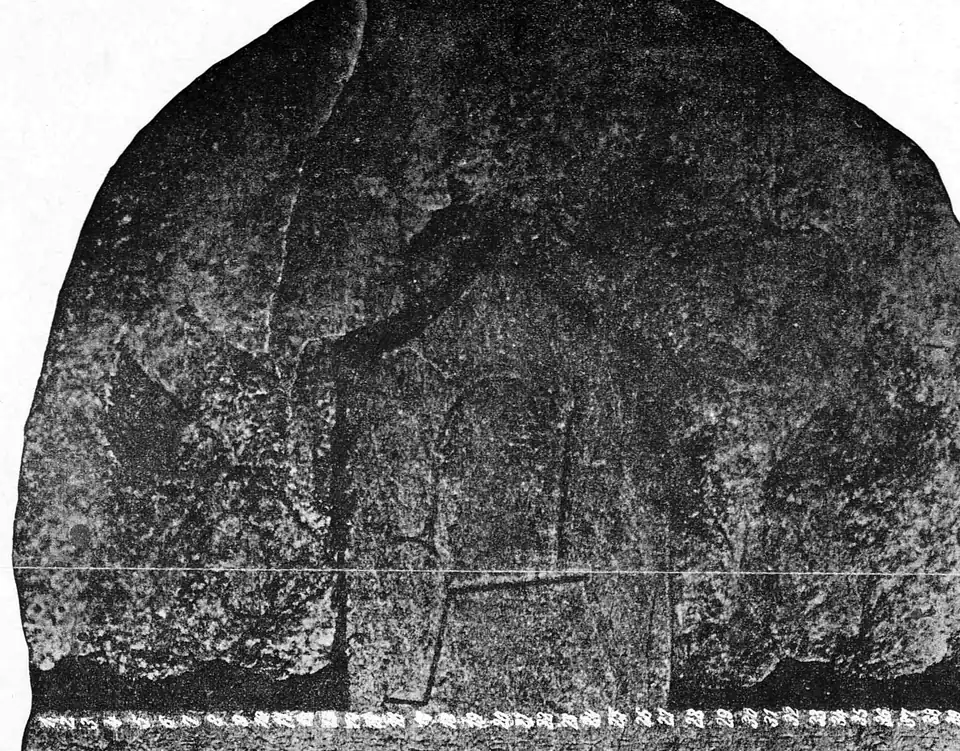
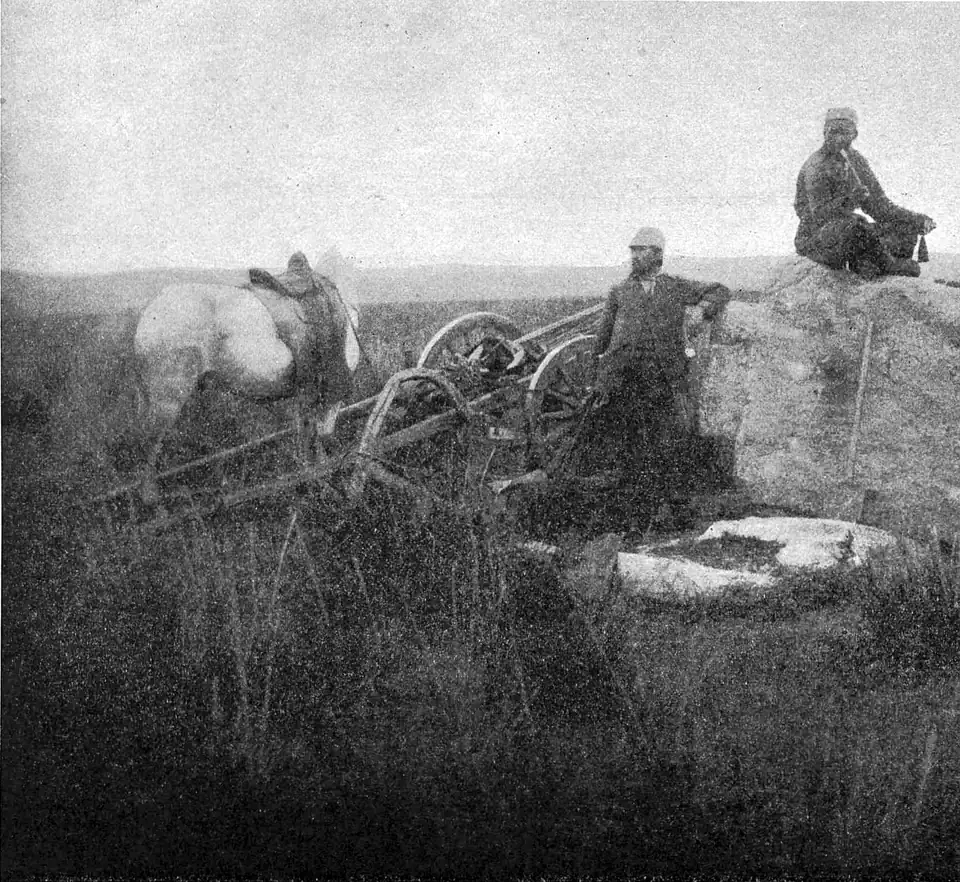
The Jiu Tang Shu’s chapter on the Göktürks runs from the rising of Kutluk to the reception of 742. It gives the years, the raids, the embassies, the titles, the speeches of Tonyukuk and Bilge and the mechanics of the fall.[1] The Xin Tang Shu’s upper chapter rewrites it to 716. It is not a second witness.[6] Its lower chapter carries 716 to 745. It supplies the end that the upper chapter lacks.[6] It has the yabgu’s usurpation, the Basmïl khan, the killing of Ozmish in 744 and of his brother Baimei in 745, the submission of Bilge’s widow, and the sentence that the state which had begun under the Western Wei was no more.[6] The Uyghur chapter of the Jiu Tang Shu gives 744.[28] In 1899 the Chinese notices were first set beside the Tonyukuk stone. The two have been read together ever since.[33]
-
682 The rising
Ilterish, whom the Chinese annals call Gudulu, rose against the Tang north of the frontier. The Xin Tang Shu dates the rising to 682, the Jiu Tang Shu to 683. The Jiu Tang Shu gives him more than five thousand men in the Zongcai mountains; the Tonyukuk inscription gives seven hundred, two parts mounted and one on foot. He fortified the town of Heisha, the Black Sands.
-
c. 687 Ötüken
Tonyukuk led the host across the Kök Öng toward the Ötüken forest and beat the Oguz on the Tola, two thousand against three thousand. No source dates the move; by 687 there was again a khan at Ötüken. From there Ilterish raided the Tang frontier year after year, in 687 as far as Changping on the plain of Hebei.
-
698 Kapgan
Kapgan, the younger brother of Ilterish, ruled from 691. In 696 he broke the Khitan, who had risen against the Tang; from 697 the Khitan and the Xi were subject to his levies. In 698 the Tang drove out to him several thousand tents of the six prefectures of the Ordos, forty thousand bushels of seed and three thousand implements. In the same year he raided Hebei with a hundred thousand men. Zhaozhou and Dingzhou fell, and he went home with eighty or ninety thousand captives.
-
710–711 Kirghiz and Türgesh
In the winter of 710 the Göktürks crossed the Kögmen, whose one road was closed by snow, with a guide of the Az, and killed the khan of the Kirghiz in the Soŋa forest. Then they crossed the Altai where there was no road and the Irtysh where there was no ford. At Bolchu they killed the khan of the Türgesh and took his realm. The year of Bolchu is 710 or 711, and where it lay is not settled.
-
712–714 To the Iron Gate
After Bolchu the Ten Arrows answered to the Göktürks, until the defections of 715. Their army crossed the Pearl River, the Syr Darya, and went as far as the Iron Gate; the Sogdians came over, with Suk at their head. In 714 Inel and Tongga Tegin laid siege to Beiting. Guo Qianguan held the city and beheaded Tongga Tegin. At the height of Kapgan's power, the Tang history says, his realm stretched more than ten thousand li from east to west.
-
716 The death of Kapgan
In 716 Kapgan beat the Bayirku on the Tola. Carrying his victory lightly, he went home without precautions and was killed in a willow wood by a Bayirku straggler. Kül Tegin killed the Lesser Khan and set his brother Bilge on the throne. The Türgesh raised a khan of their own, and the Khitan and the Xi went over to the Tang.
-
721–734 Bilge Khan and Tonyukuk
In 720 the Tang planned an attack from three sides. In the autumn of 721 Tonyukuk sent a detachment to take Beiting before the Basmïl reached it and captured their whole force; on the way home he stripped Liangzhou of its sheep and horses. In 727 the Tang granted a market at the western Shouxiang city. Kül Tegin died in 731, Bilge Khan in 734. Their stones stand in the valley of the Orkhon, Tonyukuk's on the upper Tola.
-
741–745 The fall
After 741 the realm fell into chaos. The Basmïl, the Uyghurs and the Karluk rose against the last khans. In 744 the Basmïl killed Ozmish Khan; the Uyghurs and the Karluk then killed the Basmïl khan and raised the Uyghur Kutlug Bilge Kül as khan. In 745 Baimei, the last khan of the Göktürks, was killed. Ötüken passed to the Uyghur Khaganate.
- Place named in a source (position as commonly identified)
- Position disputed or approximate
- Zone drawn after the Chinese annals and the inscriptions
- People under Göktürk rule
- Peoples subject to Göktürk levies
- Movement named in a source (route drawn)
Rulers
- Ilterish Khan682–691
- Kapgan Khan691–716
- Inel Khana699–716
- Bilge Khan716–734
- Yiran Khan734
- Tengri Khan734–741
- Ozmish Khan741–744
On the succession
- aInel Khan: Inel was set up as Lesser Khan beside Kapgan, not after him. The two reigns run together from 699 to 716 because the khaganate had two khans at once, the great khan in the centre and the lesser over the western wing.
- Ilterish Khan682–691
- Kapgan Khan691–716
- Inel Khan699–716
- Bilge Khan716–734
- Yiran Khan734–734
- Tengri Khan734–741
- Ozmish Khan741–744
Relations with other states
Red is war, blue alliance, gold trade. Where several held at once, the line shows what prevailed; alliance and trade can run side by side. Each line rests on an article. Point at a state to see its weightiest relation, select it to see its events. The slider shows what stood in a given year, and Play runs through the years.
Tang682 to 716
- War682 to 687Göktürk war of restoration, 679–687
- War698 to 716Kapgan's wars with the Tang, 698–716
- War714 to 716The revolt of the subject peoples, 714–716
References
- ^ a b c d e f g h i j k l m n o p q r s t u v w x y z aa ab ac ad ae af ag ah ai aj ak al am an ao ap aq ar as at au av aw ax ay az ba bb bc bd be bf bg Jiu Tangshu (Old Book of Tang), juan 194
- ^ a b c d e f g h i j k l m n o p q r s t Kül Tegin inscription
- ^ a b c d e f Tonyukuk inscription
- ^ Taşağıl 2004, p. 8–18
- ^ Tonyukuk inscription; Tekin 1968, p. 283
- ^ a b c d e f g h i Xin Tangshu (New Book of Tang), juan 215
- ^ Tekin 1994, p. 5, 32
- ^ Tonyukuk inscription; Tekin 1968, p. 284–285
- ^ Tekin 1994, p. 8–9
- ^ Orkun 1994, p. 104–105
- ^ a b Tonyukuk inscription; Tekin 1968, p. 285
- ^ Kwanten 1979, p. 28
- ^ a b c Jiu Tangshu (Old Book of Tang), juan 194; de la Vaissière 2005a
- ^ Tonyukuk inscription; Tekin 1968, p. 289
- ^ Taşağıl 2004, p. 25, 27
- ^ Taşağıl 2004, p. 29–30
- ^ Taşağıl 2004, p. 32–34
- ^ Tonyukuk inscription; Tekin 1968, p. 286–287
- ^ Tonyukuk inscription; Tekin 1968, p. 287–288
- ^ Tonyukuk inscription; Tekin 1968, p. 288–289
- ^ Barthold 2004, p. 39–40
- ^ Taşağıl 2004, p. 34, 46
- ^ Ögel 2000, p. 177, 179
- ^ Litvinsky 1996, p. 336
- ^ Rásonyi 1993, p. 98
- ^ a b Litvinsky 1996, p. 337
- ^ a b Golden 1992
- ^ a b Jiu Tangshu (Old Book of Tang), juan 195; Mackerras 1972
- ^ Sinor 1990, p. 310
- ^ Tekin 1968, p. 290
- ^ Struck 2022
- ^ Ōsawa 2011
- ^ Golden 1992; Hirth 1899
Sources
- Tonyukuk inscription
- Kül Tegin inscription
- Bilge Khan inscription
- Jiu Tangshu (Old Book of Tang), juan 194, 195
- Xin Tangshu (New Book of Tang), juan 215 (after Jiu Tangshu)
Literature
- Peter B. Golden, An Introduction to the History of the Turkic Peoples (1992)
- Friedrich Hirth, Nachworte zur Inschrift des Tonjukuk. Beiträge zur Geschichte der Ost-Türken im 7. und 8. Jahrhundert nach chinesischen Quellen (1899)
- Wilhelm Radloff, Die alttürkischen Inschriften der Mongolei. Zweite Folge: Die Inschrift des Tonjukuk (1899)
- E. Denison Ross (after Vilhelm Thomsen), The Orkhon Inscriptions; The Tonyukuk Inscription. Being a Translation of Professor Vilhelm Thomsen's Final Danish Rendering (1930)
- Colin Mackerras, The Uighur Empire According to the T'ang Dynastic Histories (1972)
- Étienne de la Vaissière, Sogdian Traders: A History (2005)
- Takashi Ōsawa, Revisiting the Ongi inscription of Mongolia from the Second Turkic Qaγanate on the basis of rubbings by G. J. Ramstedt (2011)
- Julian Struck; Marcel Bliedtner; Paul Strobel; William Taylor et al., Central Mongolian lake sediments reveal new insights on climate change and equestrian empires in the Eastern Steppes (2022)
- Emre-E. Yavuz, The Gokturk Empire: 2nd Edition (2025)
- Denis Sinor (ed.), The Cambridge History of Early Inner Asia (1990)
- Talât Tekin, A Grammar of Orkhon Turkic (1968)
- Luc Kwanten, Imperial Nomads. A History of Central Asia, 500–1500 (1979)
- Bahaeddin Ögel, Türk Kültür Tarihine Giriş I: Türklerde köy ve şehir hayatı (2000)
- László Rásonyi, Tarihte Türklük (1993)
- Ahmet Taşağıl, Gök-Türkler, Bd. III (2004)
- B. A. Litvinsky; Zhang Guang-da; R. Shabani Samghabadi (ed.), History of Civilizations of Central Asia, Vol. III (1996)
- V. V. Barthold, Orta Asya Türk Tarihi Dersleri (Orta Asya Türk Tarihi Hakkında Dersler) (2004)
What links here62
- Persons
- Ashina Funian · Bars Beg · Bilge Khan · Ilterish Khan · Kapgan Khan · Kül Tegin · Kutlug Bilge Kül Khan · Kutluk Tegin · Qutayba ibn Muslim · Right Shad (d. 741) · Sulu Khan · Tengri Khan · Tonyukuk
- States
- First Göktürk Khaganate · Tang · The Tibetan Empire · Uyghur Khaganate · Yenisei Kirghiz Khaganate
- Conflicts
- Uyghur–Kirghiz War
- Battles & Events
- Bilge Khan's Tent Banquet (725) · Göktürk campaign against the Kirghiz (710) · The battle of the Talas, 751 · The coup of 716 · The fall of Ordu-Balık, 840
- Places
- Beshbalik · Dzungaria · Kögmen · Lingzhou · Ordos · Orkhon valley · Ötüken · Shiveet Ulaan · Tarim Basin · Xiazhou
- Peoples
- Bayirku · Eurasian Nomads · History of the Turkic peoples · The Great Empires of the Steppe · Toquz Oghuz · Uyghurs
- Lineages
- Ashina
- Institutions and Titles
- Baga · Buyruk · Chinese Bans on the Export of Iron · Göktürk Weapons · Kut · Tarkhan · Tegin · Tölis and Tardush · Women among the Turkic Peoples
- Religions
- Tengrism
- Languages
- Old Uyghur · The Old Turkic script
- Foods
- Millet · Steppe Diet
- Customs & Pastimes
- Hunting among the Göktürks · Turkic Songs at the Tang Court
Cite this article
Yavuz, Emre-E. “Second Göktürk Khaganate.” Turkic Atlas, revised 8 November 2026. https://turkicatlas.org/polities/second-turkic-khaganate/
Last revised: 8 November 2026

